

📍 Ireland 🇮🇪
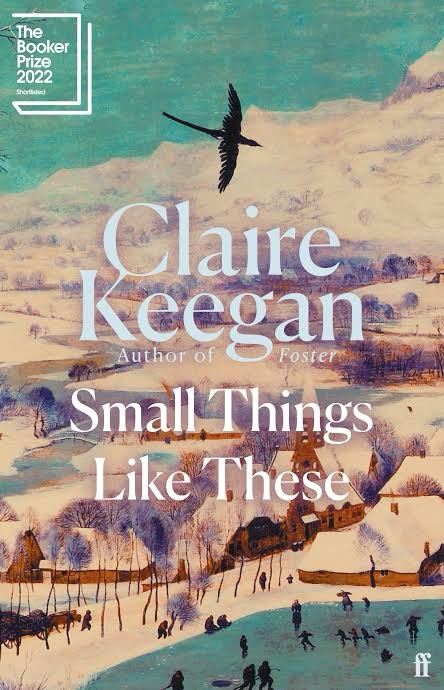
It’s Christmas of 1985 in the town of New Ross. Bill Furlong is a coal merchant toiling away feverishly to provide for his wife Eileen and five daughters. The Catholic Church is very influential in the town and Bill regularly supplies coal to them. The nuns know Bill well and admire his work and the commitment towards his family. There’s also a Magdalen laundry attached to the church which is believed to provide shelter to young girls, especially unmarried girls who are pregnant. Rumours abound about the clandestine activities at the laundry and also about the girls who are sheltering there. Most of the townspeople know the workings of the Magdalen laundry and how the church is tacitly involved in its iniquitous affairs. Eileen, doesn’t want to affront anyone; she believes that being a mute spectator would protect her daughters from any future troubles. One day, Bill while dropping off the coal at the church, stumbles upon a young girl who has been locked up in the freezing coal shed without food, water and covered in her excrements. Even in her indisposition she pleads Bill to rescue her and her child who has been forcibly taken away from her by the nuns. As Bill confronts this predicament, he has to simultaneously decide between antagonising the church and his church loving wife, and doing the right thing.
The Magdalene Laundries in Ireland, also known as Magdalene asylums, were institutions usually run by Roman Catholic orders, which operated from the 18th to the late 20th centuries. They were run ostensibly to house “fallen women”, an estimated 30,000 of whom were confined in these laundries. Given Ireland’s historically conservative sexual values, these were a generally accepted social institution well into the second half of the 20th century. They disappeared with changes in sexual mores and a loss of faith in the Catholic Church due to repeated revelations of scandals. Ireland’s last Magdalen asylum imprisoned women until 1996; it’s only in 2001 that the Irish government acknowledged that women in these laundries were victims of abuse and much later in 2013, that a formal state apology was issued.
Claire Keegan, is an Irish writer known for her short stories and the recipient of the Rooney Prize for Irish Literature among various other awards. Small Things Like These won the 2022 Orwell Prize for Political Fiction, was shortlisted for the Rathbones Folio Prize and was the shortest book to be shortlisted for the 2022 Booker Prize. In December 2024, it was Oprah’s Book Club pick. It has been adapted into a film of the same name starring Cillian Murphy.
This novella is a crisp, succinct take on how human beings falter, ponder and ruminate over doing the right thing even when faced with obvious wrongdoings. Most of us don’t want to disturb the status quo. We are ready to be consciously blind to such scenarios and even to wonder if the victim/s rightfully deserved what they endured. Our hypocrisy becomes jarringly evident in our chosen silence. Our activism and our fights are very conditional, provided they don’t cost us our peace and don’t disturb our lives. This is the advice Bill is subjected to from Eileen and others who had his best interest. If you look closer home, the rising Islamophobia and the general intolerance for criticism, though a different issue from what happened in Ireland, hasn’t prompted the majority of us to take a stand, because of the fear of being ostracised by the increasing number of zealots which may include our friends and family, and also the overbearing fear of an almost autocratic, authoritarian government that is trying its might to police secular voices. It is the acceptance of Small Things Like These that lead to big things like xenophobia, genocide and totalitarianism.
The book ends on a cliffhanger moment. Even Oprah, in her podcast, wondered what would happen next. So Claire, please let there be a sequel to Small Things Like These.
~ JUST A GAY BOY. 🥺

 the shiny diaries