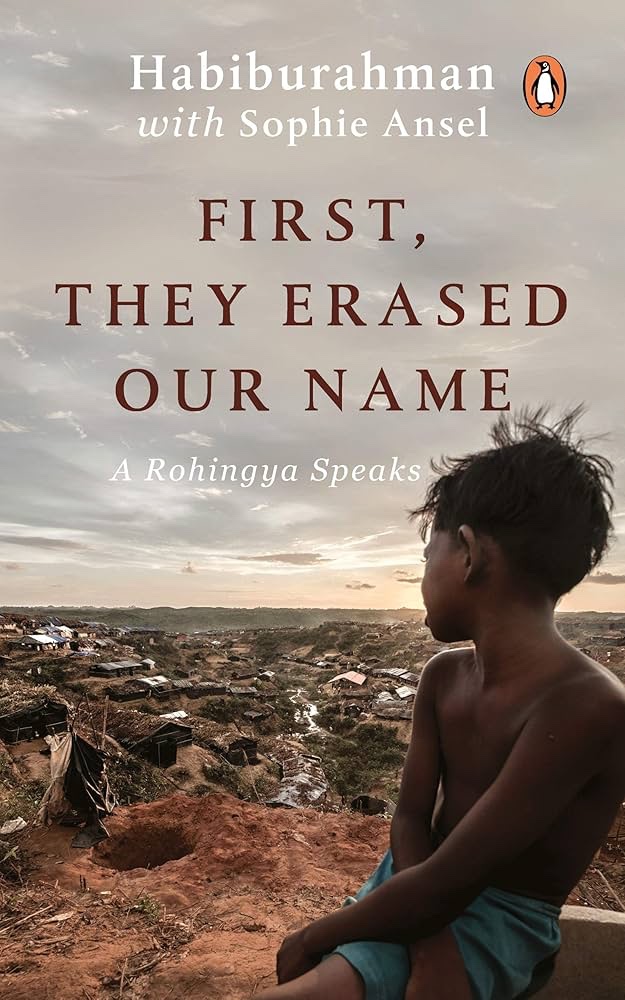
First, They Erased Our Name

📍 Myanmar 🇲🇲 

The Rohingya people are an Indo-Aryan ethnolinguistic group who predominantly follow Islam from Arakan State (now known as Rakhine State) of Myanmar (formerly Burma). They claim they are indigenous to western Myanmar with a heritage of over a millennium. The Myanmar government considers the Rohingya as British colonial and postcolonial migrants from Chittagong in Bangladesh. In addition, the government also does not recognise the term “Rohingya” (officially banned the word on 29th March, 2014) and labels them Bengali, a term wielded as a tool of erasure. Significant minorities of the Rohingya practice Hinduism and Christianity. They have been described by the UN as one of the world’s least wanted minorities and some of the world’s most persecuted people. They are denied freedom of movement as well as the right to receive a higher education. They have been denied Burmese citizenship under the 1982 nationality law, rendering them stateless in the land they consider home. 

This memoir by the Rohingya author, Habiburahman, charts his arduous journey from being stateless in his own country to becoming a refugee across borders. He was born in 1979, in the Arakan state, in Western Burma. In 1982, under the dictatorship of U Ne Win, the Rohingyas were officially de-recognised as one of the Burmese ethnic groups. With that, more than a million Rohingyas were erased from the nation’s legal existence in an instant; and their history, culture and identity were invalidated. Even uttering the word “Rohingya” became forbidden. 

The author describes growing up in the shadows of fear, exploitation, domination and relentless bullying. His parents taught him never to speak the word Rohingya for fear of violence from the authorities; Muslim was considered a marginally safer identity. He grew up knowing he was a criminal in the eyes of the state, someone whose very existence was a pretext for the military to bolster its authoritarianism and Buddhist ultranationalism. He describes how incredibly difficult it was for him to get an education because the schools and teachers belonged to the majoritarian community. Everyday life unfolded under surveillance and simple tasks were transformed into punishable acts.

Habiburahman recounts the constant racism he endured, how he was mocked and abused for his looks and skin tone thereby reflecting on the wider cruelty Rohingyas face simply for existing. All ancestral lands, including his family’s, were confiscated by the government and official documents were summarily dismissed. Children were barred from higher education. Crossing from one district to another required a maze of permissions, bribes and desperate pleading. Police detentions of both children and adults were routine, used as tools of extortion and intimidation. Those who could not pay remained imprisoned under brutal conditions for indefinite periods. 

Against these insurmountable odds, Habiburahman remained determined to study law. Fully aware that leaving home might mean never returning, he risked everything to reach Yangon in pursuit of education. The journey, fraught with danger at every turn, only reinforced the reality that he and his community were considered the most unwanted people on the planet. However, as despair and the threat of imprisonment closed in, he made the agonising decision to flee Myanmar. 

Becoming a refugee exposed him to new forms of danger in Thailand and Malaysia. Even with the help and recognition from the UN and UNHCR, he faced discrimination, rejection and statelessness in every country. Eventually, after encountering unimaginable obstacles, he managed to escape to Australia where dignity seemed momentarily within reach. Yet even there, citizenship remained elusive, his rights curtailed, and the label of a refugee clung to him. He realised, he would always be an outcast in the eyes of the world.

First, They Erased Our Name, coauthored by Sophie Ansel, translated from the French by Andrea Reece, is a searing and unflinching account of the brutality of the Rohingya genocide perpetrated by the Myanmar military junta. The world woke up to this act of ethnic cleansing only after an exodus of 600000 people landed at the Bangladesh border in August 2017. But as the book makes clear, the genocide has been decades in the making, enabled by state policies, discriminatory laws, and a hyper-nationalist propaganda that have incited massacres with impunity. The narrative also confronts Burmese politician, pro-democracy leader and Nobel Peace Prize recipient Aung San Suu Kyi’s reluctance and refusal, to address and challenge the genocide on global platforms. Instead, her silence, her deliberate omission to raise objection to this mass extermination, has rendered her complicit in this crime against humanity. 

Habiburahman now lives in Melbourne. He founded the Australian Burmese Rohingya Organisation (ABRO) to advocate for his people back in Myanmar and for his community. He is also a translator, social worker and the secretary of the Arakan Rohingya National Assembly (ARNA), based in the UK. In 2019, he was made a Refugee Ambassador in Australia. Sophie Ansel is a French journalist, author and director who lived in South Asia for several years. She met Habiburahman in 2006 and has been advocating for their cause since 2011. 

The Rohingya genocide remains an ongoing humanitarian catastrophe that has particularly intensified since 2017. It has led to mass killings, tens of thousands of genocidal rapes, destruction of villages and forced displacement of people and entire communities from Myanmar into neighbouring countries where they are forced to seek refuge. This crisis has created a fertile ground for human trafficking, where the perpetrators operate without accountability, while the victims die in obscurity or survive in the most inhumane conditions. The world has conveniently forgotten this calamity, just as it has forgotten the genocides and civil wars in East Turkestan, Tigray, Kurdistan and West Papua. According to the sources cited in the “Rohingya refugees in India” Wikipedia article, around 40,000 Rohingyas live in slums and detention camps across India, the majority of whom are undocumented. Under the Indian Law, they are considered illegal immigrants, and not refugees. They have been labelled as potential terrorists and are perceived as a national security threat leading to forced detentions and deportations. 

First, They Erased Our Name, is a devastating read because it captures humanity at its worst. It is filled with details that are almost unbelievable. However, its chronology of events and descriptions that convey an apartheid, offer an invaluable lesson. The author, through his story, has shown how the human experience depends upon the geography, religion and appearance of a person and how when these conditions are not met, ostracism, slavery, violence and humiliation become the cornerstones of the same human experience. It forces us to confront a truth we repeatedly fail to absorb; nobody dreams of becoming a refugee or willingly chooses statelessness.

At its heart, this memoir is a reminder of our collective failure, our inability to protect the most vulnerable and our willingness to look away from ongoing genocides. It compels us to remember Fannie Lou Hamer’s words, which echo through every page of this memoir, ‘Nobody’s free until everybody’s free’. Habiburahman’s story is a testament to that truth and an indictment of a world that has yet to learn it. 

~ JUST A GAY BOY. 😞

Daybreak in Gaza: Stories of Palestinian Lives and Culture

📍 Gaza 🇵🇸 

Gaza, a city having history spanning thousands of years, that once celebrated life and laughter has now become synonymous with death and destruction since the Israeli occupation began. It’s become a graveyard of lost lives, homes and hopes. The book, Daybreak in Gaza, is an anthology of essays and short stories by Palestinians from Gaza, West Bank and the diaspora who recount an erstwhile Gaza, a Gaza of their dreams, a Gaza of their grandparents and great grandparents and a present day Gaza that is witnessing a relentless genocide from the 7th October, 2023. Many of the writers give first hand accounts of the bombing and devastation that has happened mercilessly in front of their eyes. Some of the stories are diary entries as bombs go off in the background, buildings collapse and cries of despair echo constantly. Some of these writers have been killed in the ongoing war. 

Gaza has been reduced to a rubble, Gazans as a statistic. This book, has allowed a different version of Gaza to be seen, albeit the grave circumstances currently. We see Gaza as a thriving center of trade, culture, education and living prior to the Nakba of 1948. Through the various stories we are introduced to the rich history of the city and Palestine even after the Nakba and all that followed with the Egyptian occupation to the First and Second Intifada and the Oslo Accords which turned out to be criminally counterproductive to the Palestinians. And then there are the horrifying, heart wrenching, soul shattering stories of the ongoing genocide replete with unimaginable sorrow that makes this book such a necessity.

Daybreak in Gaza is a difficult read. But to think about it, can this difficulty even come close to the horrendous atrocities being meted out to Gazans since forever and especially now since October 7th, 2023? After every chapter I had to pause. Because every chapter, every page, every word is imbued with the hurt and anger that the Gazans are facing. This book is drenched in their tears and wails that the world has turned a deaf ear to. This book is a testament to their rightful hatred towards all of us for our cowardice and consent for the genocide. 

Daybreak in Gaza has been edited by Mahmoud Muna and Matthew Teller with Juliette Touma and Jayyab Abusafia. Mahmoud is a writer, publisher and bookseller from Jerusalem. Matthew is a UK-based writer and broadcaster. Juliette works for the UNRWA and Jayyab is a London-based journalist from Jabalia refugee camp in the north of Gaza.

As of 5th November, 2024, 200,000+ Palestinians are projected to have been killed by Israel and the USA in Gaza since 7th October, 2023. Two thirds of the buildings have been damaged or destroyed by the Israeli occupation forces. The $3.8 billion in annual U.S. military aid to Israel, which is part of a $38 billion, 10 year deal signed by the Obama administration (2018-2028), has supported the occupation and the ethnic cleansing. Since October 2023, at least another $17.9 billion have been funnelled into Israel’s military. 

How have we let this happen? Is this the world we are a part of wherein a certain population can be ethnically cleansed while no one bats an eyelid? Is this the world where we still call America the greatest country and completely ignore its acts of terrorism? I think we certainly are. 

I shall end my review with these quotes from the book;

From the chapter, My heart is broken, by Saba Timraz:

Has our life become a game, controlled by America and the occupier? They kill, destroy and do whatever they can to harm us, and then tell the world that they are the victims, and we are the monsters. We are an occupied people and have been since 1917. Our lands were stolen, our honour was violated, and the building blocks of our lives were destroyed. We want to be liberated and to live in freedom and dignity. We will not surrender our rights, no matter how long it takes.

From the chapter, History will not lie, by Susan Abulhawa:

But history will not lie. It will record that Israel perpetrated a holocaust in the twenty-first century.

~ JUST A GAY BOY. 🍉

Gaza Weddings

Life in Gaza is unpredictable. Hope and desire is fickle too. So what does it take to plan a wedding in Gaza then? Ibrahim Nasrallah’s book talks about the irony of having a wedding in the midst of bombs and death. He uses dark humour, sarcasm and stark realism to convey the misery and hopelessness that abound life for Gazans. Through the two protagonists, Amna and Randa, the book provides a cataclysmic account of Palestinians in Gaza under the Israeli occupation.

Randa, is an aspiring journalist, who’s identical twin sister, Lamis is in a courtship with Amna’s son Saleh. In the book, Amna keeps talking to her husband who’s in hiding while Randa talks to the readers directly. Death is so commonplace in Gaza that no family is unknown to its horrors and the brutality of the occupation. Amna is bereft after she hears about the suspected death of her husband but is unable to identify him since it’s so badly disfigured. Saleh is unable to process his father’s martyrdom and becomes emotionally unstable. Towards the end, the story depicts the death of one of the twin sisters. We never know who is dead.

Ibrahim’s writing is part lyrical, part biting. Death, tears and sadness form the canvas on which he paints the precarious lives of Palestinians. Bittersweet reminiscences and pervasive foreboding become everyday nuances for Amna and Randa. Joy and laughter feel misplaced and unnatural when there’s grief lurking at every turn. Ibrahim Nasrallah is a Palestinian writer, poet, artist and photographer with an extensive body of work and has been the winner of the Arabic Booker Prize in 2018. The book has been translated into English by Nancy Roberts who is known for her translations of Arabic literature.

As of 13th March, 2024, 31,200 Palestinians have been killed in Gaza and more than 72,800 have been injured since Israel began the genocide on October 7th, 2023. There’s no life in Gaza literally. Those who have survived the bombs and Israel’s ethnic cleansing, are now starving to death. The current day Holocaust is going unchecked and unabated as the world continues to look the other way. How are we ever going to face ourselves in the future? For how many years will Israel and its comrades, especially the United States, will have to beg for forgiveness? Should they ever be forgiven then?

~ JUST A GAY BOY. 😞

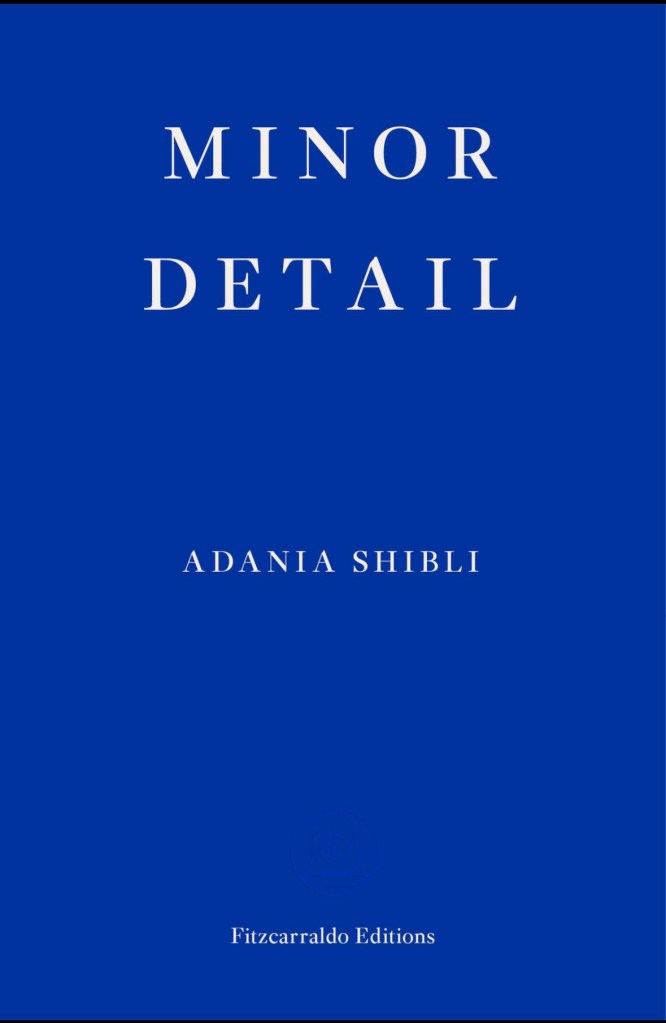
Minor Detail

📍 Palestine 🇵🇸

This novel has two parts. The first one is set in the year 1949, just after the Nakba of 1948. An Israeli officer is scouring the Negev desert for any remaining Arabs or Arab settlements. The blistering heat, a festering infection, dust, sweat do not deter him from going about his day in a regimented way. His single handed determination to find Arabs does lead him to a Palestinian girl, who is forcibly brought back to the Israeli military camp, where she is gangraped by the soldiers, later killed and buried in the sand. The second part, begins in the city of Ramallah, where a young Palestinian woman sets out to investigate this crime that happened 25 years ago. As she juggles her way through the innumerable military checkpoints in the West Bank and on her journey to the desert, she is also juggling anxiety and panic that have become ubiquitous in her life due to the Israeli occupation. Her single handed determination to find details about the gruesome incident despite the unforgiving heat through the lonesome desert unfortunately leads to a tragic penultimate moment.

The book is an uncomfortably simple yet unflinchingly honest prose on Palestine and Palestinian people living under the occupation and an apartheid regime. The first half focusses on the daily mundane activities of the officer over and over again, so much so that the brutality that occurs becomes a part of the same mundane. In the second half, the author literally places us in the passenger seat of the woman as she takes on the perilous journey, and we get to experience first-hand her anxiety, fear and trauma muddled in her determination and longing to unearth the truth. The author deftly shifts the narrative perspective from the Israeli officer whose intention and purpose is annihilation of Palestinians, to the Palestinian woman whose reality is obscured and dependent on the military occupation. Freedom is villainous in one while it’s the prisoner in another. Life is precious in one while for the other, death is a close ally.

Adania Shibli is a Palestinian author and essayist, born in Palestine, who has written three novels and lives between Jerusalem and Berlin. Minor Detail, translated from Arabic to English, by Elisabeth Jaquette, was longlisted for the International Booker Prize in 2021 and was also nominated for National Book Award for Translated Literature in 2020.

As of December 11th, 2023, over 17997 civilians which include 7729 children have been massacred in Gaza since the genocide began on October 7th, 2023. The dehumanisation of the Palestinian people by the entire world has never been more stark and atrocious. The global silence on the oppressed and the selective empathy towards the oppressors is a new abysmal low for our collective humanity. The total disregard towards the ethnic cleansing of the Palestinians, the absolute subservience towards the Israeli propaganda of self defence, the failure to distinguish between antisemitism and zionism is a telling of the dark times we are in. The next time when the world’s so called superpowers call for peace and human rights, you can gawk at the irony of it.

~ JUST A GAY BOY. 🇵🇸

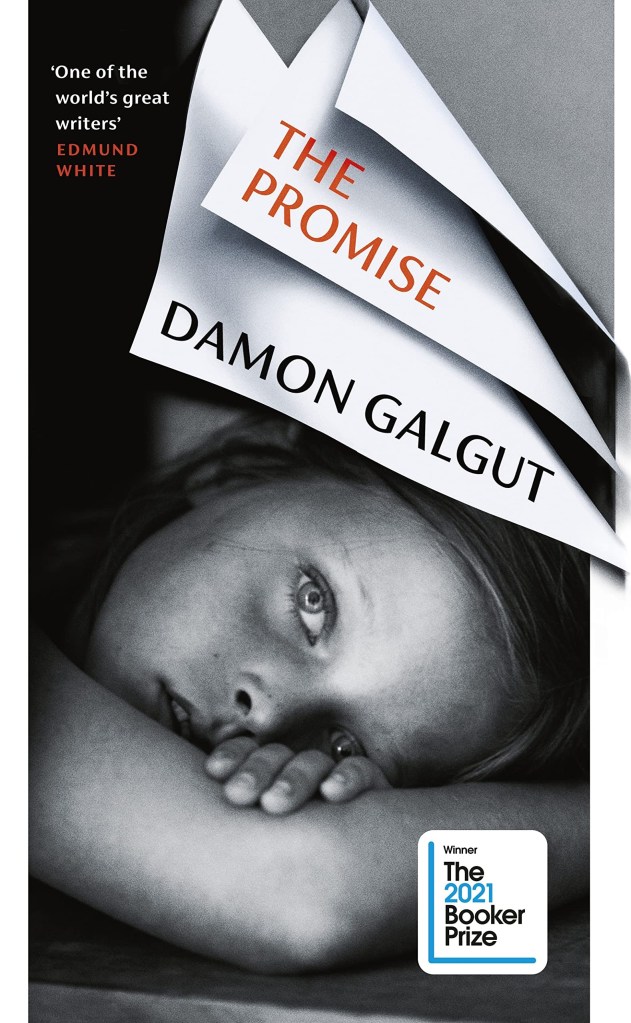
The Promise

The 2021 Booker Prize winning book is piercing and provocative. It delves into our hidden subconscious racist mentalities which can seem subtle and harmless from the outside. The story is about a white South African family, the Swart’s, and is told through four funerals extending over different time periods, encompassing South Africa’s transition out of apartheid. When Rachel Swart is on her death bed, she asks of her husband, Manie, for a promise, wherein he would give the ownership of their current home and it’s accompanying land to their black caretaker/ maid, Salome. This conversation is overheard by their youngest daughter Amor. However, the promise is never kept and is conveniently forgotten or shelved citing legalities. Despite Amor reminding her father and her other siblings, Astrid and Anton, of this promise, nobody bothers to consider it. This betrayal sort of falls as a curse on this family wherein everyone, other than Amor, dies a tragic death. And that’s when, Amor hands over the property to Salome, but is then forced to confront her subdued racism and her inherent fecklessness.

The book focuses deeply on the skewed and troubled interpersonal relationships between the parents and the siblings and between the siblings themselves. The dysfunctional and patriarchal upbringing damages each of the children, as they suffer from insecurity, lack of self worth, and body image, relationship and mental health issues. The author, Damon Galgut, doesn’t shy away from addressing the reader directly in the midst of the narration to point out our prejudices and bigotry. His rendition of complex human emotions and the subliminal satire is ingenious. Restitution when not done on time, need not guarantee absolution.

This book set during the apartheid times has won the prize this year, when we are also witnessing a travel apartheid against South Africa and other African countries due to omicron.

Have we, as a world, learnt anything?

~ JUST A GAY BOY. 😔