The Restaurant of Lost Recipes

📍 Kyoto, Japan 🇯🇵 

In Kyoto’s Shomen-dori, in a nondescript building, lies a quaint restaurant, Kamogawa Diner. Run by the chef Nagare Kamogawa, it specialises in Kyoto cuisine. The food is wholesome and customer satisfaction is of paramount importance to the chef. But there’s something unique about this restaurant and it isn’t its no-frills food. The restaurant also doubles up a food detective agency, which is handled by Nagare’s daughter, Koishi.

People come to Kamogawa Diner not just to relish its simple yet delectable fare, but also in search of lost recipes. Recipes that have been forgotten through the sands of time but its flavour has lingered in their souls forever. Recipes that bring back emotional memories; recipes that remind people of their connections and relationships; recipes that rekindle grief, gratitude and gaiety; and recipes that evoke visceral and spiritual sensations. 

Anybody who comes to the diner for their food detective services is served a set menu by Nagare, followed by Koishi’s meticulous inquiry into the lost recipe that includes its origins, flavours and taste. The discussion often gets emotionally intimate and intense and segues into stories associated with the dish and the impact it has had on the person concerned. After two weeks, when the person comes back, Nagare whips up the exact same recipe which always leaves the guest/s spellbound. He then describes the ways in which he procured the recipe, through his uniquely inventive and intuitive tricks backed by his profound knowledge of Japanese cuisine. 

There are six stories in the book each dedicated to a particular dish. The ones that stood out to me were the following. Olympian Kyosuke Kitano, reminisces about his estranged dad’s nori-ben. Nagare’s version floods him with memories, prompting him to relook at the relationship in a new light. Kana Takeda is a single mother who wants the absolute best for her son, Yusuke. When her son keeps craving for her father’s hamburger steak, with whom she has had no contact in years, she is forced to take Nagare’s help. When she eats Nagare’s hamburger steak, she is reminded of familiar flavours and familial bonds. This experience forces her to forgive herself for events that happened outside of her control and simultaneously makes her confront her ego. Yoshie and Masayuki Sakamoto are struggling to grapple with the loss of their son. They request Nagare a particular Christmas cake to be made that their son loved, but they themselves are unable to remember its taste. Nagare jumps through hoops to make the impossible possible and presents them the cake which brings them a step closer to securing closure and processing their grief.

The Restaurant of Lost Recipes, is a feel good, cozy fiction and is the second part in the series. It’s not necessary to have read the first part, The Kamogawa Food Detectives, to read this one. The book is replete with scrumptious, luscious Kyoto dishes that are described punctiliously, akin to a culinary textbook. The author, Hisashi Kashiwai’s elaborate descriptions of the ingredients, textures, flavours and aromas are bound to make any reader salivate. Tofu, mushrooms, sushi, sashimi, broths, eel, mackerel, sardines, distinct Japanese herbs and the various techniques of cooking are elucidated with great detail in the book. You can literally smell the tantalising scents of dashi and miso wafting through the pages of the book. More importantly, the book becomes a melting pot of unpleasant, unresolved human emotions often brimming at the surface, needing just that extra stirring to achieve some sort of resolution. Since millennia, food has been a source to connect people and bring them together. It warms my heart to note how simplistically the author has achieved this feat in the book. 

The Restaurant of Lost Recipes is appetising till the last page. It feels moreish. So, are you ready to indulge? 

~ JUST A GAY BOY. 🍣🍱🍜
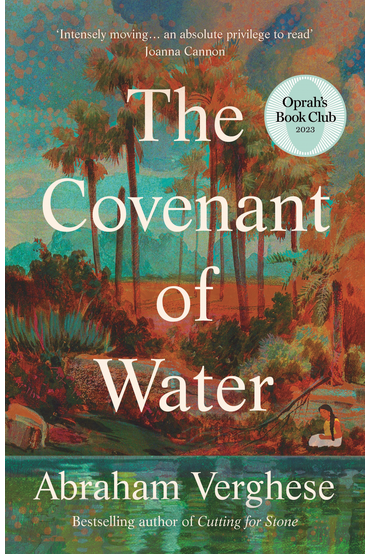
The Covenant of Water

Oprah’s book club pick, is indeed a modern day masterpiece. It’s grand, it’s moving, it’s all encompassing. It’s a historical fiction, a medical mystery and a multigenerational saga. Abraham Verghese’s epic tale, ‘The Covenant of Water’, is all this and so much more. It’s a story that shape shifts its way across generations and timelines, still retaining generosity of the human spirit at its core. It feels like a grandiose gesture on the part of Verghese to have told us this story; something that’s unflinchingly brutal, unapologetically morbid yet when the author writes it the way he writes it, that is to say, so evocatively tethered; it feels tender, considerate and benevolent.

It begins in the year 1900 in the village of Parambil, in Kerala where a twelve year old girl, is about to be married to a 40 year old man. The story progresses, and the girl soon comes to be known as the matriarch, Big Ammachi. She has been married to a man who’s family suffers from a “condition”, the men are afraid of water and the deaths have occurred because of drowning. Nobody is able to explain this strange phenomenon, until Big Ammachi’s granddaughter, becomes a doctor and unearths the mystery behind the “condition”. From 1900 to 1977, the story traverses geographies and politics, medicines and diseases; poetically; introducing us to a plethora of interesting characters and throwing a few riddles along the way. We come across Philipose, Big Ammachi’s son, a writer, who gets lost in his chauvinism and addiction, only to regain his lost ardency. His tumultuous relationship with Elsie, stands out in the prose, due to its fecklessness, its reality rooted in ambivalence and ego. Elsie, is stoic yet yielding, an artist who is wronged by Philipose’s austere callousness and detachment. Elsie’s daughter and Big Ammachi’s namesake, is a passionate doctor, yearning to be a surgeon, who is constantly juggling between her familial attachments, medical duties and heartaches. Her discovery of the “condition“ is a sublime moment in medicine; a moment that stands still for its enormity and humility.

Verghese also acquaints us with a myriad of interesting doctors. Rune Orqvist, a clinician extraordinaire, committed to his profession and people, opens a leprosarium, not just to treat leprosy, but to heal its ostracism, and provide patients with empathy and kindness. Digby Kilgour, misunderstood and misplaced, often lost in predicaments of love and longing, finds his calling in the leprosarium. The moments leading upto it, though seeped in pathos and despondency, ultimately celebrate resilience.

Abraham Verghese has a gift for words. His words, his text, interspersed with Malayalam, are so detailed yet exact. He transports us effortlessly to Parambil, Glasgow, Madras; so much so that it begins to feel like we are witnesses to the happenings in the narrative. A colonial India and an Independent India get beautifully worded; the former has angst, desperation and bondage, while the latter has a bittersweet joyous effervescence. It’s incredible to note the tapestry of the language as he describes the topography of Kerala in the 1900s. Similarly his musings with Madras city are so thorough. Just as geography provides the lush landscape to Abraham’s story, emotions provide a realness to the words. They form the undulating subtext to each of the characters’ struggles in undoing their trials and tribulations. The author provides an incredible emotional arc to each of them. Their internal struggles in coping with their unresolved traumas, and unspoken mental issues often gets reflected externally in their unparliamentary conversations and wrong decisions. This dichotomy of distress gets explored by Verghese subtly and sensitively. Also poignant and piercing are the conversations on caste between Philipose and his lower caste pulayan friend Joppan.

Death and disease form an integral part of this narrative. Since the author is a doctor, medicine gets centre stage in the proceedings. It’s magnificent to note the diagnoses being made in the early 1900s. He doesn’t shy away from getting into the details of the anatomy, physiology and grotesque pathology of it all. The surgical scenes are almost musical, so anatomically accurate. Leprosy, a disease such, that even the pen refrains from writing about it, gets its biggest attention since the medical textbooks. The conscientious decision to portray a disease that’s synonymous with exclusion and abandonment, is humbling.

It is a big book, but an easy read. Abraham Verghese’s words are captivating and commiserating. It’s a story of epic proportions and is told such. Every character adds layers and nuances to this riveting family and medical drama. There lies an undercurrent of melancholy in every page. There remains an enigmatic dread at every turn. However, the author infuses hope even in the moments of despair by singling out compassion, love and kindness in his characters and situations.

The Covenant of Water, is a triumph of human spirit. It leaves you feeling calm and contented long after you have finished reading it.

~ JUST A GAY BOY. 🥹✨

Together Tea

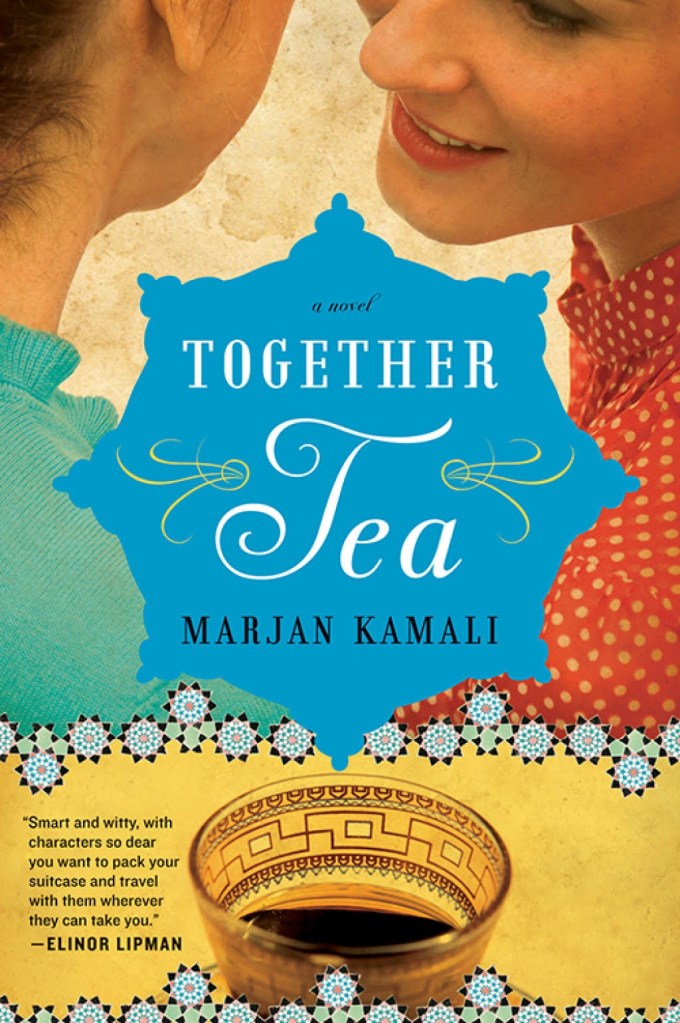
Marjan Kamali’s debut book, Together Tea, is a heartwarming rendition of the dichotomy of displacement and belongingness. The author explores this difficult predicament through an Iranian family and especially through the lives of the mother and daughter, Darya and Mina, respectively. The Rezayis are forced to immigrate to the US after the 1979 Revolution that lead to the establishment of a new Islamic regime in Iran. Darya, who’s an avid mathematician has to forgo her career plans and become accustomed to the life of being a home maker. However, she has her own maths club with two other women of her neighbourhood through which she gets to exercise her love for numbers and complicated equations. She’s also become intent on finding the most eligible husband for Mina. Mina on the other hand is torn between the frustration over her mother’s incessant obsession with her marriage, and the inability to make a conclusive decision regarding her career. Then one day when Darya and Mina decide to go to Tehran despite their family’s reservations about it, they discover each other and their relationship in a new light.

Marjan gives a detailed insight into the family’s lives in 1996 New York City and 1978 Tehran. Through the entire narrative, the author has kept Iran as the real protagonist. She has layered the story with its history, its effervescence and the political upheaval that wronged its very own people. She has captured the conspicuous changes that have occurred in Tehran, pre and post, the Islamic Revolution. The curtailment of women’s rights and their freedom to choose and express themselves, is palpable through Mina’s experience when she goes back to Iran in 1996. Juxtaposed to that is Bita, Mina’s friend living her life to the fullest and scandalously in Tehran, albeit discreetly. The author has handled these conflicting realities in the sincere conversations between Bita and Mina.

But, at the heart of this story, is the tender, often fraught and feckless relationship of Darya and Mina. The author has deftly portrayed the nuances of their hyphenated existence. The feeling of belongingness remains nebulous and unattainable for Darya and Mina. Coming to terms with their displaced identities and the bittersweet actualities of Iran has been done ever so delicately by the author. As with her more popular book, ‘The Stationary Shop of Tehran’, Marjan has infused this book too, with the sights and smells of Iranian culture and cuisine. Indulge in the tantalising aromas of ghormeh sabzi and baklava as Marjan takes you on this sublime sojourn of love, relationships and misplaced longings.

~ JUST A GAY BOY. 🥰

Vera Wong’s Unsolicited Advice for Murderers

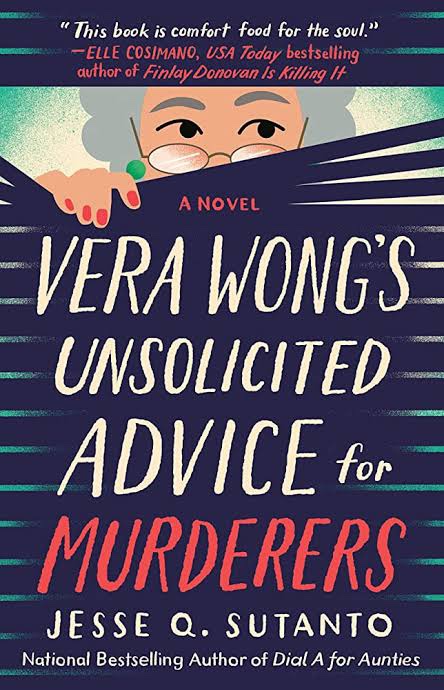
Vera Wong is a punctilious, loquacious sexagenarian who runs Vera Wang’s World Famous Teahouse in the Chinatown area of San Francisco. But here’s the thing, the tea house isn’t famous (even in Chinatown!) and she has no one to talk to (her only son Tilbert ignores her for the most bit). It all changes the day she discovers the dead body of a certain Marshall Chen in her tea house. This attracts a slew of new visitors to her establishment, who also turn out be murder suspects. When Vera fails to get a satisfactory response from the local police, she takes it upon herself to solve the murder mystery.

Amateur sleuth Vera’s list of suspects include Julia, the wife; Oliver, the brother and Marshal’s two other acquaintances Riki and Sana. As she goes about her way in knowing these people and unearthing their motives and intentions; she also starts forming unlikely and unforeseen bonds with them. The camaraderie between all of them develops so organically that Vera feels hesitant to know who the murderer is. Nonetheless her forthrightness makes her go all the way till she actually nabs the culprit.

As much as the book is a taut, crisp whodunnit; it’s also a heartwarming story about human relationships and friendships. The author has written every character with utmost consideration and has spent time in developing each of their mental and emotional arcs. But the stand out has to be Vera Wong. She is fiesty and funny with a pertinent dislike for mendacity. Though she mostly despises youngsters and their nonchalant way of life; she remains the most inquisitive person when it comes to new technology, terminology and even tiktok. The highlight of the book has to be the uplifting narrative, the unassuming feminism and Vera’s pragmatic attack on misogyny and chauvinism. Jesse Sutanto’s emphasis on the need for building social connections and a safe community is so relevant in these current times of a loneliness epidemic.

The book brews over with an abundance of aromatic teas and concoctions. Vera serves us steaming cups of delicious teas for every occasion and emotion. She has a solution for everything in a tea. Well not just that, she cooks up a storm and the pages are laden with scrumptious and luscious Chinese dishes. The author meticulously describes the cuisine such that, you can smell the piquant aromas whilst reading the book.

This murder mystery is one delectable fare. Dig in, as I sip on my tea whilst not spilling any!

~ JUST A GAY BOY. 🧐

Lessons in chemistry

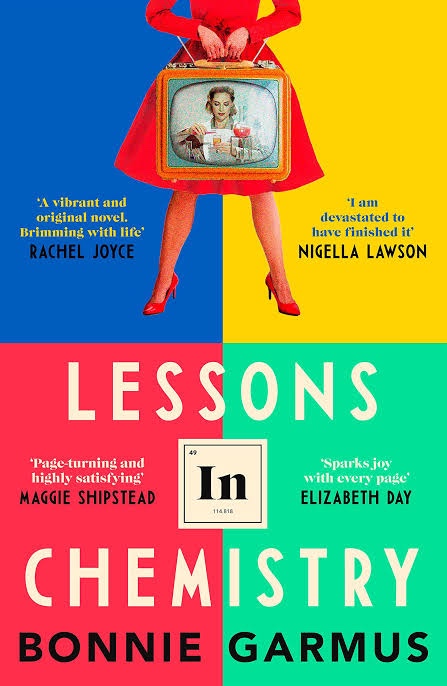
When was the last time you were taught lessons in feminism that was easy breezy, devoid of angst and presented with hilarity? I don’t think ever. It’s rather unfortunate that feminism has to be schooled. Also, this isn’t any kind of shade on all those glorious women who have taught feminism with an angry diatribe. Because clearly the world hasn’t been kind to women since time immemorial. And we get a sneak peak into this unjust scheme of things through the book’s main protagonist Elizabeth Zott. The story is about this fierce woman scientist who is never taken seriously because of her gender. Set in the 1950s America, the book takes a hard look at the subordinate and often demeaning outlook of the society towards women then. Elizabeth is passionate about chemistry and struggles to make herself seen in the overwhelming and dismissive world of men. Adversities and inappropriate men force her to switch her career quite reluctantly. From a scientist she soon becomes a television cooking show host. Despite her rather unconventional approach to anchoring, she becomes very popular and women all across America can’t seem to get enough of her show. Because hers is a first show of its kind wherein women are tutored to think they matter; they are important and they are equal. All this whilst cooking up a storm and diligently doling out chemical equations and reactions.

To say this book is unbridled joy would be an understatement. Elizabeth Zott defies all the societal conventions and expectations and still remains an embodiment of womanhood. Her bold choices which if you examine carefully, were just about what mattered to her and what was convenient; can actually trigger the chauvinists and misogynists. Her decision to have a child without being married, to have a live-in partner, to be an atheist, to question authority are just some amongst many reasons which make Elizabeth Zott unique and her own person. She epitomises freedom, equality, independence, intelligence and her actions can inspire women all across the globe to stand up for themselves, to speak up for other women, and to support one other in solidarity.

Bonnie Garmus, the ingenious author and who’s debut book this is, gives us a taut and crisp story that never falters, never slackens its pace and delves deep into feminism while serving a healthy dose of uncanny, straight-faced humour. The author deftly handles complicated and emotional topics of sexual abuse, rape, patriarchy, and childhood trauma. Garmus gives us this iconic character of Elizabeth Zott, who strives for rationality every step of the way. Not just Elizabeth, the book is peppered with various other notable characters. Be it Mad Zott, her daughter who questions the necessity for the hoopla surrounding her status as ‘a child born out of wedlock’; and Harriet the neighbour who forges a rather quirky friendship with Elizabeth and later the same relationship turns out to be a force of strength for both of them. But the most delightful character of them all, has to be the dog, Six Thirty. Bonnie Garmus humanises the dog giving it the most cheeky one liners.

Lessons in chemistry is one of those rare books that will shock you one moment and make you guffaw the next. The fact that women are equal and should be treated with respect, irrespective of their status and stature shouldn’t be taught, rather it should be a no brainer. But here we are, even in 2023, subjecting them to inequality, disrespect and trauma. This book from Garmus is a necessity, rather a compulsory read for everyone to know these invaluable lessons in humanity.

(Psst..can’t wait for Brie Larson as Elizabeth Zott!)

~ JUST A GAY BOY. 📚 🧪

Chocolat

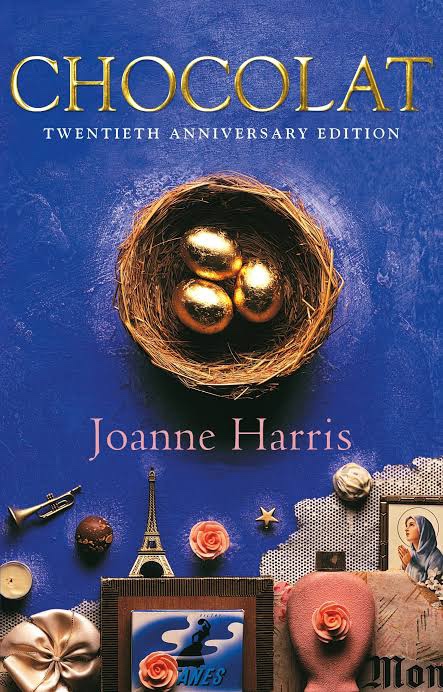
This book by the very acclaimed author, Joanne Harris, left me with quite a bitter aftertaste. The story is about a single mother and chocolatier, Vianne Rocher, who arrives in the quaint French village of Lansquenet-sous-Tannes at the beginning of Lent with her young daughter Anouk. She sets up her chocolaterie, La Céleste Praline, just opposite the village church. Her flamboyance and audacity irks the village priest Francis Reynaud, who takes it upon himself to boycott her business and also sees to it that he publicly denounces her in front of his congregation. However, Vianne goes about her day despite the seething disapprovals from Reynaud and his loyal cronies. In fact, she manages to charm many of the villagers through her irresistible confectioneries and gains their unflinching support, admiration and confidence. This further infuriates Reynaud to the point of psychosis and paranoia leading to spiteful actions ultimately causing his own tomfoolery.

The plot does sound tempting as does the evocative prose on chocolate and decadent French confectionery. However, Joanne Harris gets a little too carried away and forgets trying to reign in her condemnation of the church. Her forever babble on the proclivities of the church and its believers is extremely one dimensional. It almost seems as if the author is pushing forward her beliefs onto the reader. The characterisation of the priest remains a caricature. The various other characters in the book are poorly etched with uninteresting plot lines. For that matter, Vianne’s character itself appears to be quite implausible. Despite a very unconventional and irrational childhood, tethered on anxiety and dubiety, and now facing the villagers’ ire and reproach; she seems to appear overtly secure, unaffected and very mundane. Though the book talks about patriarchy, sexism and gender based violence, none of it is dealt with the nuance and sensitivity that it deserves. If anything, it’s a very kindergarten approach at that. Yes, the language in the book is rich and exquisite. Although, I wish that the author had tempered her story to perfection as Vianne does her des chocolats.

This chocolat is a Cadbury presented as a La Maison du Chocolat. Eat at your own risk.

~ JUST A GAY BOY. 🍫

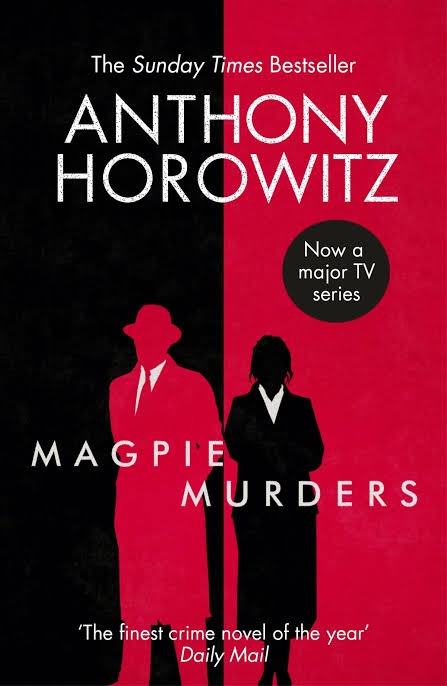
Magpie Murders

This book is so indescribably clever. It’s a book within a book, mystery within a mystery. The plot is incredibly intelligent, so much so that, trying to give a synopsis of it, would be a complete killjoy and a spoiler. After a really long time, I have come across a murder mystery that’s taut, sharp, compelling and a page turner from the word go. The narrative is atmospheric whilst the attention to detail is phenomenal. The language used is rich, articulate and eloquent. And for once, there isn’t a damaged and dysfunctional woman as a protagonist here. Thank you, Anthony Horowitz, for bringing the joy back to reading thrillers and for keeping it so unpredictable. Also, can’t thank Read a Kitaab Bookclub enough for picking this gem as their December Book of the Month. Now, I can’t wait to read the next one in the series; Moonflower Murders.

Must, must read.

~ JUST A GAY BOY. 👏

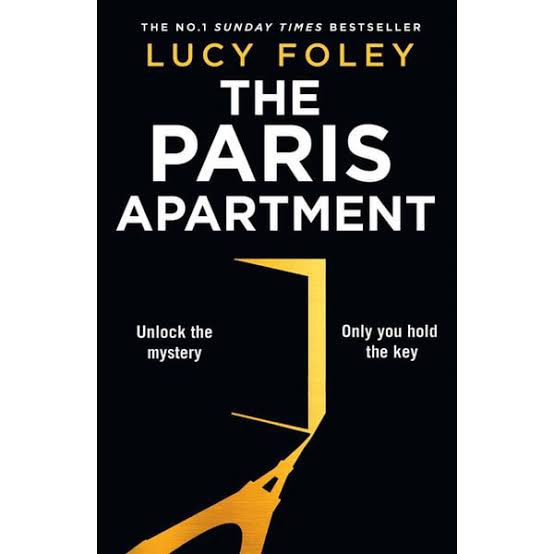
The Paris Apartment

Lucy Foley’s latest is another one of her slow burn thrillers that keeps you hooked till the last page. This time the story is set in the stylishly seductive city of Paris. The main protagonist, Jess, has run away from her dysfunctional and troubled life back in London. She has come to Paris to be with her brother Ben, who has always maintained a distance from her. She lands in Ben’s uber luxurious apartment located in the most upscale neighbourhood of Paris, only to find him missing. As time passes by, Jess begins to worry and starts searching for her brother with whatever little clues she’s able to decipher. She finds herself in the midst of extremely unfriendly and brusque neighbours who vehemently refuse to divulge any details regarding him. She begins to wonder if Ben is even alive and suspects each one of the residents of this Paris apartment, responsible for his disappearance.

The story has all the requisite elements, making it an edge of the seat thriller. The narrative is told from each of the characters’ viewpoint. The setting is atmospheric and deliberately dark. Paris becomes this silent hum in the background and its mysterious beauty etched ever so beautifully in Lucy Foley’s writing. The climax, just like her previous book, The Guest List, did make me wanting for more; but nonetheless, it’s definitely worth the read.

~ JUST A GAY BOY. 🫣

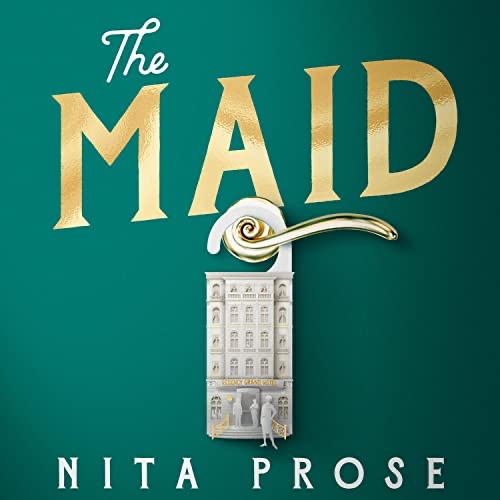
The Maid

This story is so much more than just a murder mystery. At the heart of it, it’s a story that encapsulates the human spirit; celebrates humanity and drives home the message that all of us are the same and kindness matters to each one of us. The protagonist is Molly Gray, a maid at the Regency Grand Hotel. She’s proud of her job and takes it seriously. Her personality and traits show similarities with Sheldon Cooper from TBBT. She finds it difficult to read people and surroundings, interpret their emotions, and decipher sarcasm. Hence she has a structure to her day and goes about it in the most meticulous manner. One day, when Molly discovers the dead body of a wealthy businessman, Mr Black, whilst cleaning his suite; she becomes caught up in the aftermath of the event, soon becoming the prime murder suspect.

Throughout the narration, Molly comes across resilient and determined. Despite her inability to understand the world around her, which does chip away at her confidence and makes her question her self worth; she stands tall and never lets go of her pride and dignity. Her command of the English language coupled with requisite politeness, makes Molly Gray, the most lovable character.

Kudos to the author, Nita Prose, for portraying such a delightful character like Molly and centring her in the midst of a murder mystery. Through her, the author makes a strong case for, how assumptions based on someone’s appearance and station can be detrimental to them. The narration is fast paced and by the time it’s the end, you are rooting for Molly and the real murderer remains just an afterthought.

“It’s not your station in life that matters. It’s how you conduct yourself that counts.”

“Everything will be okay in the end. If it’s not okay, it’s not the end.”

~ JUST A GAY BOY. 🤗

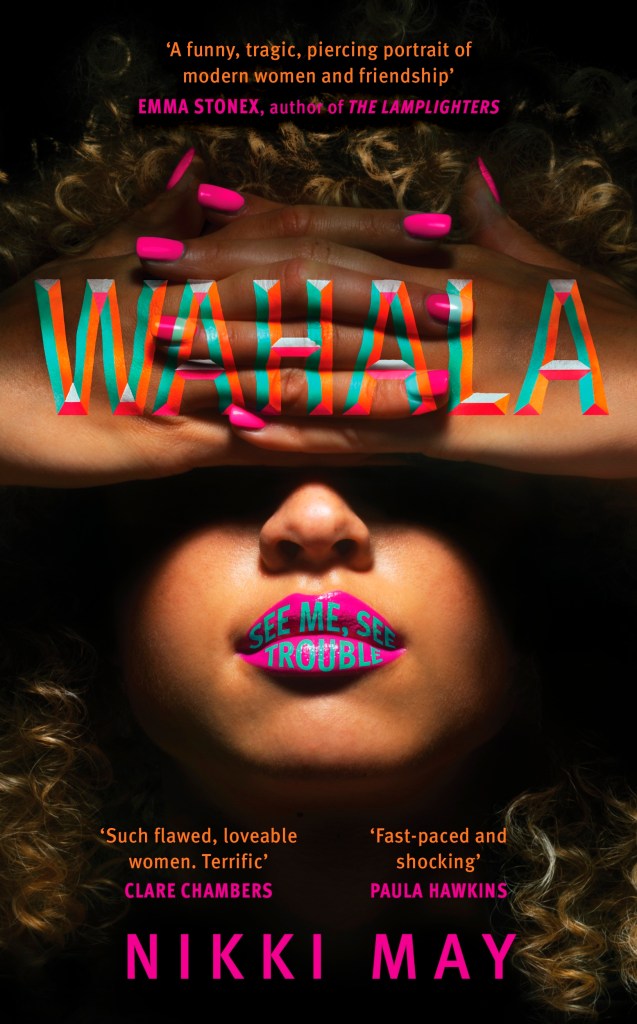
Wahala

Wahala in Nigerian Pidgin (Naija) means trouble. The three central characters of this book are mixed race women, Anglo-Nigerian; Simi, Boo and Ronke; who live and work in London. Simi and Boo are married to white men, Martin and Didier respectively; while Ronke’s boyfriend, Kayode is Nigerian. Enter wahala aka Isobel, a friend of Simi’s, who is now hell bent on being ‘best friend’ with each of the three women. Isobel is adept in creating a world of misunderstandings and the women find themselves embroiled in this mayhem. What had seemed to be a smooth and perfect friendship pre-Isobel, had now morphed into an ambiguous, erratic and frustrating experience lacking mutual trust and respect, post-Isobel. Isobel becomes this catalyst in exposing their dark secrets, emotional infractions and lies. As a master puppeteer, she manipulates their insecurities and fears and makes them dance out of their friendships and relationships.

Nikki May, writes this captivating story about flawed friendships with brutal honesty. She keeps it emotionally fertile while exploring its various psychological aspects. She drives through the point that just because a friendship has survived many years; it needn’t be the best. For that matter, any relationship that hasn’t nurtured a feeling of equality amongst its members, is destined for an upheaval.

The book is full of rich Nigerian culture. Food forms an important part of the narration and it has been written in the most visually delectable manner. At the end of the book, recipes for the most famous Nigerian dishes have been mentioned too. Though the climax felt a bit hurried and a tad dramatic, the book in itself is striking.

Of course, we don’t need an Isobel in our lives to cause Wahala and hence realisations. Maybe a keen insight would do!

~ JUST A GAY BOY. 👿