

📍 Iraq 🇮🇶
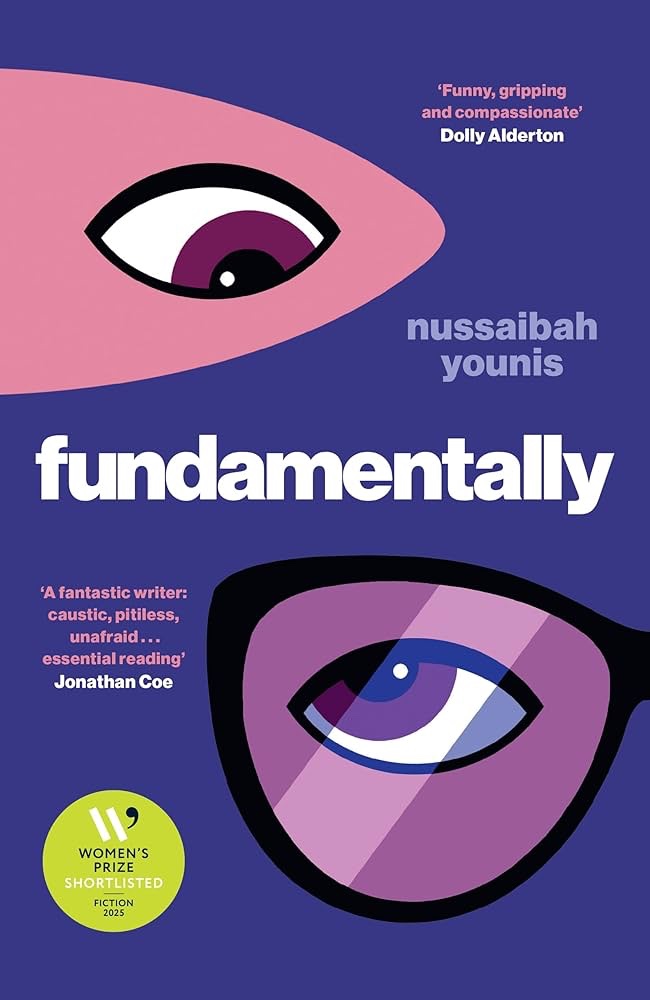
Dr Nadia Amin, a British Pakistani professor of criminology living in London, gets asked by the UN to join their new agency UNDO in Baghdad, aimed at deradicalisation and rehabilitation of ISIS brides. At this juncture, Nadia’s personal life is in disarray. Her relationship with her mother is fractured and precarious following Nadia’s apostasy. What started as a friendship with Rosy evolved into a “situationship” only to devolve into an unrequited love from Nadia’s end. While she is caught in the midst of this frustration, emotional chaos, maternal abandonment and an existential ennui, she decides to undertake the Baghdad assignment, hoping that this humanitarian cause would bring her purpose and fulfilment.
Upon her arrival at the UN Headquarters in Baghdad, Nadia finds herself on unfamiliar terrain and often lacks crucial contextual knowledge. She is surrounded by her subordinates who question her capabilities and remain indifferent and unsupportive. Her boss, Lina, with her quirky avian obsessions, expects Nadia to demonstrate exceptional competence while Lina herself remains opaque and obtuse in her suggestions and instructions. All she is concerned with is UNDO outperforming other UN departments and proving to the international and Iraqi media that their rehabilitation program has been a successful endeavour.
As Nadia immerses herself into the program and starts engaging with ISIS women, both Iraqi and European, she confronts the depth of their indoctrination. Many were radicalised at a young age by ISIS men peddling a violently distorted version of Islam. It is here that Nadia encounters Sara, a fierce and volatile British Pakistani woman with whom she forms an immediate bond. Sara’s journey from London to Iraq was undertaken willingly, only to later realise the magnitude of her betrayal. Her daughter by one of the ISIS men gets legally separated from her after the fall of ISIS and is sent to live with the man’s parents somewhere in Iraq. Nadia takes it upon herself to reunite Sara with her child without fully apprehending the dangers behind this mission, even if it means Nadia losing her coveted UN job and becoming an international fugitive.
Nussaibah Younis crafts a gripping narrative that takes us on a journey from the bureaucracy of the UN, the geopolitics of Iraq to the mindless savagery of ISIS. She highlights the covert corruption, performative humanitarianism and rigid hierarchies present even in international humanitarian agencies. Sara’s character isn’t the most likeable but her personality rightfully reflects the psychological conditioning and the internalised misogyny, violence and terror justified in the name of religion. Her story is a chilling reminder of the consequences of voluntarily surrendering one’s agency to fanatics and fanaticism wherein the radicalised victim starts humanising, rationalising and normalising blatant violations and atrocities.
Nadia is the quintessential star of the book whose nonchalant chutzpah, determination, compassion and resilience are contrasted with her low self-esteem, maladaptive coping, compulsiveness and impetuosity. She carries unprocessed trauma, refuses to accept uncomfortable truths about relationships, resorts to alcohol and casual sex to quell the internal dissonance, yet never relinquishes sincerity and integrity. Nadia’s curiosity and generosity draw her towards people and situations that exploit and manipulate her. This indirectly helps her gain emotional maturity and the author charts it with such sensitivity and subtlety, the proof of which gets revealed at the end of the book when Nadia is faced with an exceptional betrayal.
Another character who left a lasting impression is Farris. In his brief appearance, he embodies a kind, benevolent Muslim man respectful of women and humanity alike. Characters like Farris are vital; they reflect the real face of Islam, a religion that has been wronged by zealots and Islamophobes.
Dr Nussaibah Younis, an Iraqi-Pakistani living in London, is a peacebuilding practitioner and a globally recognised expert on contemporary Iraq. Her writing is crisp, controversial and considerate. The unmissable humour, often dark, sometimes satirical is deftly woven into the book. Rather than resorting to stereotypes, she insists on nuance, even in the bleakest moments. The climax delivers a startling twist that injects an urgency and a muted sensationalism into the story. My sole reservation lies with the ending which felt a tad improbable and discordant with the otherwise uncompromising authenticity of Younis’s voice. I wonder if she was mollycoddling the readers of the actuality.
Fundamentally which was shortlisted for the 2025 Women’s Prize for Fiction, is about fundamentalism and fundamentalists who hack your conscience to further their personal and political agendas. In today’s world, fundamentalists are no longer confined to terrorist organisations, they increasingly masquerade as saviours of religion, democracy and humanity. We are being governed by fundamentalists whose intentions are rooted in fascism and capitalism. These aren’t just politicians but ordinary citizens too who have been radicalised by majoritarian narratives that claim historical grievance while actively othering and annihilating minorities and vulnerable communities. Fundamentally, any extremism that thrives on fear-mongering and propaganda, is single-leader-centric, and demands unquestioning allegiance is a gateway to monarchy, totalitarianism and capitalist terrorism.
~ JUST A GAY BOY. 🤨
 the shiny diaries