

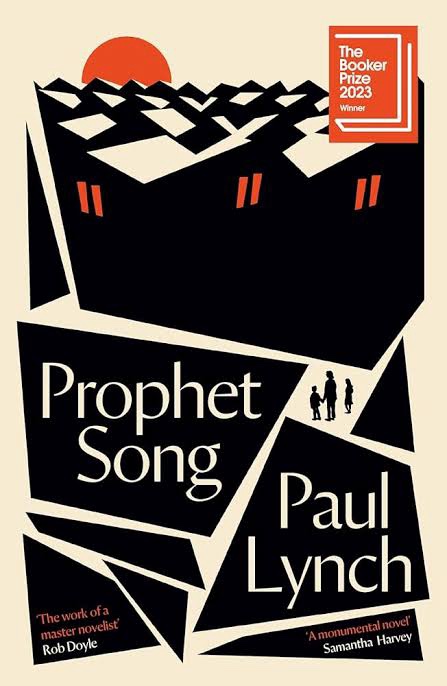
Winner of the 2023 Booker Prize, Prophet Song is deliberately dark and perversely poignant. Set in contemporary Ireland, the story is about Eilish Stack, who is a molecular biologist by training and working in biotech in Dublin. She has four children, one being an infant, Ben. The story begins when Larry, her trade unionist husband is taken in for questioning by government officials. While Eilish receives no news about Larry despite her umpteen attempts to contact him or the officials; the country is soon descending into a political quagmire. A right wing “National Alliance Party” stakes claim to be the government and begins attempts to fight the anti-nationals and the rebels. Totalitarianism sees a rapid ascent and fascism soon starts dominating every aspect of civilian life. Freedom becomes conditional, defence forces become authoritarian, paving the way for a deadly civil war.
Eilish remains forever worried about Larry, wondering whether he’s even alive. Her eldest son Mark joins the rebels and soon disappears. Her other son Bailey, remains angst ridden and obstinate. Her daughter Molly remains her only support through this ordeal. As Eilish battles her anxieties, her insecurities, her losses, her grief, her helplessness, her hopelessness, and simultaneously care for her infant and a rapidly progressing dementia suffering father; she needs to make a decision if she has to leave the country or cross the borders illegally; as the society around her continues to disintegrate, and life becomes an endless cacophony of gunshots, sirens and missile strikes.
Paul Lynch’s prose can be generalised as an urgent and compelling commentary on the steady rise of totalitarianism in the world. His writing has a claustrophobic atmosphere, a sense of foreboding and is suffused with an unrelenting uneasiness. Lynch evocatively translates Eilish’s impuissance and anxiety into his words and onto every page. The scenes where Eilish expectantly awaits Mark’s phone call and when she goes hospital to hospital in search of her injured child are especially gut wrenching, depicting an awful sense of dread. The writing almost feels like a stream of consciousness; there are sections and chapters in the novel but no paragraphs. The dialogues between characters are without any punctuations; so much so that, there’s no difference between a thing said and a thing thought.
Now, Prophet Song may have been set in a dystopian Ireland, but closer home dystopia may soon become a reality. Economic development has been used as a tool to conceal fascism and autocracy. Jingoism and zealotry are being given a free run while any form of dissent is being deemed antinational and subsequently penalised. If you are one amongst many who still chooses to look the other way as this is happening right now, and thinking ‘this won’t/ will never affect me’; read Prophet Song. Paul Lynch was probably imagining an Ireland like that, but we don’t have to imagine it.
~ JUST A GAY BOY. 👿
 the shiny diaries