Grey Bees

📍 Ukraine 🇺🇦

Andrey Kurkov, is a prolific Ukrainian author and independent thinker who writes in Russian. He is the author of 19 novels; the latest being Grey Bees, which has been translated by Boris Dralyuk. The story is about a middle aged, disabled pensioner and devoted beekeeper, Sergey Sergeyich, from the war torn region of Donbas in Eastern Ukraine. He is living in this three street village, Little Starhorodivka, along with its only other resident, Pashka, which falls in the grey zone, between the Ukrainian army on one side and the separatists supported by the Russians on the other side. Sergeyich has become accustomed to living without electricity; making do with whatever food is available. Bees are the only thing he truly cares for. Now with spring approaching, he needs to take the bees away from all the bombing and shelling happening in and around his village. As he sets off on this journey, which soon becomes an adventure, in the pursuit of providing his bees a secure environment, he lands in the Russian controlled territory of Crimea. His Interactions with a Crimean Tatar family whilst in the Crimean village of Albat, who provide him and his bees shelter, make the Russian officials suspicious of his intentions. Despite the bureaucratic surveillance on his activities, he takes it upon himself to help a young Tatar girl cross the Crimean border during the return journey to his home, in the grey zone.

Complex political decisions regarding geographical issues need not colour human emotions. The characters in the book have their humanity intact despite a ravaging war surrounding them. The author beautifully constructs their simple emotional arcs, at times peppering it with wry, dark humour. Kurkov takes times to build the narrative. He makes it atmospheric by indulging us in the mundane, boring yet terrifying life of Sergeyich. The moments at Border control and various checkpoints are so nerve racking, and described so viscerally, that you can feel Sergeyich’s anxiety and panic in you. That’s the brilliance of Kurkov. Through the characters of Aisylu and Bekir, he highlights the plight of the marginalised group of Crimean Tatars under the Russian regime, who are an indigenous people of Crimea. Not to forget, the honeybees are as much a central character in the book, as Sergeyich is. The author weaves in their life cycle, behaviour and discipline into the narrative in the most scientifically accurate and fascinating manner.

It’s evident that the whole of Ukraine has become a Donbas now. In a flash, citizens have become refugees. Because one day, a megalomaniac called Putin decided to assert his autocratic zealotry over the region. Not just Ukraine, there are so many countries (Yemen, Iraq, Syria, Afghanistan, Palestine) and regions (Tigray in Ethiopia) that are devastated by war. Wars have happened since time immemorial. Will this present war too become a piece of history for posterity? Or will we learn and strive to prevent such wars from happening again? Will we try to be humans first?

~ JUST A GAY BOY. 😓
Manifesto

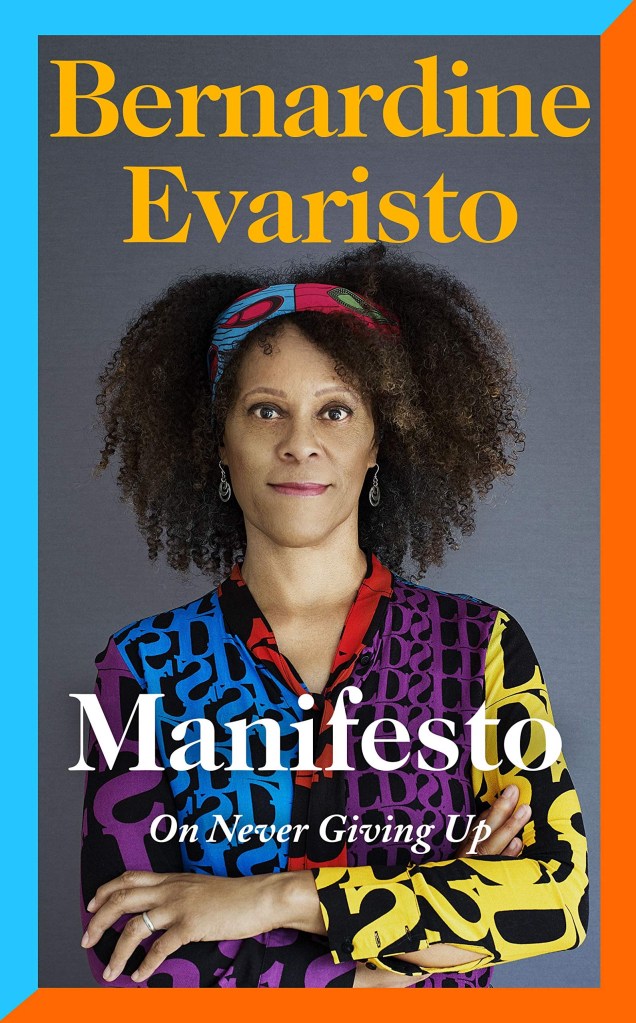
After having read the brilliant “fusion fiction” book, GIRL, WOMAN, OTHER by the astute and dynamic writer, Bernardine Evaristo, which was a vibrant and unapologetic narrative on race, intersectional feminism, ageism, gender, sexuality told by a plethora of Black women; it completely shifted my understanding about the said things. The book also won the Booker Prize in 2019 and hence she became the first Black woman and first Black British person to have won the award. I personally feel, Bernardine Evaristo, is one the best writers of our times who doesn’t shy away from decoding false narratives surrounding complex sociopolitical issues. Her unabashed truth telling jolts us from our stupor and makes us see the world through a more humane lens. And now, the writer’s latest book is a memoir manual, wherein, she talks about her life from growing up years to relationships to her writing methodology, in the most candid manner. The book is divided into seven chapters and through this she takes us on this journey of self exploration and growth. Growing up as a mixed race woman in a white-washed London society of the 1960s and 70s, was challenging. However her bold and nonconformist attitude made her convert these challenges into moments of opportunities. She says, up until the Booker Prize win, there were people who never took her seriously despite having published seven books by then. While describing her flings and romantic relationships she doesn’t shy away from taking ownership of her flaws in a particular relationship, and at the same time also acknowledges how each relationship, whether good, bad or ugly; has shaped her to be the woman she is today. She ponders over various aspects of her sexuality from being a lesbian lover to currently being married to a man. A greater part of the book, she meticulously describes her writing process; how she evolved from being a poet to a prose and fiction writer. She brazenly admits to having insecurities and fears regarding her writing. It took years and lots of self assurance and self belief to negate her own scepticism. As she elucidates the process of owning her agency on her creativity, it serves as a manual for all the writers and creative professionals who are stuck and keep questioning their ability to write and create.

Memoirs can be tricky. It can become very indulgent. It’s always a fine line to tread from it not seeming like a boastful venture. However the ingenious and modest, Bernardine Evaristo, does this job with utmost precision. As you read the book, through all her experiences and expertise, you get a sense of humility and grace that’s at the core of her writing and existence. This isn’t one of those flippant and narcissistic autobiographies; instead, it’s intelligent, intuitive and incandescent. You come out of it feeling restful and seen.

~ JUST A GAY BOY. 🤓

The Tale of Aypi

Country : Turkmenistan 🇹🇲

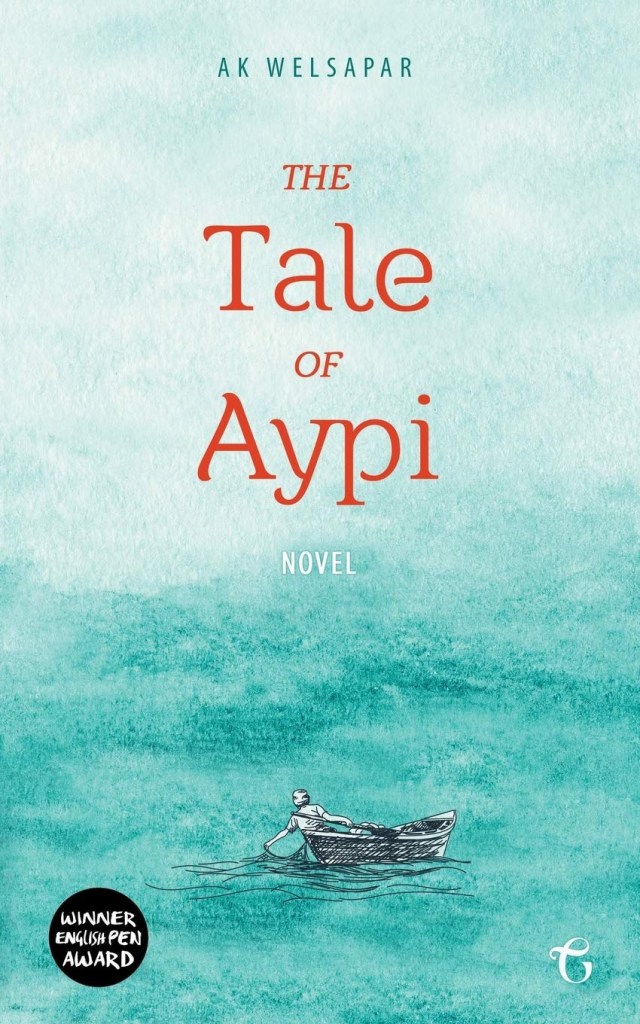
This book set in Turkmenistan, focusses on the lives of the inhabitants of a small Turkmen fishing village located on the banks of the Caspian Sea. As the story begins, the people have been ordered by the central government to relocate to a nearby city and have been forbidden from fishing, since the government plans to build a hospice in the village along the coast. As the villagers acquiesce to the pressure, and lament on their loss; there’s one defiant man though, Araz, who takes it upon himself to fight the authorities against their autocracy, and also his own village folks against their docility and subservience. Araz’s story is interwoven with the fable of Aypi. Aypi was a girl from the same village known for her beauty and is wrongfully killed for her so-called transgressions then. Now, centuries later, Aypi comes back to haunt the villagers and confronts their unconcerned, chauvinistic and vapid behaviours. Through Aypi, the author depicts society’s nonchalant normalisation of patriarchy and misogyny. With its myriad other characters and their interpersonal dialogues and arguments, the book constantly debates the traditional versus modern ways of living.

While the events in the book take place during the country’s Soviet past, the author’s depiction of its authority then, is as much a social commentary on modern-day Turkmenistan’s totalitarian governance. This book is one of the first from Turkmenistan to be translated into English (by W.M. Coulson) for the international market. Despite being the country’s most internationally recognised and appreciated authors, A K Welsapar’s books have been banned in Turkmenistan. He was exiled in 1993 and currently lives in Sweden.

Though this story is about Turkmenistan, one can draw parallels to current day India. That’s the most disturbing bit.

~ JUST A GAY BOY. 😓

The Maid

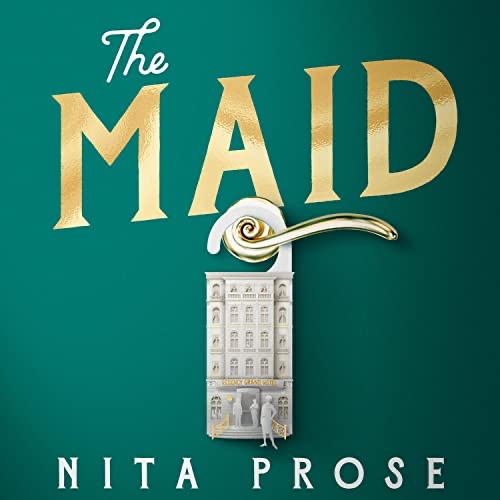
This story is so much more than just a murder mystery. At the heart of it, it’s a story that encapsulates the human spirit; celebrates humanity and drives home the message that all of us are the same and kindness matters to each one of us. The protagonist is Molly Gray, a maid at the Regency Grand Hotel. She’s proud of her job and takes it seriously. Her personality and traits show similarities with Sheldon Cooper from TBBT. She finds it difficult to read people and surroundings, interpret their emotions, and decipher sarcasm. Hence she has a structure to her day and goes about it in the most meticulous manner. One day, when Molly discovers the dead body of a wealthy businessman, Mr Black, whilst cleaning his suite; she becomes caught up in the aftermath of the event, soon becoming the prime murder suspect.

Throughout the narration, Molly comes across resilient and determined. Despite her inability to understand the world around her, which does chip away at her confidence and makes her question her self worth; she stands tall and never lets go of her pride and dignity. Her command of the English language coupled with requisite politeness, makes Molly Gray, the most lovable character.

Kudos to the author, Nita Prose, for portraying such a delightful character like Molly and centring her in the midst of a murder mystery. Through her, the author makes a strong case for, how assumptions based on someone’s appearance and station can be detrimental to them. The narration is fast paced and by the time it’s the end, you are rooting for Molly and the real murderer remains just an afterthought.

“It’s not your station in life that matters. It’s how you conduct yourself that counts.”

“Everything will be okay in the end. If it’s not okay, it’s not the end.”

~ JUST A GAY BOY. 🤗

Wahala

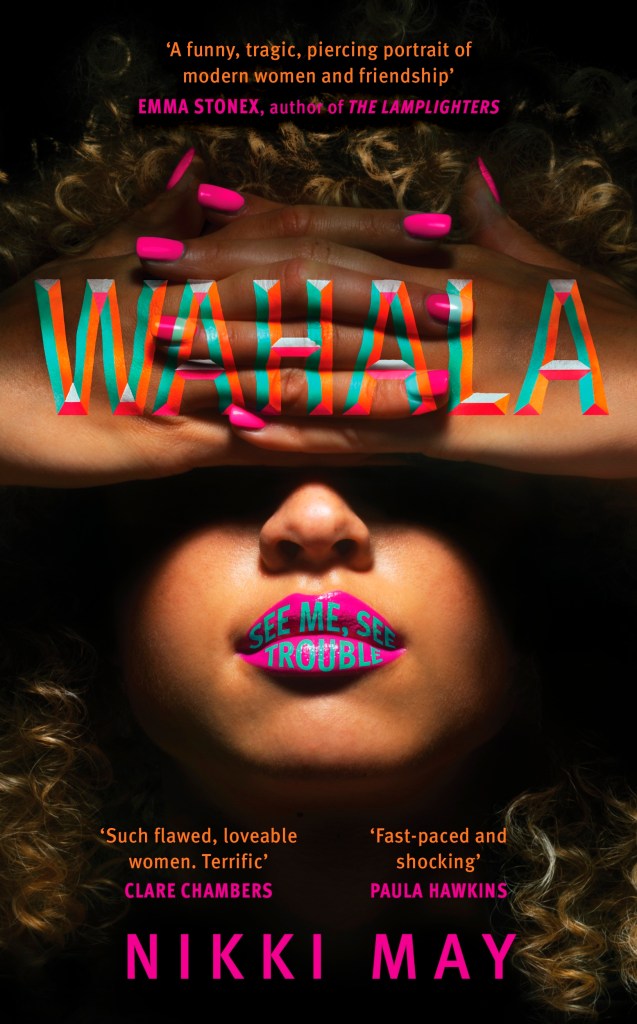
Wahala in Nigerian Pidgin (Naija) means trouble. The three central characters of this book are mixed race women, Anglo-Nigerian; Simi, Boo and Ronke; who live and work in London. Simi and Boo are married to white men, Martin and Didier respectively; while Ronke’s boyfriend, Kayode is Nigerian. Enter wahala aka Isobel, a friend of Simi’s, who is now hell bent on being ‘best friend’ with each of the three women. Isobel is adept in creating a world of misunderstandings and the women find themselves embroiled in this mayhem. What had seemed to be a smooth and perfect friendship pre-Isobel, had now morphed into an ambiguous, erratic and frustrating experience lacking mutual trust and respect, post-Isobel. Isobel becomes this catalyst in exposing their dark secrets, emotional infractions and lies. As a master puppeteer, she manipulates their insecurities and fears and makes them dance out of their friendships and relationships.

Nikki May, writes this captivating story about flawed friendships with brutal honesty. She keeps it emotionally fertile while exploring its various psychological aspects. She drives through the point that just because a friendship has survived many years; it needn’t be the best. For that matter, any relationship that hasn’t nurtured a feeling of equality amongst its members, is destined for an upheaval.

The book is full of rich Nigerian culture. Food forms an important part of the narration and it has been written in the most visually delectable manner. At the end of the book, recipes for the most famous Nigerian dishes have been mentioned too. Though the climax felt a bit hurried and a tad dramatic, the book in itself is striking.

Of course, we don’t need an Isobel in our lives to cause Wahala and hence realisations. Maybe a keen insight would do!

~ JUST A GAY BOY. 👿

The Promise

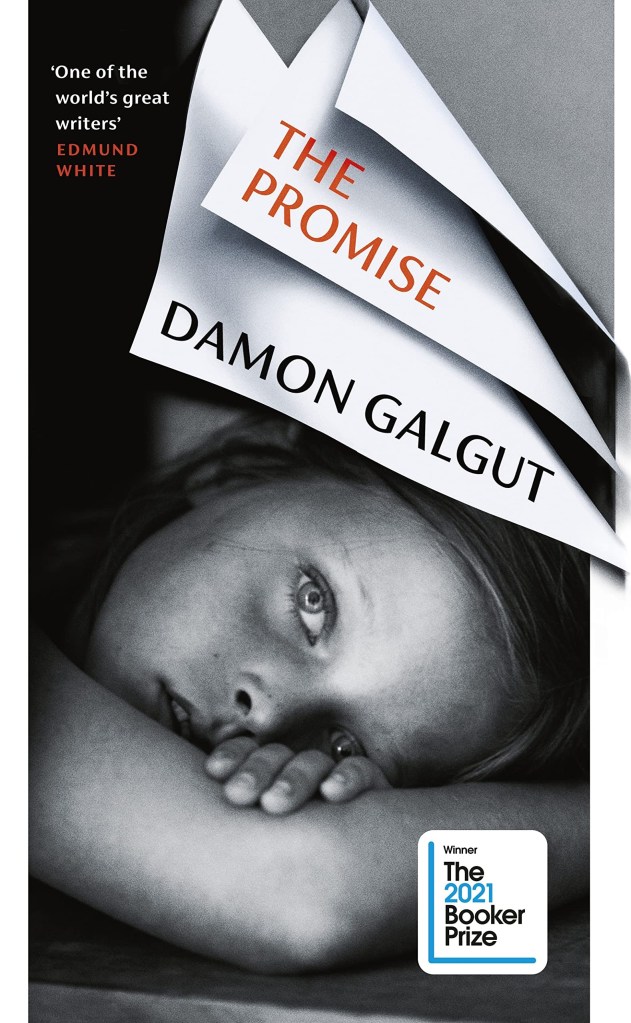
The 2021 Booker Prize winning book is piercing and provocative. It delves into our hidden subconscious racist mentalities which can seem subtle and harmless from the outside. The story is about a white South African family, the Swart’s, and is told through four funerals extending over different time periods, encompassing South Africa’s transition out of apartheid. When Rachel Swart is on her death bed, she asks of her husband, Manie, for a promise, wherein he would give the ownership of their current home and it’s accompanying land to their black caretaker/ maid, Salome. This conversation is overheard by their youngest daughter Amor. However, the promise is never kept and is conveniently forgotten or shelved citing legalities. Despite Amor reminding her father and her other siblings, Astrid and Anton, of this promise, nobody bothers to consider it. This betrayal sort of falls as a curse on this family wherein everyone, other than Amor, dies a tragic death. And that’s when, Amor hands over the property to Salome, but is then forced to confront her subdued racism and her inherent fecklessness.

The book focuses deeply on the skewed and troubled interpersonal relationships between the parents and the siblings and between the siblings themselves. The dysfunctional and patriarchal upbringing damages each of the children, as they suffer from insecurity, lack of self worth, and body image, relationship and mental health issues. The author, Damon Galgut, doesn’t shy away from addressing the reader directly in the midst of the narration to point out our prejudices and bigotry. His rendition of complex human emotions and the subliminal satire is ingenious. Restitution when not done on time, need not guarantee absolution.

This book set during the apartheid times has won the prize this year, when we are also witnessing a travel apartheid against South Africa and other African countries due to omicron.

Have we, as a world, learnt anything?

~ JUST A GAY BOY. 😔

The Sanatorium

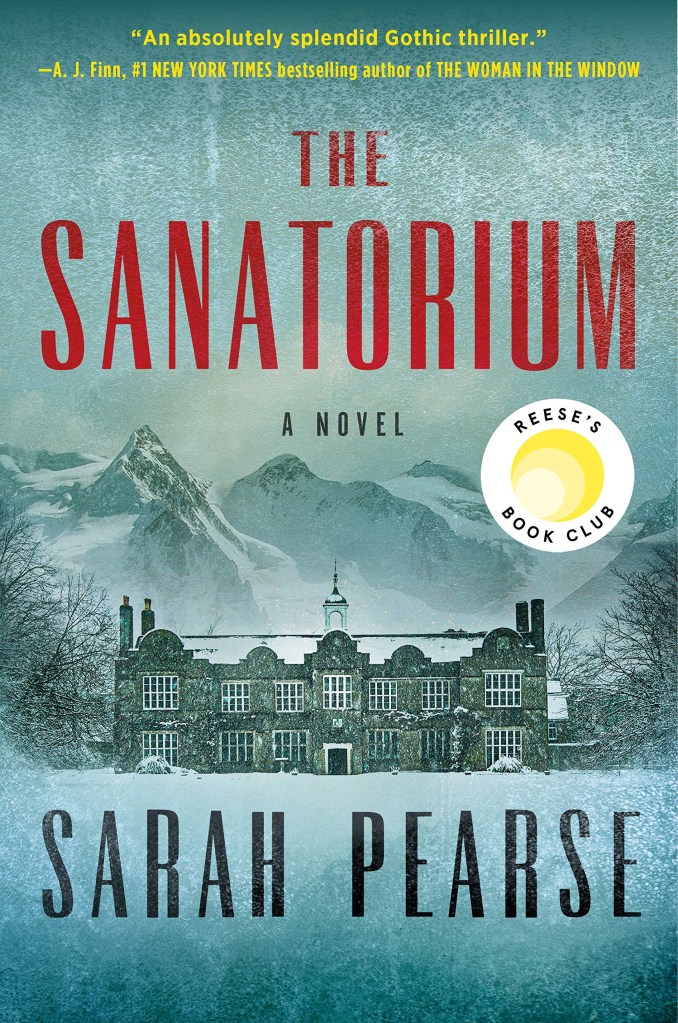
Another lengthy and laborious read from the thriller stack of Reese Witherspoon’s book club, Hello Sunshine. With this, I am beginning to doubt her choices when it comes to thrillers. Even her previous picks were duds. In this book, the protagonist, Elin, a detective in the UK, who is battling PTSD associated with the death of her younger brother; is now on a vacation with her boyfriend, Will, in a luxury hotel in the Swiss Alps. The hotel has a dark and sinister past. Before the renovation, it used to be a sanatorium for Tuberculosis patients where some questionable practices were carried out. However, Elin and Will are here in the hotel for the engagement party of her other brother Isaac with Laure. As the weather becomes increasingly harsh with an impending blizzard, Laura disappears suddenly on the eve of the engagement. This is followed by a spate of brutal murders and Elin takes it upon herself to find the murderer.

Elin, does the most shoddy job as a detective. Also her intuitions are forever wrong. Her obstinacy to remain deliberately difficult because of the traumatic past, makes her the most annoying character. Will comes across as a narcissist who keeps gaslighting Elin. It’s appalling to note that the author, Sarah Pearse, has allowed it and has shown Elin to be accepting of it.

It’s become a trend to put troubled and damaged women as protagonists of thrillers. Very few authors are able to do justice to it and hence assimilate the personal traumas with the thriller plot line. This story should have been buried in the blizzard itself. It’s so ridiculous and drab, which makes me wonder at my own weird compulsion to having completed it.

Avoid!

~ JUST A GAY BOY. 🤢

SPARKS LIKE STARS

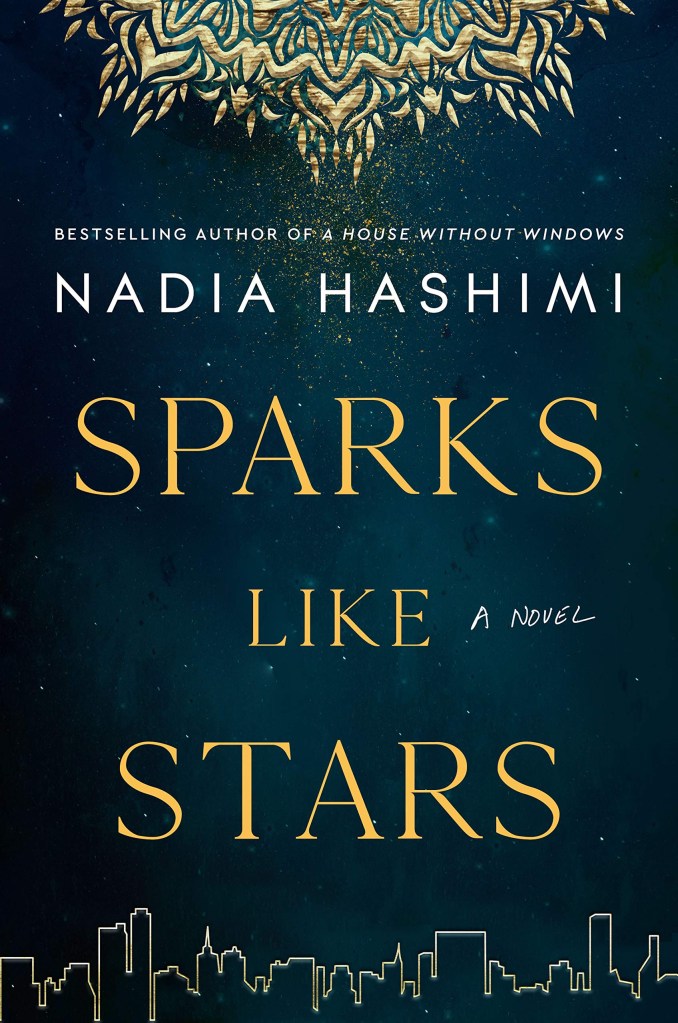
This book is about Afghanistan, it’s people and their truths. It’s never easy to talk about a country decimated by war and various vested interests which have given rise to the Taliban. So when Afghan American author and paediatrician, Nadia Hashimi, writes, you sit up and take notice. She has authored several books on Afghans; but in this recent release, she speaks about the trying and traumatic life of a person escaping death and war. The first half of the book, shows the protagonist Sitara, as a ten year old surviving the military coup against the Afghan government that happened in 1978 Kabul. She knows her family is dead and with the help of a palace guard Shair, she lands up with Antonia, an American embassy worker, who helps her escape from Kabul to the United States. The story then fast forwards to 2008 in the second half, where Sitara has a new name and is a practising onco-surgeon in NYC. However, after so many years, when a chance encounter happens with Shair who is now her patient, it brings back the pent up rage, hidden grief and all the unspeakable traumas of the past. She now has to navigate her present by acknowledging her desire to reclaim her family and heritage, which leads her back to Kabul.

The author, through Sitara, paints a moving picture about survivors guilt. The emotional turmoil of it can be seen in every aspect of her life. The book depicts the vibrant culture of the 1970s Afghanistan which is heartwarming. But it’s gut wrenching to think of the present day grim situation. The world has watched in silence as a beautiful country stands ruined, and it’s convivial people wronged.

~ JUST A GAY BOY. 😞

A Slow Fire Burning

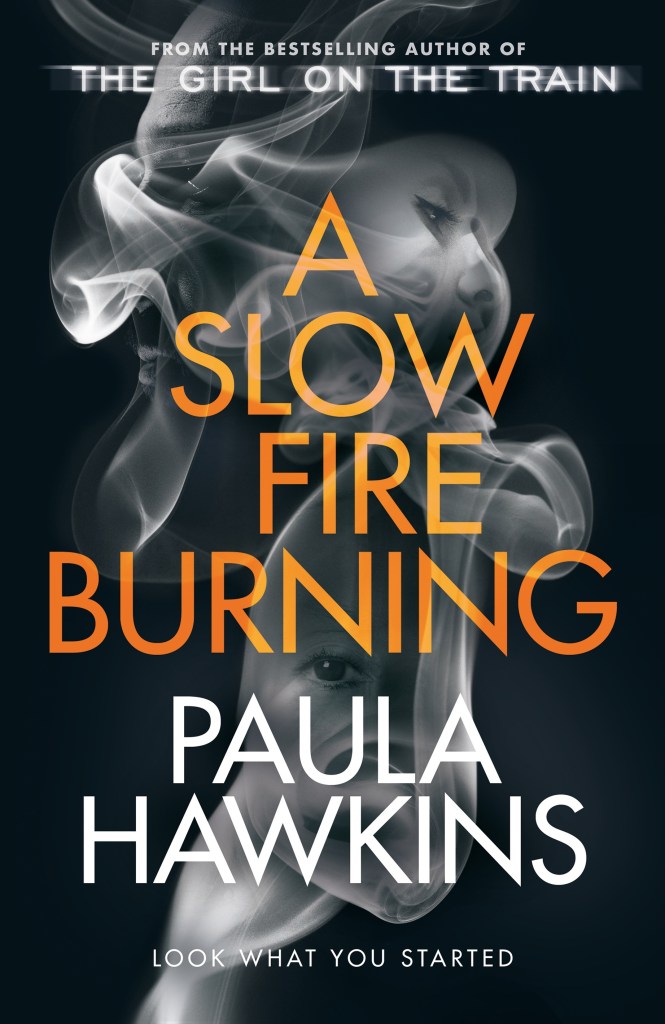
Paula Hawkins, author of The Girl on the Train and Into the Water, is back with another edgy and disturbing murder mystery-cum-psychological thriller. A young man, Daniel, gets brutally murdered in a London houseboat and now there are three suspects. Laura, his one night stand, who was last seen with him; Carla, his aunt; and Miriam, his nosy neighbour living on an adjacent houseboat. As the story unravels, so does the dark and damaged lives of the three women, intersecting and intertwining, ultimately leading to a grim climax.

The author is proficient at putting unlikeable and troubled women as her protagonists. In this book too, Laura who suffers from disinhibition, comes across as extremely unhinged. She is a victim of various childhood traumas due to which she has trouble managing her anger, emotions and behaviour. Through the various characters and plot lines, the book highlights the repercussions of PTSD, grief, loneliness and revenge.

Despite it being a page turner, the book still left me a tad underwhelmed. Maybe it’s because of the invariable comparison to the brilliancy of the author’s previous books. Nonetheless, Hawkins does create an atmospheric and creepy narrative. Do read!

~ JUST A GAY BOY. 👀

The Vanishing Half by Brit Bennett

This is a historical fiction on the American history of passing. The term ‘passing’ has been used primarily in the United States to describe a person of color or of multiracial ancestry who assimilated into the white majority to escape the legal and social conventions of racial segregation and discrimination ( source – Wikipedia). The story describes the lives of the light-skinned African American Vignes twins Stella and Desiree from the 1950s to the 1990s, wherein one twin lives life as a black woman in a small nondescript town of Mallard with her mother while the other passes as white and chooses to live an uppity life built on lies and deceit. The non linear narrative also weaves in the stories of their daughters, Jude and Kennedy, who live lives as a black and white woman respectively until their chance encounter, whereupon their lives, racial identities, beliefs collide and consume their existence. Jude and Desiree’s longing to unite the family is a juxtaposition to the denial and unwillingness of Stella and Kennedy. As their worlds clash and coincide, the women must now decide and redefine their racial histories within their current existence.

The brilliance of this book is indescribable. Brit Bennett holds a master class with this poignant and subtle rendition on race, gender, economic inequality and privilege. I particularly loved the character of Reese, a trans man going through gender affirming surgery. The relationship between Reese and Jude is tender and intimate as they discover love, respect and kindness for each other.

The book which has won Goodreads choice award and long listed for National book award is a compassionate telling of onerous issues. The writing has a subtext of poetic melancholy. The words of Brit Bennett are so powerful, they can echo your hidden fears and prejudices and at times subsume differences.

“Gratitude only emphasized the depth of your lack, so she tried to hide it.”

“You could drown in two inches of water. Maybe grief was the same.”

Ingenious!

~ JUST A GAY BOY. 🥲