Brotherless Night

📍 Jaffna, Sri Lanka 🇱🇰 

Sashi is an earnest, young girl full of hope and aspirations, dreaming of becoming a doctor and serving her people in Jaffna. Her family consists of her parents and four brothers. The eldest, Niranjan is already a doctor and dotes on her, constantly encouraging her to study so that she can crack her exams. Seelan and Dayalan, have natural political inclinations and often engage in charged rhetoric. Aran is subdued and wanting a simple and peaceful life. However, it’s 1981 and life in Jaffna is never peaceful. The Tamils are facing crackdown and oppression from the government resulting in a growing dissent and uprising. Niranjan disappears during one such riots in Colombo; their grandmother’s house gets torched to ashes by violent zealots while Sashi and Ammammah escape and endure a perilous and arduous journey back to Jaffna. These events prompt Seelan and Dayalan to join the militant group, Tamil Tigers, who now have taken control of whole of Jaffna. As the government and Tamil Tigers engage in skirmishes, Sashi gets admission to a medical school. There, persuaded by her friend K, joins the Tigers’ field hospital and starts treating their cadres as well as civilians. At her college she comes across her professor who soon becomes her mentor and confidante, Anjali. However, with the political situation becoming increasingly volatile and dangerous, she loses Seelan and Dayalan to the movement; Anjali gets abducted and Aran decides to emigrate. Sashi is gripped by her righteous rage and beliefs, and faces the predicament of whether she should stay back or join Aran and how her future now depends on this very important decision. 

The book is a breathless, often claustrophobic account of Sashi’s difficult choices, her internal struggles as she oscillates between interests and intentions, her emotional turmoils as she navigates loss and grief, and her mental prowess dealing with hope and hopelessness. Sashi as a character is an unassuming force to reckon with. The narrative also takes us on a journey of Sri Lanka’s political quagmire, the helplessness of Tamil civilians as they are caught between the militant groups, the government and the Indian Peace Keeping Force. Massacre ensues as places and people get bombed, and depression looms large at every turn. 

Brotherless Night, winner of the Women’s Prize for Fiction 2024, is a historical fiction written so brilliantly, that it is unsettling and uncomfortable. The gifted author, V. V. Ganeshananthan, builds the restlessness of the characters, as they encounter death and dilemmas and keeps the book unrelentingly atmospheric. The writing is compelling and persuasive, peppered with Tamil words. Tamil culture, cuisine and traditions get the requisite mention throughout the book. There are moments of such literary brilliance in the book; the scene where Sashi’s docile mother emerges as the proverbial phoenix and leads an uprising against the government along with a group of fierce, inspiring women; the dialogues between Anjali and Sashi as they contemplate the movement, the militants and their pursuit and purpose; as also the extremely unnerving and shocking medical examination scene of a rape victim, brutalised by the Indian Peace Keeping Force. 

Brotherless Night will disturb you and it should. It is a complex catastrophic story of survival amidst doom and despair. The ingenuity of the author is such that despite the barbarism and violence on display, humanity finds its place; in the thoughts, conversations and actions of its various characters. This is literature at its finest; V. V. Ganeshananthan, its proud torchbearer. 

~ JUST A GAY BOY. 🥹
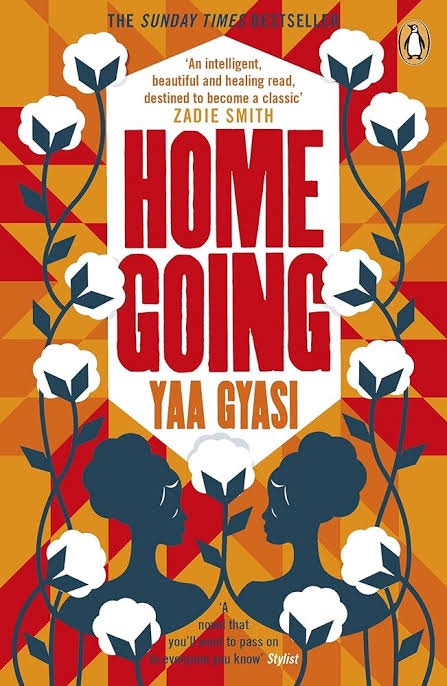
Homegoing

Yaa Gyasi’s monumental epic is a story that talks about slavery. From the days when slave trade was legal, to the days when it became a crime. It’s a multigenerational saga that carries the trauma of slavery through every generation, relives with every birth. It starts in the seventeenth century in Asanteland, along the Gold Coast of West Africa, and follows the bloodlines of two women Effia and Esi, unknown to each other, but connected through their mother Maame. The author takes us on a grippingly astute narrative through the seven generations of Effia and Esi. She brilliantly alternates between Effia and Esi’s families, through the various characters who become different chapters in the book. However, each of the chapter and character introduces us to the then geopolitical scenario and takes us a breathtaking journey as we pass through centuries. Every character is powerful despite the powerlessness of their existence. Every tale is poignant despite the numbness that accompanies it.

Yaa Gyasi describes the horrors of slave trade and the perils of living life as a black person as is. As we struggle to read the words, Gyasi makes it even more stark. Esi’s life in the slave dungeons is a putrid narrative of living alongside death, disease and human secretions. Ness’s story is about her life as a black slave woman in Alabama. H and Sonny’s tales are about black men in America who have suffered wrongful incarceration and become committed to a life full of wrong choices and consequences. Sonny and Amani Zulema’s questionable love track is steeped in doom, drugs and heartache. Kojo narrates his desperation as new slave laws come into force in Baltimore and despite being a free man, he feels enslaved and a criminal. Gyasi acquaints us with the civil war in America, the inhumane coal mines of Birmingham, the brutality of colorism and racism, and the romance of the discovery of cocoa in Ghana. Melancholy never leaves the page, as does despondency that never leaves the souls of the characters.

Homegoing creates an ache in your heart and soul which remains unshakeable long after you have finished reading it. Gyasi hasn’t written a story to soothe us, instead it jolts us out of our slumber. She presents us a history that has been wiped out, is being criminalised when talked about and unflinchingly demonstrates the ugliness of its ramifications. Her writing is confident and reverberating with tenacity. Her masterly craft shines through as she takes us on this journey from Asante villages to present day Ghana and America. The idea for Homegoing came to her during the summer of her sophomore year. At the age of 26, this stellar historical fiction was her debut work. Every character in the book is fleshed out and has been wronged. Every story is raw and imprinted with grief and violence. Homegoing is the undeniable truth about slavery and how it trickles through generations despite outwardly freedom. Gyasi is its authentic voice.

Compulsory read!

~ JUST A GAY BOY. 👏

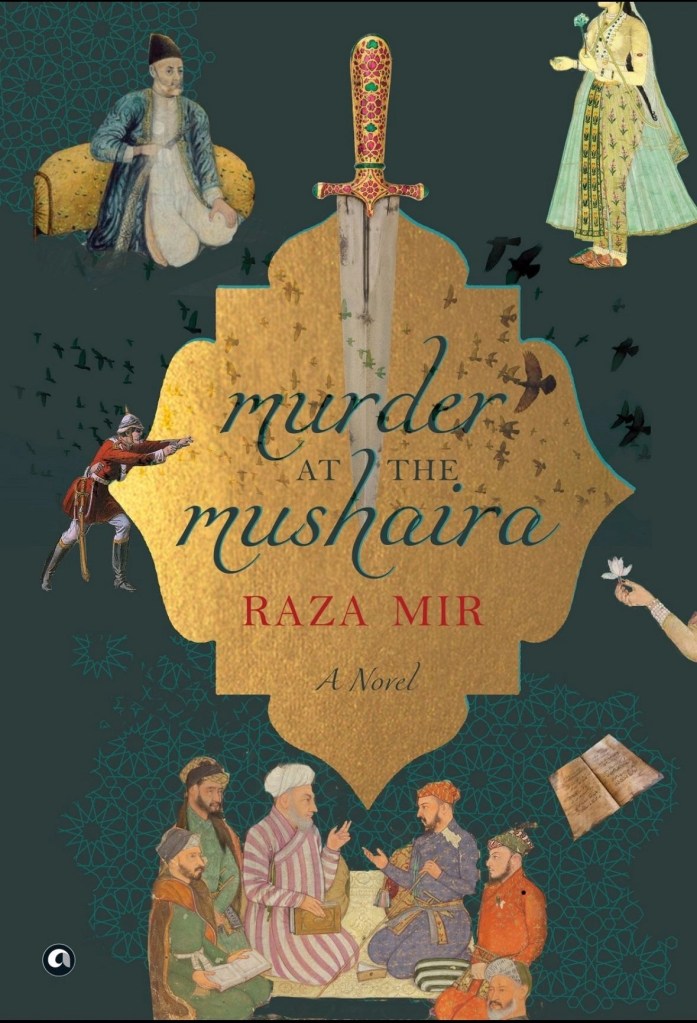
Murder at the Mushaira: A Novel

A murder mystery set during India’s First War of Independence, does sound scrumptious. It’s 1857, the British and the East India Company have started controlling greater parts of the country. It’s the last days of the erstwhile Mughal empire with many of the Nawabs surrendering to the British. There’s also a rebellion that’s brewing in various parts of the country that collectively takes the form of the Uprising of 1857. In the midst of this, Delhi is still trying to hold onto its Mughal administration. May of 1857, it’s Ramzan and there are soirées, feasts and mushairas happening in Delhi. At one such mushaira, hosted at Nawab Iftikhar Hasan’s haveli, a poet, Sukhan Khairabadi, is found to be murdered. The poet laureate, Mirza Ghalib, who also masquerades as an amateur sleuth, gets tasked with investigating this murder alongside the policeman Kirorimal Chainsukh. What unfolds next is pure delight in terms of storytelling, as history and mystery get beautifully intertwined in this marvellous fictional narrative.

A myriad of interesting characters make their appearance in this novel. Mirza Ghalib, the protagonist has his wit, charm and Urdu couplets in tow. Master Ramachandra, his accomplice in solving the crime, brings science and sincerity to the proceedings. Whilst a haggered Nawab Iftikhar, is contemptuous of Ghalib; his wife, Roshan Ara Begum has a great deal of affection for him. Various women characters such as Hyderi Begum Zutshi, Syeda Zainab, Ratna Bai make their presence felt in this story just by their steely grit, fearlessness and defiance.

Raza Mir’s story is an ode to the cultured and mellifluous Mughal era. Recently when there has been a movement to wipe out the Mughal presence from our country, Raza reminds us of their regality, their majestic architecture, their delectable cuisine and their venerable mushairas steeped in exquisite Urdu poetry. Every chapter begins with a haunting Sher in Urdu. Raza’s narrative is a rich amalgamation of fiction and accurate historical events. He’s also incorporated an innocuous and heartwarming queer plot line in the story. Such ingenuity!

Do not miss this mushaira! It’s riveting.

~ JUST A GAY BOY. 🧐

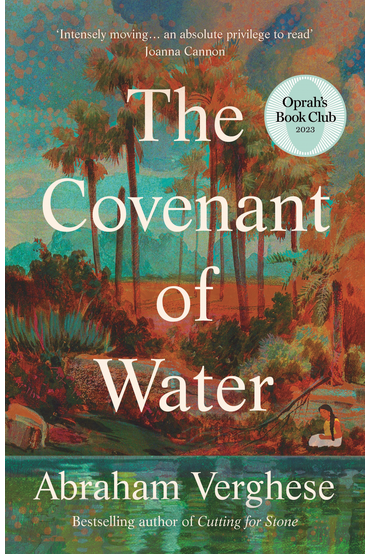
The Covenant of Water

Oprah’s book club pick, is indeed a modern day masterpiece. It’s grand, it’s moving, it’s all encompassing. It’s a historical fiction, a medical mystery and a multigenerational saga. Abraham Verghese’s epic tale, ‘The Covenant of Water’, is all this and so much more. It’s a story that shape shifts its way across generations and timelines, still retaining generosity of the human spirit at its core. It feels like a grandiose gesture on the part of Verghese to have told us this story; something that’s unflinchingly brutal, unapologetically morbid yet when the author writes it the way he writes it, that is to say, so evocatively tethered; it feels tender, considerate and benevolent.

It begins in the year 1900 in the village of Parambil, in Kerala where a twelve year old girl, is about to be married to a 40 year old man. The story progresses, and the girl soon comes to be known as the matriarch, Big Ammachi. She has been married to a man who’s family suffers from a “condition”, the men are afraid of water and the deaths have occurred because of drowning. Nobody is able to explain this strange phenomenon, until Big Ammachi’s granddaughter, becomes a doctor and unearths the mystery behind the “condition”. From 1900 to 1977, the story traverses geographies and politics, medicines and diseases; poetically; introducing us to a plethora of interesting characters and throwing a few riddles along the way. We come across Philipose, Big Ammachi’s son, a writer, who gets lost in his chauvinism and addiction, only to regain his lost ardency. His tumultuous relationship with Elsie, stands out in the prose, due to its fecklessness, its reality rooted in ambivalence and ego. Elsie, is stoic yet yielding, an artist who is wronged by Philipose’s austere callousness and detachment. Elsie’s daughter and Big Ammachi’s namesake, is a passionate doctor, yearning to be a surgeon, who is constantly juggling between her familial attachments, medical duties and heartaches. Her discovery of the “condition“ is a sublime moment in medicine; a moment that stands still for its enormity and humility.

Verghese also acquaints us with a myriad of interesting doctors. Rune Orqvist, a clinician extraordinaire, committed to his profession and people, opens a leprosarium, not just to treat leprosy, but to heal its ostracism, and provide patients with empathy and kindness. Digby Kilgour, misunderstood and misplaced, often lost in predicaments of love and longing, finds his calling in the leprosarium. The moments leading upto it, though seeped in pathos and despondency, ultimately celebrate resilience.

Abraham Verghese has a gift for words. His words, his text, interspersed with Malayalam, are so detailed yet exact. He transports us effortlessly to Parambil, Glasgow, Madras; so much so that it begins to feel like we are witnesses to the happenings in the narrative. A colonial India and an Independent India get beautifully worded; the former has angst, desperation and bondage, while the latter has a bittersweet joyous effervescence. It’s incredible to note the tapestry of the language as he describes the topography of Kerala in the 1900s. Similarly his musings with Madras city are so thorough. Just as geography provides the lush landscape to Abraham’s story, emotions provide a realness to the words. They form the undulating subtext to each of the characters’ struggles in undoing their trials and tribulations. The author provides an incredible emotional arc to each of them. Their internal struggles in coping with their unresolved traumas, and unspoken mental issues often gets reflected externally in their unparliamentary conversations and wrong decisions. This dichotomy of distress gets explored by Verghese subtly and sensitively. Also poignant and piercing are the conversations on caste between Philipose and his lower caste pulayan friend Joppan.

Death and disease form an integral part of this narrative. Since the author is a doctor, medicine gets centre stage in the proceedings. It’s magnificent to note the diagnoses being made in the early 1900s. He doesn’t shy away from getting into the details of the anatomy, physiology and grotesque pathology of it all. The surgical scenes are almost musical, so anatomically accurate. Leprosy, a disease such, that even the pen refrains from writing about it, gets its biggest attention since the medical textbooks. The conscientious decision to portray a disease that’s synonymous with exclusion and abandonment, is humbling.

It is a big book, but an easy read. Abraham Verghese’s words are captivating and commiserating. It’s a story of epic proportions and is told such. Every character adds layers and nuances to this riveting family and medical drama. There lies an undercurrent of melancholy in every page. There remains an enigmatic dread at every turn. However, the author infuses hope even in the moments of despair by singling out compassion, love and kindness in his characters and situations.

The Covenant of Water, is a triumph of human spirit. It leaves you feeling calm and contented long after you have finished reading it.

~ JUST A GAY BOY. 🥹✨