
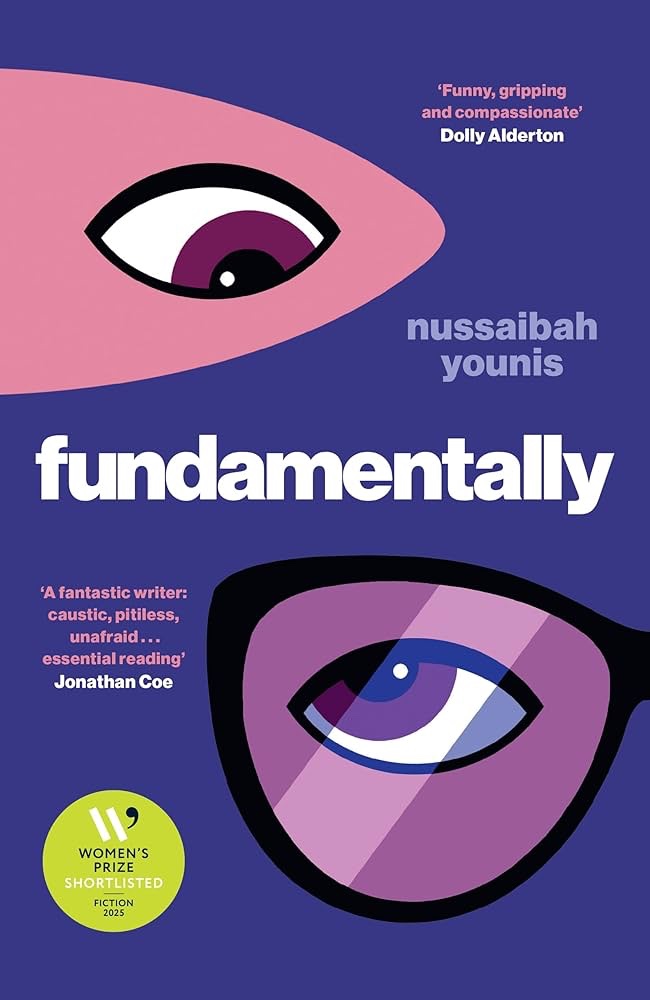
Fundamentally

📍 Iraq 🇮🇶 

Dr Nadia Amin, a British Pakistani professor of criminology living in London, gets asked by the UN to join their new agency UNDO in Baghdad, aimed at deradicalisation and rehabilitation of ISIS brides. At this juncture, Nadia’s personal life is in disarray. Her relationship with her mother is fractured and precarious following Nadia’s apostasy. What started as a friendship with Rosy evolved into a “situationship” only to devolve into an unrequited love from Nadia’s end. While she is caught in the midst of this frustration, emotional chaos, maternal abandonment and an existential ennui, she decides to undertake the Baghdad assignment, hoping that this humanitarian cause would bring her purpose and fulfilment.

Upon her arrival at the UN Headquarters in Baghdad, Nadia finds herself on unfamiliar terrain and often lacks crucial contextual knowledge. She is surrounded by her subordinates who question her capabilities and remain indifferent and unsupportive. Her boss, Lina, with her quirky avian obsessions, expects Nadia to demonstrate exceptional competence while Lina herself remains opaque and obtuse in her suggestions and instructions. All she is concerned with is UNDO outperforming other UN departments and proving to the international and Iraqi media that their rehabilitation program has been a successful endeavour. 

As Nadia immerses herself into the program and starts engaging with ISIS women, both Iraqi and European, she confronts the depth of their indoctrination. Many were radicalised at a young age by ISIS men peddling a violently distorted version of Islam. It is here that Nadia encounters Sara, a fierce and volatile British Pakistani woman with whom she forms an immediate bond. Sara’s journey from London to Iraq was undertaken willingly, only to later realise the magnitude of her betrayal. Her daughter by one of the ISIS men gets legally separated from her after the fall of ISIS and is sent to live with the man’s parents somewhere in Iraq. Nadia takes it upon herself to reunite Sara with her child without fully apprehending the dangers behind this mission, even if it means Nadia losing her coveted UN job and becoming an international fugitive. 

Nussaibah Younis crafts a gripping narrative that takes us on a journey from the bureaucracy of the UN, the geopolitics of Iraq to the mindless savagery of ISIS. She highlights the covert corruption, performative humanitarianism and rigid hierarchies present even in international humanitarian agencies. Sara’s character isn’t the most likeable but her personality rightfully reflects the psychological conditioning and the internalised misogyny, violence and terror justified in the name of religion. Her story is a chilling reminder of the consequences of voluntarily surrendering one’s agency to fanatics and fanaticism wherein the radicalised victim starts humanising, rationalising and normalising blatant violations and atrocities. 

Nadia is the quintessential star of the book whose nonchalant chutzpah, determination, compassion and resilience are contrasted with her low self-esteem, maladaptive coping, compulsiveness and impetuosity. She carries unprocessed trauma, refuses to accept uncomfortable truths about relationships, resorts to alcohol and casual sex to quell the internal dissonance, yet never relinquishes sincerity and integrity. Nadia’s curiosity and generosity draw her towards people and situations that exploit and manipulate her. This indirectly helps her gain emotional maturity and the author charts it with such sensitivity and subtlety, the proof of which gets revealed at the end of the book when Nadia is faced with an exceptional betrayal.

Another character who left a lasting impression is Farris. In his brief appearance, he embodies a kind, benevolent Muslim man respectful of women and humanity alike. Characters like Farris are vital; they reflect the real face of Islam, a religion that has been wronged by zealots and Islamophobes. 

Dr Nussaibah Younis, an Iraqi-Pakistani living in London, is a peacebuilding practitioner and a globally recognised expert on contemporary Iraq. Her writing is crisp, controversial and considerate. The unmissable humour, often dark, sometimes satirical is deftly woven into the book. Rather than resorting to stereotypes, she insists on nuance, even in the bleakest moments. The climax delivers a startling twist that injects an urgency and a muted sensationalism into the story. My sole reservation lies with the ending which felt a tad improbable and discordant with the otherwise uncompromising authenticity of Younis’s voice. I wonder if she was mollycoddling the readers of the actuality.

Fundamentally which was shortlisted for the 2025 Women’s Prize for Fiction, is about fundamentalism and fundamentalists who hack your conscience to further their personal and political agendas. In today’s world, fundamentalists are no longer confined to terrorist organisations, they increasingly masquerade as saviours of religion, democracy and humanity. We are being governed by fundamentalists whose intentions are rooted in fascism and capitalism. These aren’t just politicians but ordinary citizens too who have been radicalised by majoritarian narratives that claim historical grievance while actively othering and annihilating minorities and vulnerable communities. Fundamentally, any extremism that thrives on fear-mongering and propaganda, is single-leader-centric, and demands unquestioning allegiance is a gateway to monarchy, totalitarianism and capitalist terrorism. 

~ JUST A GAY BOY. 🤨
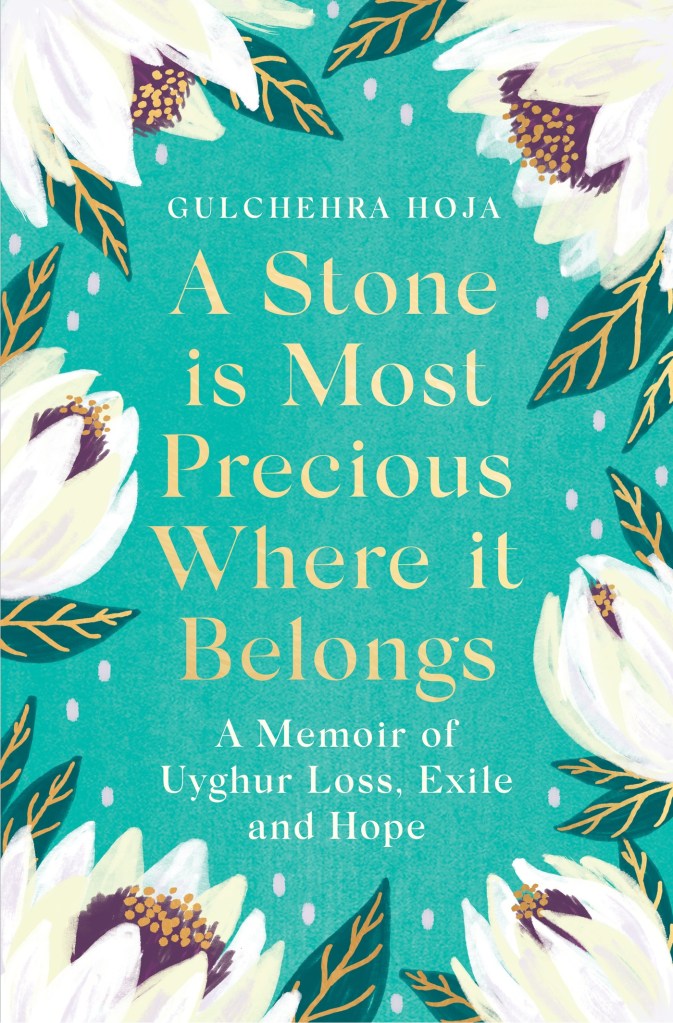
A stone is most precious where it belongs

This book is a compelling narrative on Uyghurs; their life, culture, geography and the strife unleashed upon them by the Chinese government or the CCP (Chinese Communist Party). The Uyghurs are a Turkic ethnic group from the autonomous region of Northwest China known as East Turkestan, which has been renamed as Xinjiang by the CCP. Modern Uyghurs are primarily Muslims and they are the second largest predominantly Muslim ethnicity in China after the Hui. The modern Uyghur language is classified under the Turkic language family and has an Arabic script. Gulchehra Hoja, author of this book, has written a memoir and through that, has encapsulated the trials and tribulations of her people and the ongoing modern day genocide.

Hoja, born and raised in Ürümchi, the capital of the then erstwhile East Turkestan, comes from a lineage of musicians and artists. Her family was known for their contributions towards the Uyghurs’ cultural landscape, and she had a very liberal upbringing. Gulchehra, upon completing her studies was chosen to be the face of Xinjiang Television’s children’s show. Whilst the show initially started off as a celebration of Uyghur culture and traditions, it gradually morphed into a CCP propaganda piece. Soon she realised how little to no control she had in the proceedings of the show and that, that she was becoming a puppet at the hands of the Han authorities running the channel. Now, the Chinese government had always wanted complete control of the Uyghur region and had started asserting their supremacy by sending Han Chinese civilians to live and work there. Chinese language was forcibly introduced in schools and other governmental establishments. Uyghur civilians were finding it more and more difficult to be themselves or practice their faith. The more Gulchehra understood the threats to her freedom and her Uyghur people, the more uncomfortable she got. One fine day, when she got an opportunity to go to Europe, she learnt starker truths and gory details of the Chinese government in the programmed oppression of the Uyghur, thanks to the free internet available in Europe. This prompted her to make a life changing decision to go America and work for Radio Free Asia (RFA), which simultaneously meant that, she could never come back to her land and her family.

As a journalist at RFA, Hoja gave the Uyghurs a voice that could be heard all across the globe. She brought to light the brutality and racial killing perpetuated by the CCP while promoting their ethnocentric agenda. This bold and fearless reporting only meant trouble for her family back home. She was soon branded as a separatist/ terrorist and her immediate and extended family were imprisoned and treated in the most inhuman way possible. Gulchehra battled immeasurable feelings of guilt and sorrow, but she continued her reporting nonetheless. Her personal life was a complete mess too, with an estranged husband and a budding love interest. However, Gulchehra remained committed to her Uyghur people, never lost focus of her responsibility towards them and through this extremely difficult journey, she portrayed her resilience, compassion and bravado.

What is happening to Uyghurs, is a genocide. The Islamophobia that is rampantly being broadcasted by the CCP is dangerous. There’s genocide happening of the Palestinians by apartheid Israel as well. The world, somehow has turned a blind eye to these genocides and various such Islamophobic propagandas. As I read this book, a chill ran down my spine. The measures taken by the CCP for this ethnic cleansing include detention camps (euphemised as vocational skills education training centers), forced sterilisation, disappearance of dissenting civilians, torture, violation of privacy, hi-tech mass surveillance, religious persecution, unreasonable incarcerations, suppression of free press. Now, only an imbecile or a fanatic should be able to not draw parallels to the situation here at home. Maybe there aren’t any detention camps or forced sterilisations yet, but Islamophobic rhetoric has become mainstream. And if you broaden the scope and look beyond the lens of any kind of phobia, you shall note that this is signalling of a rise in autocracy and complete totalitarianism. Let’s not shun an Uyghur or a Palestine as a localised geopolitical issue. The fanaticism used in this oppression has worldwide ramifications and replications. After the Holocaust, the world vowed that it would never ever allow another humanitarian catastrophe. Yet in 2023, we are not only seeing such events and genocides happening but also becoming widespread. How many more of such massacres would it take for the world, for us to get out of our ignorant slumber?

~ JUST A GAY BOY. 🥺

Grey Bees

📍 Ukraine 🇺🇦

Andrey Kurkov, is a prolific Ukrainian author and independent thinker who writes in Russian. He is the author of 19 novels; the latest being Grey Bees, which has been translated by Boris Dralyuk. The story is about a middle aged, disabled pensioner and devoted beekeeper, Sergey Sergeyich, from the war torn region of Donbas in Eastern Ukraine. He is living in this three street village, Little Starhorodivka, along with its only other resident, Pashka, which falls in the grey zone, between the Ukrainian army on one side and the separatists supported by the Russians on the other side. Sergeyich has become accustomed to living without electricity; making do with whatever food is available. Bees are the only thing he truly cares for. Now with spring approaching, he needs to take the bees away from all the bombing and shelling happening in and around his village. As he sets off on this journey, which soon becomes an adventure, in the pursuit of providing his bees a secure environment, he lands in the Russian controlled territory of Crimea. His Interactions with a Crimean Tatar family whilst in the Crimean village of Albat, who provide him and his bees shelter, make the Russian officials suspicious of his intentions. Despite the bureaucratic surveillance on his activities, he takes it upon himself to help a young Tatar girl cross the Crimean border during the return journey to his home, in the grey zone.

Complex political decisions regarding geographical issues need not colour human emotions. The characters in the book have their humanity intact despite a ravaging war surrounding them. The author beautifully constructs their simple emotional arcs, at times peppering it with wry, dark humour. Kurkov takes times to build the narrative. He makes it atmospheric by indulging us in the mundane, boring yet terrifying life of Sergeyich. The moments at Border control and various checkpoints are so nerve racking, and described so viscerally, that you can feel Sergeyich’s anxiety and panic in you. That’s the brilliance of Kurkov. Through the characters of Aisylu and Bekir, he highlights the plight of the marginalised group of Crimean Tatars under the Russian regime, who are an indigenous people of Crimea. Not to forget, the honeybees are as much a central character in the book, as Sergeyich is. The author weaves in their life cycle, behaviour and discipline into the narrative in the most scientifically accurate and fascinating manner.

It’s evident that the whole of Ukraine has become a Donbas now. In a flash, citizens have become refugees. Because one day, a megalomaniac called Putin decided to assert his autocratic zealotry over the region. Not just Ukraine, there are so many countries (Yemen, Iraq, Syria, Afghanistan, Palestine) and regions (Tigray in Ethiopia) that are devastated by war. Wars have happened since time immemorial. Will this present war too become a piece of history for posterity? Or will we learn and strive to prevent such wars from happening again? Will we try to be humans first?

~ JUST A GAY BOY. 😓