The Restaurant of Lost Recipes

📍 Kyoto, Japan 🇯🇵 

In Kyoto’s Shomen-dori, in a nondescript building, lies a quaint restaurant, Kamogawa Diner. Run by the chef Nagare Kamogawa, it specialises in Kyoto cuisine. The food is wholesome and customer satisfaction is of paramount importance to the chef. But there’s something unique about this restaurant and it isn’t its no-frills food. The restaurant also doubles up a food detective agency, which is handled by Nagare’s daughter, Koishi.

People come to Kamogawa Diner not just to relish its simple yet delectable fare, but also in search of lost recipes. Recipes that have been forgotten through the sands of time but its flavour has lingered in their souls forever. Recipes that bring back emotional memories; recipes that remind people of their connections and relationships; recipes that rekindle grief, gratitude and gaiety; and recipes that evoke visceral and spiritual sensations. 

Anybody who comes to the diner for their food detective services is served a set menu by Nagare, followed by Koishi’s meticulous inquiry into the lost recipe that includes its origins, flavours and taste. The discussion often gets emotionally intimate and intense and segues into stories associated with the dish and the impact it has had on the person concerned. After two weeks, when the person comes back, Nagare whips up the exact same recipe which always leaves the guest/s spellbound. He then describes the ways in which he procured the recipe, through his uniquely inventive and intuitive tricks backed by his profound knowledge of Japanese cuisine. 

There are six stories in the book each dedicated to a particular dish. The ones that stood out to me were the following. Olympian Kyosuke Kitano, reminisces about his estranged dad’s nori-ben. Nagare’s version floods him with memories, prompting him to relook at the relationship in a new light. Kana Takeda is a single mother who wants the absolute best for her son, Yusuke. When her son keeps craving for her father’s hamburger steak, with whom she has had no contact in years, she is forced to take Nagare’s help. When she eats Nagare’s hamburger steak, she is reminded of familiar flavours and familial bonds. This experience forces her to forgive herself for events that happened outside of her control and simultaneously makes her confront her ego. Yoshie and Masayuki Sakamoto are struggling to grapple with the loss of their son. They request Nagare a particular Christmas cake to be made that their son loved, but they themselves are unable to remember its taste. Nagare jumps through hoops to make the impossible possible and presents them the cake which brings them a step closer to securing closure and processing their grief.

The Restaurant of Lost Recipes, is a feel good, cozy fiction and is the second part in the series. It’s not necessary to have read the first part, The Kamogawa Food Detectives, to read this one. The book is replete with scrumptious, luscious Kyoto dishes that are described punctiliously, akin to a culinary textbook. The author, Hisashi Kashiwai’s elaborate descriptions of the ingredients, textures, flavours and aromas are bound to make any reader salivate. Tofu, mushrooms, sushi, sashimi, broths, eel, mackerel, sardines, distinct Japanese herbs and the various techniques of cooking are elucidated with great detail in the book. You can literally smell the tantalising scents of dashi and miso wafting through the pages of the book. More importantly, the book becomes a melting pot of unpleasant, unresolved human emotions often brimming at the surface, needing just that extra stirring to achieve some sort of resolution. Since millennia, food has been a source to connect people and bring them together. It warms my heart to note how simplistically the author has achieved this feat in the book. 

The Restaurant of Lost Recipes is appetising till the last page. It feels moreish. So, are you ready to indulge? 

~ JUST A GAY BOY. 🍣🍱🍜
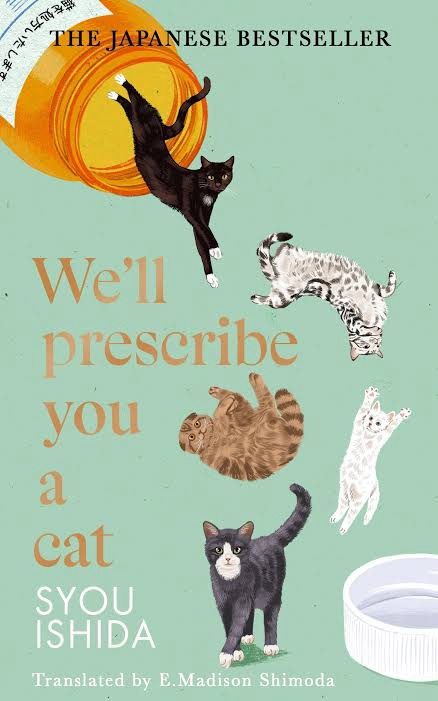
We’ll prescribe you a cat

📍 Kyoto, Japan 🇯🇵 

Located in one of the winding lanes of Kyoto, with an address as convoluted and discombobulating as, “East of Takoyakushi Street, south of Tominokoji Street, west of Rokkaku Street, north of Fuyacho Street, Nakagyō Ward, Kyoto”, lies a nondescript, difficult to spot, wellness clinic called, Nakagyō Kokoro Clinic for the Soul, run by Dr Nikké and nurse Chitose. People come here seeking help thinking it’s a mental health clinic and also having heard incredible healing stories, only to find Dr Nikké prescribing a cat (albeit a different cat for every patient) for any and all of their problems. Eccentric much?

The book has five chapters; Bee, Margot, Koyuki, Tank and Tangerine, and Mimita, named after the cat/s that have been prescribed. There’s a line drawing illustrating the cat at the beginning of every chapter. There are a couple of stories that stood out to me. The first is Bee. Shuta Kagawa, is unhappy with his monotonous job wherein his inability to perform the tasks, causes his manager to admonish and humiliate him incessantly. This translates to his personal life as well, having an untidy house and no social connections. On getting Bee, for the first time he starts to tidy up his place, to prevent the cat from swallowing harmful objects. Bee also becomes the reason for him losing his job, that leads him to finding a new job, which he actually starts liking and even the people he works with. Unknowingly Bee becomes instrumental in mediating this long overdue change in Shuta’s life, a change he was scared to seek and commit to, but done ever so organically by a cat. 

The second is Koyuki. Megumi Minamida, is having trouble dealing with her ten year old daughter, Aoba. She constantly criticises and reprimands her, gets annoyed with anything and everything that Aoba says. Aoba is having issues at her school which Megumi dismisses as being trivial and instead wonders if she is depressed. She comes to the clinic to seek therapy for Aoba and Dr Nikké hands out a kitten. Suddenly, Megumi is transported back to her childhood, where she too had rescued a kitten but was never allowed to keep it by her mother. Megumi’s mother constantly rebuked her and never let her have any agency. Inadvertently, the kitten becomes a medium for Megumi to address her repressed emotions, making her reflect on her past traumas, that paves a way for her to assuage her daughter’s concerns and forge a new improved relationship.

As you can see, the stories are simple and have been simplistically told. They tackle complex human issues and interactions without being presumptuous and patronising. A special mention of the character nurse Chitose, whose oddities are in a league of their own. 

The premise of a doctor prescribing a cat can seem bewilderingly outlandish but somehow manages to come across as heartwarming. Cats become the unlikely catalysts to troubled, irritated, grief stricken human beings in coming to terms with their choices and behaviours which in turn makes them contemplate on the same. Truth be told, cats in the book, don’t do anything magical. They just stare, eat and sleep; but for some unexplainable reason, they melt the stubborn hearts of the humans they have been prescribed to, ultimately bringing relief, joy and solace. 

We’ll prescribe you a cat, is a cozy fiction, a genre which is getting highly popular in Japanese literature. The author, Syou Ishida, is Kyoto born and adores her cats. The book has been translated from the Japanese by E Madison Shimoda. The writing is easy, considerate and brings a realm of calm upon the reader. It is quintessentially Japanese in its ethos and presentation. Kyoto comes alive with its quirks and charms through the words of Syou Ishida. However, at the heart of the book is the universal language of acceptance, bonding and belongingness. There isn’t any sermonising, just quiet realisations and reassurances that lift the collective human consciousness. 

This is a book that will brighten a dull day. The cats are luscious, fluffy and mysterious. I have always been a dog person, but Syou Ishida might have just converted me! 

(Ps. Be ready to meet more cats in, “We’ll prescribe you another cat” releasing later this year.)

~ JUST A GAY BOY. 😺😻

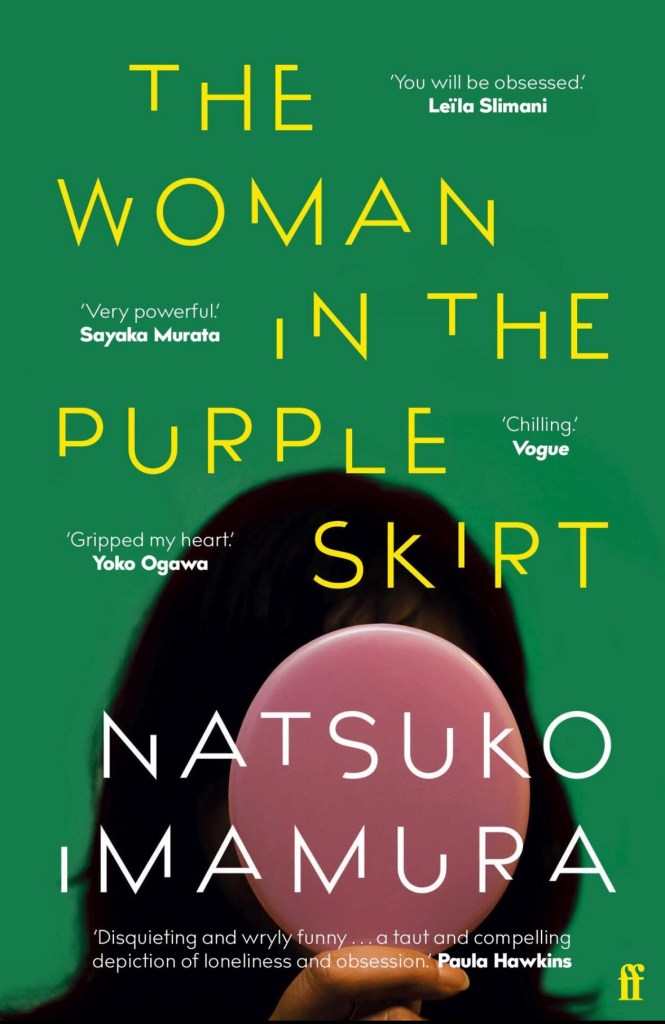
The Woman in the Purple Skirt

My pick for Read a Kitaab’s #januaryinjapan was, ‘The Woman in the Purple Skirt’. The book, written by the acclaimed Natsuko Imamura and translated from the Japanese by Lucy North, has garnered fairly positive reviews online, however I was left feeling disappointed. The book is about this eponymous Woman in the Purple Skirt who is being closely watched by the narrator who calls herself as the Woman in the Yellow Cardigan. She meticulously describes every move of the woman in the purple skirt, her daily routine, eavesdropping on conversations and even gets her a job in the hotel that she’s employed at. Despite this extremely voyeuristic snooping by the woman in the yellow cardigan, she remains inconspicuous and almost oblivious to the other woman. However, things take a more ominous turn after the woman in the purple skirt starts working earnestly in the hotel and the sequence of events leading upto the climax happen so rapidly, it almost feels like an antithesis to how the book began.

In summation, I felt the climax to be a major letdown despite the foreboding atmosphere it created and the thrilling subtext. Though the book discusses themes of loneliness and the yearning for a friendship, and the human need to be seen and validated, it gets lost in the narrative that remains hyper focused on the inconsequential daily mundane activities of the woman in the purple skirt for the greater part of the book.

Ultimately, I even wondered what was the purpose of the woman in the purple skirt? What was the author trying to convey? I remain discombobulated!

~ JUST A GAY BOY. 🫤