Homegoing

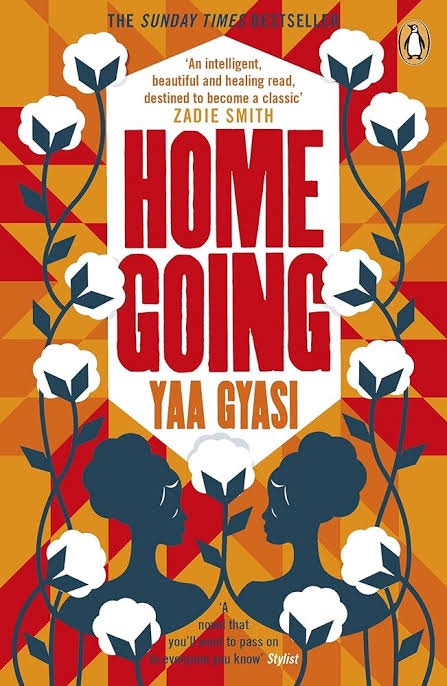
Yaa Gyasi’s monumental epic is a story that talks about slavery. From the days when slave trade was legal, to the days when it became a crime. It’s a multigenerational saga that carries the trauma of slavery through every generation, relives with every birth. It starts in the seventeenth century in Asanteland, along the Gold Coast of West Africa, and follows the bloodlines of two women Effia and Esi, unknown to each other, but connected through their mother Maame. The author takes us on a grippingly astute narrative through the seven generations of Effia and Esi. She brilliantly alternates between Effia and Esi’s families, through the various characters who become different chapters in the book. However, each of the chapter and character introduces us to the then geopolitical scenario and takes us a breathtaking journey as we pass through centuries. Every character is powerful despite the powerlessness of their existence. Every tale is poignant despite the numbness that accompanies it.

Yaa Gyasi describes the horrors of slave trade and the perils of living life as a black person as is. As we struggle to read the words, Gyasi makes it even more stark. Esi’s life in the slave dungeons is a putrid narrative of living alongside death, disease and human secretions. Ness’s story is about her life as a black slave woman in Alabama. H and Sonny’s tales are about black men in America who have suffered wrongful incarceration and become committed to a life full of wrong choices and consequences. Sonny and Amani Zulema’s questionable love track is steeped in doom, drugs and heartache. Kojo narrates his desperation as new slave laws come into force in Baltimore and despite being a free man, he feels enslaved and a criminal. Gyasi acquaints us with the civil war in America, the inhumane coal mines of Birmingham, the brutality of colorism and racism, and the romance of the discovery of cocoa in Ghana. Melancholy never leaves the page, as does despondency that never leaves the souls of the characters.

Homegoing creates an ache in your heart and soul which remains unshakeable long after you have finished reading it. Gyasi hasn’t written a story to soothe us, instead it jolts us out of our slumber. She presents us a history that has been wiped out, is being criminalised when talked about and unflinchingly demonstrates the ugliness of its ramifications. Her writing is confident and reverberating with tenacity. Her masterly craft shines through as she takes us on this journey from Asante villages to present day Ghana and America. The idea for Homegoing came to her during the summer of her sophomore year. At the age of 26, this stellar historical fiction was her debut work. Every character in the book is fleshed out and has been wronged. Every story is raw and imprinted with grief and violence. Homegoing is the undeniable truth about slavery and how it trickles through generations despite outwardly freedom. Gyasi is its authentic voice.

Compulsory read!

~ JUST A GAY BOY. 👏

Black Foam

📍 Eritrea 🇪🇷

This is a book like no other. The novel, written by Doha based Eritrean novelist Haji Jabir, was originally published in Arabic in 2018 and, is the first Eritrean novel to be longlisted for the 2019 International Prize for Arabic Fiction. It has been translated into English by Sawad Hussain and Marcia Lynx Qualey. The story is about an Eritrean soldier’s relentless pursuit in finding stability, hope and freedom as he traverses from Eritrea to Ethiopia to Israel. Adal fights as a soldier in The Eritrean war of Independence against Ethiopia and sees his country achieve it. While Asmara celebrates the new freedom, Adal changes his name to Dawoud, because he doesn’t want to be associated with it. During his time at the Revolution school there, his infractions lead him being sent to the torture prison at the Blue Valley. He escapes the prison to land in Endabaguna refugee camp in North Ethiopia where he becomes David. From there, he manages to enter the Gondar camp in the Amhara region of Ethiopia, posing as a Falasha Mura (Ethiopian Jew) named Dawit. This helps him in getting to Israel, finally to Jerusalem. This arduous journey which converts him from a soldier to a refugee, whilst he assumes various identities and religions, shakes him to his core; challenges all his beliefs and notions about the world and humanity. Ultimately, he finds a glimmer of solace when he visits the Al-Aqsa mosque in the West Bank region of Jerusalem, Palestine; it appears to him, as if life has come a full circle and there he starts questioning his identity and whether he may now be a part of a community of African Palestinians.

Black Foam is a composite story that, at the outset, through the protagonist’s character highlights the struggles and atrocities faced by a refugee. However, as we delve deep into the narrative, it holds your attention towards a plethora of unspoken issues and peoples. A nation’s independence needn’t necessarily attribute independence to all its citizens. As a soldier, Adal was left stifled living that life, though now Eritrea was free. However, his mindset was such that, he could never accept freedom, which led him from one refugee camp to another. The book also talks about the plight of Ethiopian Jews, who remain at the mercy of the Israeli Jews and live like second class citizens in the country. The story also talks about Palestine and lives of Palestinians living under the apartheid regime of Israel. Whilst weaving a sombre and at times discordant narrative through these complex geographies, the author simultaneously constructs the romantic and sexual life of the protagonist. This juxtaposition in the storytelling is distracting, deliberately pervasive and at times tedious.

Haji Jabir has masterfully sketched this story of a man in search of a home, security, a sense of belonging only to be met by hostility and uncertainty every step of the way. This quest is sadly the tale of millions of refugees in various parts of the world. Kudos to the author for writing it, keeping the despair and depravity alive in every page; for breathing life into the forgotten lives of the refugees; for portraying doom as a running subtext to the entire narrative. The descriptions of Jerusalem, West Bank, Al-Aqsa Mosque, Church of the Holy Sepulchre, is so detailed, nuanced; it’s almost as if we are there with Dawoud/ David/ Dawit as he roams these streets searching and questioning his life’s meaning and purpose.

Black Foam is a bittersweet melancholy that will stay with you long after you have finished reading it.

~ JUST A GAY BOY. 🥺

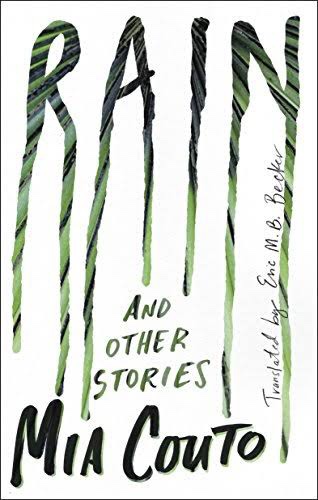
Rain and other stories

📍 Mozambique 🇲🇿

Mozambican writer Mia Couto is one of the most prominent Portuguese language writers of today. After studying medicine and biology, he worked as a journalist and headed several national newspapers and magazines in Mozambique. He has published more than thirty books that have been translated in thirty different countries.

He won the Camões Prize in 2013, the most important literary award in the Portuguese language, and the Neustadt International Prize for Literature (The Prize is a biennial award sponsored by the University of Oklahoma and World Literature Today since 1970, and is one of the few international prizes for which poets, novelists, and playwrights are equally eligible) in 2014. He was shortlisted for his entire body of work for the Man Booker International Prize 2015. In many of his texts, he undertakes to recreate the Portuguese language by infusing it with regional vocabulary and structures from Mozambique, thus producing a new model for African narrative. He lives in Maputo, Mozambique.

Mozambique, a country located in southeastern Africa, gained independence from Portuguese colonial rule in 1975. After only two years following independence, the country descended into a bloody and protracted civil war lasting from 1977 to 1992. This book was first published in 1994, shortly after the 1992 peace agreement and has been translated by Eric M.B. Becker.

The book is a collection of 26 short stories. Though the book has received wide critical acclaim internationally, I completely failed to connect with it. The stories are extremely fable like, many inspired by Mozambican folklore while others oscillate between the real world and an imaginary magical realm. The stories start and end abruptly and the author fails to provide any nuanced significance for each of them. Reading these stories I wondered, if there was a purpose for this kind of pithy yet tedious storytelling. Are Mozambicans only supposed to understand them?

Disappointed.

~ JUST A GAY BOY. 😑