

July is Disability Pride Month and it was born out of the ‘Disability Rights Movement’ in America. It is built on intersectional identity politics and social justice. The core concept of Disability Pride is based on the tenet of rewriting the negative narratives and biases that frequently surround the concept of disability.
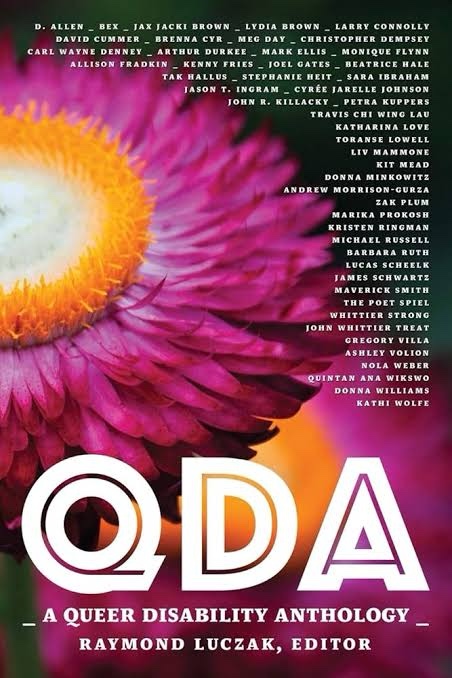
QDA isn’t just another anthology, rather it stands out for its thoughtful and considerate approach to queer disability. Each of the 48 writers/contributors is queer and disabled. The writers are diverse in terms of their race, gender, sexuality, identity and disability type which includes physical disability, sensory disability, neurodivergence, psychiatric disability, chronic illness and even invisible disability. The book also is an amalgamation of different literary forms such as essays, short fiction, poems, comics and hybrid writing.
QDA asserts itself as a commanding voice against ableism, dismantling the various ways in which it stigmatises and sidelines disabled people. The writings unapologetically express the anger and frustration felt by the writers and at the same time, they do not read as pleas for pity or assistance. The narratives are focussed on representation and resistance, where intersectionality isn’t just glossy platitude but a lived reality. The contributors have not flinched from exploring topics of sexuality, intimacy, eroticism and body politics. Out of the many writings, the ones that stood out to me were as follows.
- No more Inspiration Porn: Introduction by Raymond Luczak rightfully introduces us to the necessity of a shame-free approach to disability, the blatant normalisation of ableism and the necessary nuance needed while discussing and implementing diversity. He makes a strong case against using disability as “inspiration porn” to fuel ableist goals.
- Liv Mammone’s Advice to the Able-Bodied Poet entering a Disability Poetics Workshop, is a searing and scathing critique on the default ableist behaviours. It is a catalogue of reminders for engaging with a disabled person including checking one’s own misplaced courtesy and concern. A notable quote from the essay was, “The words disability, disorder, and disease aren’t synonymous”.
- Kit Mead in Missing What You Never Had: Autistic and Queer, speaks for the autistic and queer who tend to become the invisible queers, as most queer spaces being too loud, prohibit many in the community from seeking them out and hence many of them feel their queerness to be fake as they are unable to assimilate with something that is a part of the cultural zeitgeist.
- In Love Me, Love My Ostomy, Tak Hallus speaks about his struggles with Ulcerative Colitis and living with an ostomy; confronting the rejection he faces from within the gay community because his disability is not pretty, popular, obvious, and conventionally palatable.
- Maverick Smith in Invisible Within the Ten Percent, laments the normalisation of ableism and audism, even in Pride celebrations.
- In The Ides of April, Barbara Ruth takes us through her everyday life as a disabled person while also living with her disabled partner, Nora. In the aftermath of a terrorist attack on the Boston Marathon, her attendant Aisha fears for her racial profiling and Barbara wonders if she has become a quintessential clicktivist.
- In Learning to Fall in Love, Katharina Love, decides to fall in love with herself first and accept her condition of Möbius Syndrome, her love for women and make peace with the fact that her mother’s love may always remain unattainable.
And finally, the crown jewel of this anthology for me, was the brilliant, satirical piece by Lydia Brown called, How Not to Plan Disability Conferences (or, How to Be an Ableist Asswipe While Planning a Disability Conference). Lydia meticulously enumerates the ways in which ableist people use disability to virtue signal diversity to an ableist audience essentially and how ableism takes centre stage and disability and disabled individuals remain mere props for motivational tokenism and triumph voyeurism. This short essay is biting, belligerent and bold and it should make everyone scrutinise their own diversity agendas.
Raymond Luczak, the editor of QDA, is a prolific Deaf gay writer, editor, poet, and filmmaker whose work often explores Deaf culture, disability, queerness, and identity. He has written/edited over 30 books, spanning poetry, fiction, memoir, anthologies, and plays. QDA reads like an act of defiance. It’s an anthem against the erasure of disability. It’s provocative and rambunctious; necessarily caustic yet relentlessly truthful, indulgent yet raw, but always delightfully queer.
~ JUST A GAY BOY.
 the shiny diaries