

Country : Turkmenistan 🇹🇲
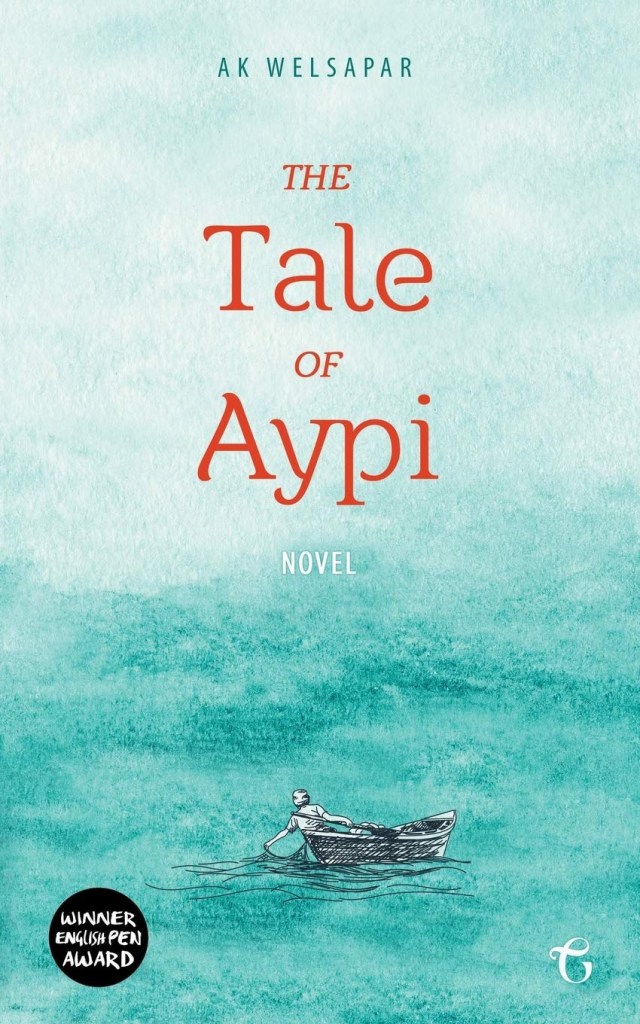
This book set in Turkmenistan, focusses on the lives of the inhabitants of a small Turkmen fishing village located on the banks of the Caspian Sea. As the story begins, the people have been ordered by the central government to relocate to a nearby city and have been forbidden from fishing, since the government plans to build a hospice in the village along the coast. As the villagers acquiesce to the pressure, and lament on their loss; there’s one defiant man though, Araz, who takes it upon himself to fight the authorities against their autocracy, and also his own village folks against their docility and subservience. Araz’s story is interwoven with the fable of Aypi. Aypi was a girl from the same village known for her beauty and is wrongfully killed for her so-called transgressions then. Now, centuries later, Aypi comes back to haunt the villagers and confronts their unconcerned, chauvinistic and vapid behaviours. Through Aypi, the author depicts society’s nonchalant normalisation of patriarchy and misogyny. With its myriad other characters and their interpersonal dialogues and arguments, the book constantly debates the traditional versus modern ways of living.
While the events in the book take place during the country’s Soviet past, the author’s depiction of its authority then, is as much a social commentary on modern-day Turkmenistan’s totalitarian governance. This book is one of the first from Turkmenistan to be translated into English (by W.M. Coulson) for the international market. Despite being the country’s most internationally recognised and appreciated authors, A K Welsapar’s books have been banned in Turkmenistan. He was exiled in 1993 and currently lives in Sweden.
Though this story is about Turkmenistan, one can draw parallels to current day India. That’s the most disturbing bit.
~ JUST A GAY BOY. 😓

 the shiny diaries