

📍 Bundjalung Country, Australia 🇦🇺
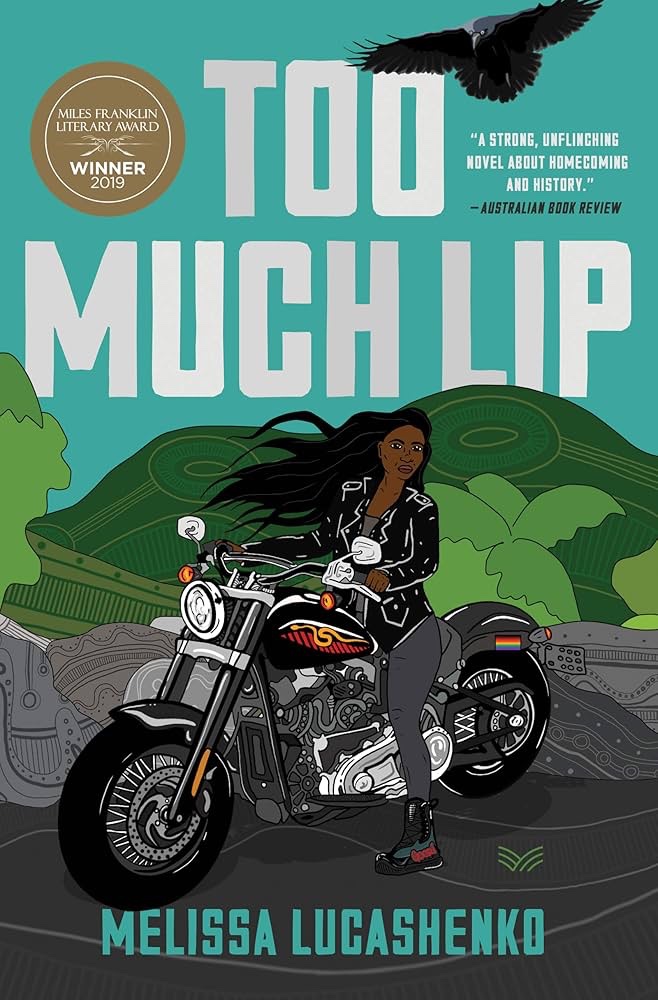
Kerry Salter has returned to her hometown of Durrongo to see her ailing grandfather Pop. But she was also running away from her life in the city and had literally done that on a stolen motorbike. The Salters are a dysfunctional family with strained relationships and overbearing personalities. Her mother, Pretty Mary, prefers to drink away her problems rather than confront the unresolved grief related to the death of her husband and her daughter Donna. Her elder brother, Ken, is an openly chauvinistic, misogynistic man who wouldn’t shy away from violence to prove his points. His relationship with his son, Donny, is marked by neglect, condescension and emotional abuse leaving Donny grappling with anorexia and deep self-doubt. In contrast, Kerry’s younger brother, Black Superman stands, who lives in Sydney with his husband and their foster children. He emerges as the rare voice of reason, wisdom, patience and maturity within the chaos.
As the Salters wrestle with tragedy, loss and suppressed trauma, they are forced to endure the greedy shenanigans of the local mayor, Jim Buckley, who is determined to seize their ancestral land. The Salters and their wider community of Blackfellas, the original inhabitants of Durrongo, refuse to let their sacred land be taken away, especially by a system rooted in colonial entitlement and oppression.
Kerry is caught unawares in the middle of this drama and her original plan of putting up a brief appearance morphs into a prolonged, endless stay. During this time, she reconnects with an old friend, Steve, a whitefella. While she is trying to make sense of her feelings for him, she stumbles upon a secret so unbelievable and implausible, that it sets off a chain reaction. What follows is the opening of a Pandora’s box of dirty, unconscionable, disturbing and deeply unsettling truths that threaten to tear the family apart.
Too Much Lip is a brave, unapologetic commentary on many evils plaguing our society, such as abuse and violence against women and children, pedophilia, patriarchy and systemic racism. It lays bare the ongoing discrimination faced by the Indigenous communities simply for existing, while also interrogating the violent legacy of settler colonialism. Through its women characters, the narrative also reveals the internalised patriarchy, misogyny and sexism that women have come to harbour and how an act of violence committed by a male family member is always dismissed or trivialised, while victims are shamed into silence and submission.
None of the characters in the book are conventionally likeable and each has been rendered in shades of grey. Kerry herself is feckless, indecisive, wayward and unmoored, yet capable of leading with empathy and stoicism when it matters most. Interestingly, while she is positioned as the protagonist, another character introduced in the later half of the book emerges as more compelling with their clarity, assertiveness, and fortitude standing as an antithesis of Kerry.
The author, Melissa Lucashenko, is an Indigenous Australian and her heritage is Bundjalung and Ukrainian. She is a prolific writer of adult literary fiction and nonfiction and has been the recipient of various Australian and international literature awards. Too Much Lip won the Miles Franklin Literary award in 2019 while it was shortlisted for the Stella Prize, the same year. Lucashenko writes fiercely and is committed to her craft that is politically charged and echoes her cultural identity. In this book too, the author has astutely woven aspects of social justice, moral bankruptcy and cultural politics into the dramatic familial narrative. Lucashenko’s strong command of the literature is evident as she tackles every issue that she brings forth in the book with adequate emphasis, nuance, sensitivity, and depth. The language is a mix of English and Aboriginal Australian English, further cementing the fact that Melissa Lucashenko is an uncompromising author, celebrating her autonomy and heritage.
This was my first foray into Indigenous literature, and it left me unsettled in the best way. It forced me to confront my own unconscious biases, especially the contradiction of embracing diversity while not actively seeking out Indigenous voices.
Across the world, Indigenous communities continue to face marginalisation, ostracism and erasure. In India, indigenous communities commonly referred to as Adivasis make up 8-9 percent of the population. From Central India to South India to the Andaman and Nicobar Islands, Indigenous communities are facing displacement under the pretext of development, such as infrastructure, tourism, mining, dams etc. The Great Nicobar Project is one such example that’s threatening an extremely vulnerable Indigenous population. Apart from displacement and loss of their ancestral lands, these communities also struggle for economic equity, cultural preservation, and political representation. Can it truly be called development if it is built on dispossession and suffering? Why does progress so often rely on the exploitation of the most marginalised?
Too Much Lip is a much needed social critique of our crumbling values in an increasingly hypocritical and polarised world. This review barely scratches the surface of Lucashenko’s complex narrative exploring flawed human beings navigating intergenerational traumas and modern day psychosocial stressors. A difficult, uncomfortable, but absolutely essential read!
~ JUST A GAY BOY. 👏

 the shiny diaries
What’s wrong with you, Abhishek? Why are you so against ‘progress’?
On a serious note though, everything around us seems to be crumbling. Yet, we are collectively blind to the immediate suffering of the vulnerable and the marginalised. If this is not entitlement, I don’t know what is? It is the burning need of the day to read fierce voices like Melissa Lucashenko.
A wonderful review indeed.
LikeLiked by 1 person
Thank you
LikeLike