Small Things Like These

šŸ“ Ireland šŸ‡®šŸ‡Ŗ 

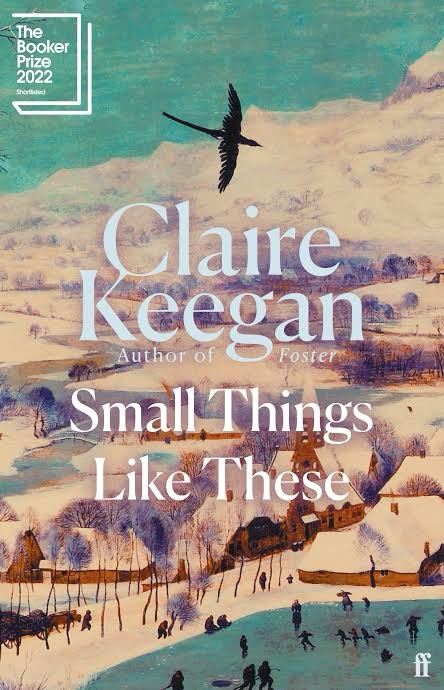
It’s Christmas of 1985 in the town of New Ross. Bill Furlong is a coal merchant toiling away feverishly to provide for his wife Eileen and five daughters. The Catholic Church is very influential in the town and Bill regularly supplies coal to them. The nuns know Bill well and admire his work and the commitment towards his family. There’s also a Magdalen laundry attached to the church which is believed to provide shelter to young girls, especially unmarried girls who are pregnant. Rumours abound about the clandestine activities at the laundry and also about the girls who are sheltering there. Most of the townspeople know the workings of the Magdalen laundry and how the church is tacitly involved in its iniquitous affairs. Eileen, doesn’t want to affront anyone; she believes that being a mute spectator would protect her daughters from any future troubles. One day, Bill while dropping off the coal at the church, stumbles upon a young girl who has been locked up in the freezing coal shed without food, water and covered in her excrements. Even in her indisposition she pleads Bill to rescue her and her child who has been forcibly taken away from her by the nuns. As Bill confronts this predicament, he has to simultaneously decide between antagonising the church and his church loving wife, and doing the right thing. 

The Magdalene Laundries in Ireland, also known as Magdalene asylums, were institutions usually run by Roman Catholic orders, which operated from the 18th to the late 20th centuries. They were run ostensibly to house ā€œfallen womenā€, an estimated 30,000 of whom were confined in these laundries. Given Ireland’s historically conservative sexual values, these were a generally accepted social institution well into the second half of the 20th century. They disappeared with changes in sexual mores and a loss of faith in the Catholic Church due to repeated revelations of scandals. Ireland’s last Magdalen asylum imprisoned women until 1996; it’s only in 2001 that the Irish government acknowledged that women in these laundries were victims of abuse and much later in 2013, that a formal state apology was issued. 

Claire Keegan, is an Irish writer known for her short stories and the recipient of the Rooney Prize for Irish Literature among various other awards. Small Things Like These won the 2022 Orwell Prize for Political Fiction, was shortlisted for the Rathbones Folio Prize and was the shortest book to be shortlisted for the 2022 Booker Prize.  In December 2024, it was Oprah’s Book Club pick. It has been adapted into a film of the same name starring Cillian Murphy. 

This novella is a crisp, succinct take on how human beings falter, ponder and ruminate over doing the right thing even when faced with obvious wrongdoings. Most of us don’t want to disturb the status quo. We are ready to be consciously blind to such scenarios and even to wonder if the victim/s rightfully deserved what they endured. Our hypocrisy becomes jarringly evident in our chosen silence. Our activism and our fights are very conditional, provided they don’t cost us our peace and don’t disturb our lives. This is the advice Bill is subjected to from Eileen and others who had his best interest. If you look closer home, the rising Islamophobia and the general intolerance for criticism, though a different issue from what happened in Ireland, hasn’t prompted the majority of us to take a stand, because of the fear of being ostracised by the increasing number of zealots which may include our friends and family, and also the overbearing fear of an almost autocratic, authoritarian government that is trying its might to police secular voices. It is the acceptance of Small Things Like These that lead to big things like xenophobia, genocide and totalitarianism. 

The book ends on a cliffhanger moment. Even Oprah, in her podcast, wondered what would happen next. So Claire, please let there be a sequel to Small Things Like These

~ JUST A GAY BOY. 🄺

Greek Lessons

šŸ“ South Korea šŸ‡°šŸ‡· 

A woman is losing her ability to speak, for the second time in her life. A man is losing his vision. He is a teacher taking evening classes of Ancient Greek in Seoul. She is his student, wanting to learn a new language, hoping that, it would somehow help her speak. 

The woman, whose story is narrated in the third person, is bereaving her mother and is simultaneously fighting for the custody of her son. She feels devastated and defeated by death and separation. She overflows with rage and rancour that consume her. She is subsumed with an overwhelming sense of love which at the moment seems uncertain and unwanted even. The man, who is narrating his own story, is trying his best to acclimatise himself to Seoul after having moved from Germany. His anguish over his past strained relationships, strains his ability to adjust to his present situation. His loneliness, his longing for a city and people that are no longer present become the fodder for his lamentations on the pathological darkness that is enveloping him slowly and steadily. Through the class, the man and the woman, come together, to provide respite to their troubled yet kindred souls by being that requisite restrained sense to each other’s losing sensibilities.

Han Kang, is a South Korean writer, who was awarded the Nobel Prize in Literature in 2024, a first for an Asian woman and for a Korean. Her other book, The Vegetarian, became the first Korean language novel to win the International Booker Prize in 2016. This book, has been translated by Deborah Smith and Emily Yae Won.

Greek Lessons, is a master storytelling on grief and its flagrant consequences. The book is seeped in all kinds of grief and loss, portrayed at various levels of intensity, conscientiously. This subtextual presence makes it ominous and omnipresent. This book also meanders on the characters’ existentialism, romanticising the desperation and the futility of it. The author has depicted Seoul to be this unwanted and cold third character, that is failing to provide warmth to its people. Han Kang’s words are measured, meticulous and mundane. Language drives the pathos, at times its dissolution drives the sentiment. Words are metaphorical, full of palpable melancholy. This is a piece of literature that is deliberate and visceral, but beautiful nonetheless.

~ JUST A GAY BOY. 🌺

Message Deleted

Saffy Morris is waiting for her turn at an interview. Her mobile pings suddenly with three WhatsApp messages from her best friend, Leona. They say, 

                               ā€œCan’t speak 

                                Don’t text or call 

                                 Pls just comeā€.

By the time Saffy could even register what these messages could mean, they get deleted. Saffy leaves her interview in a state of panic and dashes towards Leona’s house in pouring London weather, only to find a bewildered Leona being querulous about Saffy’s untimely and unexpected arrival. At the time, Saffy finds Leona’s current husband, Ash who she despises and her daughter Rosie in the house. With much resignation and following Leona’s questionable assurance that everything is fine and unfaltering indignation about the messages, Saffy leaves her house and goes to pick up her son Fox and brings him home. Soon, within a few hours, two detective officers land up at Saffy’s house claiming that Leona, Ash and Rosie are missing and since Saffy was the last person they met, she had become a person of interest in the ongoing investigation. 

From here begins an edge of the seat thriller that sees the troubled protagonist Saffy, battling her inner demons, her innate fears and worrying personality, taking upon herself to find Leona and Rosie. She finds innumerable setbacks as the police suspect all her intentions and regularly take her up for questioning. In the melee, there’s Saffy’s sister, Poppy who tries her best to help her, despite her constant scrutiny of Poppy’s life. There’s also Saffy’s ex-husband, Neil, who is more of an impediment than help in these trying times. As the events unfold at breakneck speed, Saffy and Poppy need to come to terms with a past trauma and Saffy, a secret, both of which threaten to disrupt their lives and Saffy’s relationship with everyone around her.

Message Deleted is a taut, crisp page turner that is engaging and suspenseful. K.L. Slater, a prolific psychological thriller novelist, has written an engrossing novel with fleshed out characters having skewed emotional arcs. The mystery and characters’ personal trajectories intermingle in a seamless way through the narrative. The climax, does have a jaw dropping moment but soon becomes a tad predictable. Nonetheless, Message Deleted, kept me hooked with its premise and comes highly recommended if you want a book to cozy up with for these chilly winter days. 

~ JUST A GAY BOY. 🧐

Orbital

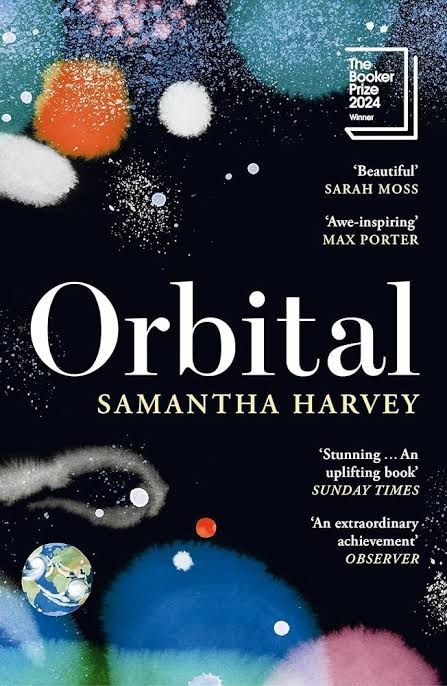
Six astronauts are inside the International Space Station; Anton, Chie, Nell, Pietro, Roman and Shaun. The book is a snapshot of a day in the lives of the astronauts as they orbit the earth 16 times during the earthly 24 hours. They grapple with a sunrise every 90 minutes which remains juxtaposed against the indescribable ethereal beauty of the planet Earth. On this particular day, there is a catastrophic typhoon that is approaching the Philippines whose path the astronauts are feverishly trying to follow as they zoom in and out of their orbital planes. The typhoon and the anticipated destruction that it would leave in its wake often becomes a vague segue and at times literature’s metaphorical liberty to delve into the internal cosmos of the individual astronauts while they themselves remain scattered in the grand cosmos of all. 

The book meticulously describes the space and how space stations orbit our planet without using any technical jargon. Earth in all its glory comes alive in the words of the author and simultaneously she transports us into the world of death and grief as one of the astronauts bemoans her mother’s death while the other, a dying relationship. Peering onto the earth, moving through the 16 orbits, the book provides a lingering, at times fleeting, but mostly a longing look at all the continents from the Americas to Antarctica, then getting more granular and microscopic as it describes the countries it crosses, all the lightness and darkness in the innumerable cities of these countries on our planet as they respond to the earthly sunrise and sunset which when observed whilst being suspended from a spacecraft can appear to be elliptically elegiac.

Samantha Harvey’s Orbital, winner of the 2024 Booker Prize, is a piece of literature that is here to let us know that books need not always be having a proverbial plot and a protagonist. Sometimes literature at its finest can be discombobulating, it can be nebulous, it can be meandering, but at the same time be a yardstick for a soulful sojourn across human lives and emotions which are unique, malleable, flawed and fascinating. Harvey’s ingenious writing can seem deceptively simple but every word of every sentence represents the complexities of the human existence when ironically the existence is now 250 miles away from the very planet that makes us human. This is a book that will stay with you for its indecipherable melancholy and literary gravitas as we continue to orbit the planes of living and existing. 

~ JUST A GAY BOY. šŸ›°ļøšŸŒšŸŒŽšŸŒ

Purple Lotus

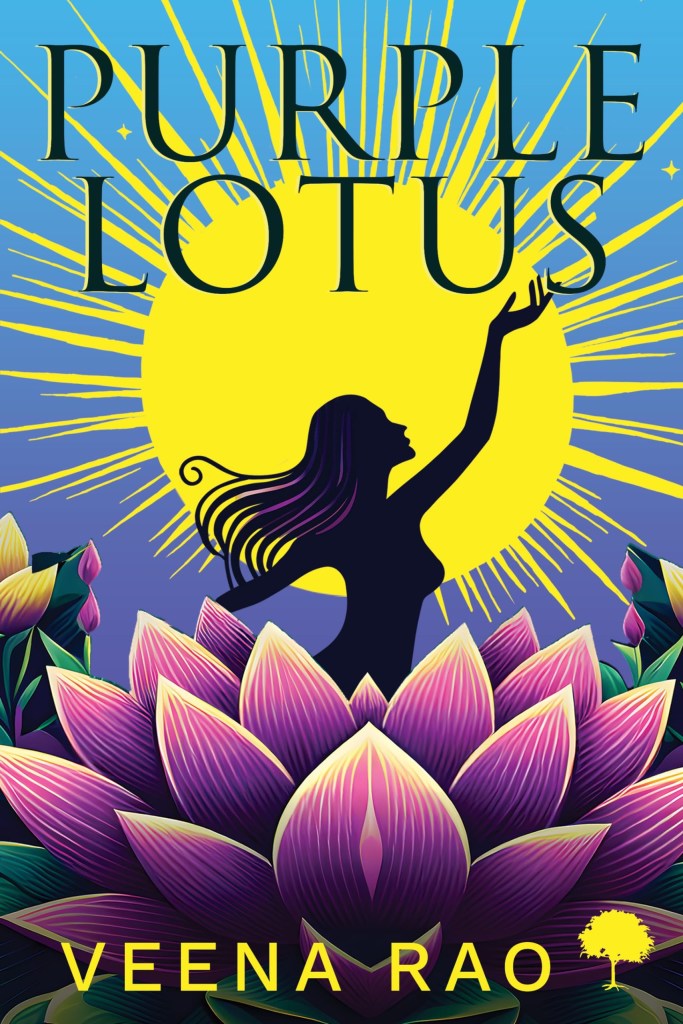
Tara, is a reticent and docile girl, who grows up in Mangalore with her grandparents and a schizophrenic uncle. Her parents along with her younger brother, move to Dubai during her formative years leaving her with her grandparents despite her disapproval and reluctance. She grows up to becomes a journalist, works for the local newspaper and has an arranged marriage with Sanjay who lives in Atlanta. After the marriage, he leaves her behind in Mangalore and Tara is only able to meet him after three years once she herself goes there. Undeterred by the abandonment and the questionable intentions of Sanjay, Tara hopes for a blissful life in the US. However, all her hopes come crashing down, as Sanjay continues to ignore her, remains non communicative and disapproving of her likes, behaviour and even her friendship with a Russian girl, Alyona. Tara continues to tolerate his mercurial temperament, his gaslighting, his passive aggression which gradually morph into physical and verbal abuse. When her parents dismiss her concerns about Sanjay and instead ask her to compromise, she feels betrayed. One day, after a particularly violent incident, she leaves her house and Sanjay, and with the help of friends manages to start her life from scratch. Later on she meets Cyrus, who develops feelings for her, as does Tara; but her unresolved past issues come to wreck havoc in her new oasis and she doesn’t stop short of self sabotaging everything that is loving and deserving of her.

Purple Lotus is an intense meditation on abandonment and shame. Through Tara, the author has portrayed how these emotions overpower our lives until a resolution is achieved. Brushing them aside, never makes them go away, rather they always come back with a vengeance in the most vulnerable of times. Tara is made to feel guilty by her parents for choosing her freedom from an abusive marriage. She carries this shame and countless other moments of shame from her growing up years, till it snowballs into a disaster that is ready to upend her life. Unbeknownst to Tara, others’ disappointment in her for her actions, and her constant longing for their approval, makes her tied to them in an emotionally calamitous way. However, through her self-actualisation which is indeed painful and unpleasant, the author shows us all that, there is always the proverbial light at the end of the tunnel.

Veena Rao’s debut work, Purple Lotus, is a poignant and urgent read on abuse, domestic violence and its unsettling impact on the victims. Though the language is easy to read and engaging, the story does hit you hard. Through this book, she highlights the various ways in which abuse can present itself and it necessarily needn’t be physical and torturous. She also makes an emphatic case for gross emotional abuse that is often disregarded not just by the victim but by the people close to her. The narrative does a sharp commentary on how Indian parents especially ignore their daughters’ call to distress and instead of comforting and supporting them, often reprimand them for even having such thoughts. 

2024 is coming to an end and Indian women are still fighting off abuse and striving for an equal stance in a marriage. Indian men are very easily given the benefit of doubt, let off the hook even in grave circumstances and celebrated for just being in the relationship. The fact that nobody questions them and challenges their innate chauvinism and misogyny, sometimes deceptively disguised as feminism and hence difficult to decode, has created this dictatorial monster that is soon becoming a monolith of unwavering patriarchy. 

That’s why we need to read this book, Purple Lotus

~ JUST A GAY BOY. 🪷

The Cemetery of Untold Stories

šŸ“ Dominican Republic šŸ‡©šŸ‡“ 

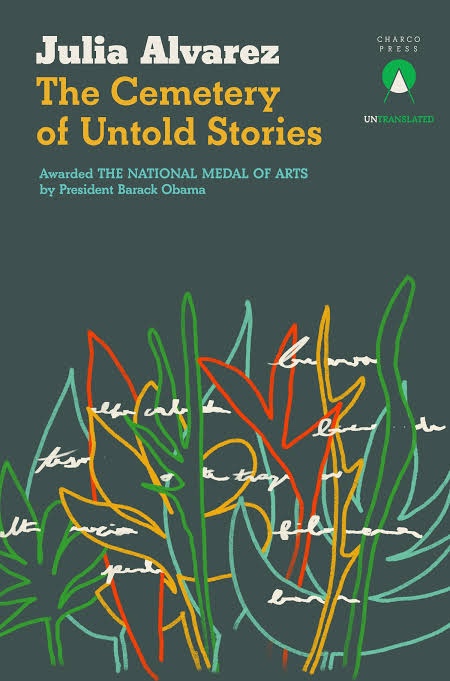
Alma Cruz is a successful writer in the US. Even with all her fame and wealth, she constantly has this gnawing sensation that something’s missing. One day she decides to move from Vermont to her homeland, Dominican Republic, in the pursuit of peace and happiness. This decision is met with a lot of opposition and criticism from her other three sisters. Nonetheless, she moves to her country and decides to open a cemetery in the backyard of her house. When the locals hear about this oddity of a plan, they gossip, eavesdrop and even scramble to secure a job at this cemetery only to know that this cemetery would be for all the unfinished manuscripts and stories that Alma as a writer began earnestly but could never finish. 

To bring this cemetery to fruition, she hires an architect who starts building sculptures of the people beside the graves where their stories lay buried. To do the upkeep of the cemetery and maintain the house, Alma also hires Filomena from the neighbourhood. As Filomena starts working at the cemetery, the sculptures start coming to life and start telling their stories. Bienvenida talks about her distraught life, her troubled marriage with the dictator el Jefe (Trujillo), his second marriage to his mistress because of Bienvenida’s miscarriages, his decision to exile her, the premeditated reconciliation during the exile that leads to Bienvenida’s pregnancy, and later forcibly separating the daughter from her under the pretext of a safe and secure upbringing. Filomena too starts chatting about her life, the feud with her sister Perla, the unconditional love for her nephew Pepito, the estrangement between the sisters and a recent tragedy that forces understanding between them. As the stories intermingle, and the characters real and unreal get candid with their lives, we soon realise that these stories aren’t separate, instead are interconnected.

Alma comes across as a stoic, independent, intelligent woman who remains resilient through her unconventional choices. She straddles her immigrant identity, the realities of being Dominican American and the belongingness to her Dominican heritage. She oscillates between the rights and the wrongs, but remains resolute with her decision, no matter the consequences. Filomena, is a harbinger of unconditional love despite a tedious and lonely life. Others’ selfishness never extinguishes the selflessness that’s inherent in her. Bienvenida’s docility and fragility shouldn’t be mistaken as her personality for they tend to overshadow her grit and perseverance. 

Julia Alvarez’s latest book, The Cemetery of untold stories, was my pick for September’s Hispanic Heritage Month. Julia is a poet, novelist and essayist and is regarded as one of the most significant contemporary Latina writers. The book is unique not just because of its plot line that indulges in magical realism but also the language and writing style. Spanish is generously interspersed with English, to the extent that I thought the book was written in Span-glish (if that could be a word!), which I thoroughly enjoyed. The author has taken her time to build the story, she has let the characters grow with the story; almost as if one is uplifting the other in a surreal symbiosis. There’s also an interesting queer character in the book. Dominican culture, geography and politics form an integral part of the narrative and Alvarez proudly flaunts all its naĆÆvetĆ© and nicety. 

The Cemetery of untold stories is Julia Alvarez’s allegory to letting go and providing oneself the proverbial closure to everything that has remained incomplete and insufficient. Quite poetic, indeed!

~ JUST A GAY BOY. šŸ˜Ž

I Kick and I Fly

Ruchira Gupta, journalist, activist, Emmy award winning documentarian, has written this ā€˜social justice adventure novel’ that celebrates hope even in the pit of despair. Heera, the fourteen year old girl protagonist in the book, lives in the red light district of Forbesganj, Bihar that borders Nepal. Her entire life, she has witnessed women being forced into prostitution, tortured and brutally abused. Since she belongs to the Nat tribe where there is intergenerational prostitution, her father is keen for her to carry on with this abominable tradition. While Heera vehemently opposes this, and is keen to pursue education, she faces innumerable struggles and ostracism at her school due to her caste and where she comes from. Her mother and her brother Salman remain her only support system. But one day, when she is expelled from her school and the threat of her being sold off as a prostitute at a local fair starts becoming more real, she seeks help from Rini Di who runs a girls hostel. Rini is actively fighting prostitution in the locality while taking on all the big names who are involved in this global trafficking racket. She also is providing a safe haven to the rescued girls and survivors. She imparts kung fu training to them and Heera soon becomes proficient in it, which slowly changes the entire trajectory of her life.

The book is a gritty retelling of the horrific realities of child trafficking and human trafficking that abound our cities, towns and villages. While we often turn a blind eye to this grim actuality, Ruchira Gupta has made it her life’s mission to rescue and rehabilitate the vulnerable women survivors; and she does it through her Nonprofit organisation, Apne Aap. The story too is inspired by real life events and characters, and while it begins on a very hopeless note, she sees to it that as it progresses, hopelessness keeps turning into hopefulness, and the proverbial hope just doesn’t remain an elusive dream but something real that can be claimed, built and asserted, even when all odds are against you.

Not just Heera, the narrative is peppered with various strong women characters such as Mai, Azra and Mira Di. The book celebrates resilience, determination, sisterhood and the joys of conviviality, friendship and community. While we feel shame in even uttering the word prostitution and prostitute; the women survivors of this profession are now looking us in the eye and demanding their rightful respect and dignity. Ruchira Gupta is helping countless such women to regain their self respect and this book, ā€˜I kick and I fly’ is just another resounding message for the same.

Must read.

~ JUST A GAY BOY. šŸ™Œ

Daybreak in Gaza: Stories of Palestinian Lives and Culture

šŸ“ Gaza šŸ‡µšŸ‡ø 

Gaza, a city having history spanning thousands of years, that once celebrated life and laughter has now become synonymous with death and destruction since the Israeli occupation began. It’s become a graveyard of lost lives, homes and hopes. The book, Daybreak in Gaza, is an anthology of essays and short stories by Palestinians from Gaza, West Bank and the diaspora who recount an erstwhile Gaza, a Gaza of their dreams, a Gaza of their grandparents and great grandparents and a present day Gaza that is witnessing a relentless genocide from the 7th October, 2023. Many of the writers give first hand accounts of the bombing and devastation that has happened mercilessly in front of their eyes. Some of the stories are diary entries as bombs go off in the background, buildings collapse and cries of despair echo constantly. Some of these writers have been killed in the ongoing war. 

Gaza has been reduced to a rubble, Gazans as a statistic. This book, has allowed a different version of Gaza to be seen, albeit the grave circumstances currently. We see Gaza as a thriving center of trade, culture, education and living prior to the Nakba of 1948. Through the various stories we are introduced to the rich history of the city and Palestine even after the Nakba and all that followed with the Egyptian occupation to the First and Second Intifada and the Oslo Accords which turned out to be criminally counterproductive to the Palestinians. And then there are the horrifying, heart wrenching, soul shattering stories of the ongoing genocide replete with unimaginable sorrow that makes this book such a necessity.

Daybreak in Gaza is a difficult read. But to think about it, can this difficulty even come close to the horrendous atrocities being meted out to Gazans since forever and especially now since October 7th, 2023? After every chapter I had to pause. Because every chapter, every page, every word is imbued with the hurt and anger that the Gazans are facing. This book is drenched in their tears and wails that the world has turned a deaf ear to. This book is a testament to their rightful hatred towards all of us for our cowardice and consent for the genocide. 

Daybreak in Gaza has been edited by Mahmoud Muna and Matthew Teller with Juliette Touma and Jayyab Abusafia. Mahmoud is a writer, publisher and bookseller from Jerusalem. Matthew is a UK-based writer and broadcaster. Juliette works for the UNRWA and Jayyab is a London-based journalist from Jabalia refugee camp in the north of Gaza.

As of 5th November, 2024, 200,000+ Palestinians are projected to have been killed by Israel and the USA in Gaza since 7th October, 2023. Two thirds of the buildings have been damaged or destroyed by the Israeli occupation forces. The $3.8 billion in annual U.S. military aid to Israel, which is part of a $38 billion, 10 year deal signed by the Obama administration (2018-2028), has supported the occupation and the ethnic cleansing. Since October 2023, at least another $17.9 billion have been funnelled into Israel’s military. 

How have we let this happen? Is this the world we are a part of wherein a certain population can be ethnically cleansed while no one bats an eyelid? Is this the world where we still call America the greatest country and completely ignore its acts of terrorism? I think we certainly are. 

I shall end my review with these quotes from the book;

From the chapter, My heart is broken, by Saba Timraz:

ā€œHas our life become a game, controlled by America and the occupier? They kill, destroy and do whatever they can to harm us, and then tell the world that they are the victims, and we are the monsters. We are an occupied people and have been since 1917. Our lands were stolen, our honour was violated, and the building blocks of our lives were destroyed. We want to be liberated and to live in freedom and dignity. We will not surrender our rights, no matter how long it takes.ā€

From the chapter, History will not lie, by Susan Abulhawa:

ā€œBut history will not lie. It will record that Israel perpetrated a holocaust in the twenty-first century.ā€

~ JUST A GAY BOY. šŸ‰

The Lion Women of Tehran

šŸ“ Iran šŸ‡®šŸ‡· 

It’s Tehran in the 1950s. Progressive and on the brink of change. Ellie, living an affluent life, is now forced to move to a poorer neighbourhood with her cantankerous mother after her father’s untimely death. Seven year old Ellie is happy to be in her new surroundings and keeps yearning for a good friend. Enter Homa, who with her free spirited and rambunctious personality soon becomes best friends with her. Together they dare to dream and don’t shy away from being ambitious whilst breaking some harmless rules along the way. Ellie’s mother despises Homa and remains condescending towards their friendship. She remarries so that they can return to their moneyed ways, marking an end to Ellie and Homa’s relationship. Years pass by, and Ellie is now one of the most popular girls of her posh school. Homa secures admission to the same school, and while she is ecstatic to reunite with Ellie; Ellie doesn’t feel the same. Ellie’s hesitation and snobbery don’t stand a chance to Homa’s infectious enthusiasm and simplicity. Soon they are back to being friends which again irks Ellie’s mother. Homa is determined to be a lawyer so that she can bring about reforms in women’s rights in Iran. She also remains committed to political activism. She constantly eggs Ellie to pursue her education. Ellie on the other hand is besotted with Mehrdad and wants to be married. Despite this clash of values and interests, they forge their friendship until one unfortunate misunderstanding that leads to a catastrophic incident upending their lives forever. 

My favourite Iranian author, Marjan Kamali, is back with her third and latest book, The Lion Women of Tehran, and this one is a stark departure from her previous works. Women are the front and center of this narrative. Marjan has put female friendship as the protagonist of this book and has charted its course through trials and tribulations, financial disparities and long distance. 

Marjan has written a story about feminism and everything it encompasses. Through Homa, she has portrayed the quintessential activist woman who is striving to make the world a better place for other women. Homa embodies fortitude, tenacity and resilience. Through Ellie, the author has made us broaden the scope of feminism and makes a case for women who willingly choose to be a homemaker. These are the women who are omnipresent in all our lives and yet easily forgotten by the feminist movement. However, Ellie’s character brings this subtlety and nuance to the conversation. Though debatable and dubious, Ellie’s mother is fierce in her own way taking ownership for her choices and actions, and yet standing tall. 

As with her previous books, Marjan has left no stone unturned in describing Iran’s political landscape and its innate turmoil and turbulence alongside Ellie and Homa’s story. She guides us through all the major political upheavals that have changed Iran’s society and the consciousness at large. The horrific killing of Mahsa Amini and the riots that have followed since for women’s liberation in Iran also find a commendable mention in the book. 

The book is purely Persian in its essence and celebrates all the ā€˜shir zan’ (lion women) of Iran. Persian culture has been brought to life in Marjan’s writing. The book is suffused with Persian cooking and the aromas literally waft through the pages. Food just doesn’t feature here for celebration but also denotes a revolution. Farsi words and sentences find considerable mention in the book. It’s such a joy to read it and to find similarities between Farsi and Hindi/ Urdu. 

Marjan Kamali writes so evocatively about love, friendship and Iran. She also challenges patriarchy and chauvinism fearlessly. The book is so achingly beautiful; it’s compassionate and passionate in the same breath and with every word.

~ JUST A GAY BOY. šŸ˜‡

Brotherless Night

šŸ“ Jaffna, Sri Lanka šŸ‡±šŸ‡° 

Sashi is an earnest, young girl full of hope and aspirations, dreaming of becoming a doctor and serving her people in Jaffna. Her family consists of her parents and four brothers. The eldest, Niranjan is already a doctor and dotes on her, constantly encouraging her to study so that she can crack her exams. Seelan and Dayalan, have natural political inclinations and often engage in charged rhetoric. Aran is subdued and wanting a simple and peaceful life. However, it’s 1981 and life in Jaffna is never peaceful. The Tamils are facing crackdown and oppression from the government resulting in a growing dissent and uprising. Niranjan disappears during one such riots in Colombo; their grandmother’s house gets torched to ashes by violent zealots while Sashi and Ammammah escape and endure a perilous and arduous journey back to Jaffna. These events prompt Seelan and Dayalan to join the militant group, Tamil Tigers, who now have taken control of whole of Jaffna. As the government and Tamil Tigers engage in skirmishes, Sashi gets admission to a medical school. There, persuaded by her friend K, joins the Tigers’ field hospital and starts treating their cadres as well as civilians. At her college she comes across her professor who soon becomes her mentor and confidante, Anjali. However, with the political situation becoming increasingly volatile and dangerous, she loses Seelan and Dayalan to the movement; Anjali gets abducted and Aran decides to emigrate. Sashi is gripped by her righteous rage and beliefs, and faces the predicament of whether she should stay back or join Aran and how her future now depends on this very important decision. 

The book is a breathless, often claustrophobic account of Sashi’s difficult choices, her internal struggles as she oscillates between interests and intentions, her emotional turmoils as she navigates loss and grief, and her mental prowess dealing with hope and hopelessness. Sashi as a character is an unassuming force to reckon with. The narrative also takes us on a journey of Sri Lanka’s political quagmire, the helplessness of Tamil civilians as they are caught between the militant groups, the government and the Indian Peace Keeping Force. Massacre ensues as places and people get bombed, and depression looms large at every turn. 

Brotherless Night, winner of the Women’s Prize for Fiction 2024, is a historical fiction written so brilliantly, that it is unsettling and uncomfortable. The gifted author, V. V. Ganeshananthan, builds the restlessness of the characters, as they encounter death and dilemmas and keeps the book unrelentingly atmospheric. The writing is compelling and persuasive, peppered with Tamil words. Tamil culture, cuisine and traditions get the requisite mention throughout the book. There are moments of such literary brilliance in the book; the scene where Sashi’s docile mother emerges as the proverbial phoenix and leads an uprising against the government along with a group of fierce, inspiring women; the dialogues between Anjali and Sashi as they contemplate the movement, the militants and their pursuit and purpose; as also the extremely unnerving and shocking medical examination scene of a rape victim, brutalised by the Indian Peace Keeping Force. 

Brotherless Night will disturb you and it should. It is a complex catastrophic story of survival amidst doom and despair. The ingenuity of the author is such that despite the barbarism and violence on display, humanity finds its place; in the thoughts, conversations and actions of its various characters. This is literature at its finest; V. V. Ganeshananthan, its proud torchbearer. 

~ JUST A GAY BOY. 🄹