Juveniles & Other Stories

📍 Thailand đŸ‡č🇭 

Juveniles & Other Stories is an anthology of short stories centered on queer narratives and queer characters. While the pieces may appear to be coming-of-age stories at first glance, a deeper reading reveals a tapestry of complex human emotions, rendered with remarkable empathy and compassion.

Nearly half of the book comprises the titular novella “Juveniles”. This is a story about two young boys Hai Saeng and Dao Nhue and their journey through adolescence. Dao Nhue gets enamoured with the mysterious Hai Saeng, who comes from a wealthy and privileged background. Hai Saeng seems to visit Dao Nhue’s village only during the summers and is never seen with his parents. His brooding and detached personality arouses Dao Nhue’s curiosity, and as they begin spending time together, he realises the dark secrets hiding behind the facade of congeniality. The innocent friendship blossoms into love and both of them find themselves in an inseparable dynamic of longing. However, Hai Saeng’s past looms large preventing him from embracing happiness or accepting love. The simmering anger, frustration and a sense of abandonment pushes him toward self sabotage and makes him lash out at times. The story builds toward a pivotal moment when Hai Saeng is forced to confront his worst fear leading to untoward repercussions that irrevocably alter the trajectory of both boys’ lives. Though the story is told through two young adults, it deals with adult issues of violence, neglect and emotional repression and how unchecked wounds can harden into self contempt, unworthiness and indifference. Hai Saeng’s attempt to walk through life unperturbed whilst bottling up rage and resentment only transforms him into a vehicle of pain. Ultimately, the boys do navigate their emotional burdens in flawed, confused, and profoundly human ways, thus offering an understated but resonant life lesson.

Amongst the accompanying stories, the one that caught my attention was, “Hirun and Beardy”. Again, this is about two men and the unspoken love between them. The fact that neither of them address a misunderstanding that occurred years ago, allowing it to fester and create a rift, says a lot about how adults choose to act immature and give in to their ego and false assumptions. Eventually it takes their perceptive nephew to bridge the gap and remind them of the unmistakable bond that has always existed between them. 

Apinuch Petcharapiracht, the author, (also known under the pen name ‘Moonscape’) is a Chinese-Thai writer based in Phetchaburi, Thailand, and who dreams of marrying her girlfriend. Her stories in the book repeatedly explore unrequited love, silent longing and suppressed desire. Themes of grief, loss and loneliness echo throughout the collection. Through Juveniles & Other Stories, which has been translated from Thai by Kornhirun Nikornsaen, Apinuch has demonstrated how queer individuals experience the same vast spectrum of human emotions like anybody else. Sometimes the simplest stories leave the deepest impressions and Apinuch’s collection is a testament to that truth.

~ JUST A GAY BOY. đŸłïžâ€đŸŒˆđŸŒˆ

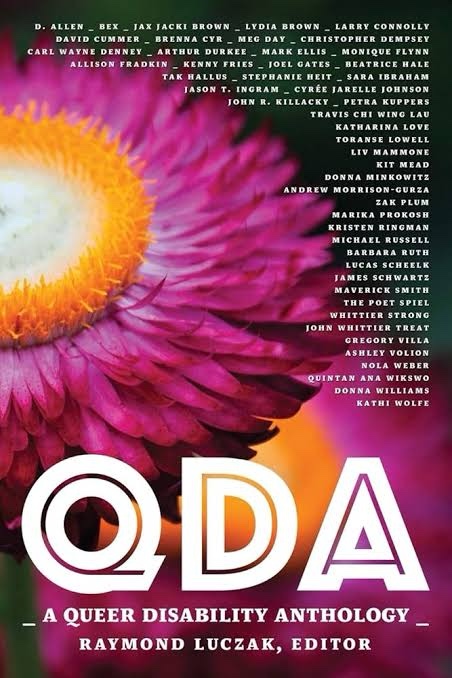
QDA – A Queer Disability Anthology 

July is Disability Pride Month and it was born out of the ‘Disability Rights Movement’ in America. It is built on intersectional identity politics and social justice. The core concept of Disability Pride is based on the tenet of rewriting the negative narratives and biases that frequently surround the concept of disability. 

QDA isn’t just another anthology, rather it stands out for its thoughtful and considerate approach to queer disability. Each of the 48 writers/contributors is queer and disabled. The writers are diverse in terms of their race, gender, sexuality, identity and disability type which includes physical disability, sensory disability, neurodivergence, psychiatric disability, chronic illness and even invisible disability. The book also is an amalgamation of different literary forms such as essays, short fiction, poems, comics and hybrid writing. 

QDA asserts itself as a commanding voice against ableism, dismantling the various ways in which it stigmatises and sidelines disabled people. The writings unapologetically express the anger and frustration felt by the writers and at the same time, they do not read as pleas for pity or assistance. The narratives are focussed on representation and resistance, where intersectionality isn’t just glossy platitude but a lived reality. The contributors have not flinched from exploring topics of sexuality, intimacy, eroticism and body politics. Out of the many writings, the ones that stood out to me were as follows. 

  1. No more Inspiration Porn: Introduction by Raymond Luczak rightfully introduces us to the necessity of a shame-free approach to disability, the blatant normalisation of ableism and the necessary nuance needed while discussing and implementing diversity. He makes a strong case against using disability as “inspiration porn” to fuel ableist goals. 
  2. Liv Mammone’s Advice to the Able-Bodied Poet entering a Disability Poetics Workshop, is a searing and scathing critique on the default ableist behaviours. It is a catalogue of reminders for engaging with a disabled person including checking one’s own misplaced courtesy and concern. A notable quote from the essay was, “The words disability, disorder, and disease aren’t synonymous”. 
  3. Kit Mead in Missing What You Never Had: Autistic and Queer, speaks for the autistic and queer who tend to become the invisible queers, as most queer spaces being too loud, prohibit many in the community from seeking them out and hence many of them feel their queerness to be fake as they are unable to assimilate with something that is a part of the cultural zeitgeist. 
  4. In Love Me, Love My Ostomy, Tak Hallus speaks about his struggles with Ulcerative Colitis and living with an ostomy; confronting the rejection he faces from within the gay community because his disability is not pretty, popular, obvious, and conventionally palatable. 
  5. Maverick Smith in Invisible Within the Ten Percent, laments the normalisation of ableism and audism, even in Pride celebrations.
  6. In The Ides of April, Barbara Ruth takes us through her everyday life as a disabled person while also living with her disabled partner, Nora. In the aftermath of a terrorist attack on the Boston Marathon, her attendant Aisha fears for her racial profiling and Barbara wonders if she has become a quintessential clicktivist.
  7. In Learning to Fall in Love, Katharina Love, decides to fall in love with herself first and accept her condition of Möbius Syndrome, her love for women and make peace with the fact that her mother’s love may always remain unattainable. 

And finally, the crown jewel of this anthology for me, was the brilliant, satirical piece by Lydia Brown called, How Not to Plan Disability Conferences (or, How to Be an Ableist Asswipe While Planning a Disability Conference). Lydia meticulously enumerates the ways in which ableist people use disability to virtue signal diversity to an ableist audience essentially and how ableism takes centre stage and disability and disabled individuals remain mere props for motivational tokenism and triumph voyeurism. This short essay is biting, belligerent and bold and it should make everyone scrutinise their own diversity agendas. 

Raymond Luczak, the editor of QDA, is a prolific Deaf gay writer, editor, poet, and filmmaker whose work often explores Deaf culture, disability, queerness, and identity. He has written/edited over 30 books, spanning poetry, fiction, memoir, anthologies, and plays. QDA reads like an act of defiance. It’s an anthem against the erasure of disability. It’s provocative and rambunctious; necessarily caustic yet relentlessly truthful, indulgent yet raw, but always delightfully queer. 

~ JUST A GAY BOY.

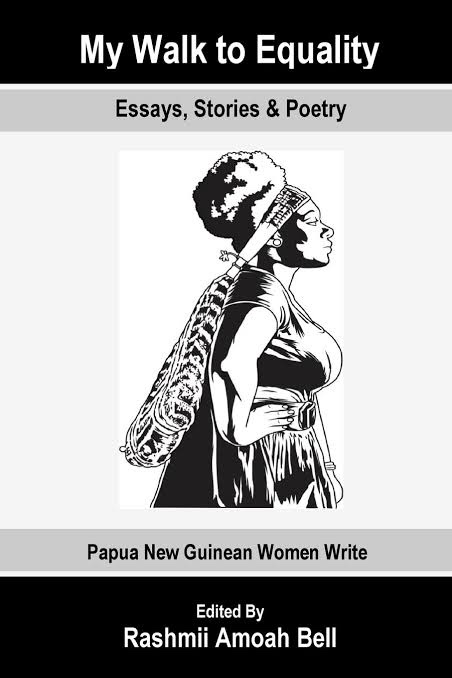
My Walk to Equality: Essays, Stories and Poetry- Papua New Guinean Women Write

📍 Papua New Guinea đŸ‡”đŸ‡Ź

May is celebrated as the Pacific Islander Heritage Month and my pick this year was from Papua New Guinea (PNG). The book is an anthology of essays, poems and stories, written exclusively by Papua New Guinean women. There are more than 80 contributions from 40 writers, and the majority are in their 30s. For the uninitiated, PNG is a country located in Southwestern Pacific Ocean, occupying half of the island of New Guinea (the western half belongs to Indonesia). The country gained independence from Australia on September 16, 1975. It is one of the most rural countries and comprises of over 800 tribes. It’s also the most linguistically diverse country in the world, and about 839 languages are spoken in PNG. It also has the dubious distinction of having one of the highest rates of violence against women in the world. This book, therefore, captues the ongoing struggles of women who are trying to achieve a semblance of equality in a particularly patriarchal society.

The book has been divided into sections; Relationships, Self Awareness and Challenging gender roles and breaking glass ceilings. However, the overarching theme throughout is the demand for women’s rights and equality, the necessity to disband the deep rooted misogyny and the call for action against sexual and domestic violence. The writers boldly dissect the prevailing patriarchal culture in which young women are being brought up and how men are groomed to be sexist and gynophobic. The society at large is perverse to women being educated and taking up spaces in public and private sectors. Working women are often scorned at, receive no help at home and face uphill battles navigating professional environments. These courageous women writers, many of whom are teachers and working professionals, have urged PNG women to fight for their education and never to dismiss any opportunity that could guarantee financial independence, which can then pave the way for the upliftment of their collective consciousness and thus inspire future generations.

Rashmii Amoah Bell, who has edited this book, is a Papua New Guinean writer and editor renowned for her contributions to amplifying women’s voices in her country. From this book, a few writings stood out to me for their poignancy and simplicity yet relaying the angst, anguish and resilience. The Expectation of Marriage by Watna Mori explores how colonial past and intergenerational traumas shape the reality of PNG women; how the entirety of a woman in PNG has been reduced to her marital status and the writer wonders what happens to women who consciously decide to live outside this boxed existence. Betty Lovai writes in her essay, Papua New Guinean women in Leadership, the harsh truths about securing leadership roles as a woman in PNG and the governmental and societal inertia in bringing about any positive impact. In the story, On the hunt for a New Language in Papua New Guinea, Samantha Kusari, makes a case for languages that are dying across the country. In the search for a tokples (dialect), the writer gets introduced to another rare dialect, Akadou, and hence realises the rich legacy of a language that now has only three living people speaking it. In Walk to Equality in Education, Roslyn Tony, laments about the insurmountable hardships met by teachers and women principals in the field of education. Caroline Evari’s poem, Who are you to tell me it’s wrong, explores the possibility of an egalitarian household in PNG. The brilliant essay, The Inappropriate Cultural Appropriation of the Bilum by Elvina Ogil, articulates the perils of the harmful practice of such a cultural theft. She provides the nuances that make us ponder the consequences of a heritage hijack, that which can undermine and undervalue an entire civilisation. Tanya Zeriga-Alone, in her thought provoking essay, Which way Papua New Guinea? Look in the Mirror; presents an insider’s perspective on the current situation in the country and says, that the only way PNG can move forward towards ensuring equality and equity, is by disregarding mediocrity, respecting fellow citizens and local talents, and understanding the collective resilience shared by all the tribes of PNG

Having read this book, I wonder if the conditions for Indian women are any different; rather how eerily similar are Indian and PNG women’s struggles. On the surface of it, we may seem to be a society where women have rights, but certainly there’s no equality yet. If you scratch this surface, you will notice uncomfortable truths and predatory practices of misogyny, chauvinism, sexism and violence deeply rooted and being disguised as appropriated and misplaced feminism. We may be into our 79th year of independence and the fastest growing economy in the world, but none of that or the current ubiquitous vermilion can hide the fact, that women in our country are unsafe, undervalued, excluded, oppressed (especially Dalit and tribal women) and marginalised. 

~ JUST A GAY BOY. 🧐

Daybreak in Gaza: Stories of Palestinian Lives and Culture

📍 Gaza đŸ‡”đŸ‡ž 

Gaza, a city having history spanning thousands of years, that once celebrated life and laughter has now become synonymous with death and destruction since the Israeli occupation began. It’s become a graveyard of lost lives, homes and hopes. The book, Daybreak in Gaza, is an anthology of essays and short stories by Palestinians from Gaza, West Bank and the diaspora who recount an erstwhile Gaza, a Gaza of their dreams, a Gaza of their grandparents and great grandparents and a present day Gaza that is witnessing a relentless genocide from the 7th October, 2023. Many of the writers give first hand accounts of the bombing and devastation that has happened mercilessly in front of their eyes. Some of the stories are diary entries as bombs go off in the background, buildings collapse and cries of despair echo constantly. Some of these writers have been killed in the ongoing war. 

Gaza has been reduced to a rubble, Gazans as a statistic. This book, has allowed a different version of Gaza to be seen, albeit the grave circumstances currently. We see Gaza as a thriving center of trade, culture, education and living prior to the Nakba of 1948. Through the various stories we are introduced to the rich history of the city and Palestine even after the Nakba and all that followed with the Egyptian occupation to the First and Second Intifada and the Oslo Accords which turned out to be criminally counterproductive to the Palestinians. And then there are the horrifying, heart wrenching, soul shattering stories of the ongoing genocide replete with unimaginable sorrow that makes this book such a necessity.

Daybreak in Gaza is a difficult read. But to think about it, can this difficulty even come close to the horrendous atrocities being meted out to Gazans since forever and especially now since October 7th, 2023? After every chapter I had to pause. Because every chapter, every page, every word is imbued with the hurt and anger that the Gazans are facing. This book is drenched in their tears and wails that the world has turned a deaf ear to. This book is a testament to their rightful hatred towards all of us for our cowardice and consent for the genocide. 

Daybreak in Gaza has been edited by Mahmoud Muna and Matthew Teller with Juliette Touma and Jayyab Abusafia. Mahmoud is a writer, publisher and bookseller from Jerusalem. Matthew is a UK-based writer and broadcaster. Juliette works for the UNRWA and Jayyab is a London-based journalist from Jabalia refugee camp in the north of Gaza.

As of 5th November, 2024, 200,000+ Palestinians are projected to have been killed by Israel and the USA in Gaza since 7th October, 2023. Two thirds of the buildings have been damaged or destroyed by the Israeli occupation forces. The $3.8 billion in annual U.S. military aid to Israel, which is part of a $38 billion, 10 year deal signed by the Obama administration (2018-2028), has supported the occupation and the ethnic cleansing. Since October 2023, at least another $17.9 billion have been funnelled into Israel’s military. 

How have we let this happen? Is this the world we are a part of wherein a certain population can be ethnically cleansed while no one bats an eyelid? Is this the world where we still call America the greatest country and completely ignore its acts of terrorism? I think we certainly are. 

I shall end my review with these quotes from the book;

From the chapter, My heart is broken, by Saba Timraz:

“Has our life become a game, controlled by America and the occupier? They kill, destroy and do whatever they can to harm us, and then tell the world that they are the victims, and we are the monsters. We are an occupied people and have been since 1917. Our lands were stolen, our honour was violated, and the building blocks of our lives were destroyed. We want to be liberated and to live in freedom and dignity. We will not surrender our rights, no matter how long it takes.”

From the chapter, History will not lie, by Susan Abulhawa:

“But history will not lie. It will record that Israel perpetrated a holocaust in the twenty-first century.”

~ JUST A GAY BOY. 🍉

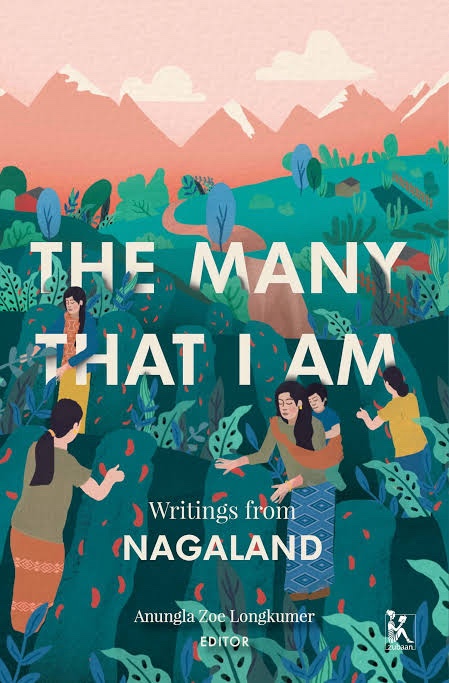
The Many That I Am : Writings from Nagaland

📍 Nagaland

Nagaland has been mired in political turmoil and various occupations. From the British to the Japanese and the Indian state, the Nagas have suffered violence and persecution. Hence, there isn’t much literature from those troubled times. However, they do have a rich tradition of oral literature, history and culture passed down through word of mouth from generation to generation. It’s only after the formation of Nagaland statehood in 1963 that some writings started appearing. By the turn of the century is when the dawn of writing in Nagaland truly began.

This book is an anthology of short stories, personal essays and poems interspersed with painting prints. What makes this book compelling is that all of the writers and artists are women, and it has equal space for contemporary and debutantes alongside prominent, established writers such as Temsula Ao, Easterine Kire and Avinuo Kire.

The writings essentially reflect the issues plaguing Naga society and Naga women. Patriarchy is the biggest social evil and most of the essays and poems portray its intergenerational traumatic consequences due to the abject denial of its existence. The poems, I wish you were a man by Abokali Jimoni, I just hate and NoNoNo woman by rƍzumarÄ« raáčsāra, are poetic lashings at the rigid patriarchal constructs and how women are now walking away from them. The story, My Mother’s Daughter by Neikehienuo MepfhĂŒo, brings about the widely prevalent but silenced epidemic of domestic violence; which when unchallenged becomes the norm of a woman’s lived experience. The power to forgive by Avinuo Kire, is a gut wrenching story on rape and what happens when righteous anger, hatred and the decision to forgive are taken away from the victim. Many of the stories depict the sense of belonging that Nagas have for their land and their peoples. Martha’s mother by Hekali Zhimoni was a stand out story for the sheer wit, resilience and composure shown by the mother when faced with an emotionally volatile predicament.

Anungla Zoe Longkumer is a writer, musician and filmmaker, based in Dimapur, Nagaland. Through this genre defying book, she has unleashed the creative pursuits of Naga women writers and has presented to the world the glorious literature from Nagaland that is steeped in folklore and continues to challenge myths, traditions and our collective consciousness.

~ JUST A GAY BOY. 😇

Crafting the Word: Writings from Manipur

📍 Manipur

The book is an anthology of short stories, essays and poems, many of which are translations from the Manipuri into English, all written and translated by women writers from Manipur; edited and put together by Imphal based independent journalist, writer and translator, Thingnam Anjulika Samom. Many prominent Manipuri writers feature in the book from the yesteryears to the current. Particularly noteworthy amongst them was Binodini, who was a Manipuri novelist, essayist, playwright, screenwriter and lyricist. Her collection of short stories in 1965 was the first by a Manipuri woman. Her story, Girls’ Hostel Sri Bhavana; translated by L. Somi Roy, evokes a sense of nostalgia and grips us with the tenderness of love and belonging.

The book begins with an elaborate and nuanced essay, The Journey of Women’s Writing in Manipuri Literature, by Nahakpam Aruna, on the various Manipuri women writers and their contributions to the craft and society at large. The writings in the book form a social discourse on the position of women and women’s rights in Manipur. Patriarchy, misogyny, abuse, gender and caste based discrimination, menstruation form recurring topics in the various stories and poems. Though every story is profound, three of them caught my attention. These are: 1) Sati interview by Ningobam Sanatombi, translated by Kundo Yumnam, which takes a very poignant and satirical look on women’s rights in Hindu mythology; 2) Nightmare by Nee Devi, translated by Soibam Haripriya, is a tragic lesbian love story wherein the lesbian lovers, Somo and Leishna, are at the receiving end of their respective homophobic and abusive families; 3) The Defeat by Ningombam Surma, translated by Bobo Khuraijam, which, through the story of a married couple, Bipin and Nalini, brings forth the hidden chauvinism present in the often revered so-called feminist men.

The writings are simple and the language lucid, but they pack a punch. The messages that they convey can keep echoing long after you have finished the book. Manipur is currently in a state of utmost unrest, turmoil and despair. I hold this book close to my heart whilst thinking about all the people there, especially the women and these brilliant women writers. May peace and stability reign.

~ JUST A GAY BOY. đŸ«„

Kurdish Women’s Stories

📍 Kurdistan

Kurdistan is a roughly defined geo-cultural territory in Western Asia wherein the Kurds form a prominent majority population. It comprises the following four regions: southeastern TĂŒrkiye (Northern Kurdistan), northern Iraq ( Southern Kurdistan), northwestern Iran (Eastern Kurdistan), and northern Syria (Western Kurdistan). Certain Kurdish nationalist organisations seek to create an independent nation state while others campaign for greater autonomy within the existing national boundaries. Iraqi Kurdistan first gained autonomous status in a 1970 agreement with the Iraqi government, and its status was reconfirmed as the autonomous Kurdistan region within the federal Iraqi republic in 2005. There is also a Kurdistan Province in Iran but it is not self ruled. Kurds fighting in the Syrian Civil War were able to take control of large sections of northern Syria and establish self governing regions in an Autonomous Administration of North and East Syria (Rojava). [ source: Wikipedia]

This book is an anthology of 25 stories, told by Kurdish women themselves. The book spans five generations and starts with the oldest woman and ends with the youngest. There are voices from each of the four regions of Kurdistan. The book is a nuanced, poignant, first person account of the lives of Kurdish women, a nation without a state; fighting authoritarian governments, patriarchy, discrimination and gender based violence. But more importantly, it’s an inspiring and reverberating narration of the resilience, courage, determination of these fierce and independent Kurdish women. These valiant women wore their Kurdish patriotism and pride on their sleeve and fought for their region through art, poetry, education, whilst braving grief due to death and separation from their loved ones. None of the women, in these stories portray themselves as victims, despite the adverse circumstances; instead only speak about their outstanding valorous actions in an understated and pragmatic way. The stories edited and put together by Houzan Mahmoud, is a testament to the brave, crucial and exceptional women revolutionists and crusaders who are often forgotten by the media and the world at large.

~ JUST A GAY BOY. 👏