

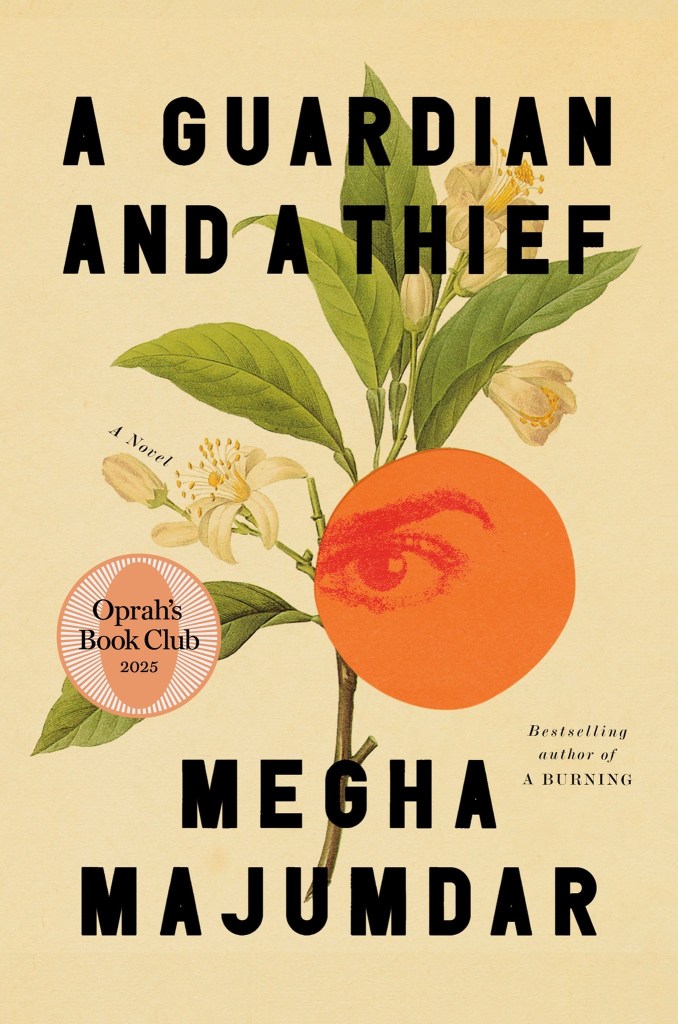
Some books are so bad that there can be no redemption for them. That’s precisely how Megha Majumdar’s A Guardian and a Thief appears to be. Since it came with great appreciation from none other than Oprah and was even her book club’s pick, also having been shortlisted for the National Book Awards, it made me wonder what exactly made this book a “shining jewel”, particularly in the eyes of an American readership. To put it bluntly, this book has been written by an NRI for a Western, specifically American, audience. It ticks every box when it comes to caricaturing and stereotyping Indians through a familiar western gaze. What is especially astonishing is that despite having lived in India for nineteen years, Majumdar still chooses to pander to this gaze by reproducing a shoddy and pathetic poverty porn. This raises a larger and more troubling question: what should be said about the literary genius of someone like Oprah when they champion a book like this which exemplifies lazy writing highlighting all the tropes, has a flimsy storyline and actively perpetuates stereotypes. Shouldn’t Oprah have known better?
The story is set in a climate-stricken Kolkata of the future where poverty, famine and scarcity form the backdrop of an anarchic society. The billionaires continue to profit obscenely making billions out of the misery of the poor while hoarding resources. There’s the protagonist, Ma, who is desperate to migrate to America with her father and her two-year-old daughter, Mishti, to reunite with her husband. Battling the everyday challenges of extreme heat and hunger, she does secure the visas for their journey. However, fate has other plans when a thief steals her bag containing their passports, leaving Ma helpless and hopeless, just days before their scheduled flight.
What follows is so tedious, disjointed, and incoherent that one loses track of the entire story. Calamity after calamity befalls Ma, but her otherworldly, almost supernatural stoicism feels performative and implausible. The city of Kolkata experiencing the effects of the climate crisis that Megha has tried to depict, is reduced to cursory descriptions of poverty, emotional apathy and belligerence amongst its inhabitants without allowing for nuance, insight, or interpretation. It feels as though the author has simply taken the tropes of a ‘third world country’ and transplanted them into a speculative future, where little has changed, an exercise that caters neatly to a voyeuristic western imagination.
More than being disappointed, I am angry. Ma is singularly the most frustrating character I have encountered in recent literature. Not merely one-dimensional, she is also burdened by an unnecessary, almost theatrical resilience and pretence. She seems to be the living embodiment of somebody who is deliberately delusional. Mishti, her daughter, emerges as one of the most irritating child characters I have ever read and I bemoan the author’s craft in making me dislike even a toddler.
The book leaves me with a host of unanswered questions. What was the author trying to convey with the supposedly shocking climax? What traumas has Ma endured that explain her behaviour and why is there little to no mention of the same? Does the text hint at child abuse, and if so, why is it merely gestured at and abandoned? Why is the narrative energy spent building empathy for the thief while Ma, the ostensible victim, remains alienating and opaque? Lastly, why did Majumdar write this book at all? If the aim was only to appease an American audience, then it’s worked brilliantly.
This brings me back to those who have praised the book, Oprah included. Where does the responsibility of the reader lie when a book such as this gets promoted as one of the “best books of the year”? For Oprah did this book tick the ‘diversity reads’ box and hence the appropriation of India and Indians by a diaspora author was never examined or interrogated? Should diaspora authors get away with such misrepresentation simply because they are Indian by origin, even though their work is divorced from the lived realities it claims to portray and their writing is nothing but a patronising paean?
I have said this before and I will say it again, diaspora Indian authors should write about their diaspora clan. Everything else risks becoming appropriation. To imagine an India steeped in suffering and mythological misery, written for western consumption and for pacifying one’s misplaced patriotism, serves neither literature nor truth.
It genuinely pains me to criticise my forever idol, Oprah for choosing Megha Majumdar’s A Guardian and a Thief. Oprah will continue to remain my idol, but at times it’s imperative we question our idols too for their choices. If not, we become equally complicit.
Postscript: I am aware that this review may be misconstrued as misogynistic and dismissed for mansplaining, because I, as a cis-presenting queer man is criticising two women, but I still stand by my review nonetheless. After all, this critical thinking is also inspired by Oprah and her penchant for speaking truth to power.
~ JUST A GAY BOY. 🫣😠



 the shiny diaries