Gaza Weddings

Life in Gaza is unpredictable. Hope and desire is fickle too. So what does it take to plan a wedding in Gaza then? Ibrahim Nasrallah’s book talks about the irony of having a wedding in the midst of bombs and death. He uses dark humour, sarcasm and stark realism to convey the misery and hopelessness that abound life for Gazans. Through the two protagonists, Amna and Randa, the book provides a cataclysmic account of Palestinians in Gaza under the Israeli occupation.

Randa, is an aspiring journalist, who’s identical twin sister, Lamis is in a courtship with Amna’s son Saleh. In the book, Amna keeps talking to her husband who’s in hiding while Randa talks to the readers directly. Death is so commonplace in Gaza that no family is unknown to its horrors and the brutality of the occupation. Amna is bereft after she hears about the suspected death of her husband but is unable to identify him since it’s so badly disfigured. Saleh is unable to process his father’s martyrdom and becomes emotionally unstable. Towards the end, the story depicts the death of one of the twin sisters. We never know who is dead.

Ibrahim’s writing is part lyrical, part biting. Death, tears and sadness form the canvas on which he paints the precarious lives of Palestinians. Bittersweet reminiscences and pervasive foreboding become everyday nuances for Amna and Randa. Joy and laughter feel misplaced and unnatural when there’s grief lurking at every turn. Ibrahim Nasrallah is a Palestinian writer, poet, artist and photographer with an extensive body of work and has been the winner of the Arabic Booker Prize in 2018. The book has been translated into English by Nancy Roberts who is known for her translations of Arabic literature.

As of 13th March, 2024, 31,200 Palestinians have been killed in Gaza and more than 72,800 have been injured since Israel began the genocide on October 7th, 2023. There’s no life in Gaza literally. Those who have survived the bombs and Israel’s ethnic cleansing, are now starving to death. The current day Holocaust is going unchecked and unabated as the world continues to look the other way. How are we ever going to face ourselves in the future? For how many years will Israel and its comrades, especially the United States, will have to beg for forgiveness? Should they ever be forgiven then?

~ JUST A GAY BOY. 😞

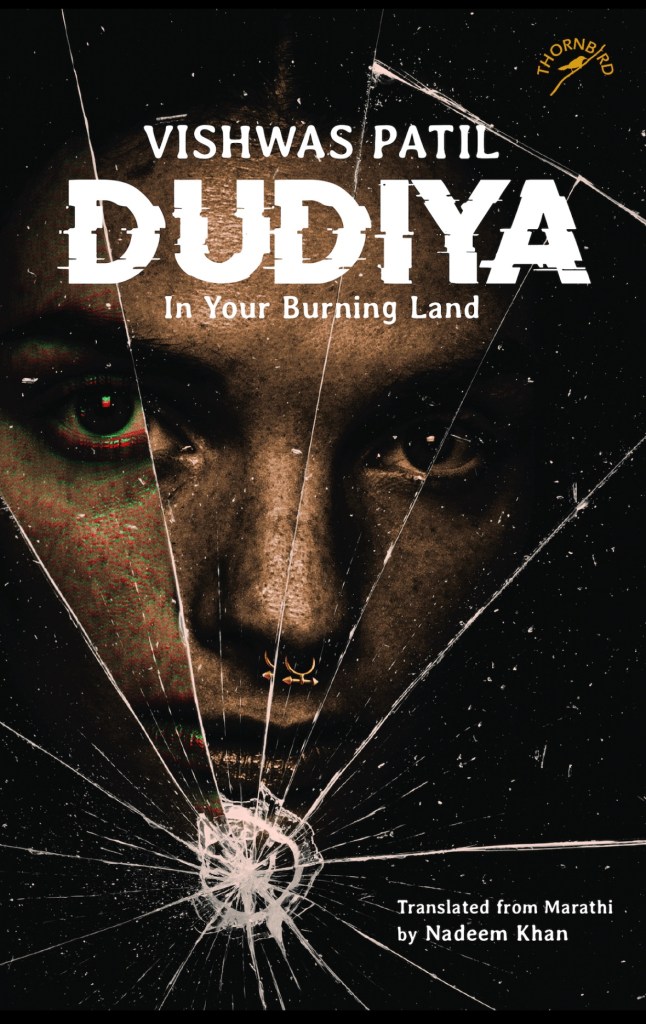
Dudiya: In your burning land

Read a Kitaab, reading community’s February month’s #readingindiachallenge was dedicated to Chhattisgarh and my pick was Vishwas Patil’s Dudiya. Written originally in Marathi and translated into English by Nadeem Khan, the book is a searing portrayal of life in the Naxal region of Chhattisgarh. The story begins in May 2013, when IAS officer Dilip Pawar gets posted as an Election Observer in the Naxal dominated districts of Chhattisgarh. His duty is to ensure smooth electoral process despite the grave circumstances of the region. His trepidation is put to test when he lands in the area and is inundated with stories of Naxal brutality and their ingenious ways in circumventing police surveillance and governmental interference. There, during his stay, he comes across this girl, Dudiya, who was born in one of the impoverished hamlets of Chhattisgarh, but soon joins the Naxals to escape the misogynist traditions and cultural norms of her village. During her training as a Naxalite, she soon realises how the original principles on which Naxalism was built have got eroded in the pursuit of establishing authority, control and hierarchy. Violence is commonplace and often misguided. Misogyny remains omnipresent in the Naxal camps though not as stark as in her village. She ditches the Naxals and joins the police as an informant and begins her life anew whilst trying to heal the traumas of her past.

Inspired by real life events, the book gives a thorough introduction to the region that has been plagued by the Naxalite movement. The author has on no occasion taken sides. He deftly portrays the history of the rise of Naxalism, its necessity, its spread and how its roots are linked to Maoism. Through various characters in the novel, he brings to light the politics that are deeply ingrained in the sustenance of the Naxal movement. Caught in the crossfire between the government and the rebels are the tribals of the region who have been completely forgotten by both parties. The apathy and ignorance of the political class in wanting to primarily weed out Naxal insurgents without addressing the grievances of the tribals at the grassroots level, exemplifies it. Through this book, the author has touched upon all of the above issues, without sounding patronising and being morally absolute.

Though the writing is simple and lucid, I felt it faltered at a few places when it tried to incorporate some element of ‘boob writing’ (the term, courtesy Daisy Rockwell). The description of the ‘bare breast’ tradition of the tribe and later of Dudiya’s relationship with an older man, bordered on titillation. Male writers should do away with these descriptions of women’s anatomy having lecherous overtones, because it serves no purpose in propelling the narrative.

Having said that, Dudiya is still a good book that attempts to provide a thorough understanding of the complexity of the Naxal movement. It also describes the lush yet difficult geography of the region. The author has given a vivid description of the Abujmarh forests, Tadmetla and Bastar. Vishwas Patil has done a fairly commendable job in bringing forth this national issue through the lives of the tribals who are easily dismissed in an often forgotten area of the country.

~ JUST A GAY BOY. 😐

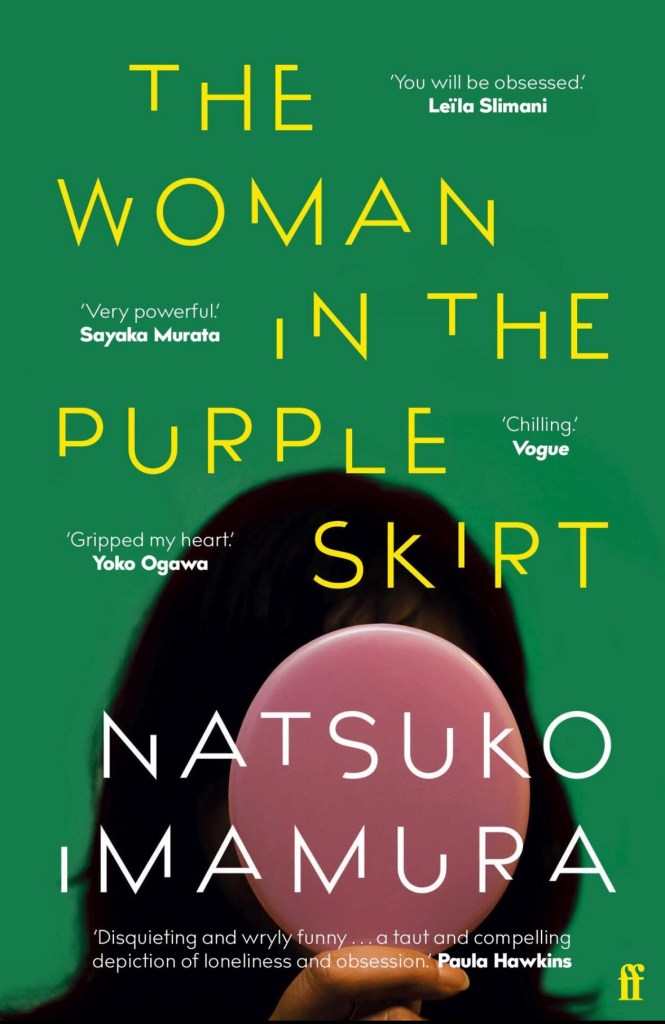
The Woman in the Purple Skirt

My pick for Read a Kitaab’s #januaryinjapan was, ‘The Woman in the Purple Skirt’. The book, written by the acclaimed Natsuko Imamura and translated from the Japanese by Lucy North, has garnered fairly positive reviews online, however I was left feeling disappointed. The book is about this eponymous Woman in the Purple Skirt who is being closely watched by the narrator who calls herself as the Woman in the Yellow Cardigan. She meticulously describes every move of the woman in the purple skirt, her daily routine, eavesdropping on conversations and even gets her a job in the hotel that she’s employed at. Despite this extremely voyeuristic snooping by the woman in the yellow cardigan, she remains inconspicuous and almost oblivious to the other woman. However, things take a more ominous turn after the woman in the purple skirt starts working earnestly in the hotel and the sequence of events leading upto the climax happen so rapidly, it almost feels like an antithesis to how the book began.

In summation, I felt the climax to be a major letdown despite the foreboding atmosphere it created and the thrilling subtext. Though the book discusses themes of loneliness and the yearning for a friendship, and the human need to be seen and validated, it gets lost in the narrative that remains hyper focused on the inconsequential daily mundane activities of the woman in the purple skirt for the greater part of the book.

Ultimately, I even wondered what was the purpose of the woman in the purple skirt? What was the author trying to convey? I remain discombobulated!

~ JUST A GAY BOY. 🫤

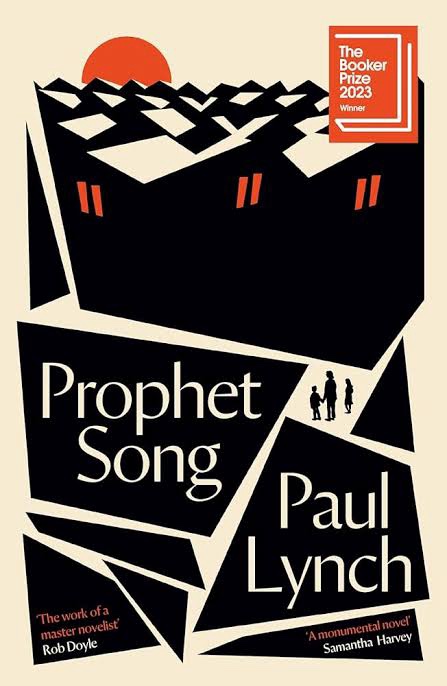
Prophet Song

Winner of the 2023 Booker Prize, Prophet Song is deliberately dark and perversely poignant. Set in contemporary Ireland, the story is about Eilish Stack, who is a molecular biologist by training and working in biotech in Dublin. She has four children, one being an infant, Ben. The story begins when Larry, her trade unionist husband is taken in for questioning by government officials. While Eilish receives no news about Larry despite her umpteen attempts to contact him or the officials; the country is soon descending into a political quagmire. A right wing “National Alliance Party” stakes claim to be the government and begins attempts to fight the anti-nationals and the rebels. Totalitarianism sees a rapid ascent and fascism soon starts dominating every aspect of civilian life. Freedom becomes conditional, defence forces become authoritarian, paving the way for a deadly civil war.

Eilish remains forever worried about Larry, wondering whether he’s even alive. Her eldest son Mark joins the rebels and soon disappears. Her other son Bailey, remains angst ridden and obstinate. Her daughter Molly remains her only support through this ordeal. As Eilish battles her anxieties, her insecurities, her losses, her grief, her helplessness, her hopelessness, and simultaneously care for her infant and a rapidly progressing dementia suffering father; she needs to make a decision if she has to leave the country or cross the borders illegally; as the society around her continues to disintegrate, and life becomes an endless cacophony of gunshots, sirens and missile strikes.

Paul Lynch’s prose can be generalised as an urgent and compelling commentary on the steady rise of totalitarianism in the world. His writing has a claustrophobic atmosphere, a sense of foreboding and is suffused with an unrelenting uneasiness. Lynch evocatively translates Eilish’s impuissance and anxiety into his words and onto every page. The scenes where Eilish expectantly awaits Mark’s phone call and when she goes hospital to hospital in search of her injured child are especially gut wrenching, depicting an awful sense of dread. The writing almost feels like a stream of consciousness; there are sections and chapters in the novel but no paragraphs. The dialogues between characters are without any punctuations; so much so that, there’s no difference between a thing said and a thing thought.

Now, Prophet Song may have been set in a dystopian Ireland, but closer home dystopia may soon become a reality. Economic development has been used as a tool to conceal fascism and autocracy. Jingoism and zealotry are being given a free run while any form of dissent is being deemed antinational and subsequently penalised. If you are one amongst many who still chooses to look the other way as this is happening right now, and thinking ‘this won’t/ will never affect me’; read Prophet Song. Paul Lynch was probably imagining an Ireland like that, but we don’t have to imagine it.

~ JUST A GAY BOY. 👿

Minor Detail

📍 Palestine 🇵🇸

This novel has two parts. The first one is set in the year 1949, just after the Nakba of 1948. An Israeli officer is scouring the Negev desert for any remaining Arabs or Arab settlements. The blistering heat, a festering infection, dust, sweat do not deter him from going about his day in a regimented way. His single handed determination to find Arabs does lead him to a Palestinian girl, who is forcibly brought back to the Israeli military camp, where she is gangraped by the soldiers, later killed and buried in the sand. The second part, begins in the city of Ramallah, where a young Palestinian woman sets out to investigate this crime that happened 25 years ago. As she juggles her way through the innumerable military checkpoints in the West Bank and on her journey to the desert, she is also juggling anxiety and panic that have become ubiquitous in her life due to the Israeli occupation. Her single handed determination to find details about the gruesome incident despite the unforgiving heat through the lonesome desert unfortunately leads to a tragic penultimate moment.

The book is an uncomfortably simple yet unflinchingly honest prose on Palestine and Palestinian people living under the occupation and an apartheid regime. The first half focusses on the daily mundane activities of the officer over and over again, so much so that the brutality that occurs becomes a part of the same mundane. In the second half, the author literally places us in the passenger seat of the woman as she takes on the perilous journey, and we get to experience first-hand her anxiety, fear and trauma muddled in her determination and longing to unearth the truth. The author deftly shifts the narrative perspective from the Israeli officer whose intention and purpose is annihilation of Palestinians, to the Palestinian woman whose reality is obscured and dependent on the military occupation. Freedom is villainous in one while it’s the prisoner in another. Life is precious in one while for the other, death is a close ally.

Adania Shibli is a Palestinian author and essayist, born in Palestine, who has written three novels and lives between Jerusalem and Berlin. Minor Detail, translated from Arabic to English, by Elisabeth Jaquette, was longlisted for the International Booker Prize in 2021 and was also nominated for National Book Award for Translated Literature in 2020.

As of December 11th, 2023, over 17997 civilians which include 7729 children have been massacred in Gaza since the genocide began on October 7th, 2023. The dehumanisation of the Palestinian people by the entire world has never been more stark and atrocious. The global silence on the oppressed and the selective empathy towards the oppressors is a new abysmal low for our collective humanity. The total disregard towards the ethnic cleansing of the Palestinians, the absolute subservience towards the Israeli propaganda of self defence, the failure to distinguish between antisemitism and zionism is a telling of the dark times we are in. The next time when the world’s so called superpowers call for peace and human rights, you can gawk at the irony of it.

~ JUST A GAY BOY. 🇵🇸

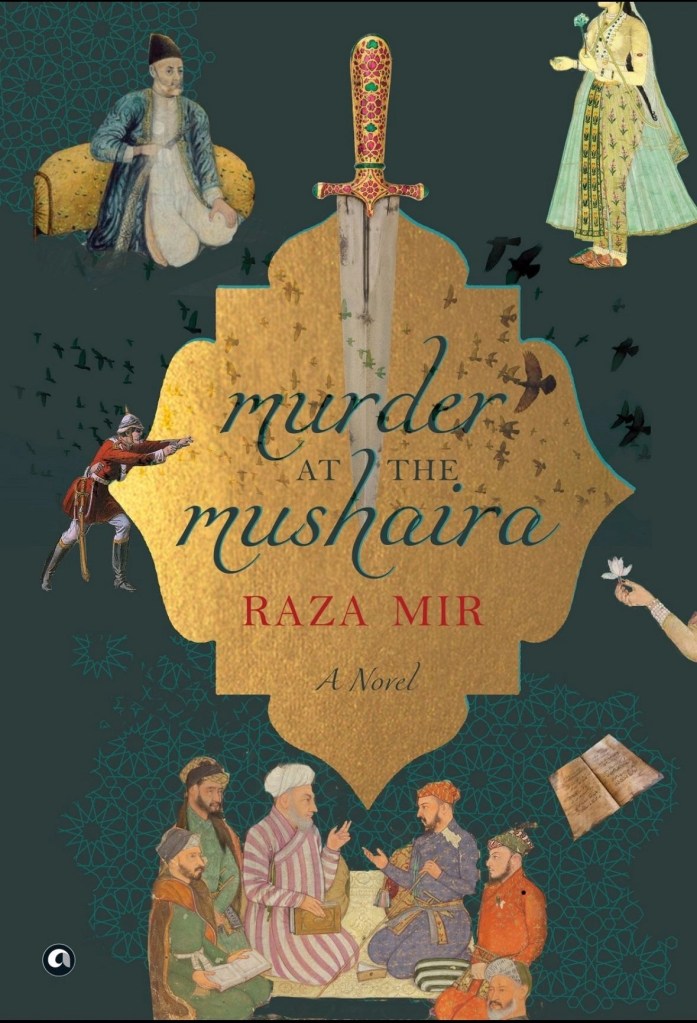
Murder at the Mushaira: A Novel

A murder mystery set during India’s First War of Independence, does sound scrumptious. It’s 1857, the British and the East India Company have started controlling greater parts of the country. It’s the last days of the erstwhile Mughal empire with many of the Nawabs surrendering to the British. There’s also a rebellion that’s brewing in various parts of the country that collectively takes the form of the Uprising of 1857. In the midst of this, Delhi is still trying to hold onto its Mughal administration. May of 1857, it’s Ramzan and there are soirées, feasts and mushairas happening in Delhi. At one such mushaira, hosted at Nawab Iftikhar Hasan’s haveli, a poet, Sukhan Khairabadi, is found to be murdered. The poet laureate, Mirza Ghalib, who also masquerades as an amateur sleuth, gets tasked with investigating this murder alongside the policeman Kirorimal Chainsukh. What unfolds next is pure delight in terms of storytelling, as history and mystery get beautifully intertwined in this marvellous fictional narrative.

A myriad of interesting characters make their appearance in this novel. Mirza Ghalib, the protagonist has his wit, charm and Urdu couplets in tow. Master Ramachandra, his accomplice in solving the crime, brings science and sincerity to the proceedings. Whilst a haggered Nawab Iftikhar, is contemptuous of Ghalib; his wife, Roshan Ara Begum has a great deal of affection for him. Various women characters such as Hyderi Begum Zutshi, Syeda Zainab, Ratna Bai make their presence felt in this story just by their steely grit, fearlessness and defiance.

Raza Mir’s story is an ode to the cultured and mellifluous Mughal era. Recently when there has been a movement to wipe out the Mughal presence from our country, Raza reminds us of their regality, their majestic architecture, their delectable cuisine and their venerable mushairas steeped in exquisite Urdu poetry. Every chapter begins with a haunting Sher in Urdu. Raza’s narrative is a rich amalgamation of fiction and accurate historical events. He’s also incorporated an innocuous and heartwarming queer plot line in the story. Such ingenuity!

Do not miss this mushaira! It’s riveting.

~ JUST A GAY BOY. 🧐

The Covenant of Water

Oprah’s book club pick, is indeed a modern day masterpiece. It’s grand, it’s moving, it’s all encompassing. It’s a historical fiction, a medical mystery and a multigenerational saga. Abraham Verghese’s epic tale, ‘The Covenant of Water’, is all this and so much more. It’s a story that shape shifts its way across generations and timelines, still retaining generosity of the human spirit at its core. It feels like a grandiose gesture on the part of Verghese to have told us this story; something that’s unflinchingly brutal, unapologetically morbid yet when the author writes it the way he writes it, that is to say, so evocatively tethered; it feels tender, considerate and benevolent.

It begins in the year 1900 in the village of Parambil, in Kerala where a twelve year old girl, is about to be married to a 40 year old man. The story progresses, and the girl soon comes to be known as the matriarch, Big Ammachi. She has been married to a man who’s family suffers from a “condition”, the men are afraid of water and the deaths have occurred because of drowning. Nobody is able to explain this strange phenomenon, until Big Ammachi’s granddaughter, becomes a doctor and unearths the mystery behind the “condition”. From 1900 to 1977, the story traverses geographies and politics, medicines and diseases; poetically; introducing us to a plethora of interesting characters and throwing a few riddles along the way. We come across Philipose, Big Ammachi’s son, a writer, who gets lost in his chauvinism and addiction, only to regain his lost ardency. His tumultuous relationship with Elsie, stands out in the prose, due to its fecklessness, its reality rooted in ambivalence and ego. Elsie, is stoic yet yielding, an artist who is wronged by Philipose’s austere callousness and detachment. Elsie’s daughter and Big Ammachi’s namesake, is a passionate doctor, yearning to be a surgeon, who is constantly juggling between her familial attachments, medical duties and heartaches. Her discovery of the “condition“ is a sublime moment in medicine; a moment that stands still for its enormity and humility.

Verghese also acquaints us with a myriad of interesting doctors. Rune Orqvist, a clinician extraordinaire, committed to his profession and people, opens a leprosarium, not just to treat leprosy, but to heal its ostracism, and provide patients with empathy and kindness. Digby Kilgour, misunderstood and misplaced, often lost in predicaments of love and longing, finds his calling in the leprosarium. The moments leading upto it, though seeped in pathos and despondency, ultimately celebrate resilience.

Abraham Verghese has a gift for words. His words, his text, interspersed with Malayalam, are so detailed yet exact. He transports us effortlessly to Parambil, Glasgow, Madras; so much so that it begins to feel like we are witnesses to the happenings in the narrative. A colonial India and an Independent India get beautifully worded; the former has angst, desperation and bondage, while the latter has a bittersweet joyous effervescence. It’s incredible to note the tapestry of the language as he describes the topography of Kerala in the 1900s. Similarly his musings with Madras city are so thorough. Just as geography provides the lush landscape to Abraham’s story, emotions provide a realness to the words. They form the undulating subtext to each of the characters’ struggles in undoing their trials and tribulations. The author provides an incredible emotional arc to each of them. Their internal struggles in coping with their unresolved traumas, and unspoken mental issues often gets reflected externally in their unparliamentary conversations and wrong decisions. This dichotomy of distress gets explored by Verghese subtly and sensitively. Also poignant and piercing are the conversations on caste between Philipose and his lower caste pulayan friend Joppan.

Death and disease form an integral part of this narrative. Since the author is a doctor, medicine gets centre stage in the proceedings. It’s magnificent to note the diagnoses being made in the early 1900s. He doesn’t shy away from getting into the details of the anatomy, physiology and grotesque pathology of it all. The surgical scenes are almost musical, so anatomically accurate. Leprosy, a disease such, that even the pen refrains from writing about it, gets its biggest attention since the medical textbooks. The conscientious decision to portray a disease that’s synonymous with exclusion and abandonment, is humbling.

It is a big book, but an easy read. Abraham Verghese’s words are captivating and commiserating. It’s a story of epic proportions and is told such. Every character adds layers and nuances to this riveting family and medical drama. There lies an undercurrent of melancholy in every page. There remains an enigmatic dread at every turn. However, the author infuses hope even in the moments of despair by singling out compassion, love and kindness in his characters and situations.

The Covenant of Water, is a triumph of human spirit. It leaves you feeling calm and contented long after you have finished reading it.

~ JUST A GAY BOY. 🥹✨

All the Little Bird-Hearts

(Slight spoilers ahead)

Longlisted for The Booker Prize 2023, this phenomenal book, is a heartfelt, yet emotionally brutal look at love that’s lost in relationships. Sunday, the principal protagonist, lives with her teenage daughter Dolly, in a modest house on a quiet street and living an orderly life. Sunday is neurodivergent and makes no bones about having difficulty in negotiating and understanding the simplest neurotypical situations. Hence, she finds it necessary to stick to a routine, even if it means eating only white food and relying heavily on an etiquette book. Her life seems to get upended when a glamorous couple move next doors. Vita, is a larger than life character, who uses her charm, wit and captivating personality to mesmerise Sunday and Dolly; while her husband Rollo, is calm and collected, having a suave impressionable style. In no time, they are in and out of each other’s house, having regular dinners and brunches. Dolly is so taken by Vita’s magnetism, that she starts spending more and more time at Vita and Rollo’s place; soon taking her clothes there, starting to work for them in their construction business and even having her own room in their house. Sunday begins to wonder at this rapid rate of detachment of Dolly from her and starts questioning Vita’s real intentions behind the same. These, of course, aren’t met with favourable outcomes and Sunday is left abandoned by everyone.

The book is an open canvas of Sunday’s mind. The author gives us a detailed and unfiltered blueprint of her thoughts and triggers. The first half of the book may seem a tad slow and repetitive, simply because the author is making us accustomed to Sunday’s neurodivergence, her vulnerability, her ways of tackling everyday conversations and interactions, and her perplexities in understanding others’ ease in navigating the same. Sunday is a fierce character who owns her neurodivergence in spite of the negativity and deliberate ambiguity that others display around her. The author also gives us an insight into her childhood traumas, her highly volatile relationship with her mother and her incongruous marriage. The disintegration of Sunday and Dolly’s relationship is heartbreaking, so is Dolly’s disregard and contempt of her mother for a more attractive Vita. Despite this anguish, Sunday exhibits steely grit and acceptance of her agony, and also of her daughter’s estrangement.

The author, Viktoria Lloyd-Barlow, is autistic and through this book has given a voice that’s authentic to so many other autistic people who are underrepresented and often misrepresented too. It’s a searing yet poignant rendition on motherhood, flawed relationships, and unequal societal dynamics. As you read the book, you understand the fact, that the author isn’t wanting our sympathy, rather wants us to check in with our prejudices and privileges. Such a stellar debut!

~ JUST A GAY BOY. 🫶

Together Tea

Marjan Kamali’s debut book, Together Tea, is a heartwarming rendition of the dichotomy of displacement and belongingness. The author explores this difficult predicament through an Iranian family and especially through the lives of the mother and daughter, Darya and Mina, respectively. The Rezayis are forced to immigrate to the US after the 1979 Revolution that lead to the establishment of a new Islamic regime in Iran. Darya, who’s an avid mathematician has to forgo her career plans and become accustomed to the life of being a home maker. However, she has her own maths club with two other women of her neighbourhood through which she gets to exercise her love for numbers and complicated equations. She’s also become intent on finding the most eligible husband for Mina. Mina on the other hand is torn between the frustration over her mother’s incessant obsession with her marriage, and the inability to make a conclusive decision regarding her career. Then one day when Darya and Mina decide to go to Tehran despite their family’s reservations about it, they discover each other and their relationship in a new light.

Marjan gives a detailed insight into the family’s lives in 1996 New York City and 1978 Tehran. Through the entire narrative, the author has kept Iran as the real protagonist. She has layered the story with its history, its effervescence and the political upheaval that wronged its very own people. She has captured the conspicuous changes that have occurred in Tehran, pre and post, the Islamic Revolution. The curtailment of women’s rights and their freedom to choose and express themselves, is palpable through Mina’s experience when she goes back to Iran in 1996. Juxtaposed to that is Bita, Mina’s friend living her life to the fullest and scandalously in Tehran, albeit discreetly. The author has handled these conflicting realities in the sincere conversations between Bita and Mina.

But, at the heart of this story, is the tender, often fraught and feckless relationship of Darya and Mina. The author has deftly portrayed the nuances of their hyphenated existence. The feeling of belongingness remains nebulous and unattainable for Darya and Mina. Coming to terms with their displaced identities and the bittersweet actualities of Iran has been done ever so delicately by the author. As with her more popular book, ‘The Stationary Shop of Tehran’, Marjan has infused this book too, with the sights and smells of Iranian culture and cuisine. Indulge in the tantalising aromas of ghormeh sabzi and baklava as Marjan takes you on this sublime sojourn of love, relationships and misplaced longings.

~ JUST A GAY BOY. 🥰

A General Theory of Oblivion

📍 Angola 🇦🇴

Angola is a country on the west central coast of Southern Africa. It is the second largest Portuguese speaking (Lusophone) country in the world. After a protracted anti-colonial struggle, Angola achieved independence in 1975 from Portuguese colonisation as a Marxist-Leninist one party Republic. The country descended into a devastating civil war the same year between the ruling People’s Movement for the Liberation of Angola (MPLA), the insurgent National Union for the Total Independence of Angola, and the militant organization National Liberation Front of Angola. The country has been governed by MPLA ever since its independence in 1975. Following the end of the war in 2002, Angola emerged as a relatively stable unitary, presidential constitutional republic. (Source- Wikipedia)

The book, originally written in Portuguese by Angolan writer, José Eduardo Agualusa in 2012, was translated into English by Daniel Hahn in 2015. The novel appeared on the shortlist for the 2016 Man Booker International Prize and has been the recipient of the 2017 International Dublin Literary Award. The story is about a woman, Ludovica, who seals herself off in her apartment in Luanda in 1975 at the time of Angola’s independence. As Luanda plunges into a civil car soon after, Ludovica watches it unfold in bits and pieces through her window, radio and sometimes overhearing people’s conversations. She’s also dealing with the abrupt disappearance of her sister and brother-in-law which happens around the same time. She sustains herself frugally by growing her own vegetables, catching pigeons, reading the books in her house and by scribbling her thoughts on the wall. Years pass by, and Ludovica, with her aging and diminishing eyesight often oscillates between periods of imagined insanity and hopeless reality. One day, a little boy, Sabalu comes into her life, at a time, when she’s immobile and sprawled out on the floor due to a fracture. He tends to her and gives her hope through his unconditional empathy and care. Just when Ludo starts considering Sabalu as her grandson and only family, she is confronted with an unexpected and unknown family member.

This dark and seemingly despondent life of Ludovica runs in parallel with the civil upheaval in Luanda and Angola. The author also introduces us to a myriad of other characters through the narrative, whose individual stories, purposes and intentions come together in the end. Each of them has a tale woven across Angola’s independence. He also takes time in explaining Ludovica’s painful past traumas leading her to live a life of confinement, self abandonment and shame.

Agualusa’s prose is purposeful, political and poetic. He crafts a meandering plot that traverses from Angola’s independence in 1975, through the civil war, till its end in 2002. He doesn’t shy away from layering the text with mentions of colonialism and white supremacy and it’s problematic effects. Ludovica comes across as a woman of steely grit having a resounding optimism to live, despite her circumstances and her own beliefs about her. That’s the genius of Agualusa’s writing. Do savour it.

~ JUST A GAY BOY. 🙃