Whale

šŸ“ South Korea šŸ‡°šŸ‡· 

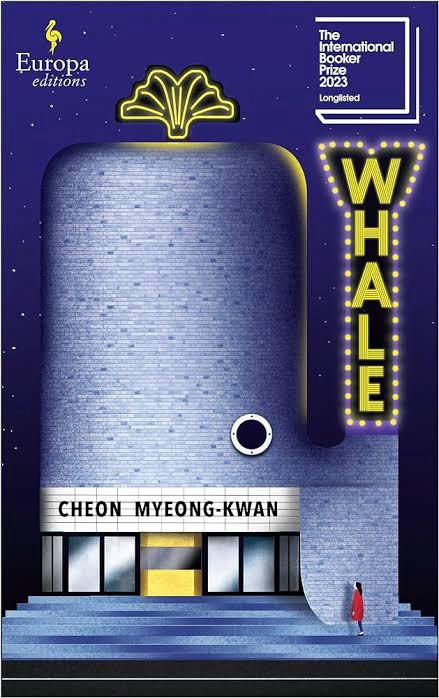
Geumbok is an extraordinarily fierce and courageous woman who is set out to expand her life, to bring enormity in all its glory and forms into her life, so that she can regale in its obscenity. As a child, she sees a whale and gets enamoured by it. The whale becomes an inspiration for her to dream big, to pursue and achieve impossible things, especially things that are deemed undoable by a woman. She runs away from her small village, comes to the Wharf, meets the fishmonger with whom she starts a fish drying business. There she encounters Geokjeong, falls in love with him, marries him and later realises his stupidity and inherent violent tendencies. Catastrophes befall her in continuum that leads her to a nondescript village, Pyeongdae. Here, she becomes the talk of the town, builds a cafe, starts a brick making business and opens a movie theatre designed as a whale. She becomes rich, arrogant and doesn’t predict the unfortunate destiny that is awaiting her, which true be told, had always been encircling her.

Chunhui, is Geumbok’s mute daughter, forgotten by the mother and the people around her. It’s her enormous size that gets people’s attention but soon their interest wades away because of her inability to communicate and comprehend. But she does possess a magical ability to talk to elephants and Jumbo becomes her only confidante. She learns to make bricks, adores daisy fleabanes and forever wonders why the world is the way it is. She becomes a suspect in a disaster that destroys Pyeongdae, gets incarcerated, undergoes unimaginable torture in the prison and is released after many years. She goes back to the ramshackle city only to find it in ruins. She then goes on to lead an absolutely lonely, marooned life making bricks.

There are hoards of interesting characters in the book like the one eyed woman, the old crone, the twins, Mun, Ladybug etc who bring their own whimsy, quirks and terror to the narrative. Pathos and grief await at every turn for all of these characters. Despondency and mayhem form the hallmarks of the plot. However, despite the grotesque events that make you squirm and your skin crawl, the ingenuity of the writing is such that it succeeds in keeping you hooked. 

Whale, shortlisted for the International Booker Prize 2023, is a story like no other. Even if I try my best, I wouldn’t be able to classify its genre or its style. To say it is unique would be a literary disservice. It’s a story that has history, folklore, magical realism, dark humour and feminism. The narrative for two thirds of the book is fast paced while the remaining third assumes a relaxed tone. The words are full of vivid imagery. They convey innocence, violence, hatred, longing, iniquity and doom. At the same time they also bring about revulsion by depicting bodily fluids, diseases and putrefaction. Sex finds liberal mention through the pages and the author doesn’t shy away from being graphic, problematic and harsh about it.

Geumbok’s character is one that is going to stay with me for a long time. She is multilayered, multifaceted and multitalented. She’s sexual and owns her sexuality. She resists every patriarchal norm and challenges everyone’s, including the readers, innate prejudices and chauvinism through her beguilingly subtle and brutally grandiose ways. She represents liberality and makes us question stereotypes. She’s selfish in her wants, selfless about her prowess. She’s flawed, witty, promiscuous, odious,mysterious and extremely narcissistic. There’s no one like Geumbok.

Though Geumbok grabs our attention, Chunhui asserts her presence with her silence. In silence, she finds her strength too. She epitomises resilience and perseverance. Often times, characters like Chunhui dont find mention in books and media, let alone be the protagonist, but in this book, the author has projected the boredom and mundanity of Chunhui to be purposeful leading to an awe inspiring but lugubrious climax. 

The author, Cheon Myeong-kwan, is a South Korean author, screenwriter and film director. This book has been translated into English by Chi-Young Kim who has done an incredible job in translating this phenomenal piece of Korean literature. Whale comes across as an astonishing feminist literature where women drive the story and men play second fiddle to them. Feminism, in this book doesn’t make men hapless and victimised, rather it asserts itself as being deliberately provocative and intentional. There’s three more things that enrapture the narrative; fishes and their fishy smell, bricks and daisy fleabanes.

Read Whale. Today!

~ JUST A GAY BOY. šŸ¤“

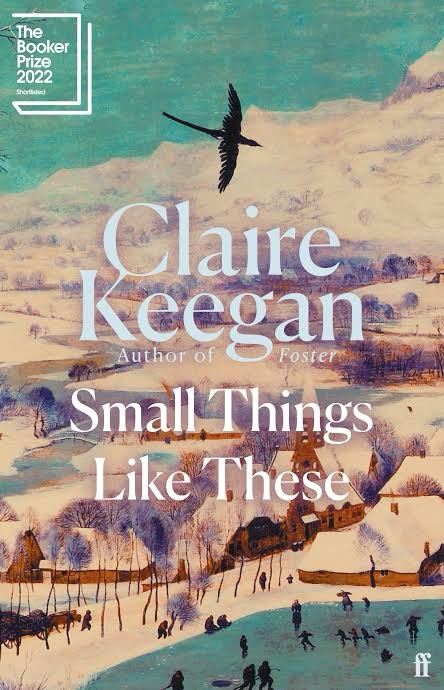
Small Things Like These

šŸ“ Ireland šŸ‡®šŸ‡Ŗ 

It’s Christmas of 1985 in the town of New Ross. Bill Furlong is a coal merchant toiling away feverishly to provide for his wife Eileen and five daughters. The Catholic Church is very influential in the town and Bill regularly supplies coal to them. The nuns know Bill well and admire his work and the commitment towards his family. There’s also a Magdalen laundry attached to the church which is believed to provide shelter to young girls, especially unmarried girls who are pregnant. Rumours abound about the clandestine activities at the laundry and also about the girls who are sheltering there. Most of the townspeople know the workings of the Magdalen laundry and how the church is tacitly involved in its iniquitous affairs. Eileen, doesn’t want to affront anyone; she believes that being a mute spectator would protect her daughters from any future troubles. One day, Bill while dropping off the coal at the church, stumbles upon a young girl who has been locked up in the freezing coal shed without food, water and covered in her excrements. Even in her indisposition she pleads Bill to rescue her and her child who has been forcibly taken away from her by the nuns. As Bill confronts this predicament, he has to simultaneously decide between antagonising the church and his church loving wife, and doing the right thing. 

The Magdalene Laundries in Ireland, also known as Magdalene asylums, were institutions usually run by Roman Catholic orders, which operated from the 18th to the late 20th centuries. They were run ostensibly to house ā€œfallen womenā€, an estimated 30,000 of whom were confined in these laundries. Given Ireland’s historically conservative sexual values, these were a generally accepted social institution well into the second half of the 20th century. They disappeared with changes in sexual mores and a loss of faith in the Catholic Church due to repeated revelations of scandals. Ireland’s last Magdalen asylum imprisoned women until 1996; it’s only in 2001 that the Irish government acknowledged that women in these laundries were victims of abuse and much later in 2013, that a formal state apology was issued. 

Claire Keegan, is an Irish writer known for her short stories and the recipient of the Rooney Prize for Irish Literature among various other awards. Small Things Like These won the 2022 Orwell Prize for Political Fiction, was shortlisted for the Rathbones Folio Prize and was the shortest book to be shortlisted for the 2022 Booker Prize.  In December 2024, it was Oprah’s Book Club pick. It has been adapted into a film of the same name starring Cillian Murphy. 

This novella is a crisp, succinct take on how human beings falter, ponder and ruminate over doing the right thing even when faced with obvious wrongdoings. Most of us don’t want to disturb the status quo. We are ready to be consciously blind to such scenarios and even to wonder if the victim/s rightfully deserved what they endured. Our hypocrisy becomes jarringly evident in our chosen silence. Our activism and our fights are very conditional, provided they don’t cost us our peace and don’t disturb our lives. This is the advice Bill is subjected to from Eileen and others who had his best interest. If you look closer home, the rising Islamophobia and the general intolerance for criticism, though a different issue from what happened in Ireland, hasn’t prompted the majority of us to take a stand, because of the fear of being ostracised by the increasing number of zealots which may include our friends and family, and also the overbearing fear of an almost autocratic, authoritarian government that is trying its might to police secular voices. It is the acceptance of Small Things Like These that lead to big things like xenophobia, genocide and totalitarianism. 

The book ends on a cliffhanger moment. Even Oprah, in her podcast, wondered what would happen next. So Claire, please let there be a sequel to Small Things Like These

~ JUST A GAY BOY. 🄺

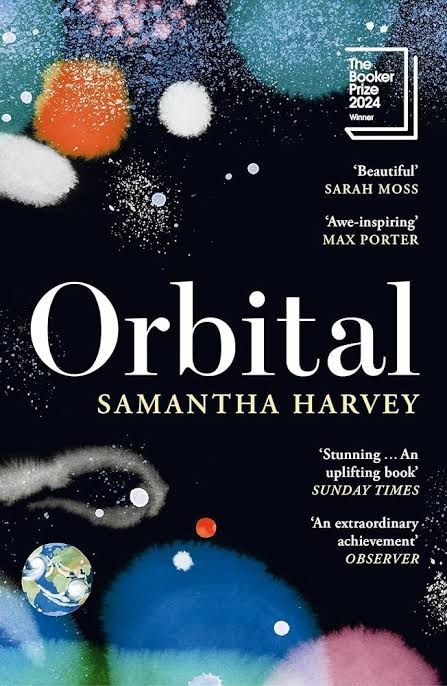
Orbital

Six astronauts are inside the International Space Station; Anton, Chie, Nell, Pietro, Roman and Shaun. The book is a snapshot of a day in the lives of the astronauts as they orbit the earth 16 times during the earthly 24 hours. They grapple with a sunrise every 90 minutes which remains juxtaposed against the indescribable ethereal beauty of the planet Earth. On this particular day, there is a catastrophic typhoon that is approaching the Philippines whose path the astronauts are feverishly trying to follow as they zoom in and out of their orbital planes. The typhoon and the anticipated destruction that it would leave in its wake often becomes a vague segue and at times literature’s metaphorical liberty to delve into the internal cosmos of the individual astronauts while they themselves remain scattered in the grand cosmos of all. 

The book meticulously describes the space and how space stations orbit our planet without using any technical jargon. Earth in all its glory comes alive in the words of the author and simultaneously she transports us into the world of death and grief as one of the astronauts bemoans her mother’s death while the other, a dying relationship. Peering onto the earth, moving through the 16 orbits, the book provides a lingering, at times fleeting, but mostly a longing look at all the continents from the Americas to Antarctica, then getting more granular and microscopic as it describes the countries it crosses, all the lightness and darkness in the innumerable cities of these countries on our planet as they respond to the earthly sunrise and sunset which when observed whilst being suspended from a spacecraft can appear to be elliptically elegiac.

Samantha Harvey’s Orbital, winner of the 2024 Booker Prize, is a piece of literature that is here to let us know that books need not always be having a proverbial plot and a protagonist. Sometimes literature at its finest can be discombobulating, it can be nebulous, it can be meandering, but at the same time be a yardstick for a soulful sojourn across human lives and emotions which are unique, malleable, flawed and fascinating. Harvey’s ingenious writing can seem deceptively simple but every word of every sentence represents the complexities of the human existence when ironically the existence is now 250 miles away from the very planet that makes us human. This is a book that will stay with you for its indecipherable melancholy and literary gravitas as we continue to orbit the planes of living and existing. 

~ JUST A GAY BOY. šŸ›°ļøšŸŒšŸŒŽšŸŒ

Kairos

šŸ“ Germany šŸ‡©šŸ‡Ŗ

Katharina is a nineteen year old girl living in East Berlin. Hans is a fifty plus gentleman, a novelist and working for a local broadcaster, also living in East Berlin. The year is 1986. The Berlin Wall is intact. Katharina and Hans have a romantic meet cute and soon start dating each other. She gets completely besotted with Hans and turns a blind eye to his behaviours and transgressions. Hans is a married man and has a son. He has various extramarital relationships while being married to Ingrid. Katharina is aware of his philandering ways but is too consumed by his charm, his sex appeal, his taste in music, art and books to even subconsciously register it as a concern. When Katharina goes away to Frankfurt an der Oder for a year, for a theatre internship, she develops a close friendship with her colleague Vadim. He has feelings for Katharina and after multiple romantic and sexual advances from his side, one fine day, they end up having sex. Through one of the loose pages of her diary, Hans finds out about this affair and mayhem ensues.

Hans is mortified by Katharina’s behaviour and leaves no stone unturned in punishing her. He emotionally abuses her, threatens to end the relationship and even violates her sexually. He periodically records his disdain and hatred for her as cassettes, both sides, 60 minutes each and expects her to answer him. The verbal abuse meted out through these recordings is excruciating. Katharina continues to soothe his chauvinism and misplaced anger by dutifully listening to these recordings, genuinely begging for his forgiveness, despite the repeated attacks on her character and morality. The relentless oppression makes Katharina question the love if it exists between them, even forcing her to self censor at times, but is never able to end the relationship. She continues to suffer because she feels, she deserves it and Hans continues with his torture routine, because he believes, she deserves it.

At the same time, Germany is in the midst of the Cold War. The tensions between East and West Berlin continue to escalate. The political situation becomes volatile and chaotic leading to the fall of the Berlin Wall in 1989. Soon after the fall, it almost seems like an erasure of East Berlin as the West with its wealth and capitalism takes over, leaving no traces of what was once before, the people and the city. These developments run parallel to Katharina and Hans’ relationship, being metaphorical at times; creating an atmosphere of foreboding and unease.

This isn’t a love story, but a story about control. Hans wanted total control over Katharina’s mind and body under the garb of love, but the moment it faltered, control easily metamorphosed into misogyny and toxic masculinity, also under the garb of love. Katharina is groomed by Hans since the beginning of the relationship and because of her tender age and his towering seniority gets moulded into believing the necessity for her suffering because of her indiscretion, prompting acquiescence. At some point, as a reader, you wonder if Katharina wanted to sabotage herself and her happiness by being in this relationship. She represents millions of women worldwide who suffer through such sexist bullying and exploitation, because they aren’t aware of their worth, and of a life outside of emotional captivity.

Jenny Erpenbeck, a prolific German author and opera director, is the first German writer to win the International Booker Prize for Kairos, which is also the first novel originally written in German to win the award. Kairos has been written with a lot of consideration for German politics, the history and the societal structure of East and West Berlin. The book also makes a poignant case for ā€˜love bombing’ and ā€˜breadcrumbing’ in relationships. Erpenbeck takes us on Katharina’s traumatic journey of abuse without sugarcoating it. As a reader, you squirm and feel frustrated for Katharina and I wondered, if she felt ennui in Hans’ narcissism. Music, art and theatre play a significant part of the narrative and the author delves deep into them through conversations between the protagonists. Michael Hofmann, a German poet and translator, who shared the International Booker Prize with Erpenbeck, has done an exacting translation of the original.

Kairos is a multilayered sensory experience. The story and the politics kept me intrigued and exasperated simultaneously. Chopin’s Nocturne and Polonaise seem perfect for part one of the book, while Bach’s Well-Tempered Clavier and Goldberg Variations blend in seamlessly with the second and Mozart’s Symphony is the ideal score for the climax. Read the book with these musical masterpieces in the background! I am definitely doing a reread.

~ JUST A GAY BOY. šŸ‘

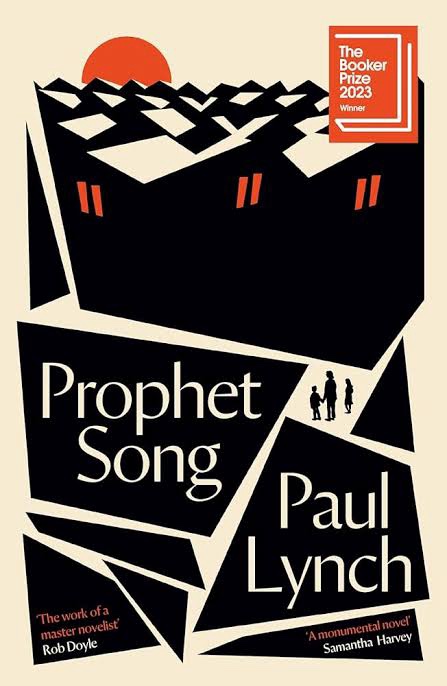
Prophet Song

Winner of the 2023 Booker Prize, Prophet Song is deliberately dark and perversely poignant. Set in contemporary Ireland, the story is about Eilish Stack, who is a molecular biologist by training and working in biotech in Dublin. She has four children, one being an infant, Ben. The story begins when Larry, her trade unionist husband is taken in for questioning by government officials. While Eilish receives no news about Larry despite her umpteen attempts to contact him or the officials; the country is soon descending into a political quagmire. A right wing ā€œNational Alliance Partyā€ stakes claim to be the government and begins attempts to fight the anti-nationals and the rebels. Totalitarianism sees a rapid ascent and fascism soon starts dominating every aspect of civilian life. Freedom becomes conditional, defence forces become authoritarian, paving the way for a deadly civil war.

Eilish remains forever worried about Larry, wondering whether he’s even alive. Her eldest son Mark joins the rebels and soon disappears. Her other son Bailey, remains angst ridden and obstinate. Her daughter Molly remains her only support through this ordeal. As Eilish battles her anxieties, her insecurities, her losses, her grief, her helplessness, her hopelessness, and simultaneously care for her infant and a rapidly progressing dementia suffering father; she needs to make a decision if she has to leave the country or cross the borders illegally; as the society around her continues to disintegrate, and life becomes an endless cacophony of gunshots, sirens and missile strikes.

Paul Lynch’s prose can be generalised as an urgent and compelling commentary on the steady rise of totalitarianism in the world. His writing has a claustrophobic atmosphere, a sense of foreboding and is suffused with an unrelenting uneasiness. Lynch evocatively translates Eilish’s impuissance and anxiety into his words and onto every page. The scenes where Eilish expectantly awaits Mark’s phone call and when she goes hospital to hospital in search of her injured child are especially gut wrenching, depicting an awful sense of dread. The writing almost feels like a stream of consciousness; there are sections and chapters in the novel but no paragraphs. The dialogues between characters are without any punctuations; so much so that, there’s no difference between a thing said and a thing thought.

Now, Prophet Song may have been set in a dystopian Ireland, but closer home dystopia may soon become a reality. Economic development has been used as a tool to conceal fascism and autocracy. Jingoism and zealotry are being given a free run while any form of dissent is being deemed antinational and subsequently penalised. If you are one amongst many who still chooses to look the other way as this is happening right now, and thinking ā€˜this won’t/ will never affect me’; read Prophet Song. Paul Lynch was probably imagining an Ireland like that, but we don’t have to imagine it.

~ JUST A GAY BOY. šŸ‘æ

Minor Detail

šŸ“ Palestine šŸ‡µšŸ‡ø

This novel has two parts. The first one is set in the year 1949, just after the Nakba of 1948. An Israeli officer is scouring the Negev desert for any remaining Arabs or Arab settlements. The blistering heat, a festering infection, dust, sweat do not deter him from going about his day in a regimented way. His single handed determination to find Arabs does lead him to a Palestinian girl, who is forcibly brought back to the Israeli military camp, where she is gangraped by the soldiers, later killed and buried in the sand. The second part, begins in the city of Ramallah, where a young Palestinian woman sets out to investigate this crime that happened 25 years ago. As she juggles her way through the innumerable military checkpoints in the West Bank and on her journey to the desert, she is also juggling anxiety and panic that have become ubiquitous in her life due to the Israeli occupation. Her single handed determination to find details about the gruesome incident despite the unforgiving heat through the lonesome desert unfortunately leads to a tragic penultimate moment.

The book is an uncomfortably simple yet unflinchingly honest prose on Palestine and Palestinian people living under the occupation and an apartheid regime. The first half focusses on the daily mundane activities of the officer over and over again, so much so that the brutality that occurs becomes a part of the same mundane. In the second half, the author literally places us in the passenger seat of the woman as she takes on the perilous journey, and we get to experience first-hand her anxiety, fear and trauma muddled in her determination and longing to unearth the truth. The author deftly shifts the narrative perspective from the Israeli officer whose intention and purpose is annihilation of Palestinians, to the Palestinian woman whose reality is obscured and dependent on the military occupation. Freedom is villainous in one while it’s the prisoner in another. Life is precious in one while for the other, death is a close ally.

Adania Shibli is a Palestinian author and essayist, born in Palestine, who has written three novels and lives between Jerusalem and Berlin. Minor Detail, translated from Arabic to English, by Elisabeth Jaquette, was longlisted for the International Booker Prize in 2021 and was also nominated for National Book Award for Translated Literature in 2020.

As of December 11th, 2023, over 17997 civilians which include 7729 children have been massacred in Gaza since the genocide began on October 7th, 2023. The dehumanisation of the Palestinian people by the entire world has never been more stark and atrocious. The global silence on the oppressed and the selective empathy towards the oppressors is a new abysmal low for our collective humanity. The total disregard towards the ethnic cleansing of the Palestinians, the absolute subservience towards the Israeli propaganda of self defence, the failure to distinguish between antisemitism and zionism is a telling of the dark times we are in. The next time when the world’s so called superpowers call for peace and human rights, you can gawk at the irony of it.

~ JUST A GAY BOY. šŸ‡µšŸ‡ø

All the Little Bird-Hearts

(Slight spoilers ahead)

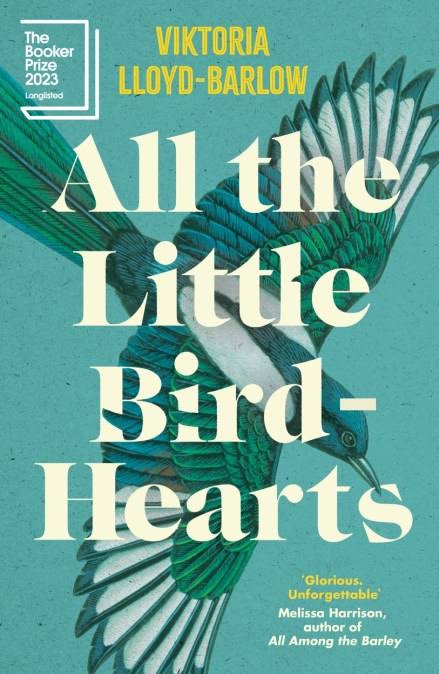
Longlisted for The Booker Prize 2023, this phenomenal book, is a heartfelt, yet emotionally brutal look at love that’s lost in relationships. Sunday, the principal protagonist, lives with her teenage daughter Dolly, in a modest house on a quiet street and living an orderly life. Sunday is neurodivergent and makes no bones about having difficulty in negotiating and understanding the simplest neurotypical situations. Hence, she finds it necessary to stick to a routine, even if it means eating only white food and relying heavily on an etiquette book. Her life seems to get upended when a glamorous couple move next doors. Vita, is a larger than life character, who uses her charm, wit and captivating personality to mesmerise Sunday and Dolly; while her husband Rollo, is calm and collected, having a suave impressionable style. In no time, they are in and out of each other’s house, having regular dinners and brunches. Dolly is so taken by Vita’s magnetism, that she starts spending more and more time at Vita and Rollo’s place; soon taking her clothes there, starting to work for them in their construction business and even having her own room in their house. Sunday begins to wonder at this rapid rate of detachment of Dolly from her and starts questioning Vita’s real intentions behind the same. These, of course, aren’t met with favourable outcomes and Sunday is left abandoned by everyone.

The book is an open canvas of Sunday’s mind. The author gives us a detailed and unfiltered blueprint of her thoughts and triggers. The first half of the book may seem a tad slow and repetitive, simply because the author is making us accustomed to Sunday’s neurodivergence, her vulnerability, her ways of tackling everyday conversations and interactions, and her perplexities in understanding others’ ease in navigating the same. Sunday is a fierce character who owns her neurodivergence in spite of the negativity and deliberate ambiguity that others display around her. The author also gives us an insight into her childhood traumas, her highly volatile relationship with her mother and her incongruous marriage. The disintegration of Sunday and Dolly’s relationship is heartbreaking, so is Dolly’s disregard and contempt of her mother for a more attractive Vita. Despite this anguish, Sunday exhibits steely grit and acceptance of her agony, and also of her daughter’s estrangement.

The author, Viktoria Lloyd-Barlow, is autistic and through this book has given a voice that’s authentic to so many other autistic people who are underrepresented and often misrepresented too. It’s a searing yet poignant rendition on motherhood, flawed relationships, and unequal societal dynamics. As you read the book, you understand the fact, that the author isn’t wanting our sympathy, rather wants us to check in with our prejudices and privileges. Such a stellar debut!

~ JUST A GAY BOY. 🫶

Time Shelter

(spoilers ahead; mostly it’s my interpretation)

There’s a reason why certain books win the coveted International Booker Prize. Simply put, there isn’t a book like that; a writing like that, a story like that; that you would have read or ever come across. Time Shelter, winner of the 2023 International Booker Prize, is certainly one such book of course, but more than a book, it’s a collection of nostalgia, of memories; and of the times when these memories start fading.

The story is about a psychiatrist, Gaustine and an unnamed narrator. Gaustine opens a clinic for patients suffering from Alzheimer’s disease in Zürich. Each decade has been recreated in this clinic from the decor to the newspapers of that time. Patients come into the clinic, and through this memory evoking therapeutic sensory experience, start remembering, recognising and reliving the forgotten time. The narrator becomes fascinated, almost borderline obsessed with Gaustine’s ingenious idea and becomes a part of his team in building such clinics all across Europe. Before you know it, the entire world is now building these clinics, even planning cities dedicated to certain eras and decades. Countries have referendums on which past year or decade be chosen to be recreated. As with any fantastic idea, this ambitious project too, marred by its pomposity, soon starts to disintegrate into chaos and mayhem.

There was this surreal moment whilst reading the book, when the penny dropped for me. I realised the beauty of this book and the craftsmanship of the author, Georgi Gospodinov (masterly translated from the Bulgarian to English by Angela Rodel) in writing a tale like this. The author has exposed us to the mind of the narrator who is writing this book and who is losing his mind. Now what starts as a story soon morphs into his recollections and learnings of history and later into a series of uncoordinated events. We become witness to his dementia. We are put onto the edge of the precipice of an individual losing himself and his autonomy. This realisation jolted me, suddenly the book developed an eerie undercurrent because what I had thought to be benign till now, wasn’t really so. So I wondered, did Gaustine ever exist? Or was the narrator Gaustine?

The book is rich in Bulgarian and European history. The author juxtaposes this richness with the hypocrisy prevalent in European politics. His satirical narrative takes us on a raucous journey from World War II to Brexit. The author deliberately changes the writing style and language through the course of the book. What starts off as poetic, lyrical and contemplative in the beginning, later becomes tedious and monotonous, only to end disjointed. Through Time Shelter, Gospodinov, has attempted to highlight people’s obsession with the past, only so much as to stall the future whilst forever remaining oblivious to the present. Not an easy book to read for sure, but if you do read (which you must!), you can marvel at Georgi’s innate literary genius. Now let’s ruminate on the title. Goosebumps!

~ JUST A GAY BOY. 🄸

Pyre

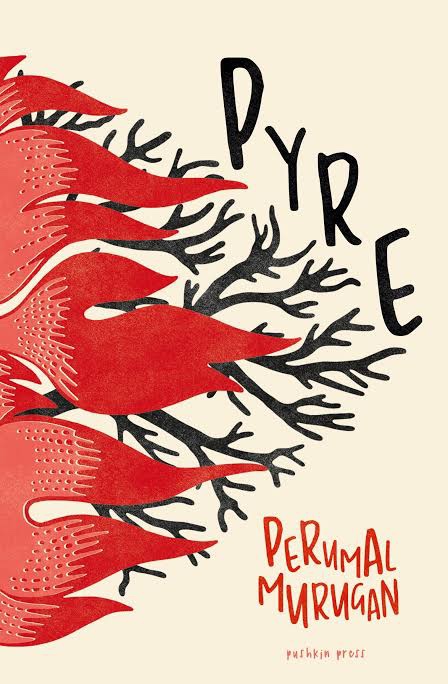
Perumal Murugan is an author, scholar and literary chronicler who writes in Tamizh. He has written ten novels; five of them have been translated into English. As a professor of Tamizh literature, he has made several contributions to research and academic study of Tamizh literature specific to Konganadu region. He courted controversy with his book Madhorubhagan which made him announce, ā€˜Perumal Murugan the writer is dead’. His novel Pookuzzhi (Pyre) was originally published in Tamizh in 2013 and translated into English by Aniruddhan Vasudevan in 2016. It has now been longlisted for The International Booker Prize 2023.

Pyre is a heart wrenching story of an intercaste couple, Saroja and Kumaresan. Saroja elopes and marries Kumaresan, who then brings her to his remote, arid and decrepit village of Kattuppatti, in the hinterland of Tamil Nadu. Upon arrival, the couple are welcomed with abuses, mourning and threats. Saroja becomes their easy target, and is showered with expletives and profanities, especially from the womenfolk, and Marayi, her mother-in-law. Each passing day becomes a living hell as the villagers become hell bent on knowing Saroja’s caste. As the story progresses, there seems to be no sympathy or changed behaviour by the villagers towards the couple, who believe that this marriage is an impending doom, and start plotting a heinous crime against them. The couple though, remain in love, crave love yet have no idea that the same love is a harbinger of hatred and enmity.

Pyre is a grim telling of the realities of caste differences and discriminations present in our society. Through this lens, Murugan tells a riveting tale of the people who put caste on a pedestal. He centres caste as the unrelenting, unforgiving protagonist in the book. You may despise its presence, still remain helpless, just like Saroja and Kumaresan. The internalised misogyny that Marayi spews onto Saroja, is a depiction of the ways in which caste and such other forms of bigotry manoeuvre, such that those who are oppressed become the oppressors.

The harsh landscapes and terrains of Kongunadu form an integral part of this story. The barrenness of the land which the author describes evocatively becomes deafening through the narrative. The villagers’ reverence to caste whilst ignoring its beguiling notoriety to cause persecution remains a passive subtext all through. Perumal has fleshed out his characters; be it a listless yet restive Saroja, a pensive yet petulant Kumaresan or a scornful and savage Marayi. Aniruddhan Vasudevan’s translation of Perumal’s crude and caustic prose is unparalleled. He has managed to imbibe the nuances of the original language during the tender moments in the book as well as during the diatribe. Being a Tamizh speaker myself, I appreciate and applaud the sensitivity and restraint in Aniruddhan’s translation.

Pyre is a disturbing read. Perumal Murugan writes to unnerve you, to push you out of your bubble, to give your prejudices and preordained thoughts a 360 degree spin. He makes us, the reader, a mute spectator to the atrocities as they unfold. But isn’t that true in real life too? Aren’t we/ haven’t we become mute spectators to all kinds of caste, gender, religion, social status based atrocities? Aren’t we/ haven’t we become complicit in this despotism?

~ JUST A GAY BOY. šŸ˜“

The Seven Moons of Maali Almeida

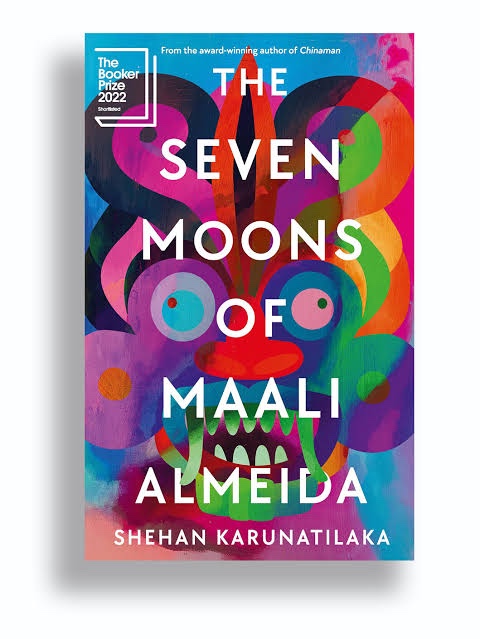
This 2022 Booker Prize winner book is like no other. The protagonist, Maali Almeida is dead. He has been killed and his body dumped in Colombo’s Beira Lake. His ghost is now narrating the story and trying to find out his killer/s. The premise is happening in the very nebulous In Between, wherein ghosts are looming large over Colombo’s skyline and constantly trying to interact or distract the living mortals Down There. If this has intrigued you already, wait till you read the brilliance with which Shehan Karunatilaka has authored this story. It is set in the extremely turbulent times of Sri Lanka’s civil war circa 1989. Maali is a war photographer who clicks unfiltered, raw and controversial photos of war victims, ruthless politicians and the civil unrest per se. Debauchery forms his middle name, as he parties with Colombo’s elite and canoodles countless young men. Now that he’s dead, he’s got ā€œSeven Moonsā€ to sort out his grievances. He tries desperately to reach and send signals to his people Down There, especially his best friend Jaki and his on-off boyfriend DD. Other ghosts inadvertently and reluctantly help him with this pursuit. As Maali finds out his killer, whilst protecting the war photographs that could expose the dirty politics of the country, he also tries to make amends with all his strained relationships, albeit, its now in the afterlife.

This roller coaster of a story gains momentum from the start and constantly shifts between the past and present; real and otherworldly. Shehan doesn’t shy away from presenting the gory details of the politics behind the war using satire and dark humour; at the same time also blasphemously portraying the privileged ignorance of other countries and international organisations in mindlessly sustaining the war. The mastery of his writing is evident in the way he has fleshed out Maali’s character who you want to sympathise with just because he’s dead but are also put off by his arrogance, audacity and impetuous attitude. The nuanced portrayal of the various messy relationships between the characters and their interplays in the backdrop of a war and an afterlife is ingenious to say the least. Shehan has been able to translate the palpable frustration of Maali in us as his ghost looks arounds furtively and helplessly for answers. Also, very rarely do you come across such an effortless writing which doesn’t take sides despite a raging war, countless deaths, and a humanity at loss.

Stellar!

~ JUST A GAY BOY. 🤩