Molly Gray is back. She’s socially awkward, fails to understand the world around her, misses the obvious, has a keen eye for the unobvious and has a flair for the English language. She’s now the Head Maid at the Regency Grand Hotel, has a loving relationship with her boyfriend Juan and has again become entangled in another scandalous murder. J. D. Grimthorpe, an award winning mystery writer, is supposed to make a big announcement and has booked the hotel’s Tea room for the event. The room is packed to the rafters with journalists, media professionals, photographers and eager fan club members. Grimthorpe takes the stage, sips his tea on stage and drops dead. Lily, a maid-in-training under Molly was responsible for arranging his tea cart and had handed him the tea in front of everyone. Detective Stark is tasked with solving this mystery and again Molly becomes her unlikely partner.
It’s a very simple murder mystery and the author presents various characters as suspects including Grimthorpe’s secretary, Serena Sharpe; Hotel’s manager Mr. Snow and even Mr. Preston, the kind grandfather figure in the life of Molly who continues to dote on her. The happenings in the book are fast paced and this time around the author provides substantial backstory on Molly’s childhood growing up with her Gran. Molly continues to fight the social odds stacked against her and with her grit, perseverance, unassuming intelligence and cheeky wit cracks this murder too.
For all those who have read Nita Prose’s debut book, The Maid, which for the first time introduced us to Molly, this second book, doesn’t disappoint. Through Molly, the author drives home the message that, everybody deserves to be seen and no one should be underestimated because of their appearance or background. Nita has created a world of hope and optimism, while Molly brings in the beauty in her oddity.
Katharina is a nineteen year old girl living in East Berlin. Hans is a fifty plus gentleman, a novelist and working for a local broadcaster, also living in East Berlin. The year is 1986. The Berlin Wall is intact. Katharina and Hans have a romantic meet cute and soon start dating each other. She gets completely besotted with Hans and turns a blind eye to his behaviours and transgressions. Hans is a married man and has a son. He has various extramarital relationships while being married to Ingrid. Katharina is aware of his philandering ways but is too consumed by his charm, his sex appeal, his taste in music, art and books to even subconsciously register it as a concern. When Katharina goes away to Frankfurt an der Oder for a year, for a theatre internship, she develops a close friendship with her colleague Vadim. He has feelings for Katharina and after multiple romantic and sexual advances from his side, one fine day, they end up having sex. Through one of the loose pages of her diary, Hans finds out about this affair and mayhem ensues.
Hans is mortified by Katharina’s behaviour and leaves no stone unturned in punishing her. He emotionally abuses her, threatens to end the relationship and even violates her sexually. He periodically records his disdain and hatred for her as cassettes, both sides, 60 minutes each and expects her to answer him. The verbal abuse meted out through these recordings is excruciating. Katharina continues to soothe his chauvinism and misplaced anger by dutifully listening to these recordings, genuinely begging for his forgiveness, despite the repeated attacks on her character and morality. The relentless oppression makes Katharina question the love if it exists between them, even forcing her to self censor at times, but is never able to end the relationship. She continues to suffer because she feels, she deserves it and Hans continues with his torture routine, because he believes, she deserves it.
At the same time, Germany is in the midst of the Cold War. The tensions between East and West Berlin continue to escalate. The political situation becomes volatile and chaotic leading to the fall of the Berlin Wall in 1989. Soon after the fall, it almost seems like an erasure of East Berlin as the West with its wealth and capitalism takes over, leaving no traces of what was once before, the people and the city. These developments run parallel to Katharina and Hans’ relationship, being metaphorical at times; creating an atmosphere of foreboding and unease.
This isn’t a love story, but a story about control. Hans wanted total control over Katharina’s mind and body under the garb of love, but the moment it faltered, control easily metamorphosed into misogyny and toxic masculinity, also under the garb of love. Katharina is groomed by Hans since the beginning of the relationship and because of her tender age and his towering seniority gets moulded into believing the necessity for her suffering because of her indiscretion, prompting acquiescence. At some point, as a reader, you wonder if Katharina wanted to sabotage herself and her happiness by being in this relationship. She represents millions of women worldwide who suffer through such sexist bullying and exploitation, because they aren’t aware of their worth, and of a life outside of emotional captivity.
Jenny Erpenbeck, a prolific German author and opera director, is the first German writer to win the International Booker Prize for Kairos, which is also the first novel originally written in German to win the award. Kairos has been written with a lot of consideration for German politics, the history and the societal structure of East and West Berlin. The book also makes a poignant case for ‘love bombing’ and ‘breadcrumbing’ in relationships. Erpenbeck takes us on Katharina’s traumatic journey of abuse without sugarcoating it. As a reader, you squirm and feel frustrated for Katharina and I wondered, if she felt ennui in Hans’ narcissism. Music, art and theatre play a significant part of the narrative and the author delves deep into them through conversations between the protagonists. Michael Hofmann, a German poet and translator, who shared the International Booker Prize with Erpenbeck, has done an exacting translation of the original.
Kairos is a multilayered sensory experience. The story and the politics kept me intrigued and exasperated simultaneously. Chopin’s Nocturne and Polonaise seem perfect for part one of the book, while Bach’s Well-Tempered Clavier and Goldberg Variations blend in seamlessly with the second and Mozart’s Symphony is the ideal score for the climax. Read the book with these musical masterpieces in the background! I am definitely doing a reread.
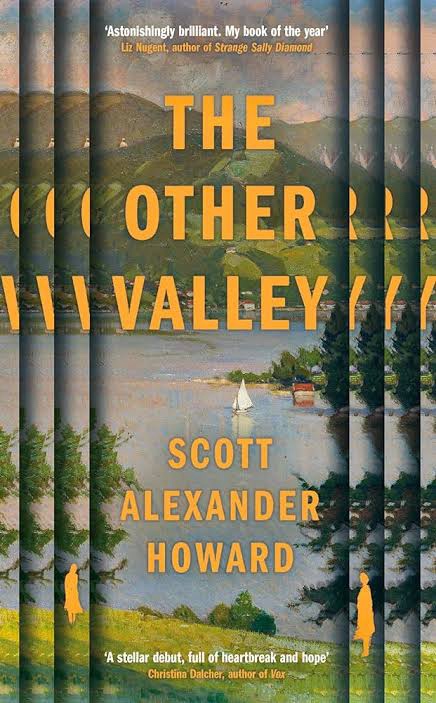
Odile Ozanne lives in a small town which is actually a valley, surrounded by mountains and barbed wire borders. To her right is the same town twenty years into the future. To her left is the same town twenty years into the past. And the valleys keep repeating on either side. The movement between these towns and essentially through time is strictly controlled by the Conseil who invite and review petitions from people who wish to travel to the east or west. The borders are also patrolled by the patrol guards, gendarmerie. The book begins with sixteen year old Odile trying hard to get through the vetting program for being a member of the Conseil. Her intelligence shines through the vetting process and she starts getting noticed by the more popular kids from the school. She starts hanging out with them and develops feelings for one of the boys, Edme. But one day she notices people from afar, looking like Edme’s parents, but older, arousing a suspicion in her that they maybe visiting from the east or Est 1, which also means that there is a strong likelihood of something terrible happening to Edme. What does Odile do next?
The second part of the book introduces us to thirty six year old Odile. A lot has happened and she finds herself in a thankless job, a job that she does in an autopilot mode. The relationship with her mother is distraught, her friendships seem ambiguous and loneliness seems to be her only steadfast companion. Circumstances hit the proverbial rock bottom and Odile decides to do the unimaginable prompted by strong emotions from her past.
The Canadian author, Scott Alexander Howard, takes us on this science fiction, time travel story which is unlike any other. People in the story do not hop across timelines and the author explains the protocols for doing so in the right way and the consequences when not done correctly. I had a difficult time trying to orient myself to the organisation of the valleys and imagining how would Odile’s world actually look like. Time in this book is never absolute but always relative to the other valley. A lot of the narrative is spent on Odile’s internal struggles and her going about the mundane. Very little happens in the book, especially in the second part. The writing is tedious particularly when the author talks about the valleys and the time zones. He never spells it out completely and for the most part it becomes a guessing game. Also the protagonist Odile comes across as unlikeable due to her brooding and one dimensional persona and at times appears inconsequential to the story. None of the other characters make an impact either.
The Other Valley is a very unique story and kudos to the author for writing this as his debut work. I tried very hard to love this book but all through I felt shortchanged. Not that I dislike it or wouldn’t recommend it but the book could have been taut with some much needed edits. Despite my grudges, I would still call it a complex and cerebral read.
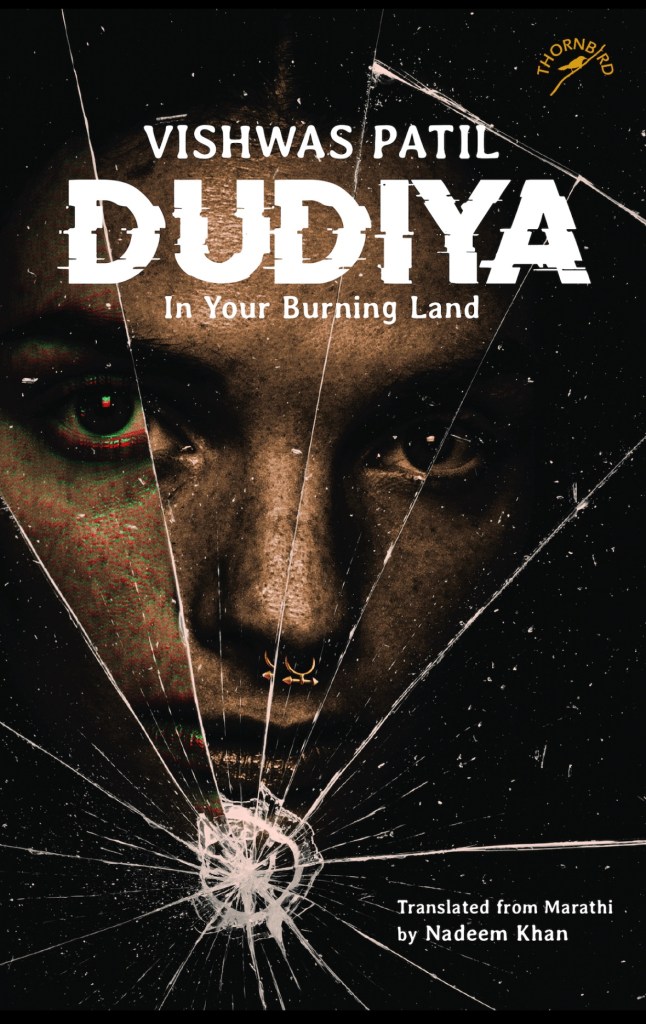
Read a Kitaab, reading community’s February month’s #readingindiachallenge was dedicated to Chhattisgarh and my pick was Vishwas Patil’s Dudiya. Written originally in Marathi and translated into English by Nadeem Khan, the book is a searing portrayal of life in the Naxal region of Chhattisgarh. The story begins in May 2013, when IAS officer Dilip Pawar gets posted as an Election Observer in the Naxal dominated districts of Chhattisgarh. His duty is to ensure smooth electoral process despite the grave circumstances of the region. His trepidation is put to test when he lands in the area and is inundated with stories of Naxal brutality and their ingenious ways in circumventing police surveillance and governmental interference. There, during his stay, he comes across this girl, Dudiya, who was born in one of the impoverished hamlets of Chhattisgarh, but soon joins the Naxals to escape the misogynist traditions and cultural norms of her village. During her training as a Naxalite, she soon realises how the original principles on which Naxalism was built have got eroded in the pursuit of establishing authority, control and hierarchy. Violence is commonplace and often misguided. Misogyny remains omnipresent in the Naxal camps though not as stark as in her village. She ditches the Naxals and joins the police as an informant and begins her life anew whilst trying to heal the traumas of her past.
Inspired by real life events, the book gives a thorough introduction to the region that has been plagued by the Naxalite movement. The author has on no occasion taken sides. He deftly portrays the history of the rise of Naxalism, its necessity, its spread and how its roots are linked to Maoism. Through various characters in the novel, he brings to light the politics that are deeply ingrained in the sustenance of the Naxal movement. Caught in the crossfire between the government and the rebels are the tribals of the region who have been completely forgotten by both parties. The apathy and ignorance of the political class in wanting to primarily weed out Naxal insurgents without addressing the grievances of the tribals at the grassroots level, exemplifies it. Through this book, the author has touched upon all of the above issues, without sounding patronising and being morally absolute.
Though the writing is simple and lucid, I felt it faltered at a few places when it tried to incorporate some element of ‘boob writing’ (the term, courtesy Daisy Rockwell). The description of the ‘bare breast’ tradition of the tribe and later of Dudiya’s relationship with an older man, bordered on titillation. Male writers should do away with these descriptions of women’s anatomy having lecherous overtones, because it serves no purpose in propelling the narrative.
Having said that, Dudiya is still a good book that attempts to provide a thorough understanding of the complexity of the Naxal movement. It also describes the lush yet difficult geography of the region. The author has given a vivid description of the Abujmarh forests, Tadmetla and Bastar. Vishwas Patil has done a fairly commendable job in bringing forth this national issue through the lives of the tribals who are easily dismissed in an often forgotten area of the country.
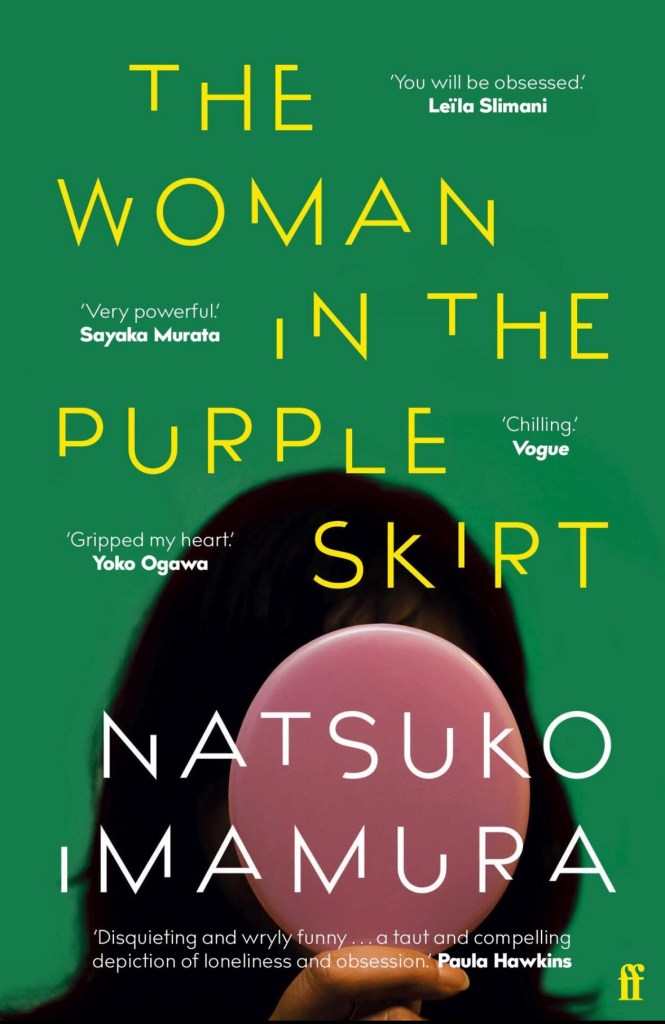
My pick for Read a Kitaab’s #januaryinjapan was, ‘The Woman in the Purple Skirt’. The book, written by the acclaimed Natsuko Imamura and translated from the Japanese by Lucy North, has garnered fairly positive reviews online, however I was left feeling disappointed. The book is about this eponymous Woman in the Purple Skirt who is being closely watched by the narrator who calls herself as the Woman in the Yellow Cardigan. She meticulously describes every move of the woman in the purple skirt, her daily routine, eavesdropping on conversations and even gets her a job in the hotel that she’s employed at. Despite this extremely voyeuristic snooping by the woman in the yellow cardigan, she remains inconspicuous and almost oblivious to the other woman. However, things take a more ominous turn after the woman in the purple skirt starts working earnestly in the hotel and the sequence of events leading upto the climax happen so rapidly, it almost feels like an antithesis to how the book began.
In summation, I felt the climax to be a major letdown despite the foreboding atmosphere it created and the thrilling subtext. Though the book discusses themes of loneliness and the yearning for a friendship, and the human need to be seen and validated, it gets lost in the narrative that remains hyper focused on the inconsequential daily mundane activities of the woman in the purple skirt for the greater part of the book.
Ultimately, I even wondered what was the purpose of the woman in the purple skirt? What was the author trying to convey? I remain discombobulated!
Western Sahara is a disputed territory on the northwest coast of Africa and is among the most arid and inhospitable on the planet. Colonised by Spain until 1975, about 20% of the territory is controlled by the Saharawi Arab Democratic Republic (SADR); while the remaining 80% is occupied and administered by Morocco with tacit support from France and the United States. A nationalist movement, the Polisario Front, has proclaimed the rightful leadership of the SADR with a government in exile in Tindouf, Algeria. The UN considers the Polisario Front to be the legitimate representative of the Saharawi people and maintains the Saharawis have a right to self determination. Western Sahara is the last African colonial state yet to achieve its independence and has been dubbed “Africa’s last colony”.
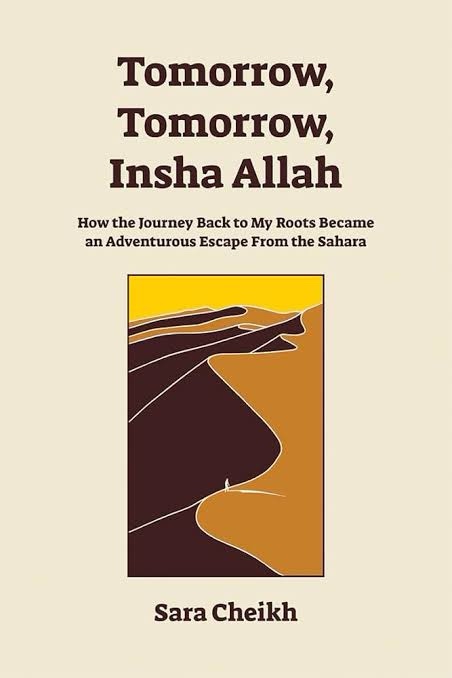
The book is a memoir of the Saharawi author, Sara Cheikh. Born in the Smara refugee camp in Tindouf, where she lived till the age of six, Sara later immigrated to Spain and is currently living in Paris. In the March of 2020, Sara decides to travel to Western Sahara to see her grandmother, Noa; just when the world is discovering about Covid-19. Despite a very uncertain and anxious start to her journey from Paris, she travels to Algiers, then Tindouf, then Smara and ultimately to Mheiriz in the liberated territory where she meets Noa and many members of her family. However, by this time, border closures have started happening all over the world and Sara is left panicking if she is ever going to go back to Europe. Her journey back from the desolate desert terrains forms the crux of this story that keeps us, the readers on the edge of our seats.
Sara’s writing is descriptive, nuanced and humorous. She carefully describes the geopolitical situation of the Saharawi people and benevolently introduces us to their culture, traditions and cuisine. The desert forms an important character in the prose and its harshness and kindness has been lucidly illustrated by the author. As you read the book, you discover that Saharawi women are fierce, independent and liberal minded. Sara’s mother, Gbnaha, comes across as this daring go-getter with a charming attitude who is tough and strong willed. The Saharawi men also appear to be supportive, convivial and progressive. The book is peppered with archival and personal pictures of the Saharawi territories and the people. Through the book, Sara tries portraying her juxtaposition as she battles her European upbringing with her Saharawi consciousness and makes a compelling case about a hyphenated existence.
Tomorrow, Tomorrow, Insha Allah is one of those rare books written by a Saharawi talking about the forgotten territory of Western Sahara. With this book, you realise that even in 2024, there’s colonialism present and the same colonisers are giving lessons to the world about freedom and equal rights. What a time to be alive!
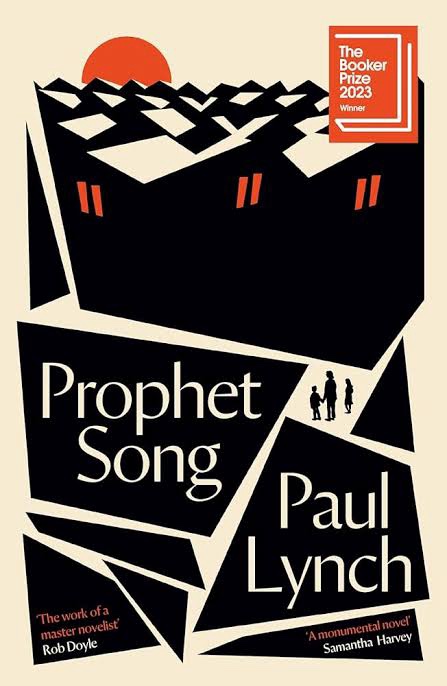
Winner of the 2023 Booker Prize, Prophet Song is deliberately dark and perversely poignant. Set in contemporary Ireland, the story is about Eilish Stack, who is a molecular biologist by training and working in biotech in Dublin. She has four children, one being an infant, Ben. The story begins when Larry, her trade unionist husband is taken in for questioning by government officials. While Eilish receives no news about Larry despite her umpteen attempts to contact him or the officials; the country is soon descending into a political quagmire. A right wing “National Alliance Party” stakes claim to be the government and begins attempts to fight the anti-nationals and the rebels. Totalitarianism sees a rapid ascent and fascism soon starts dominating every aspect of civilian life. Freedom becomes conditional, defence forces become authoritarian, paving the way for a deadly civil war.
Eilish remains forever worried about Larry, wondering whether he’s even alive. Her eldest son Mark joins the rebels and soon disappears. Her other son Bailey, remains angst ridden and obstinate. Her daughter Molly remains her only support through this ordeal. As Eilish battles her anxieties, her insecurities, her losses, her grief, her helplessness, her hopelessness, and simultaneously care for her infant and a rapidly progressing dementia suffering father; she needs to make a decision if she has to leave the country or cross the borders illegally; as the society around her continues to disintegrate, and life becomes an endless cacophony of gunshots, sirens and missile strikes.
Paul Lynch’s prose can be generalised as an urgent and compelling commentary on the steady rise of totalitarianism in the world. His writing has a claustrophobic atmosphere, a sense of foreboding and is suffused with an unrelenting uneasiness. Lynch evocatively translates Eilish’s impuissance and anxiety into his words and onto every page. The scenes where Eilish expectantly awaits Mark’s phone call and when she goes hospital to hospital in search of her injured child are especially gut wrenching, depicting an awful sense of dread. The writing almost feels like a stream of consciousness; there are sections and chapters in the novel but no paragraphs. The dialogues between characters are without any punctuations; so much so that, there’s no difference between a thing said and a thing thought.
Now, Prophet Song may have been set in a dystopian Ireland, but closer home dystopia may soon become a reality. Economic development has been used as a tool to conceal fascism and autocracy. Jingoism and zealotry are being given a free run while any form of dissent is being deemed antinational and subsequently penalised. If you are one amongst many who still chooses to look the other way as this is happening right now, and thinking ‘this won’t/ will never affect me’; read Prophet Song. Paul Lynch was probably imagining an Ireland like that, but we don’t have to imagine it.
This novel has two parts. The first one is set in the year 1949, just after the Nakba of 1948. An Israeli officer is scouring the Negev desert for any remaining Arabs or Arab settlements. The blistering heat, a festering infection, dust, sweat do not deter him from going about his day in a regimented way. His single handed determination to find Arabs does lead him to a Palestinian girl, who is forcibly brought back to the Israeli military camp, where she is gangraped by the soldiers, later killed and buried in the sand. The second part, begins in the city of Ramallah, where a young Palestinian woman sets out to investigate this crime that happened 25 years ago. As she juggles her way through the innumerable military checkpoints in the West Bank and on her journey to the desert, she is also juggling anxiety and panic that have become ubiquitous in her life due to the Israeli occupation. Her single handed determination to find details about the gruesome incident despite the unforgiving heat through the lonesome desert unfortunately leads to a tragic penultimate moment.
The book is an uncomfortably simple yet unflinchingly honest prose on Palestine and Palestinian people living under the occupation and an apartheid regime. The first half focusses on the daily mundane activities of the officer over and over again, so much so that the brutality that occurs becomes a part of the same mundane. In the second half, the author literally places us in the passenger seat of the woman as she takes on the perilous journey, and we get to experience first-hand her anxiety, fear and trauma muddled in her determination and longing to unearth the truth. The author deftly shifts the narrative perspective from the Israeli officer whose intention and purpose is annihilation of Palestinians, to the Palestinian woman whose reality is obscured and dependent on the military occupation. Freedom is villainous in one while it’s the prisoner in another. Life is precious in one while for the other, death is a close ally.
Adania Shibli is a Palestinian author and essayist, born in Palestine, who has written three novels and lives between Jerusalem and Berlin. Minor Detail, translated from Arabic to English, by Elisabeth Jaquette, was longlisted for the International Booker Prize in 2021 and was also nominated for National Book Award for Translated Literature in 2020.
As of December 11th, 2023, over 17997 civilians which include 7729 children have been massacred in Gaza since the genocide began on October 7th, 2023. The dehumanisation of the Palestinian people by the entire world has never been more stark and atrocious. The global silence on the oppressed and the selective empathy towards the oppressors is a new abysmal low for our collective humanity. The total disregard towards the ethnic cleansing of the Palestinians, the absolute subservience towards the Israeli propaganda of self defence, the failure to distinguish between antisemitism and zionism is a telling of the dark times we are in. The next time when the world’s so called superpowers call for peace and human rights, you can gawk at the irony of it.
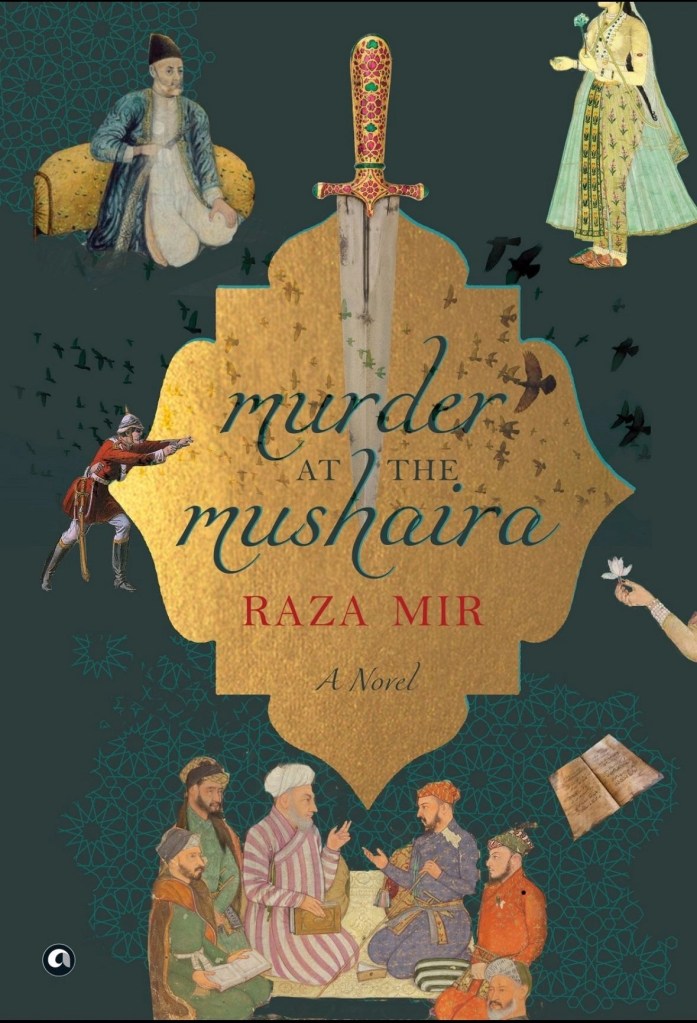
A murder mystery set during India’s First War of Independence, does sound scrumptious. It’s 1857, the British and the East India Company have started controlling greater parts of the country. It’s the last days of the erstwhile Mughal empire with many of the Nawabs surrendering to the British. There’s also a rebellion that’s brewing in various parts of the country that collectively takes the form of the Uprising of 1857. In the midst of this, Delhi is still trying to hold onto its Mughal administration. May of 1857, it’s Ramzan and there are soirées, feasts and mushairas happening in Delhi. At one such mushaira, hosted at Nawab Iftikhar Hasan’s haveli, a poet, Sukhan Khairabadi, is found to be murdered. The poet laureate, Mirza Ghalib, who also masquerades as an amateur sleuth, gets tasked with investigating this murder alongside the policeman Kirorimal Chainsukh. What unfolds next is pure delight in terms of storytelling, as history and mystery get beautifully intertwined in this marvellous fictional narrative.
A myriad of interesting characters make their appearance in this novel. Mirza Ghalib, the protagonist has his wit, charm and Urdu couplets in tow. Master Ramachandra, his accomplice in solving the crime, brings science and sincerity to the proceedings. Whilst a haggered Nawab Iftikhar, is contemptuous of Ghalib; his wife, Roshan Ara Begum has a great deal of affection for him. Various women characters such as Hyderi Begum Zutshi, Syeda Zainab, Ratna Bai make their presence felt in this story just by their steely grit, fearlessness and defiance.
Raza Mir’s story is an ode to the cultured and mellifluous Mughal era. Recently when there has been a movement to wipe out the Mughal presence from our country, Raza reminds us of their regality, their majestic architecture, their delectable cuisine and their venerable mushairas steeped in exquisite Urdu poetry. Every chapter begins with a haunting Sher in Urdu. Raza’s narrative is a rich amalgamation of fiction and accurate historical events. He’s also incorporated an innocuous and heartwarming queer plot line in the story. Such ingenuity!
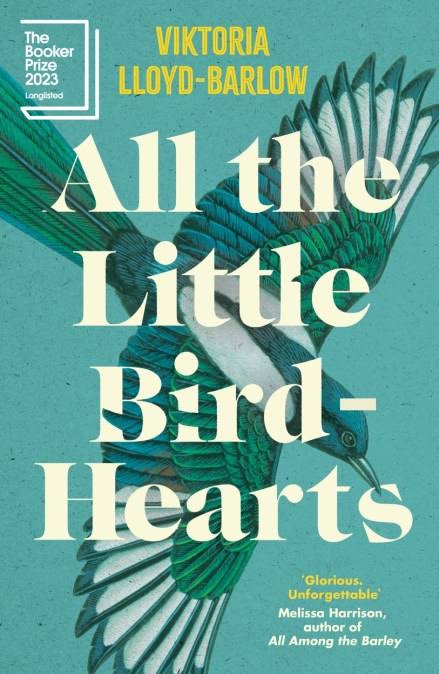
Longlisted for The Booker Prize 2023, this phenomenal book, is a heartfelt, yet emotionally brutal look at love that’s lost in relationships. Sunday, the principal protagonist, lives with her teenage daughter Dolly, in a modest house on a quiet street and living an orderly life. Sunday is neurodivergent and makes no bones about having difficulty in negotiating and understanding the simplest neurotypical situations. Hence, she finds it necessary to stick to a routine, even if it means eating only white food and relying heavily on an etiquette book. Her life seems to get upended when a glamorous couple move next doors. Vita, is a larger than life character, who uses her charm, wit and captivating personality to mesmerise Sunday and Dolly; while her husband Rollo, is calm and collected, having a suave impressionable style. In no time, they are in and out of each other’s house, having regular dinners and brunches. Dolly is so taken by Vita’s magnetism, that she starts spending more and more time at Vita and Rollo’s place; soon taking her clothes there, starting to work for them in their construction business and even having her own room in their house. Sunday begins to wonder at this rapid rate of detachment of Dolly from her and starts questioning Vita’s real intentions behind the same. These, of course, aren’t met with favourable outcomes and Sunday is left abandoned by everyone.
The book is an open canvas of Sunday’s mind. The author gives us a detailed and unfiltered blueprint of her thoughts and triggers. The first half of the book may seem a tad slow and repetitive, simply because the author is making us accustomed to Sunday’s neurodivergence, her vulnerability, her ways of tackling everyday conversations and interactions, and her perplexities in understanding others’ ease in navigating the same. Sunday is a fierce character who owns her neurodivergence in spite of the negativity and deliberate ambiguity that others display around her. The author also gives us an insight into her childhood traumas, her highly volatile relationship with her mother and her incongruous marriage. The disintegration of Sunday and Dolly’s relationship is heartbreaking, so is Dolly’s disregard and contempt of her mother for a more attractive Vita. Despite this anguish, Sunday exhibits steely grit and acceptance of her agony, and also of her daughter’s estrangement.
The author, Viktoria Lloyd-Barlow, is autistic and through this book has given a voice that’s authentic to so many other autistic people who are underrepresented and often misrepresented too. It’s a searing yet poignant rendition on motherhood, flawed relationships, and unequal societal dynamics. As you read the book, you understand the fact, that the author isn’t wanting our sympathy, rather wants us to check in with our prejudices and privileges. Such a stellar debut!




 the shiny diaries