Being Queer and Somali: LGBT Somalis at Home and Abroad 

📍 Somalia 🇸🇴 

Somalia is the easternmost country in Africa and located in the Horn of Africa. Mogadishu is the capital and largest city. Around 85% of Somalia’s residents are ethnic Somalis; and Somali is the primary language. The country has been ravaged by a civil war that started in the 1980s as a resistance to the military junta. There is an ongoing phase of the civil war which is concentrated in southern and central Somalia that began in January 2009. Al-Shabaab, a militant terrorist organisation who have pledged allegiance to al-Qaeda is actively involved in the war and despite the growing challenges, still controls large swathes of territory in southern Somalia. LGBTQ people in Somalia face severe adversity and consensual same sex sexual activity is illegal for men and women. In areas controlled by al-Shabaab and in Jubaland, capital punishment is frequently executed.

Afdhere Jama is a Somali writer and filmmaker, born and raised in Somalia who moved to America as a teenager. Jama identifies as queer and Muslim. He has written six books till date.

Now, who would have thought about Queer Somalis? Hardly any! Nobody thinks about queer people in Africa and definitely not in a Muslim majority country like Somalia. And that’s where, the author, through this book, not only has shattered our preconceived notions and ill informed opinions and prejudices, but also has shown that, queer Somalis are living their lives unapologetically. This book is a testament to the fact that LGBT individuals in Somalia despite being in a hostile environment have had the courage to navigate the precarious circumstances to thrive, some doing it cautiously in the country, others having escaped to other countries and being advocates for the diaspora queer Somalis and also for those back home. 

The book starts with the author giving us a comprehensive overview of the country, culture, history, geography and the various tribes with their languages and dialects. He has also provided an essay on what it means to be queer, as a Muslim and as a Somali. He has given us a snapshot on the bullying faced by LGBT people in the country and the everyday slangs that are used for them. Through the book, he has also explained the origins, the continuity and the consequences of the civil war. With this background, he introduces us to a diverse and interesting plethora of LGBT Somalis who he has interviewed for the book. These individuals, resplendent in their own uniqueness, tell their stories of identity, struggle, escape, vulnerability, grief and fear; but forever standing tall and constantly reminding us readers of their supreme fortitude, resilience and charisma. 

The stories span from Mogadishu to cities and towns in Somalia, and to cities across the world such as Paris, London, Toronto, Oslo, Dubai, Jeddah, Cape Town, Nairobi, Washington, Atlanta and even our very own Mumbai. The Mumbai story features a Somali gay guy Kamal, working as a high profile escort in the city, living the good life who decides to quit the profession in the future and pursue his career in IT. Many stories about individuals fleeing the country as a refugee and/or illegal immigrant are gut wrenching for the sheer amount of brutality that they experience. But what’s even more astonishing is their ability to reconcile with their traumas, not dwelling in them and ultimately choosing to live, dream and hope. 

Every story is a gem but the ones that touched me deeply are as follows, described in a nutshell. Badal from Bosaaso comes out to his family after being married, is forced to flee to Mogadishu and establishes a relationship with a married man, Mubarak. The story of a labeeb, (a person who is neither a boy nor a girl; as said by the narrator Abshir), whose gender remains ambiguous, amongst the Sufis in the city of Bardera, is fascinating to say the least. Nuuroow’s a gay boy living in the town of Baraawe; a town controlled by al-Shabaab. Despite the overbearing presence of radicalism and homophobia, Nuuroow and his friends indulge in clandestine gay parties dancing to Bollywood music and living life in debauchery and defiance. Shamsa and Isfahan are a lesbian couple from Hargeisa, Somaliland, who had lived together in Rome, and are back in Hargeisa living in a seven bedroom house with four other lesbian couples. Rahma’s from Geneva, Switzerland, who has finished her medical school and waiting to be a gynaecologist; is a fierce feminist educating the Somali community on the horrible practice of FGM (Female Genital Mutilation); loves her vagina and is looking forward to marrying her girlfriend. Hamdi, a Somali trans woman, from Waqooyi in Northern Somalia, ran away from an abusive gay relationship to Mogadishu, then to a Kenyan refugee camp in Mombasa, finally emigrating to Seattle and has undergone gender reassignment surgery. She’s now a nurse in the US and happily married to a Somali man. Dadirow’s a black, muscular, gay man; is HIV positive, who experienced a traumatic childhood due to an abusive father, escaped to Ethiopia before coming to the US. Now he leads a disciplined life, loving and respecting his body, things that never occurred to him during his recalcitrant and reckless years. 

February is LGBTQ History Month. I am ecstatic to have read this book during this month. World over when LGBTQ individuals are being mistreated, misunderstood, misrepresented, maligned and marginalised, the Somalis are showing us how to survive these odds and make your voice heard. Through this book and their glorious existence, they are paving the way for so many of us to emulate and hence discover ourselves. Afdhere Jama, through his stellar writing, interviewing and compassion, has shown how to portray diversity and inclusivity. He has represented gay, lesbian, bisexual and transgender people from Somalia and the Somalian diaspora with equity, dignity and integrity. The book is a masterclass in writing and representation which when done rightfully, makes the unseen seen and the unheard heard. 

Read this book to be inspired, read it to be humbled; every step of the way. 

~ JUST A GAY BOY. 🏳️‍🌈🏳️‍⚧️

Brotherless Night

📍 Jaffna, Sri Lanka 🇱🇰 

Sashi is an earnest, young girl full of hope and aspirations, dreaming of becoming a doctor and serving her people in Jaffna. Her family consists of her parents and four brothers. The eldest, Niranjan is already a doctor and dotes on her, constantly encouraging her to study so that she can crack her exams. Seelan and Dayalan, have natural political inclinations and often engage in charged rhetoric. Aran is subdued and wanting a simple and peaceful life. However, it’s 1981 and life in Jaffna is never peaceful. The Tamils are facing crackdown and oppression from the government resulting in a growing dissent and uprising. Niranjan disappears during one such riots in Colombo; their grandmother’s house gets torched to ashes by violent zealots while Sashi and Ammammah escape and endure a perilous and arduous journey back to Jaffna. These events prompt Seelan and Dayalan to join the militant group, Tamil Tigers, who now have taken control of whole of Jaffna. As the government and Tamil Tigers engage in skirmishes, Sashi gets admission to a medical school. There, persuaded by her friend K, joins the Tigers’ field hospital and starts treating their cadres as well as civilians. At her college she comes across her professor who soon becomes her mentor and confidante, Anjali. However, with the political situation becoming increasingly volatile and dangerous, she loses Seelan and Dayalan to the movement; Anjali gets abducted and Aran decides to emigrate. Sashi is gripped by her righteous rage and beliefs, and faces the predicament of whether she should stay back or join Aran and how her future now depends on this very important decision. 

The book is a breathless, often claustrophobic account of Sashi’s difficult choices, her internal struggles as she oscillates between interests and intentions, her emotional turmoils as she navigates loss and grief, and her mental prowess dealing with hope and hopelessness. Sashi as a character is an unassuming force to reckon with. The narrative also takes us on a journey of Sri Lanka’s political quagmire, the helplessness of Tamil civilians as they are caught between the militant groups, the government and the Indian Peace Keeping Force. Massacre ensues as places and people get bombed, and depression looms large at every turn. 

Brotherless Night, winner of the Women’s Prize for Fiction 2024, is a historical fiction written so brilliantly, that it is unsettling and uncomfortable. The gifted author, V. V. Ganeshananthan, builds the restlessness of the characters, as they encounter death and dilemmas and keeps the book unrelentingly atmospheric. The writing is compelling and persuasive, peppered with Tamil words. Tamil culture, cuisine and traditions get the requisite mention throughout the book. There are moments of such literary brilliance in the book; the scene where Sashi’s docile mother emerges as the proverbial phoenix and leads an uprising against the government along with a group of fierce, inspiring women; the dialogues between Anjali and Sashi as they contemplate the movement, the militants and their pursuit and purpose; as also the extremely unnerving and shocking medical examination scene of a rape victim, brutalised by the Indian Peace Keeping Force. 

Brotherless Night will disturb you and it should. It is a complex catastrophic story of survival amidst doom and despair. The ingenuity of the author is such that despite the barbarism and violence on display, humanity finds its place; in the thoughts, conversations and actions of its various characters. This is literature at its finest; V. V. Ganeshananthan, its proud torchbearer. 

~ JUST A GAY BOY. 🥹

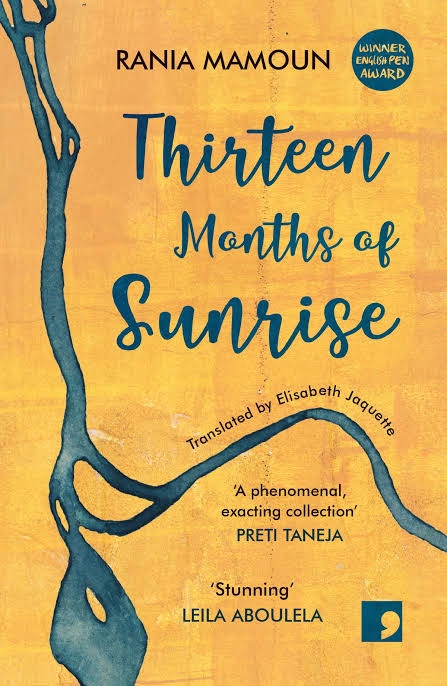
Thirteen Months of Sunrise

📍 Sudan 🇸🇩 

Sudan, is one of the poorest countries in Africa, and has been afflicted by repeated revolutions, civil wars and military dictatorships leading to international sanctions and isolation, internal instability and factional violence. Sudan achieved independence on 1st January 1956 from Egyptian and British colonisation. The partition of Sudan happened in 2011 and South Sudan was formed in July 2011. The war in Darfur was a major armed conflict in Sudan from 2003 to 2020, akin to a genocide, leading to hundreds of thousands of civilian casualties and deaths, brutal rapes and various other horrific human rights violations. 

This novella, my pick for Women in Translation Month, is an anthology of short stories, set in Khartoum, the capital of Sudan. These stories offer a contemporary outlook on Sudan but often replete with the issues plaguing Sudanese people such as poverty, insecurity and safety. The first story, titled ‘Thirteen months of Sunrise’, is about a bittersweet friendship between a Sudanese woman and an Ethiopian man; also why Ethiopia has thirteen months! The other stories that stood out were, ‘A woman asleep on her Bundle’, that spoke about a woman’s benevolence despite her abject poverty and hence forced ostracism; ‘Stray Steps’, that portrayed a diabetic woman’s ordeal with hunger and hypoglycaemia and how stray dogs come to her rescue; and ‘Doors’, a story about an unemployed man’s hope of securing a job only to be left despondent and indignant.

Rania Mamoun is a Sudanese fiction writer and journalist, known for her novels, poems and short stories. The book which has been translated from Arabic into English by Elisabeth Jaquette, won the Pen Translates Award in 2017 and was also shortlisted for the Warwick Prize for Women in Translation 2020. 

The ongoing civil war that began during Ramadan on 15th April, 2023, between the two rival factions of the military government of Sudan, has been concentrated around the capital city of Khartoum and the Darfur region. The country is facing one of the most severe humanitarian crises in recent history. According to the UN, UNHCR and Amnesty International; over 18,800 people have been killed; 6.7 million are at risk of gender-based violence, particularly women and girls; 755k people are on the brink of famine and 25.6 million people are in acute hunger that includes more than 8.5 million people facing emergency levels of hunger. Over 10 million people have been forced to flee their homes both within the country and across its borders; out of which over 7.7 million are internally displaced persons; as the devastating civil war heads for its 500th day. 

Sudan, Gaza, DR Congo, Burkina Faso, Myanmar, Bangladesh, Yemen, Afghanistan, Ukraine, Haiti, Manipur. The world in 2024. 

~ JUST A GAY BOY. 😞

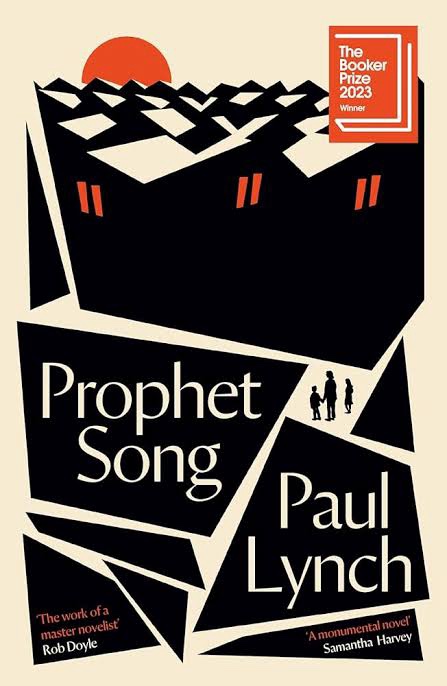
Prophet Song

Winner of the 2023 Booker Prize, Prophet Song is deliberately dark and perversely poignant. Set in contemporary Ireland, the story is about Eilish Stack, who is a molecular biologist by training and working in biotech in Dublin. She has four children, one being an infant, Ben. The story begins when Larry, her trade unionist husband is taken in for questioning by government officials. While Eilish receives no news about Larry despite her umpteen attempts to contact him or the officials; the country is soon descending into a political quagmire. A right wing “National Alliance Party” stakes claim to be the government and begins attempts to fight the anti-nationals and the rebels. Totalitarianism sees a rapid ascent and fascism soon starts dominating every aspect of civilian life. Freedom becomes conditional, defence forces become authoritarian, paving the way for a deadly civil war.

Eilish remains forever worried about Larry, wondering whether he’s even alive. Her eldest son Mark joins the rebels and soon disappears. Her other son Bailey, remains angst ridden and obstinate. Her daughter Molly remains her only support through this ordeal. As Eilish battles her anxieties, her insecurities, her losses, her grief, her helplessness, her hopelessness, and simultaneously care for her infant and a rapidly progressing dementia suffering father; she needs to make a decision if she has to leave the country or cross the borders illegally; as the society around her continues to disintegrate, and life becomes an endless cacophony of gunshots, sirens and missile strikes.

Paul Lynch’s prose can be generalised as an urgent and compelling commentary on the steady rise of totalitarianism in the world. His writing has a claustrophobic atmosphere, a sense of foreboding and is suffused with an unrelenting uneasiness. Lynch evocatively translates Eilish’s impuissance and anxiety into his words and onto every page. The scenes where Eilish expectantly awaits Mark’s phone call and when she goes hospital to hospital in search of her injured child are especially gut wrenching, depicting an awful sense of dread. The writing almost feels like a stream of consciousness; there are sections and chapters in the novel but no paragraphs. The dialogues between characters are without any punctuations; so much so that, there’s no difference between a thing said and a thing thought.

Now, Prophet Song may have been set in a dystopian Ireland, but closer home dystopia may soon become a reality. Economic development has been used as a tool to conceal fascism and autocracy. Jingoism and zealotry are being given a free run while any form of dissent is being deemed antinational and subsequently penalised. If you are one amongst many who still chooses to look the other way as this is happening right now, and thinking ‘this won’t/ will never affect me’; read Prophet Song. Paul Lynch was probably imagining an Ireland like that, but we don’t have to imagine it.

~ JUST A GAY BOY. 👿

A General Theory of Oblivion

📍 Angola 🇦🇴

Angola is a country on the west central coast of Southern Africa. It is the second largest Portuguese speaking (Lusophone) country in the world. After a protracted anti-colonial struggle, Angola achieved independence in 1975 from Portuguese colonisation as a Marxist-Leninist one party Republic. The country descended into a devastating civil war the same year between the ruling People’s Movement for the Liberation of Angola (MPLA), the insurgent National Union for the Total Independence of Angola, and the militant organization National Liberation Front of Angola. The country has been governed by MPLA ever since its independence in 1975. Following the end of the war in 2002, Angola emerged as a relatively stable unitary, presidential constitutional republic. (Source- Wikipedia)

The book, originally written in Portuguese by Angolan writer, José Eduardo Agualusa in 2012, was translated into English by Daniel Hahn in 2015. The novel appeared on the shortlist for the 2016 Man Booker International Prize and has been the recipient of the 2017 International Dublin Literary Award. The story is about a woman, Ludovica, who seals herself off in her apartment in Luanda in 1975 at the time of Angola’s independence. As Luanda plunges into a civil car soon after, Ludovica watches it unfold in bits and pieces through her window, radio and sometimes overhearing people’s conversations. She’s also dealing with the abrupt disappearance of her sister and brother-in-law which happens around the same time. She sustains herself frugally by growing her own vegetables, catching pigeons, reading the books in her house and by scribbling her thoughts on the wall. Years pass by, and Ludovica, with her aging and diminishing eyesight often oscillates between periods of imagined insanity and hopeless reality. One day, a little boy, Sabalu comes into her life, at a time, when she’s immobile and sprawled out on the floor due to a fracture. He tends to her and gives her hope through his unconditional empathy and care. Just when Ludo starts considering Sabalu as her grandson and only family, she is confronted with an unexpected and unknown family member.

This dark and seemingly despondent life of Ludovica runs in parallel with the civil upheaval in Luanda and Angola. The author also introduces us to a myriad of other characters through the narrative, whose individual stories, purposes and intentions come together in the end. Each of them has a tale woven across Angola’s independence. He also takes time in explaining Ludovica’s painful past traumas leading her to live a life of confinement, self abandonment and shame.

Agualusa’s prose is purposeful, political and poetic. He crafts a meandering plot that traverses from Angola’s independence in 1975, through the civil war, till its end in 2002. He doesn’t shy away from layering the text with mentions of colonialism and white supremacy and it’s problematic effects. Ludovica comes across as a woman of steely grit having a resounding optimism to live, despite her circumstances and her own beliefs about her. That’s the genius of Agualusa’s writing. Do savour it.

~ JUST A GAY BOY. 🙃

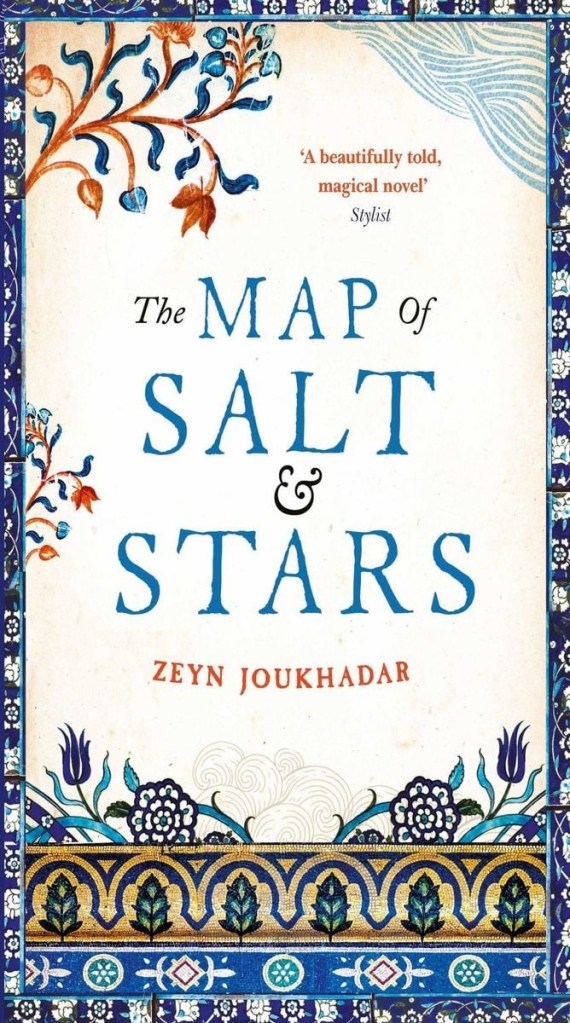
The Map of Salt and Stars

Unrest in Syria began on 15th March, 2011 as part of the wider 2011 Arab spring protests out of discontent with the Syrian government, eventually leading to an armed conflict. The war is currently fought by several factions. The Syrian Civil War is second deadliest conflict of the 21st century after the Second Congo War. The conflict has caused a major refugee crisis with millions fleeing to neighbouring countries (source Wikipedia). This book by Syrian American author, Zeyn Joukhadar, is rooted in Syria and celebrates it with a double tale of voyage and exile. The first tale is about 16 year old Rawiya, set in 12th century, who leaves her house in Benzu, near Ceuta (Ceuta is a Spanish autonomous city on the north coast of Africa), in search of adventure and with a quest to explore the world beyond the desert. She becomes an apprentice with the renowned explorer and mapmaker al-Idrisi and sets out on this perilous and unforeseeable odyssey to assist al-Idrisi in sketching the map through the Maghreb and the Mediterranean. During this adventure of a lifetime, she comes across blood thirsty mystical creatures; vicious men; cruel, tyrant kings and their armies; and difficult terrain and weather. This only establishes Rawiya as a gallant warrior. Rawiya single handedly helps al-Idrisi in completing his exploration of the world whilst constantly battling attackers and reminding everyone through this pursuit that her gender is no barrier in achieving accolades and appreciation and in being one of the greatest warriors of her time.

The second tale is of the present day, 12 year old Nour who has moved to Homs in Syria from Manhattan after her father’s death; with her mother, who is a mapmaker and two sisters, Zahra and Huda. As she is adjusting to her new life in Syria while knowing only a few words of Arabic, she is now one amongst many who has got trapped in the Civil war. She experiences bombing of her house and from there on, her ordeal for survival begins. Instantly her status becomes that of a refugee as she manages to escape from Syria. She has to let go of her mother and sister Huda during this gut wrenching journey which takes her through Jordan, Libya, Algeria and finally to Ceuta. The tale is as much a portrayal of Nour’s resilience, as much as it is, about her coming to terms with the menacing traits of human behaviour and the rot that has crept into humanity at large.

The narrative constantly flips between the stories of Rawiya and Nour. It’s a slow paced read. Islamic history and ancient names of cities find a constant mention through the book. I had to refer to Google lot many times to educate myself about the same. The author brilliantly depicts the striking geographical similarities between the old world and the current. Maps form an integral part of the storyline throughout the book. There are constant references about stars, galaxies and various constellations. I did find Nour’s narrative a bit tedious, since it gets a lot metaphorical at times. It isn’t an easy book to read. How would it even be? How can any book that talks about a devastating civil war be pleasant in any way? The author deftly portrays the geopolitical dissimilarity in tales of Rawiya and Nour. Rawiya’s is about bringing the world together by sketching the map and defining the borders, whilst ironically in Nour’s, it’s about a disintegrated world and the battles at the borders.

~ JUST A GAY BOY. 😞

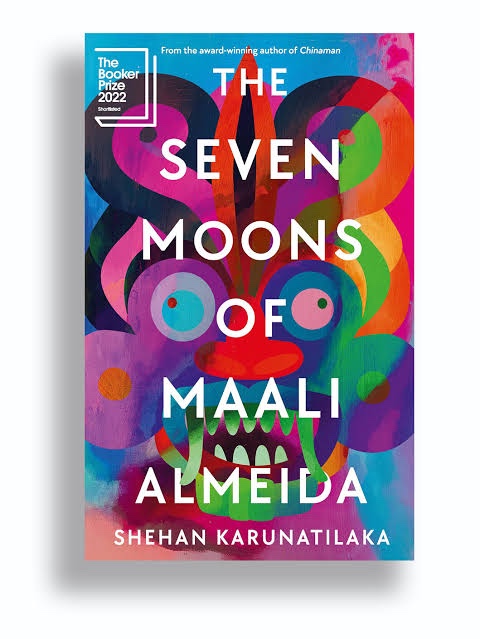
The Seven Moons of Maali Almeida

This 2022 Booker Prize winner book is like no other. The protagonist, Maali Almeida is dead. He has been killed and his body dumped in Colombo’s Beira Lake. His ghost is now narrating the story and trying to find out his killer/s. The premise is happening in the very nebulous In Between, wherein ghosts are looming large over Colombo’s skyline and constantly trying to interact or distract the living mortals Down There. If this has intrigued you already, wait till you read the brilliance with which Shehan Karunatilaka has authored this story. It is set in the extremely turbulent times of Sri Lanka’s civil war circa 1989. Maali is a war photographer who clicks unfiltered, raw and controversial photos of war victims, ruthless politicians and the civil unrest per se. Debauchery forms his middle name, as he parties with Colombo’s elite and canoodles countless young men. Now that he’s dead, he’s got “Seven Moons” to sort out his grievances. He tries desperately to reach and send signals to his people Down There, especially his best friend Jaki and his on-off boyfriend DD. Other ghosts inadvertently and reluctantly help him with this pursuit. As Maali finds out his killer, whilst protecting the war photographs that could expose the dirty politics of the country, he also tries to make amends with all his strained relationships, albeit, its now in the afterlife.

This roller coaster of a story gains momentum from the start and constantly shifts between the past and present; real and otherworldly. Shehan doesn’t shy away from presenting the gory details of the politics behind the war using satire and dark humour; at the same time also blasphemously portraying the privileged ignorance of other countries and international organisations in mindlessly sustaining the war. The mastery of his writing is evident in the way he has fleshed out Maali’s character who you want to sympathise with just because he’s dead but are also put off by his arrogance, audacity and impetuous attitude. The nuanced portrayal of the various messy relationships between the characters and their interplays in the backdrop of a war and an afterlife is ingenious to say the least. Shehan has been able to translate the palpable frustration of Maali in us as his ghost looks arounds furtively and helplessly for answers. Also, very rarely do you come across such an effortless writing which doesn’t take sides despite a raging war, countless deaths, and a humanity at loss.

Stellar!

~ JUST A GAY BOY. 🤩

A Passage North

Sri Lankan author, Anuk Arudpragasam’s second book, and also shortlisted for Booker Prize 2021, is striking but deliberately difficult. The book is a meandering tale of a Sri Lankan Tamil man, Krishan, living in Colombo, who is now faced with the news of his grandmother Appamma’s caretaker, Rani’s death in the far flung village of Kilinochchi, in the Northern Province of Sri Lanka. As Krishan leaves on this train journey to the North, a region devastated by the civil war, he starts ruminating on his life’s choices and outcomes; philosophically analysing them, in the context of the inevitable truths of grief, loss, trauma and death.

As the author builds Krishan’s narrative, he also introduces us to the relationships he shares with all the women in his life including mother, grandmother, Rani and his former girlfriend Anjum. Anjum is an Indian girl, he meets while in Delhi. Though they share a “friend with benefits” relationship, more so from Anjum’s perspective; Krishan feels drawn to her romantically. Since separated and not in touch, Krishan keeps reminiscing about her; he remains in denial about the unrequited love and his inability to come to a closure.

Through the story of Rani, the Tamil woman, who loses both her sons to the war and is now battling severe clinical depression, the author brings to fore the turbulent times of the country when the Tigers and the military were engaged in a destructive duel. The book also has detailed multi-page recountings of Tamil poems, Buddha, and television documentaries.

Through the book, very little happens. While the author is adept at illustrating our most private and everyday emotions and thoughts lucidly; at the same time, it also feels like rambling. The dialogue-less prose, is full of long, laborious and word-y sentences. The character of Krishan comes across as inconsequential, indecisive and tedious.

To summarise, the book feels more like an indulgent experience, than immersive.

~ JUST A GAY BOY. 😶