Juveniles & Other Stories

📍 Thailand 🇹🇭 

Juveniles & Other Stories is an anthology of short stories centered on queer narratives and queer characters. While the pieces may appear to be coming-of-age stories at first glance, a deeper reading reveals a tapestry of complex human emotions, rendered with remarkable empathy and compassion.

Nearly half of the book comprises the titular novella “Juveniles”. This is a story about two young boys Hai Saeng and Dao Nhue and their journey through adolescence. Dao Nhue gets enamoured with the mysterious Hai Saeng, who comes from a wealthy and privileged background. Hai Saeng seems to visit Dao Nhue’s village only during the summers and is never seen with his parents. His brooding and detached personality arouses Dao Nhue’s curiosity, and as they begin spending time together, he realises the dark secrets hiding behind the facade of congeniality. The innocent friendship blossoms into love and both of them find themselves in an inseparable dynamic of longing. However, Hai Saeng’s past looms large preventing him from embracing happiness or accepting love. The simmering anger, frustration and a sense of abandonment pushes him toward self sabotage and makes him lash out at times. The story builds toward a pivotal moment when Hai Saeng is forced to confront his worst fear leading to untoward repercussions that irrevocably alter the trajectory of both boys’ lives. Though the story is told through two young adults, it deals with adult issues of violence, neglect and emotional repression and how unchecked wounds can harden into self contempt, unworthiness and indifference. Hai Saeng’s attempt to walk through life unperturbed whilst bottling up rage and resentment only transforms him into a vehicle of pain. Ultimately, the boys do navigate their emotional burdens in flawed, confused, and profoundly human ways, thus offering an understated but resonant life lesson.

Amongst the accompanying stories, the one that caught my attention was, “Hirun and Beardy”. Again, this is about two men and the unspoken love between them. The fact that neither of them address a misunderstanding that occurred years ago, allowing it to fester and create a rift, says a lot about how adults choose to act immature and give in to their ego and false assumptions. Eventually it takes their perceptive nephew to bridge the gap and remind them of the unmistakable bond that has always existed between them. 

Apinuch Petcharapiracht, the author, (also known under the pen name ‘Moonscape’) is a Chinese-Thai writer based in Phetchaburi, Thailand, and who dreams of marrying her girlfriend. Her stories in the book repeatedly explore unrequited love, silent longing and suppressed desire. Themes of grief, loss and loneliness echo throughout the collection. Through Juveniles & Other Stories, which has been translated from Thai by Kornhirun Nikornsaen, Apinuch has demonstrated how queer individuals experience the same vast spectrum of human emotions like anybody else. Sometimes the simplest stories leave the deepest impressions and Apinuch’s collection is a testament to that truth.

~ JUST A GAY BOY. 🏳️‍🌈🌈

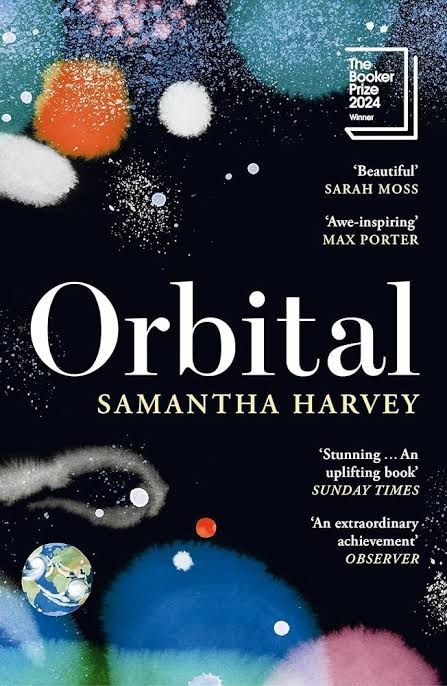
Orbital

Six astronauts are inside the International Space Station; Anton, Chie, Nell, Pietro, Roman and Shaun. The book is a snapshot of a day in the lives of the astronauts as they orbit the earth 16 times during the earthly 24 hours. They grapple with a sunrise every 90 minutes which remains juxtaposed against the indescribable ethereal beauty of the planet Earth. On this particular day, there is a catastrophic typhoon that is approaching the Philippines whose path the astronauts are feverishly trying to follow as they zoom in and out of their orbital planes. The typhoon and the anticipated destruction that it would leave in its wake often becomes a vague segue and at times literature’s metaphorical liberty to delve into the internal cosmos of the individual astronauts while they themselves remain scattered in the grand cosmos of all. 

The book meticulously describes the space and how space stations orbit our planet without using any technical jargon. Earth in all its glory comes alive in the words of the author and simultaneously she transports us into the world of death and grief as one of the astronauts bemoans her mother’s death while the other, a dying relationship. Peering onto the earth, moving through the 16 orbits, the book provides a lingering, at times fleeting, but mostly a longing look at all the continents from the Americas to Antarctica, then getting more granular and microscopic as it describes the countries it crosses, all the lightness and darkness in the innumerable cities of these countries on our planet as they respond to the earthly sunrise and sunset which when observed whilst being suspended from a spacecraft can appear to be elliptically elegiac.

Samantha Harvey’s Orbital, winner of the 2024 Booker Prize, is a piece of literature that is here to let us know that books need not always be having a proverbial plot and a protagonist. Sometimes literature at its finest can be discombobulating, it can be nebulous, it can be meandering, but at the same time be a yardstick for a soulful sojourn across human lives and emotions which are unique, malleable, flawed and fascinating. Harvey’s ingenious writing can seem deceptively simple but every word of every sentence represents the complexities of the human existence when ironically the existence is now 250 miles away from the very planet that makes us human. This is a book that will stay with you for its indecipherable melancholy and literary gravitas as we continue to orbit the planes of living and existing. 

~ JUST A GAY BOY. 🛰️🌏🌎🌍

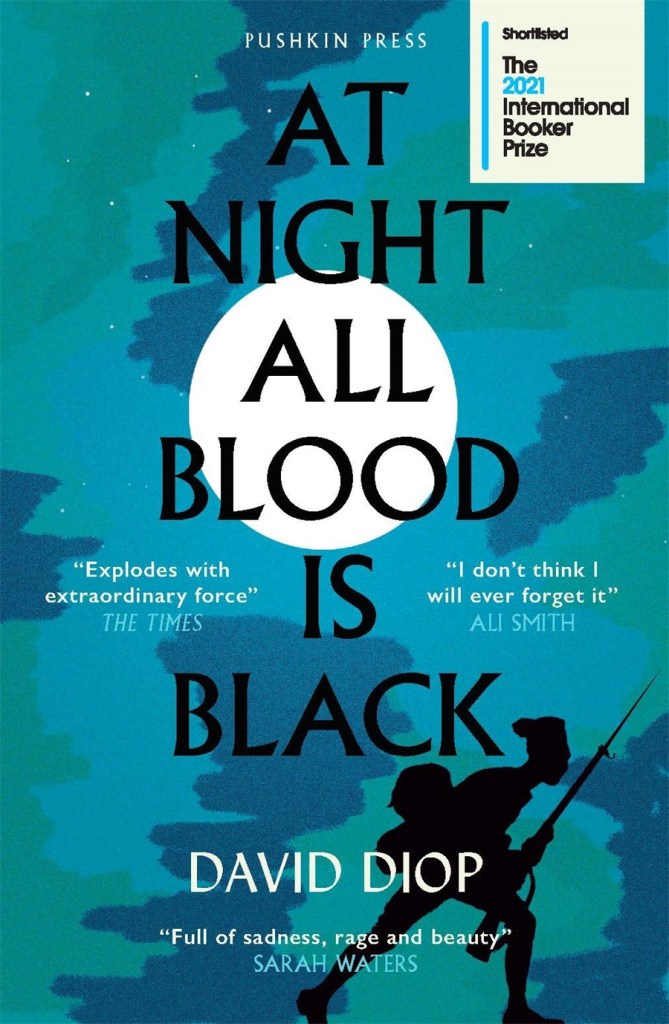
At night all blood is black

This 2021 International Booker Prize winner, is a sordid telling about a Senegalese soldier during the First World War. Alfa Ndiaye, is a strong and handsome man, recruited by the French against the German troops. Mademba Diop, with whom Alfa shares a brotherhood with, gets brutally killed and disemboweled during one of the attacks. Alfa sees him pleading for death and writhing in agony during his last moments and feels helpless and responsible about not providing him death sooner. This event destabilises Alfa which makes him seek gruesome revenge on the Germans. Every night he kills one of them and brings their severed hand as a medallion. Initially, his own troops and the French captain laud him for his bravery. But as his grotesque killing continues, the same people, now deem his bravery as savagery; call him dëmm, the devourer of souls and avoid him. All of this, makes Alfa have mental breakdowns and hence is ordered by the captain to be sent to an asylum. Slowly Alfa starts losing his memory, gets delusional and forgets his own identity.

The author, in the second half, throws light on the friendship and brotherhood of Alfa and Mademba. The relationship of Alfa with this mother, Penndo Ba, who leaves him at the age of nine, remains constrained with an unsaid love and resentment. The book describes the culture and traditions of Fula people of Senegal. The words and the narration get deliberately repetitive, probably to keep it authentic to Alfa Ndiaye’s thoughts.

Through the story, Alfa emerges as this brute force who only knows, blood, death and violence as the language of love, care and loyalty. In his delusional state, when he commits a rape; he believes it to be his act of making love. Narrated by Alfa himself, the story gets intentionally disturbing, making you squirm.

The book is translated from French by Anna Moschovakis, who shares the Booker Prize with the author David Diop. The story is a slice of the unspoken brutality of the First World War. As also, it’s an unflinching account of the life and mind of a soldier, facing the trauma of a war.

Haunting.

~ JUST A GAY BOY. 🥴