Juveniles & Other Stories

📍 Thailand 🇹🇭 

Juveniles & Other Stories is an anthology of short stories centered on queer narratives and queer characters. While the pieces may appear to be coming-of-age stories at first glance, a deeper reading reveals a tapestry of complex human emotions, rendered with remarkable empathy and compassion.

Nearly half of the book comprises the titular novella “Juveniles”. This is a story about two young boys Hai Saeng and Dao Nhue and their journey through adolescence. Dao Nhue gets enamoured with the mysterious Hai Saeng, who comes from a wealthy and privileged background. Hai Saeng seems to visit Dao Nhue’s village only during the summers and is never seen with his parents. His brooding and detached personality arouses Dao Nhue’s curiosity, and as they begin spending time together, he realises the dark secrets hiding behind the facade of congeniality. The innocent friendship blossoms into love and both of them find themselves in an inseparable dynamic of longing. However, Hai Saeng’s past looms large preventing him from embracing happiness or accepting love. The simmering anger, frustration and a sense of abandonment pushes him toward self sabotage and makes him lash out at times. The story builds toward a pivotal moment when Hai Saeng is forced to confront his worst fear leading to untoward repercussions that irrevocably alter the trajectory of both boys’ lives. Though the story is told through two young adults, it deals with adult issues of violence, neglect and emotional repression and how unchecked wounds can harden into self contempt, unworthiness and indifference. Hai Saeng’s attempt to walk through life unperturbed whilst bottling up rage and resentment only transforms him into a vehicle of pain. Ultimately, the boys do navigate their emotional burdens in flawed, confused, and profoundly human ways, thus offering an understated but resonant life lesson.

Amongst the accompanying stories, the one that caught my attention was, “Hirun and Beardy”. Again, this is about two men and the unspoken love between them. The fact that neither of them address a misunderstanding that occurred years ago, allowing it to fester and create a rift, says a lot about how adults choose to act immature and give in to their ego and false assumptions. Eventually it takes their perceptive nephew to bridge the gap and remind them of the unmistakable bond that has always existed between them. 

Apinuch Petcharapiracht, the author, (also known under the pen name ‘Moonscape’) is a Chinese-Thai writer based in Phetchaburi, Thailand, and who dreams of marrying her girlfriend. Her stories in the book repeatedly explore unrequited love, silent longing and suppressed desire. Themes of grief, loss and loneliness echo throughout the collection. Through Juveniles & Other Stories, which has been translated from Thai by Kornhirun Nikornsaen, Apinuch has demonstrated how queer individuals experience the same vast spectrum of human emotions like anybody else. Sometimes the simplest stories leave the deepest impressions and Apinuch’s collection is a testament to that truth.

~ JUST A GAY BOY. 🏳️‍🌈🌈

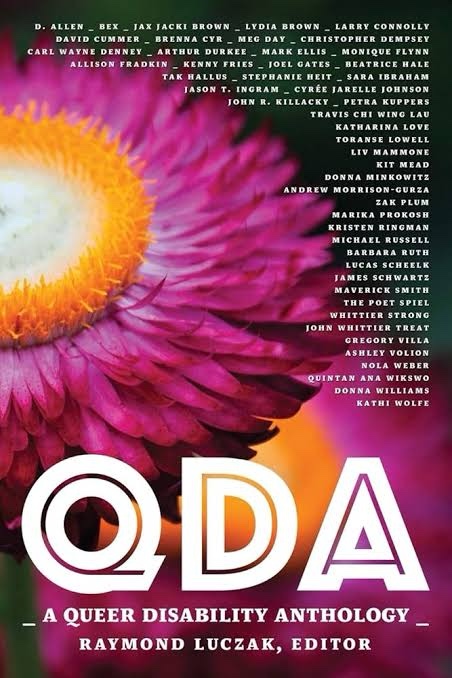
QDA – A Queer Disability Anthology 

July is Disability Pride Month and it was born out of the ‘Disability Rights Movement’ in America. It is built on intersectional identity politics and social justice. The core concept of Disability Pride is based on the tenet of rewriting the negative narratives and biases that frequently surround the concept of disability. 

QDA isn’t just another anthology, rather it stands out for its thoughtful and considerate approach to queer disability. Each of the 48 writers/contributors is queer and disabled. The writers are diverse in terms of their race, gender, sexuality, identity and disability type which includes physical disability, sensory disability, neurodivergence, psychiatric disability, chronic illness and even invisible disability. The book also is an amalgamation of different literary forms such as essays, short fiction, poems, comics and hybrid writing. 

QDA asserts itself as a commanding voice against ableism, dismantling the various ways in which it stigmatises and sidelines disabled people. The writings unapologetically express the anger and frustration felt by the writers and at the same time, they do not read as pleas for pity or assistance. The narratives are focussed on representation and resistance, where intersectionality isn’t just glossy platitude but a lived reality. The contributors have not flinched from exploring topics of sexuality, intimacy, eroticism and body politics. Out of the many writings, the ones that stood out to me were as follows. 

  1. No more Inspiration Porn: Introduction by Raymond Luczak rightfully introduces us to the necessity of a shame-free approach to disability, the blatant normalisation of ableism and the necessary nuance needed while discussing and implementing diversity. He makes a strong case against using disability as “inspiration porn” to fuel ableist goals. 
  2. Liv Mammone’s Advice to the Able-Bodied Poet entering a Disability Poetics Workshop, is a searing and scathing critique on the default ableist behaviours. It is a catalogue of reminders for engaging with a disabled person including checking one’s own misplaced courtesy and concern. A notable quote from the essay was, “The words disability, disorder, and disease aren’t synonymous”. 
  3. Kit Mead in Missing What You Never Had: Autistic and Queer, speaks for the autistic and queer who tend to become the invisible queers, as most queer spaces being too loud, prohibit many in the community from seeking them out and hence many of them feel their queerness to be fake as they are unable to assimilate with something that is a part of the cultural zeitgeist. 
  4. In Love Me, Love My Ostomy, Tak Hallus speaks about his struggles with Ulcerative Colitis and living with an ostomy; confronting the rejection he faces from within the gay community because his disability is not pretty, popular, obvious, and conventionally palatable. 
  5. Maverick Smith in Invisible Within the Ten Percent, laments the normalisation of ableism and audism, even in Pride celebrations.
  6. In The Ides of April, Barbara Ruth takes us through her everyday life as a disabled person while also living with her disabled partner, Nora. In the aftermath of a terrorist attack on the Boston Marathon, her attendant Aisha fears for her racial profiling and Barbara wonders if she has become a quintessential clicktivist.
  7. In Learning to Fall in Love, Katharina Love, decides to fall in love with herself first and accept her condition of Möbius Syndrome, her love for women and make peace with the fact that her mother’s love may always remain unattainable. 

And finally, the crown jewel of this anthology for me, was the brilliant, satirical piece by Lydia Brown called, How Not to Plan Disability Conferences (or, How to Be an Ableist Asswipe While Planning a Disability Conference). Lydia meticulously enumerates the ways in which ableist people use disability to virtue signal diversity to an ableist audience essentially and how ableism takes centre stage and disability and disabled individuals remain mere props for motivational tokenism and triumph voyeurism. This short essay is biting, belligerent and bold and it should make everyone scrutinise their own diversity agendas. 

Raymond Luczak, the editor of QDA, is a prolific Deaf gay writer, editor, poet, and filmmaker whose work often explores Deaf culture, disability, queerness, and identity. He has written/edited over 30 books, spanning poetry, fiction, memoir, anthologies, and plays. QDA reads like an act of defiance. It’s an anthem against the erasure of disability. It’s provocative and rambunctious; necessarily caustic yet relentlessly truthful, indulgent yet raw, but always delightfully queer. 

~ JUST A GAY BOY.

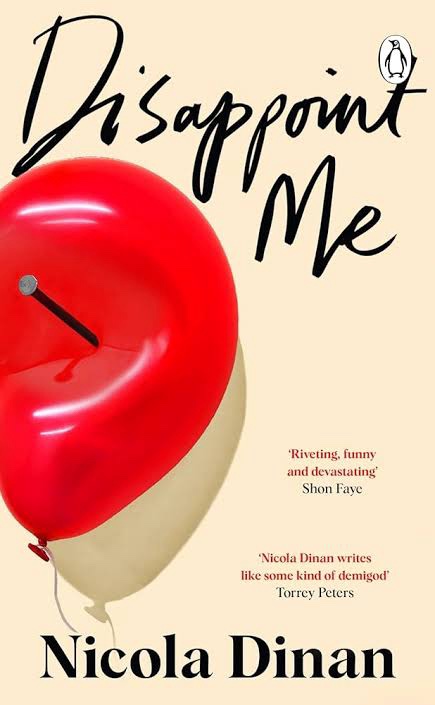
Disappoint Me

When Max, a thirty something trans woman wakes up in the hospital after falling down a flight of stairs at a New Year’s party, she decides to take charge of her life. She has split from her boyfriend, Arthur, and the modern dating scene in London makes her anxious, where every swipe feels like a psychological landmine. Nonetheless she decides to sample its myriad offerings by deciding to go on a date with Vincent. His Asian background reassures her a bit and she soon also realises that he is thoughtful, kind and caring. As they embark upon this journey together, Max understands the love Vincent harbours for her and his earnest commitment towards being in a relationship with a trans woman. He is considerate with his words and language and ready to accept his misgivings. However, he is hesitant about telling his conservative Chinese parents about Max. This irks Max and despite her best attempts at trying not to dwell on it, subconsciously it keeps gnawing at her. An innocuous thing soon becomes a bone of contention and every banter and argument starts to carry its essence implicitly. If that were not enough, and add to it current dating culture’s panic and emotional pandemonium, there’s a troubled past that Vincent harbours in secret, which is bound to disrupt his relationship with Max once she finds out. 

Disappoint Me is a meticulously clever and nuanced take on contemporary relationships and partnerships. Max and Vincent embody the quintessential emotionally dysregulated millennials as they navigate a relatively new and fragile relationship. Max is secure in her trans personhood but now, after being pair-bonded with Vincent she starts questioning everything about it, from its integrity to its malleability with a straight partner. Vincent on the other hand, seems to be unsure of his wholehearted attempts at traversing this queer relationship and is constantly wondering if he’s failing Max. Both Max and Vincent seem to be holding back their true selves during much of their communication for the irrational fear they feel in revealing their real personalities. Vincent straddles the romantic pressures of being the partner who is expected to introduce Max to his family, and the parental pressures of being the ideal son who will give his parents, their grandchildren. Max’s tryst with the complex emotions of self sabotage prevents her from being fully transparent with her feelings, instead, it leads to misunderstanding and misinterpretation. As she is settling into the ennui of having a new boyfriend post the breakup, doubts, revelations and reservations take her back into a state of restlessness and a previous, familiar world of disappointment.

While Max and Vincent come across as scattered, confused and a tad obsequious; some of the supporting characters bring the humour and spontaneity to the mundanity of a bougie existence in London. Max’s friend, Simone, is pragmatic about dealing with everyday situations but punishing when dealing with race and gender politics. The duality and dubiety of her personality comes forth when she gets accused of body shaming and unprofessional conduct. The standout character for me was Alex, whose unfading presence in the book heightens the narrative. She is assiduous and prudent about her decisions. Her quiet fortitude and restraint speak volumes in contrast to the emotional volatility around her. The author’s portrayal of most of her characters as sanctimonious, impetuous and solipsistic feels deliberate and conforming to the evolution of romance, camaraderie and cultural mores. 

Nicola Dinan, is a British-Malaysian novelist and essayist who has swiftly become a celebrated voice in contemporary literary fiction. Her debut novel, Bellies won the Polari First Book Prize and was a finalist for the Lambda Literary Award. Nicola’s writing is witty, perceptive, conspicuous, incisive and complex. She meanders and ruminates on the real life trans experience through Max’s character, hence presenting her as layered, multidimensional and deeply human. That’s the beauty and purpose of Dinan’s language which presents people with flaws, insecurities and imperfections, and yet who are committed to living and loving. Her prose doesn’t cater to the gaze of cisnormative audiences; it gives trans women the room to be everything: angry, confused, loved, lonely and free. Her writing feels untethered, grounded in emotional realism and disinterested in perfection. Queer relationships and trans representation are the necessity of the hour and Dinan’s narrative puts it at the forefront of the social milieu in all its glory. Disappoint Me is so frighteningly accurate that it’s certainly going to be a part of the literary zeitgeist and Nicola Dinan’s voice, agency and craft are here to stay. 

~ JUST A GAY BOY. 🏳️‍⚧️🏳️‍🌈

Nobody Needs To Know

Nobody needs to know, that’s exactly what is being told to intersex children and their parents. It’s as if intersex bodies are a pathology to be diagnosed and then treated. As if intersex bodies are embodiments of shame that need to be hidden, corrected or obliterated. This is what Pidgeon Pagonis, the author experienced as an intersex person, when they were a child. They were subjected to brutal corrective surgeries while their parents were being misguided and misinformed about their condition. The doctors at the Lurie Children’s Hospital in Chicago, took it upon themselves to pathologise Pidgeon’s intersexuality, performed the unnecessary surgeries and decided that they were to be raised as a girl. Years later, as an adolescent, when Pidgeon realises that they are intersex and that what they had was in fact, Androgen Insensitivity Syndrome, which doesn’t warrant invasive and intrusive medical intervention, they decide to be an advocate for their own intersexuality which later organically morphs into activism for the advocacy and upliftment of the intersex community. 

The book, Pidgeon’s memoir, is a testament of the medical gaslighting that they endured for years and the erasure they experienced of their personhood. The refusal to acknowledge the bodily harm that was voluntarily inflicted on Pidgeon by the doctors is bewildering. They decide to fight the system that denies intersex individuals their bodily autonomy by taking on the doctors at the hospital. Pidgeon repeatedly makes the case for intersex individuals having the right to choose their surgery if they wish to, once they are able enough and grown enough to make such an informed decision. This arduous journey sees its fair share of trials and tribulations as Pidgeon grows from being timid to tenacious, from being gullible to informed, and from being a single person to becoming a community. As the hospital and one particular doctor, Dr Earl Cheng, continue to perform unwarranted surgeries under the garb of parental pressures, Pidgeon takes the battle to the streets of Chicago that sees an unprecedented support from their network, friends, and also the transgender community. 

Nobody needs to know is a bold and moving memoir about securing belief in one’s body especially when the world has made one disbelieve its beauty. Through this, the author continually comments on the harms that get perpetuated due to the obduracy of a binary mentality and hence viewing the society at large as binary. They also highlight the fraught relationship with their mother when they decide to live their truth unapologetically and simultaneously also decide to launch a full challenge against a revered medical institution like Lurie. The book, unbeknownst to Pagonis, tacitly celebrates their generosity of spirit, in bringing together everyone who has ever been wronged by the bigotry of a binary society, to become a force that will challenge these notions and help everyone visualise an existence that’s unique and congruent with their truth. 

There is no reliable national data on the number of intersex individuals in India. Estimates cited by activists point to approximately 10,000 intersex babies born each year in India. In April 2019, the Madras High Court (Madurai Bench) issued a landmark ruling banning non-essential “sex-normalizing” surgeries on infants and children with intersex traits, allowing exceptions only for life-threatening situations. Hundreds of such surgeries are still being performed in Tamil Nadu despite the 2019 ban. There is no centralized registry or national data on intersex surgeries in India. There is no pan-India law yet that bans these needless and exploitative intersex surgeries. Intersex individuals are often rendered invisible or they are mislabeled and misidentified and continue to be subjected to societal and medical abuse due to absence of education, awareness, culpability and law enforcement. They remain invisible even in the LGBTQIA+ spaces. This begs the question of whether we, the queers have let an entire community down? Is ‘I’ in the LGBTQIA+ spectrum just a letter or does it also call for more inclusivity?

~ JUST A GAY BOY. 🏳️‍🌈

Everything Is Fine Here

📍 Uganda 🇺🇬 

Eighteen-year-old Aine Kamara is excited to meet her elder sister Mbabazi at their university, where Mbabazi, a gynecologist practising in Kampala, has been invited as a guest speaker. Aine is aware that her sister is a lesbian and is pleasantly surprised when she arrives with her partner Achen to deliver the guest lecture. Aine and Achen hit it off instantly, and soon Achen assumes the role of a confidante. Mbabazi and Achen try their best to keep their relationship discreet from the prying eyes of a very homophobic and biblically grounded society, despite the challenges it brings. Aine is juggling her passion for ornithology and her yearning to work in a sanctuary with her upcoming university exams and the overbearing aspirations of her parents regarding her future educational prospects. Unfortunately, a tragedy upends their lives, and a seemingly benevolent decision taken by Aine during this turbulent time fractures her relationship with her sister and even threatens the love between Mbabazi and Achen.

Everything Is Fine Here does come across as Aine’s coming-of-age story, but Mbabazi and her queer relationship feature prominently in the narrative. In fact, it has been a deliberate attempt by the author to narrate a queer relationship through the eyes of a straight ally. Aine becomes privy to the nuances of queer love and what it takes to be queer and have a relationship in a country that punishes homosexuality. As an ally, Aine embodies the role and offers her unwavering support to her sister and her partner. She has a falling out with her devout Christian mother over Mbabazi’s relationship, which prompts her to leave her house in Bigodi and travel to Kampala. Through these trials and tribulations, Aine comes into her own, understands her tenacity, acknowledges her overwhelming grief, and affirms her own sexual awakening.

This is a book that celebrates relationships; whether it is Aine and Mbabazi processing their loss together by honouring and remembering the person lost, or Mbabazi and Achen working together to value their commitment and love by understanding and accepting each other’s differences, or Aine and Achen discovering this new bond that helps them confide without judgement. This is a thoroughly Ugandan book. Ugandan culture and cuisine are effortlessly embedded in the narrative, as are the language and various dialects. This is also a book that attempts to normalise queer relationships in a homophobic and fundamentalist society. Though Mbabazi and Achen keep their relationship under the radar, it still epitomises an act of defiance and the necessity to have agency over one’s life; and how authenticity can act like a permission slip for others to self-express and embrace their individuality.

Iryn Tushabe, who identifies as bisexual, is a Ugandan-Canadian writer and journalist, born in Uganda and now based in Regina. Her work, spanning creative nonfiction and short fiction, has appeared in several prestigious outlets. She was also a finalist for the Caine Prize for African Writing in 2021. Everything Is Fine Here is her debut novel.

Homosexuality has been illegal in Uganda since 1950, a law enacted during British protectorate rule (1894–1962). The Anti-Homosexuality Act was passed by the Ugandan Parliament in March 2023 and was signed into law by President Museveni on May 26, 2023. The key provisions include life imprisonment, prison terms for up to 20 years, and even the death penalty. The law has led to increased arrests, raids, extortion, violence, and widespread persecution of LGBTQ+ individuals and supporters. India decriminalised homosexuality on September 6, 2018; however, societal acceptance has been hard to come by. Queer individuals and those in queer relationships that challenge heteronormativity and the gender binary still face ridicule, discrimination, prejudice, and violence. The U.K. decriminalised homosexuality in 1967 but left colonial versions in place in its protectorates and colonies. Yet these same colonisers do have the audacity to preach equality, inclusivity, and human rights. The colonised peoples need to realise that homosexuality was never a Western import. In fact, to quote from the book:

Did they not know this bit of history? Was it lost on them that homophobia, not homosexuality, was the import?

~ JUST A GAY BOY. 🏳️‍🌈

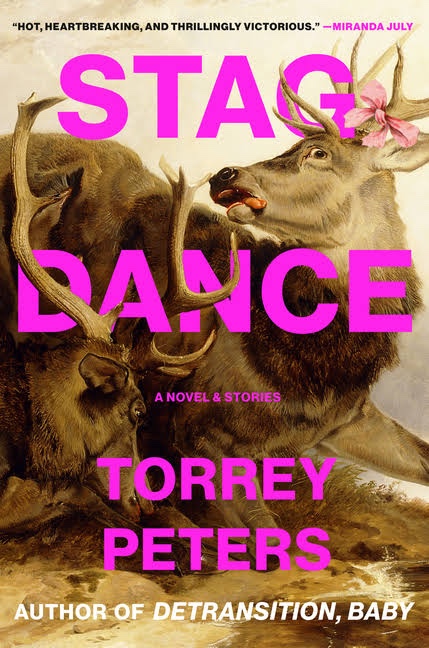
Stag Dance

Torrey Peters is back with a brand new book after her phenomenally successful  genre bending debut, “Detransition, Baby”. Her debut work made her one of the best trans writers of our times and also got her many awards and nominations. Now, does this new book, follow its predecessor’s footsteps? Let’s find out.

Stag Dance is a collection of three short stories and a novella. There’s no theme that’s connecting the stories. They range from dystopia to old world, from rigid sexuality to fluid and questioning genders and sexualities, from morality to immoral obsessions, from functionally perverse to dysfunctionally obtuse narratives.

The story, Infect your friends and loved ones, set in a dystopian future, has two trans women, exploring their troubled and harmful relationship dynamics, through emotionally abusive codependency that’s morphed into a toxic, traumatic bond. They navigate the above entanglement in a world where humans have lost the ability to produce their own sex hormones after a pandemic and these and other trans women are obsessing over animal estrogens. In the story, The Chaser, the narrator is a boy sharing a boarding school room with another boy, Robbie, who’s effeminate mannerisms and curvy body gets the narrator infatuated with him. What follows is a sequence of events in which the narrator gets sexually intimate with Robbie multiple times and even convinces him to cross dress for him. Later he ignores Robbie and when Robbie confronts him about his problematic attitude, the narrator refuses to acknowledge it at first as he feels obligated to safeguard his puritanical masculinity which he thinks is being threatened by Robbie. Eventually he does understand his feelings for Robbie but that comes with a grotesque scene involving the butchering of an animal and a hormonally charged climax. The story, The Masker, involves a cross dresser guy, Krys, exploring his new found identity but soon finds himself being emotionally manipulated by an elder trans woman and another cross dresser called, The Masker. The story does touch upon issues of self determination and fetishisation of queer identities and the obstacles one faces with the gatekeepers of gender and sexuality. The scenes of physical violence and emotional abuse by the Masker were unnerving and can open a pandora’s box of the untold, unreported assaults and aggressions that are prevalent and pervasive in the queer and trans communities.

The titular novella, Stag Dance, was the weakest link. Set somewhere in the past, it’s a story of timber pirates. The leader of the pack, Daglish, is organising a stag dance, wherein few of these brawny, muscular men dress up as women for a night of drinking, dancing and debauchery. One of the beefy guys, Babe, fancies Daglish, while Daglish is already having a clandestine sexual relationship with another guy Lisen. The days leading upto the dance sees a rise in the sexual tensions between the trio. In the meantime, there occurs a slip up and betrayal from both Babe and Lisen respectively towards Daglish when they are assigned a task. As we approach the apogee of the novella, we find the three characters trying to decipher their ambivalent and ambiguous sexuality in this hyper masculine and chauvinistic setting. The novella is tedious, underwhelming and the usage of rural western American lexicon makes it dreary.

Stag Dance, the book, seems like a missed opportunity. I did say in the beginning that there wasn’t an obvious theme connecting the stories, but on examining carefully, all the stories carry the underlying subtext of shame and bullying. There are a lot of bullies in the book and they seem to have the most prominent voice. Rationality and nuance get lost in the overbearing attack by prejudice and stereotypes, which is what majorly happens in the real world too. Probably, Peters deliberately wanted to portray this dichotomy of existence between what is seen and unseen, felt and unfelt. Though the author’s intentions are brave and righteous, they get muddled in the irreverent and irrational script. I understand, it’s a tough act to follow something as groundbreaking as Detransition, Baby. While Detransition, Baby was a uniquely liberating singular voice that stood out in the queer and trans literature landscape; Stag Dance feels like a cacophony of many confusing and confining voices. It does come across as an experimental piece of writing, but was this risky experiment necessary?

~ JUST A GAY BOY. 🫣

Being Queer and Somali: LGBT Somalis at Home and Abroad 

📍 Somalia 🇸🇴 

Somalia is the easternmost country in Africa and located in the Horn of Africa. Mogadishu is the capital and largest city. Around 85% of Somalia’s residents are ethnic Somalis; and Somali is the primary language. The country has been ravaged by a civil war that started in the 1980s as a resistance to the military junta. There is an ongoing phase of the civil war which is concentrated in southern and central Somalia that began in January 2009. Al-Shabaab, a militant terrorist organisation who have pledged allegiance to al-Qaeda is actively involved in the war and despite the growing challenges, still controls large swathes of territory in southern Somalia. LGBTQ people in Somalia face severe adversity and consensual same sex sexual activity is illegal for men and women. In areas controlled by al-Shabaab and in Jubaland, capital punishment is frequently executed.

Afdhere Jama is a Somali writer and filmmaker, born and raised in Somalia who moved to America as a teenager. Jama identifies as queer and Muslim. He has written six books till date.

Now, who would have thought about Queer Somalis? Hardly any! Nobody thinks about queer people in Africa and definitely not in a Muslim majority country like Somalia. And that’s where, the author, through this book, not only has shattered our preconceived notions and ill informed opinions and prejudices, but also has shown that, queer Somalis are living their lives unapologetically. This book is a testament to the fact that LGBT individuals in Somalia despite being in a hostile environment have had the courage to navigate the precarious circumstances to thrive, some doing it cautiously in the country, others having escaped to other countries and being advocates for the diaspora queer Somalis and also for those back home. 

The book starts with the author giving us a comprehensive overview of the country, culture, history, geography and the various tribes with their languages and dialects. He has also provided an essay on what it means to be queer, as a Muslim and as a Somali. He has given us a snapshot on the bullying faced by LGBT people in the country and the everyday slangs that are used for them. Through the book, he has also explained the origins, the continuity and the consequences of the civil war. With this background, he introduces us to a diverse and interesting plethora of LGBT Somalis who he has interviewed for the book. These individuals, resplendent in their own uniqueness, tell their stories of identity, struggle, escape, vulnerability, grief and fear; but forever standing tall and constantly reminding us readers of their supreme fortitude, resilience and charisma. 

The stories span from Mogadishu to cities and towns in Somalia, and to cities across the world such as Paris, London, Toronto, Oslo, Dubai, Jeddah, Cape Town, Nairobi, Washington, Atlanta and even our very own Mumbai. The Mumbai story features a Somali gay guy Kamal, working as a high profile escort in the city, living the good life who decides to quit the profession in the future and pursue his career in IT. Many stories about individuals fleeing the country as a refugee and/or illegal immigrant are gut wrenching for the sheer amount of brutality that they experience. But what’s even more astonishing is their ability to reconcile with their traumas, not dwelling in them and ultimately choosing to live, dream and hope. 

Every story is a gem but the ones that touched me deeply are as follows, described in a nutshell. Badal from Bosaaso comes out to his family after being married, is forced to flee to Mogadishu and establishes a relationship with a married man, Mubarak. The story of a labeeb, (a person who is neither a boy nor a girl; as said by the narrator Abshir), whose gender remains ambiguous, amongst the Sufis in the city of Bardera, is fascinating to say the least. Nuuroow’s a gay boy living in the town of Baraawe; a town controlled by al-Shabaab. Despite the overbearing presence of radicalism and homophobia, Nuuroow and his friends indulge in clandestine gay parties dancing to Bollywood music and living life in debauchery and defiance. Shamsa and Isfahan are a lesbian couple from Hargeisa, Somaliland, who had lived together in Rome, and are back in Hargeisa living in a seven bedroom house with four other lesbian couples. Rahma’s from Geneva, Switzerland, who has finished her medical school and waiting to be a gynaecologist; is a fierce feminist educating the Somali community on the horrible practice of FGM (Female Genital Mutilation); loves her vagina and is looking forward to marrying her girlfriend. Hamdi, a Somali trans woman, from Waqooyi in Northern Somalia, ran away from an abusive gay relationship to Mogadishu, then to a Kenyan refugee camp in Mombasa, finally emigrating to Seattle and has undergone gender reassignment surgery. She’s now a nurse in the US and happily married to a Somali man. Dadirow’s a black, muscular, gay man; is HIV positive, who experienced a traumatic childhood due to an abusive father, escaped to Ethiopia before coming to the US. Now he leads a disciplined life, loving and respecting his body, things that never occurred to him during his recalcitrant and reckless years. 

February is LGBTQ History Month. I am ecstatic to have read this book during this month. World over when LGBTQ individuals are being mistreated, misunderstood, misrepresented, maligned and marginalised, the Somalis are showing us how to survive these odds and make your voice heard. Through this book and their glorious existence, they are paving the way for so many of us to emulate and hence discover ourselves. Afdhere Jama, through his stellar writing, interviewing and compassion, has shown how to portray diversity and inclusivity. He has represented gay, lesbian, bisexual and transgender people from Somalia and the Somalian diaspora with equity, dignity and integrity. The book is a masterclass in writing and representation which when done rightfully, makes the unseen seen and the unheard heard. 

Read this book to be inspired, read it to be humbled; every step of the way. 

~ JUST A GAY BOY. 🏳️‍🌈🏳️‍⚧️

Wild Geese

Wild Geese, written by trans writer, Soula Emmanuel; the 2024 Lambda Literary Awards winner for Transgender Fiction; is a vivid exploration of the complexities of human existence, especially when people refuse to conform to their societal perceptions. Phoebe Forde, is a thirty year old Irish trans woman, three years into her transition, pursuing her PhD from a Swedish University and living in Copenhagen, Denmark. She leaves Ireland to chart a new life for her as a trans woman, and to escape from a life that was no longer serving her. She is living a pretty nondescript life in Copenhagen with her dog, when suddenly one day, her ex girlfriend Grace, shows up at her doorstep.

The book is essentially what happens between Phoebe and Grace over one weekend. Their past lives, their individual and shared traumas, their anger and insecurities, their contemplations about a blurry future get sometimes muddled, sometimes real and many times jarring in the present, as they speak unfiltered, not shying from the awkwardness of each other’s presence, yet getting caught in the awkwardness of their truth and lies, things said and unsaid, emotions discerned and disregarded, leading to an incongruence of expectations and a cacophony of explicit suppositions often blanketed by a symphony of territorial understanding.

Phoebe comes across as a very real person having the rightful fears and anxieties about her existence so much so that, she prefers anonymity. The author sensitively and sensibly portrays her experience as a trans woman without making it a spectacle ever. Phoebe isn’t out there to challenge people’s beliefs and wage a war against transphobia, rather through her confusions and complications, shows her authenticity, vulnerability and reality. Even when Grace, with her preconceived notions provokes Phoebe, she prefers to remain calm and engages her in an esoteric debate over bodies, minds and belongingness.

The writer, Soula Emmanuel, an Irish trans woman, whose debut work is Wild Geese, has used the book as a meditative consideration on a trans person’s lived experience. It is quiet, benevolent and benign. Soula tactfully never tries to answer all the questions that readers may have about Phoebe. Through her nuanced writing, she emphatically states that trans lives are not for scrutiny and examination. The dreamy Copenhagen forms the perfect backdrop to stage Phoebe and Grace’s chance rendezvous. However, there were times, wherein I felt, the prose to be too metaphorical and the language difficult. The conversations between Phoebe and Grace are easy to read, but Phoebe’s internal monologue seems demanding in terms of the language. My pedantic views shouldn’t really stop anyone from picking this profoundly glorious book. An astute, unambiguous, unapologetic and forthright voice in Trans literature. Bravo Soula!

~ JUST A GAY BOY. 🏳️‍⚧️

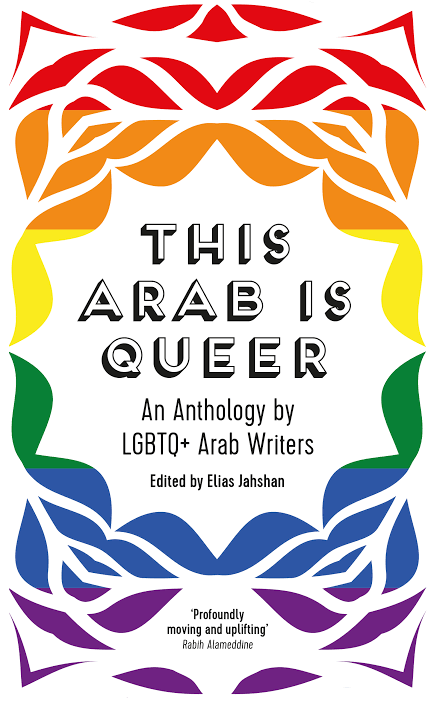
This Arab is Queer

I feel, I am blessed to have read this book, that too during pride month. The book, which the Time magazine hailed as ‘groundbreaking’, is indeed that. It’s also trailblazing in so many ways. It’s an anthology of 18 essays written by queer Arab writers from the SWANA region, edited by Elias Jahshan, a Palestinian Lebanese journalist living in Australia. Now when was the last time you heard or saw space for a queer arab? And that’s the power this book yields. By asking 18 brilliant writers to write their stories, their way, many through their lived experiences, this book embodies the queer arab narrative, emboldens the queer arab and makes their visibility and intersectionality a necessity. While the stories are rooted in the arab-ness and queerness, diaspora or otherwise, the feelings of dignity, safety, and belongingness remain universal.

The book begins with the feminist giant (that’s also her newsletter) Mona Eltahawy’s essay, The decade of saying all that I could not say. Mona, a survivor of sexual assault, has been a crusader against patriarchy. In her essay she astutely describes her reckoning of owning her sexuality, her bisexuality, and the umpteen nuances that make it so. Her liberation by shedding the shame surrounding sex, has been an act of rebellion. As a Muslim woman, her vehement uprising against heteronormativity has been her emancipation. Mona writes not just to inspire us but to instigate our power.

Though each essay is profound, I would like to highlight a few that stayed with me. Amrou Al-kadhi’s essay, You made me your Monster, is a fierce, defiant take on Arab-ness, Quran and his Islamic identity. His transgressions viewed as blasphemous in the Arab world are just his ways of honouring his own authentic existence. Through his flamboyant, glamorous drag persona, Glamrou; Amrou is reinforcing the power in provocation.

Danny Ramadan, in his essay, The Artist’s portrait of a marginalised man, talks about how his writing is always up for debate, whether it’s fiction or non fiction and if it’s based on his real life experiences, simply because he’s a queer Syrian man with a refugee experience. He poignantly points out people’s assumptions about him and his work since he’s a queer arab and also worries if his real life trauma is going to unknowingly and inadvertently slip into his every narrative.

Amna Ali’s essay, My intersectionality was my biggest bully, is an eye opening piece about her journey as a Black Queer Arab. Growing up as and being a visibly Black person in a racism predominant society like UAE, Amna had a tumultuous upbringing wherein she was taught to be shameful about her blackness. Later, she became shameful about her queerness too. This amalgamation of multiple identities made her distraught, caused her abuse and violence, until she learnt to make peace with them. Amna has since realised her intersectionality as a Somali-Yemeni-Emirati queer person, is her true strength and yet it continues to be an arduous journey.

Hasan Namir’s story, Dancing like Sherihan, is about his tryst with shame due to his queerness leading to his ingrained belief about him being a sinner. His strict Iraqi Muslim upbringing was always at odds despite him moving to Canada and experiencing queer freedom. His essay deftly portrays the internal struggles of a queer person as they oscillate between religious virtues, familial pressures, internalised shame and queer trauma. Hasan’s relationship with Tarn, leading to their marriage and later having a child is one that of queer joy. It makes you misty-eyed, it makes you hopeful and it feels like a collective queer victory.

Madian Al Jazerah’s moving piece, Then came Hope, is an ode to him as a displaced Palestinian Queer man who is constantly engaged in an embittered battle with shame whilst remaining hopeful that he would emerge triumphant. His trauma is multilayered as he navigates zionism and homophobia. His astute observations on the blatant yet veiled discrimination in the gay world is one that many of us can identify with. Madian has a beautiful bookstore in Amman which I had visited back in 2019. It’s now through this book that I know the connection between the bookstore and him and have been so ecstatic since. Queer joy indeed comes in so many forms and experiences. I would like to quote a couple of lines from his essay which I felt were earth shatteringly brilliant. Here goes;

I know from experience that you can put shame on the highest shelf and forget about it for a while, but bigots and bullies can smell it and it is always within their reach.

When we talk about love, the image of a heterosexual couple is accompanied by a thousand positive romantic associations. When we talk about gay men, the image is of two men having sex.’

Many or most of these stories are about shame and trauma, and that’s so true since those are the first feelings one experiences as a queer person. They also highlight the yearning for love, acceptance and inclusion. These stories are a lot tragic, which just goes on to show the commonality in their lived experiences as a queer arab. At the same time, the writers have done a commendable job in instilling faith and hope despite their grim realities of being a queer arab in a world so hostile towards them. This is a book that is going to jolt you out of your assumptions, privileges and entitlements. Burst that bubble, it’s time for a masterclass on humility and humanity.

Elias Jahshan has done beyond stellar work as an editor. Bringing together each of these supremely talented and gifted writers is not just groundbreaking but distinctively exceptional. Take a bow!

~ JUST A QUEER HUMAN. 🥹🥲

Crimson by Niviaq Korneliussen

📍Greenland 🇬🇱

First published in Greenlandic in 2014 as Homo Sapienne, the book was then translated by the author into Danish, a version that went on to receive Nordic acclaim, being nominated for the Nordic Council’s Literature Prize. In 2018, the UK translation, Crimson (released as Last Night in Nuuk in the US in 2019) was published, converted from Danish by Anna Halager. Events unfold at a startling pace in this book, told through the lives and stories of its five protagonists. Fia, has no love for her longtime boyfriend, and is now repulsed by his touch and presence. She breaks up with him, only to fall head over heels for Sara. Inuk, Fia’s brother, is a closeted gay guy and is in a secret relationship with a prominent personality from Nuuk. Arnaq, Inuk’s best friend and who is temporarily hosting Fia at her apartment, has unresolved childhood traumas which has lead her to alcoholism and a self destructive “party” lifestyle. She is smitten with Ivik. Ivik, who’s story is the most heartwarming and queer affirming, is struggling with the label of being a lesbian and sexual intimacy with girlfriend Sara; later realises his gender dysphoria. Sara, who actually makes Ivik realise the above, is grappling with loss of the relationship, the birth of her niece, and her simmering attraction for Fia.

The book is an exploration of various nuances of gender and sexuality. The author, a queer woman and native Greenlander herself, asserts that queerness cannot be explained by a stringent and linear definition. Queer individuals define it for themselves. Through it’s myriad characters, Niviaq, makes space for an unbridled queer narrative that’s messy, flawed, imperfect, inconsistent and even inconsequential at times. Their internal dialogues and personal struggles, conveyed effortlessly by the author, is reminiscent of every queer person’s journey, irrespective of their country of origin. The book also gives us a glimpse into Greenland (a former Danish colony which became self governing in 2009 after a referendum), it’s culture and life in its capital city, Nuuk. I feel, the original in Greenlandic, was way ahead of its time, since queer discourses and identities have become and are becoming mainstream only since the last couple of years. Bravo, Niviaq!

~ JUST A GAY BOY. 🥹