Greek Lessons

📍 South Korea 🇰🇷 

A woman is losing her ability to speak, for the second time in her life. A man is losing his vision. He is a teacher taking evening classes of Ancient Greek in Seoul. She is his student, wanting to learn a new language, hoping that, it would somehow help her speak. 

The woman, whose story is narrated in the third person, is bereaving her mother and is simultaneously fighting for the custody of her son. She feels devastated and defeated by death and separation. She overflows with rage and rancour that consume her. She is subsumed with an overwhelming sense of love which at the moment seems uncertain and unwanted even. The man, who is narrating his own story, is trying his best to acclimatise himself to Seoul after having moved from Germany. His anguish over his past strained relationships, strains his ability to adjust to his present situation. His loneliness, his longing for a city and people that are no longer present become the fodder for his lamentations on the pathological darkness that is enveloping him slowly and steadily. Through the class, the man and the woman, come together, to provide respite to their troubled yet kindred souls by being that requisite restrained sense to each other’s losing sensibilities.

Han Kang, is a South Korean writer, who was awarded the Nobel Prize in Literature in 2024, a first for an Asian woman and for a Korean. Her other book, The Vegetarian, became the first Korean language novel to win the International Booker Prize in 2016. This book, has been translated by Deborah Smith and Emily Yae Won.

Greek Lessons, is a master storytelling on grief and its flagrant consequences. The book is seeped in all kinds of grief and loss, portrayed at various levels of intensity, conscientiously. This subtextual presence makes it ominous and omnipresent. This book also meanders on the characters’ existentialism, romanticising the desperation and the futility of it. The author has depicted Seoul to be this unwanted and cold third character, that is failing to provide warmth to its people. Han Kang’s words are measured, meticulous and mundane. Language drives the pathos, at times its dissolution drives the sentiment. Words are metaphorical, full of palpable melancholy. This is a piece of literature that is deliberate and visceral, but beautiful nonetheless.

~ JUST A GAY BOY. 🌺

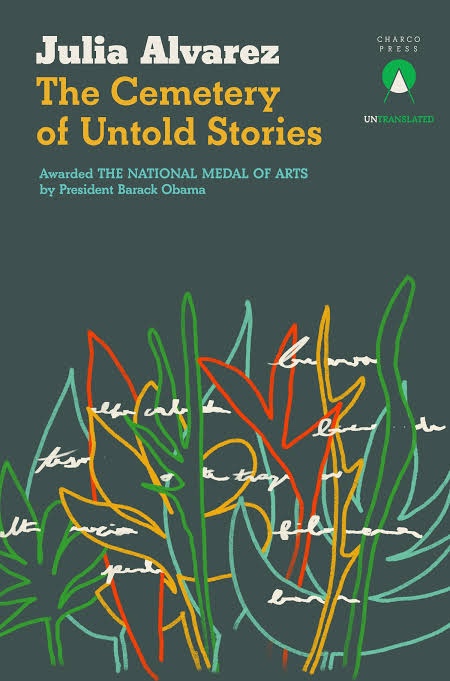
The Cemetery of Untold Stories

📍 Dominican Republic 🇩🇴 

Alma Cruz is a successful writer in the US. Even with all her fame and wealth, she constantly has this gnawing sensation that something’s missing. One day she decides to move from Vermont to her homeland, Dominican Republic, in the pursuit of peace and happiness. This decision is met with a lot of opposition and criticism from her other three sisters. Nonetheless, she moves to her country and decides to open a cemetery in the backyard of her house. When the locals hear about this oddity of a plan, they gossip, eavesdrop and even scramble to secure a job at this cemetery only to know that this cemetery would be for all the unfinished manuscripts and stories that Alma as a writer began earnestly but could never finish. 

To bring this cemetery to fruition, she hires an architect who starts building sculptures of the people beside the graves where their stories lay buried. To do the upkeep of the cemetery and maintain the house, Alma also hires Filomena from the neighbourhood. As Filomena starts working at the cemetery, the sculptures start coming to life and start telling their stories. Bienvenida talks about her distraught life, her troubled marriage with the dictator el Jefe (Trujillo), his second marriage to his mistress because of Bienvenida’s miscarriages, his decision to exile her, the premeditated reconciliation during the exile that leads to Bienvenida’s pregnancy, and later forcibly separating the daughter from her under the pretext of a safe and secure upbringing. Filomena too starts chatting about her life, the feud with her sister Perla, the unconditional love for her nephew Pepito, the estrangement between the sisters and a recent tragedy that forces understanding between them. As the stories intermingle, and the characters real and unreal get candid with their lives, we soon realise that these stories aren’t separate, instead are interconnected.

Alma comes across as a stoic, independent, intelligent woman who remains resilient through her unconventional choices. She straddles her immigrant identity, the realities of being Dominican American and the belongingness to her Dominican heritage. She oscillates between the rights and the wrongs, but remains resolute with her decision, no matter the consequences. Filomena, is a harbinger of unconditional love despite a tedious and lonely life. Others’ selfishness never extinguishes the selflessness that’s inherent in her. Bienvenida’s docility and fragility shouldn’t be mistaken as her personality for they tend to overshadow her grit and perseverance. 

Julia Alvarez’s latest book, The Cemetery of untold stories, was my pick for September’s Hispanic Heritage Month. Julia is a poet, novelist and essayist and is regarded as one of the most significant contemporary Latina writers. The book is unique not just because of its plot line that indulges in magical realism but also the language and writing style. Spanish is generously interspersed with English, to the extent that I thought the book was written in Span-glish (if that could be a word!), which I thoroughly enjoyed. The author has taken her time to build the story, she has let the characters grow with the story; almost as if one is uplifting the other in a surreal symbiosis. There’s also an interesting queer character in the book. Dominican culture, geography and politics form an integral part of the narrative and Alvarez proudly flaunts all its naïveté and nicety. 

The Cemetery of untold stories is Julia Alvarez’s allegory to letting go and providing oneself the proverbial closure to everything that has remained incomplete and insufficient. Quite poetic, indeed!

~ JUST A GAY BOY. 😎

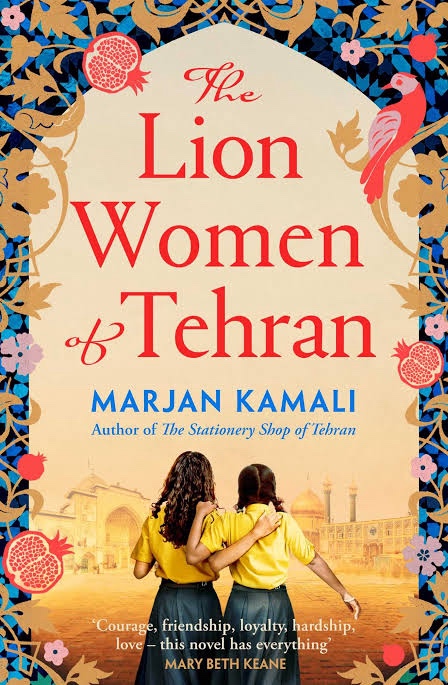
The Lion Women of Tehran

📍 Iran 🇮🇷 

It’s Tehran in the 1950s. Progressive and on the brink of change. Ellie, living an affluent life, is now forced to move to a poorer neighbourhood with her cantankerous mother after her father’s untimely death. Seven year old Ellie is happy to be in her new surroundings and keeps yearning for a good friend. Enter Homa, who with her free spirited and rambunctious personality soon becomes best friends with her. Together they dare to dream and don’t shy away from being ambitious whilst breaking some harmless rules along the way. Ellie’s mother despises Homa and remains condescending towards their friendship. She remarries so that they can return to their moneyed ways, marking an end to Ellie and Homa’s relationship. Years pass by, and Ellie is now one of the most popular girls of her posh school. Homa secures admission to the same school, and while she is ecstatic to reunite with Ellie; Ellie doesn’t feel the same. Ellie’s hesitation and snobbery don’t stand a chance to Homa’s infectious enthusiasm and simplicity. Soon they are back to being friends which again irks Ellie’s mother. Homa is determined to be a lawyer so that she can bring about reforms in women’s rights in Iran. She also remains committed to political activism. She constantly eggs Ellie to pursue her education. Ellie on the other hand is besotted with Mehrdad and wants to be married. Despite this clash of values and interests, they forge their friendship until one unfortunate misunderstanding that leads to a catastrophic incident upending their lives forever. 

My favourite Iranian author, Marjan Kamali, is back with her third and latest book, The Lion Women of Tehran, and this one is a stark departure from her previous works. Women are the front and center of this narrative. Marjan has put female friendship as the protagonist of this book and has charted its course through trials and tribulations, financial disparities and long distance. 

Marjan has written a story about feminism and everything it encompasses. Through Homa, she has portrayed the quintessential activist woman who is striving to make the world a better place for other women. Homa embodies fortitude, tenacity and resilience. Through Ellie, the author has made us broaden the scope of feminism and makes a case for women who willingly choose to be a homemaker. These are the women who are omnipresent in all our lives and yet easily forgotten by the feminist movement. However, Ellie’s character brings this subtlety and nuance to the conversation. Though debatable and dubious, Ellie’s mother is fierce in her own way taking ownership for her choices and actions, and yet standing tall. 

As with her previous books, Marjan has left no stone unturned in describing Iran’s political landscape and its innate turmoil and turbulence alongside Ellie and Homa’s story. She guides us through all the major political upheavals that have changed Iran’s society and the consciousness at large. The horrific killing of Mahsa Amini and the riots that have followed since for women’s liberation in Iran also find a commendable mention in the book. 

The book is purely Persian in its essence and celebrates all the ‘shir zan’ (lion women) of Iran. Persian culture has been brought to life in Marjan’s writing. The book is suffused with Persian cooking and the aromas literally waft through the pages. Food just doesn’t feature here for celebration but also denotes a revolution. Farsi words and sentences find considerable mention in the book. It’s such a joy to read it and to find similarities between Farsi and Hindi/ Urdu. 

Marjan Kamali writes so evocatively about love, friendship and Iran. She also challenges patriarchy and chauvinism fearlessly. The book is so achingly beautiful; it’s compassionate and passionate in the same breath and with every word.

~ JUST A GAY BOY. 😇

Brotherless Night

📍 Jaffna, Sri Lanka 🇱🇰 

Sashi is an earnest, young girl full of hope and aspirations, dreaming of becoming a doctor and serving her people in Jaffna. Her family consists of her parents and four brothers. The eldest, Niranjan is already a doctor and dotes on her, constantly encouraging her to study so that she can crack her exams. Seelan and Dayalan, have natural political inclinations and often engage in charged rhetoric. Aran is subdued and wanting a simple and peaceful life. However, it’s 1981 and life in Jaffna is never peaceful. The Tamils are facing crackdown and oppression from the government resulting in a growing dissent and uprising. Niranjan disappears during one such riots in Colombo; their grandmother’s house gets torched to ashes by violent zealots while Sashi and Ammammah escape and endure a perilous and arduous journey back to Jaffna. These events prompt Seelan and Dayalan to join the militant group, Tamil Tigers, who now have taken control of whole of Jaffna. As the government and Tamil Tigers engage in skirmishes, Sashi gets admission to a medical school. There, persuaded by her friend K, joins the Tigers’ field hospital and starts treating their cadres as well as civilians. At her college she comes across her professor who soon becomes her mentor and confidante, Anjali. However, with the political situation becoming increasingly volatile and dangerous, she loses Seelan and Dayalan to the movement; Anjali gets abducted and Aran decides to emigrate. Sashi is gripped by her righteous rage and beliefs, and faces the predicament of whether she should stay back or join Aran and how her future now depends on this very important decision. 

The book is a breathless, often claustrophobic account of Sashi’s difficult choices, her internal struggles as she oscillates between interests and intentions, her emotional turmoils as she navigates loss and grief, and her mental prowess dealing with hope and hopelessness. Sashi as a character is an unassuming force to reckon with. The narrative also takes us on a journey of Sri Lanka’s political quagmire, the helplessness of Tamil civilians as they are caught between the militant groups, the government and the Indian Peace Keeping Force. Massacre ensues as places and people get bombed, and depression looms large at every turn. 

Brotherless Night, winner of the Women’s Prize for Fiction 2024, is a historical fiction written so brilliantly, that it is unsettling and uncomfortable. The gifted author, V. V. Ganeshananthan, builds the restlessness of the characters, as they encounter death and dilemmas and keeps the book unrelentingly atmospheric. The writing is compelling and persuasive, peppered with Tamil words. Tamil culture, cuisine and traditions get the requisite mention throughout the book. There are moments of such literary brilliance in the book; the scene where Sashi’s docile mother emerges as the proverbial phoenix and leads an uprising against the government along with a group of fierce, inspiring women; the dialogues between Anjali and Sashi as they contemplate the movement, the militants and their pursuit and purpose; as also the extremely unnerving and shocking medical examination scene of a rape victim, brutalised by the Indian Peace Keeping Force. 

Brotherless Night will disturb you and it should. It is a complex catastrophic story of survival amidst doom and despair. The ingenuity of the author is such that despite the barbarism and violence on display, humanity finds its place; in the thoughts, conversations and actions of its various characters. This is literature at its finest; V. V. Ganeshananthan, its proud torchbearer. 

~ JUST A GAY BOY. 🥹

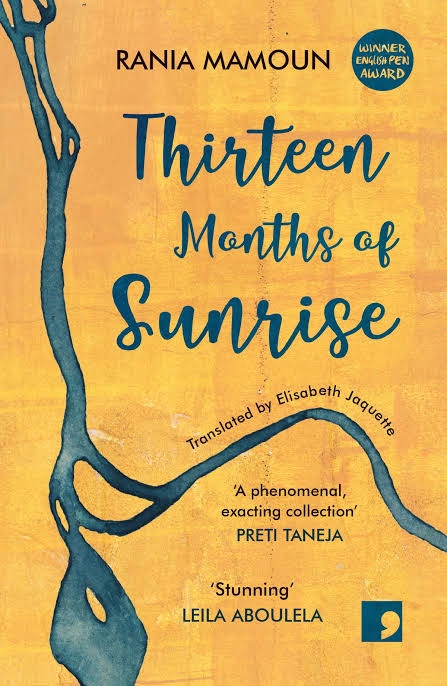
Thirteen Months of Sunrise

📍 Sudan 🇸🇩 

Sudan, is one of the poorest countries in Africa, and has been afflicted by repeated revolutions, civil wars and military dictatorships leading to international sanctions and isolation, internal instability and factional violence. Sudan achieved independence on 1st January 1956 from Egyptian and British colonisation. The partition of Sudan happened in 2011 and South Sudan was formed in July 2011. The war in Darfur was a major armed conflict in Sudan from 2003 to 2020, akin to a genocide, leading to hundreds of thousands of civilian casualties and deaths, brutal rapes and various other horrific human rights violations. 

This novella, my pick for Women in Translation Month, is an anthology of short stories, set in Khartoum, the capital of Sudan. These stories offer a contemporary outlook on Sudan but often replete with the issues plaguing Sudanese people such as poverty, insecurity and safety. The first story, titled ‘Thirteen months of Sunrise’, is about a bittersweet friendship between a Sudanese woman and an Ethiopian man; also why Ethiopia has thirteen months! The other stories that stood out were, ‘A woman asleep on her Bundle’, that spoke about a woman’s benevolence despite her abject poverty and hence forced ostracism; ‘Stray Steps’, that portrayed a diabetic woman’s ordeal with hunger and hypoglycaemia and how stray dogs come to her rescue; and ‘Doors’, a story about an unemployed man’s hope of securing a job only to be left despondent and indignant.

Rania Mamoun is a Sudanese fiction writer and journalist, known for her novels, poems and short stories. The book which has been translated from Arabic into English by Elisabeth Jaquette, won the Pen Translates Award in 2017 and was also shortlisted for the Warwick Prize for Women in Translation 2020. 

The ongoing civil war that began during Ramadan on 15th April, 2023, between the two rival factions of the military government of Sudan, has been concentrated around the capital city of Khartoum and the Darfur region. The country is facing one of the most severe humanitarian crises in recent history. According to the UN, UNHCR and Amnesty International; over 18,800 people have been killed; 6.7 million are at risk of gender-based violence, particularly women and girls; 755k people are on the brink of famine and 25.6 million people are in acute hunger that includes more than 8.5 million people facing emergency levels of hunger. Over 10 million people have been forced to flee their homes both within the country and across its borders; out of which over 7.7 million are internally displaced persons; as the devastating civil war heads for its 500th day. 

Sudan, Gaza, DR Congo, Burkina Faso, Myanmar, Bangladesh, Yemen, Afghanistan, Ukraine, Haiti, Manipur. The world in 2024. 

~ JUST A GAY BOY. 😞

Kairos

📍 Germany 🇩🇪

Katharina is a nineteen year old girl living in East Berlin. Hans is a fifty plus gentleman, a novelist and working for a local broadcaster, also living in East Berlin. The year is 1986. The Berlin Wall is intact. Katharina and Hans have a romantic meet cute and soon start dating each other. She gets completely besotted with Hans and turns a blind eye to his behaviours and transgressions. Hans is a married man and has a son. He has various extramarital relationships while being married to Ingrid. Katharina is aware of his philandering ways but is too consumed by his charm, his sex appeal, his taste in music, art and books to even subconsciously register it as a concern. When Katharina goes away to Frankfurt an der Oder for a year, for a theatre internship, she develops a close friendship with her colleague Vadim. He has feelings for Katharina and after multiple romantic and sexual advances from his side, one fine day, they end up having sex. Through one of the loose pages of her diary, Hans finds out about this affair and mayhem ensues.

Hans is mortified by Katharina’s behaviour and leaves no stone unturned in punishing her. He emotionally abuses her, threatens to end the relationship and even violates her sexually. He periodically records his disdain and hatred for her as cassettes, both sides, 60 minutes each and expects her to answer him. The verbal abuse meted out through these recordings is excruciating. Katharina continues to soothe his chauvinism and misplaced anger by dutifully listening to these recordings, genuinely begging for his forgiveness, despite the repeated attacks on her character and morality. The relentless oppression makes Katharina question the love if it exists between them, even forcing her to self censor at times, but is never able to end the relationship. She continues to suffer because she feels, she deserves it and Hans continues with his torture routine, because he believes, she deserves it.

At the same time, Germany is in the midst of the Cold War. The tensions between East and West Berlin continue to escalate. The political situation becomes volatile and chaotic leading to the fall of the Berlin Wall in 1989. Soon after the fall, it almost seems like an erasure of East Berlin as the West with its wealth and capitalism takes over, leaving no traces of what was once before, the people and the city. These developments run parallel to Katharina and Hans’ relationship, being metaphorical at times; creating an atmosphere of foreboding and unease.

This isn’t a love story, but a story about control. Hans wanted total control over Katharina’s mind and body under the garb of love, but the moment it faltered, control easily metamorphosed into misogyny and toxic masculinity, also under the garb of love. Katharina is groomed by Hans since the beginning of the relationship and because of her tender age and his towering seniority gets moulded into believing the necessity for her suffering because of her indiscretion, prompting acquiescence. At some point, as a reader, you wonder if Katharina wanted to sabotage herself and her happiness by being in this relationship. She represents millions of women worldwide who suffer through such sexist bullying and exploitation, because they aren’t aware of their worth, and of a life outside of emotional captivity.

Jenny Erpenbeck, a prolific German author and opera director, is the first German writer to win the International Booker Prize for Kairos, which is also the first novel originally written in German to win the award. Kairos has been written with a lot of consideration for German politics, the history and the societal structure of East and West Berlin. The book also makes a poignant case for ‘love bombing’ and ‘breadcrumbing’ in relationships. Erpenbeck takes us on Katharina’s traumatic journey of abuse without sugarcoating it. As a reader, you squirm and feel frustrated for Katharina and I wondered, if she felt ennui in Hans’ narcissism. Music, art and theatre play a significant part of the narrative and the author delves deep into them through conversations between the protagonists. Michael Hofmann, a German poet and translator, who shared the International Booker Prize with Erpenbeck, has done an exacting translation of the original.

Kairos is a multilayered sensory experience. The story and the politics kept me intrigued and exasperated simultaneously. Chopin’s Nocturne and Polonaise seem perfect for part one of the book, while Bach’s Well-Tempered Clavier and Goldberg Variations blend in seamlessly with the second and Mozart’s Symphony is the ideal score for the climax. Read the book with these musical masterpieces in the background! I am definitely doing a reread.

~ JUST A GAY BOY. 👏

And Then He Sang A Lullaby

📍 Nigeria 🇳🇬

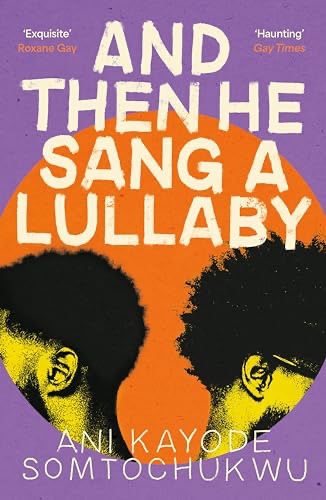
My pick for Pride Month is a searingly honest and often heartbreaking story of two gay men finding love and themselves in a country that is decidedly against them. August Akasike, whose mother dies while giving birth to him, is often tormented by the same fact and considers her foolish for going ahead with the pregnancy despite the doctor’s warnings. He lives in Enugu and has three older sisters who dote on him and mollycoddle his every action and achievement. They along with an emotionally indifferent father entrust him with the responsibility of protecting the Akasike family name. However, August who is a phenomenal track star, is naturally attracted towards men and often admonishes himself in the harshest way possible for even having these thoughts. Despite the strong self reluctance in wanting to engage in sex with men, he does have a few dalliances, which end up causing him extreme emotional turmoil, so much so that in University he tries having a relationship with a girl, Betty, until he meets Segun.

Segun, who lives in Iyana-Ipaja near Lagos, is the only child to a fierce mother and an impassive father. His body language and gesticulations which get perceived as being “effeminate” attract teasing, bullying and even assaults from a very young age. Tanko, his first boyfriend, gaslights him, physically manipulates and harms him until Tanko himself becomes a victim of homophobic attack. His other failed relationships and random sexual encounters make him cynical of love. He refuses to be discreet and starts living openly as a queer man, picking up fights, and being borderline reckless in his defiance. He wants his partner to be as open as him until he meets August.

Segun and August meet at the University in Enugu and despite their reservations regarding each other, fall in love. At the beginning of their relationship, August is secretive and ashamed of their affair. This irks Segun to no end and they have multiple heated arguments over it. Later, a brutal mob attack on Segun at his hostel, changes him completely. The once bold and rebellious Segun becomes submissive and docile. He loses his will to live and to fight. This prompts almost a role reversal and August becomes the new rebel; comes out to his bewildered sisters and his peers, inviting contempt. However, nothing that he does, is able to shake Segun out of his despair.

The author, Ani Kayode Somtochukwu, is a Nigerian writer and a prominent LGBTQ+ activist who is known for his advocacy and criticism of anti-LGBTQ+ laws. This book, his debut work, published at the age of 23, is a purely African queer story and Nigeria remains the front and center of it. As the story unfolds, the author simultaneously introduces us to the political scenario in his country and the rising hostility towards queer people. Some of the striking moments in the book are about the Nigerian President Goodluck Jonathan signing into law the Same Sex Marriage Prohibition Act in 2014, to cheers from a largely homophobic society and disputes between August and Segun. But the real beauty of the book lies in the way, Somtochukwu has written his characters. They are as real as it gets, brimming with temerity and perseverance but also being flawed in their own ignorant way. The tender moments between August and Segun are affirming and written with so much consideration. August’s love for Segun is all encompassing and immersive yet helpless. Ani Kayode has written with such empathy that never overburdens the reader. His prose is exacting in the grimness of the realities faced by August and Segun and still offering a vague semblance of mundanity to their romance. His depiction of sexual scenes is exemplary and one where in other writers could take notes from. Kudos to him for championing compelling themes of internalised homophobia, closeted gays, emotional and physical violence in gay relationships with the requisite sensitivity and nuance. This story is truly a lullaby, a lullaby you will hum long after you finish reading it, reminiscing August and Segun and their love which was never meant to be.

As I write this, LGBTQIA+ individuals are criminalised in Nigeria and various states of the country have extremely harsh laws for the same. In fact, worldwide 64 countries criminalise homosexuality as of 2024. In 12 countries, the death penalty is imposed. Here, in our country, we may have decriminalised article 377, but LGBTQ+ individuals still remain second class citizens with no equal rights. I wonder, how long would it take for others to see us as humans? How many lives need to be lost, and hopes to be crushed for a positive change to happen?

Happy Pride indeed!

~ JUST A GAY BOY. 🏳️‍🌈🏳️‍⚧️

Afakasi Woman

📍 Samoa 🇼🇸

May was Pacific Islander Heritage Month and this book, Afakasi Woman, was my pick for it. In fact, it’s my first time reading literature from Oceania and Pacific Islands. There are 13 (? 12) Pacific Islands countries and Samoa is one of them. Samoa is a picturesque island nation located in the South Pacific Ocean, known for its vibrant culture, lush landscapes, and welcoming people. It consists of two main islands, Upolu and Savai’i, along with several smaller islands. The capital city, Apia, is situated on Upolu, which is also the most populous island. Samoa has a rich history that dates back over 3,000 years. Samoan culture, known as Fa’a Samoa, emphasizes community, family, and respect for tradition.

Afakasi is the Samoan transliteration for half-caste meaning half Samoan and half of any other ethnicity, mostly European. Palagi in Samoan language usually refers to white foreigners of European or American descent. This book is a collection of short stories from the point of view of an Afakasi woman. Through these stories, the author effortlessly offers us a glimpse of the strong Samoan culture, their language, their food and even their idiosyncrasies and morally ambiguous traits. The stories, some of which are witty and humorous, while a few are dark and brooding, talk about contemporary issues plaguing the Samoan society at large. The story, Afakasi woman, spoke about the silent discrimination that palagi women face in Samoa despite the obsession of Samoans with white skin. The story, Don’t tell, spoke about child sexual abuse by the stepfather and how the family still rallied around the accused while the victim faced social ostracism. Another story, Red Hibiscus – A Fairytale, also spoke about child sexual abuse at the hands of the pastor and how the grandmother avenges the crime. Each of the story is poignant and contemplative highlighting the perils of abuse, neglect, patriarchy and chauvinism.

The author, Lani Wendt Young, is a Samoan/ Maori woman who specialises in YA fantasy, modern romance and literary fiction; and has written 15 books till date. This book, Afakasi Woman, has won a Storylines Notable Book Award and was also short listed in the NZ Book Awards for Young Adults.

In our country too, we dismiss victims of sexual abuse; especially children, who are discouraged and punitively dealt with, if at all they come forth with their trauma. Victims often are subjugated to invasive scrutiny, their traumas invalidated and gaslighted. On the contrary, the perpetrators of the crime always get the benefit of doubt and the entire family and sometimes the country and the government continue to protect them. Well, suddenly Samoa and India feel so similar, no?

~ JUST A GAY BOY. 🙂

Homegoing

Yaa Gyasi’s monumental epic is a story that talks about slavery. From the days when slave trade was legal, to the days when it became a crime. It’s a multigenerational saga that carries the trauma of slavery through every generation, relives with every birth. It starts in the seventeenth century in Asanteland, along the Gold Coast of West Africa, and follows the bloodlines of two women Effia and Esi, unknown to each other, but connected through their mother Maame. The author takes us on a grippingly astute narrative through the seven generations of Effia and Esi. She brilliantly alternates between Effia and Esi’s families, through the various characters who become different chapters in the book. However, each of the chapter and character introduces us to the then geopolitical scenario and takes us a breathtaking journey as we pass through centuries. Every character is powerful despite the powerlessness of their existence. Every tale is poignant despite the numbness that accompanies it.

Yaa Gyasi describes the horrors of slave trade and the perils of living life as a black person as is. As we struggle to read the words, Gyasi makes it even more stark. Esi’s life in the slave dungeons is a putrid narrative of living alongside death, disease and human secretions. Ness’s story is about her life as a black slave woman in Alabama. H and Sonny’s tales are about black men in America who have suffered wrongful incarceration and become committed to a life full of wrong choices and consequences. Sonny and Amani Zulema’s questionable love track is steeped in doom, drugs and heartache. Kojo narrates his desperation as new slave laws come into force in Baltimore and despite being a free man, he feels enslaved and a criminal. Gyasi acquaints us with the civil war in America, the inhumane coal mines of Birmingham, the brutality of colorism and racism, and the romance of the discovery of cocoa in Ghana. Melancholy never leaves the page, as does despondency that never leaves the souls of the characters.

Homegoing creates an ache in your heart and soul which remains unshakeable long after you have finished reading it. Gyasi hasn’t written a story to soothe us, instead it jolts us out of our slumber. She presents us a history that has been wiped out, is being criminalised when talked about and unflinchingly demonstrates the ugliness of its ramifications. Her writing is confident and reverberating with tenacity. Her masterly craft shines through as she takes us on this journey from Asante villages to present day Ghana and America. The idea for Homegoing came to her during the summer of her sophomore year. At the age of 26, this stellar historical fiction was her debut work. Every character in the book is fleshed out and has been wronged. Every story is raw and imprinted with grief and violence. Homegoing is the undeniable truth about slavery and how it trickles through generations despite outwardly freedom. Gyasi is its authentic voice.

Compulsory read!

~ JUST A GAY BOY. 👏

The Woman in the Purple Skirt

My pick for Read a Kitaab’s #januaryinjapan was, ‘The Woman in the Purple Skirt’. The book, written by the acclaimed Natsuko Imamura and translated from the Japanese by Lucy North, has garnered fairly positive reviews online, however I was left feeling disappointed. The book is about this eponymous Woman in the Purple Skirt who is being closely watched by the narrator who calls herself as the Woman in the Yellow Cardigan. She meticulously describes every move of the woman in the purple skirt, her daily routine, eavesdropping on conversations and even gets her a job in the hotel that she’s employed at. Despite this extremely voyeuristic snooping by the woman in the yellow cardigan, she remains inconspicuous and almost oblivious to the other woman. However, things take a more ominous turn after the woman in the purple skirt starts working earnestly in the hotel and the sequence of events leading upto the climax happen so rapidly, it almost feels like an antithesis to how the book began.

In summation, I felt the climax to be a major letdown despite the foreboding atmosphere it created and the thrilling subtext. Though the book discusses themes of loneliness and the yearning for a friendship, and the human need to be seen and validated, it gets lost in the narrative that remains hyper focused on the inconsequential daily mundane activities of the woman in the purple skirt for the greater part of the book.

Ultimately, I even wondered what was the purpose of the woman in the purple skirt? What was the author trying to convey? I remain discombobulated!

~ JUST A GAY BOY. 🫤