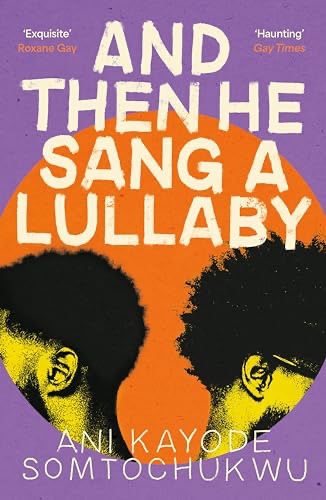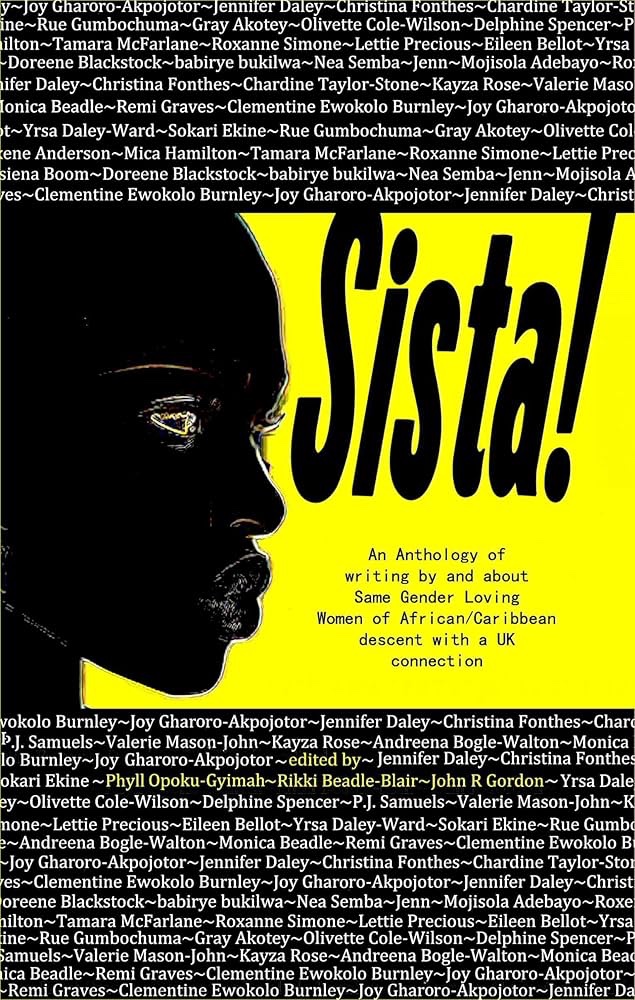
If you have read Black women writers, you would know that their writing is fierce, inspiring, creative and bold. They write with compassion and conviction, almost always to uplift one another and nurture the sisterhood, especially Black sisterhood. You can only imagine how much more intense and interesting the writing becomes when an anthology brings together a constellation of queer Black women writers. As the cover promises, Sista! is a brilliant collection of stories, poems, personal essays, (and even an interview) by and about queer women of African and Caribbean descent with a connection to UK.
While every contribution deserves recognition, a few pieces stood out to me for their authenticity, enviable audacity, and the incandescent freedom that radiated from their words. They are as follows:
- In her deeply personal essay, Not White, Not Ever: a Black Lesbian Lament, Kesiena Boom, a mixed-race, Black, lesbian feminist writer, reflects on the trials and tribulations of dating white women, and how race can be both, a catalyst to bring people together and one that also separates them, but can never be ignored. She also describes her failed attempts at having relationships with Black women and wonders what it takes for Black lesbians to seek and sustain romantic relationships and whether the overtly white lesbian landscape itself becomes a deterrent for Black women in visualising and creating meaningful partnerships.
- Author of 8 books and an inspirational Public Speaker, Valerie Mason-John’s Those Were The Daze, is a heartfelt rendition of what it means to be an elder of the Black Queer community. She revisits her struggles as a lesbian in the 80s including how her accidental coming out created both opportunities and hardships. She carefully explains her arrogance then which she adopted as an armour to tide over the anti-queer sentiment and reminds us in the most blistering way, how now more than ever, queer communities and queer people must look beyond racial, ethnic, religious and other socioeconomic differences and soldier on together as a singular powerful force.
- Tamara McFarlane’s poems are tender and evocative, with an equal measure of romance, sensuality and poignancy.
- Nea Semba’s tour de force essay, Supermalt, Self Love and Sexuality, is a rambunctious celebration of Black womanhood and the intersections between Black and Queer feminism. In this carefully constructed piece, the author, a non binary queer African, describes the significance of Black woman’s hair as an expression of her independence, authority, Blackness and queerness. Semba also confronts uncomfortable truths, including the persistent perception of queerness as a white thing and the tendency to attribute homophobia solely to religion while overlooking the roles of toxic masculinity and colonialism.
- In To be Femme: Lesbian Guerrilla Soldier, Chardine Taylor-Stone, an award winning cultural producer and feminist activist, succinctly elucidates what it means to be Femme and how embodying it as a queer woman of colour can itself be a radical act of feminism.
- Nigerian-British writer and visual scholar, Sokari Ekine’s Love in the Age [of] Evolution, is a hopeful and deeply moving reflection on dating, intimacy and discovering love at the age of 67. The essay brims with excitement and euphoria but simultaneously brings in the reality of dating with maturity and intention. She strongly asserts against the notion of age being considered a disability in the cis-normative world and how Black queer women are changing this very notion with their zest for romance, desire and companionship.
Sista!, edited by Phyll Opoku-Gyimah, Rikki Beadle-Blair and John R Gordon, is an illuminating anthology about lives and experiences that may initially seem distant from our own, but through them they reveal universal truths about reclaiming authority, autonomy and agency. The women writers bring in their unfiltered voices portraying their vulnerability and resilience and aren’t afraid to conceal their mistakes and shortcomings. The stories embolden us with extraordinary power, inviting us to restructure and recalibrate our own lives. They emerge from moments of existential crisis, yet arrive at places of balance and affirmation.
Few anthologies possess the ability to alter the way we see ourselves and the world. Sista! is one of them. It has the potential to change you at the molecular level, not because these writers set out to transform you, but because their stories have that innate ability to accomplish that quietly and organically.
I end the review with this quote from Kayza Rose’s essay, When is the right time?,
“I do hope we will come to a time where ‘coming out’ isn’t needed, and that being SGL (same gender loving) will be one of the norms of society. We still have a long way to go… but I do hope!”
~ JUST A GAY BOY. 🏳️⚧️🏳️🌈