Rain and other stories

📍 Mozambique 🇲🇿

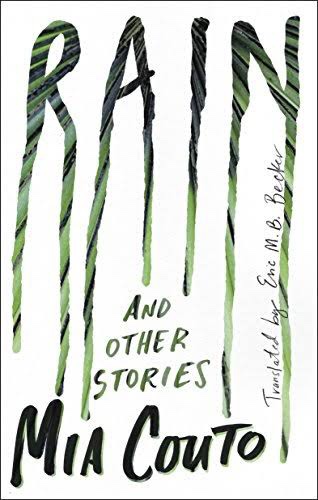
Mozambican writer Mia Couto is one of the most prominent Portuguese language writers of today. After studying medicine and biology, he worked as a journalist and headed several national newspapers and magazines in Mozambique. He has published more than thirty books that have been translated in thirty different countries.

He won the Camões Prize in 2013, the most important literary award in the Portuguese language, and the Neustadt International Prize for Literature (The Prize is a biennial award sponsored by the University of Oklahoma and World Literature Today since 1970, and is one of the few international prizes for which poets, novelists, and playwrights are equally eligible) in 2014. He was shortlisted for his entire body of work for the Man Booker International Prize 2015. In many of his texts, he undertakes to recreate the Portuguese language by infusing it with regional vocabulary and structures from Mozambique, thus producing a new model for African narrative. He lives in Maputo, Mozambique.

Mozambique, a country located in southeastern Africa, gained independence from Portuguese colonial rule in 1975. After only two years following independence, the country descended into a bloody and protracted civil war lasting from 1977 to 1992. This book was first published in 1994, shortly after the 1992 peace agreement and has been translated by Eric M.B. Becker.

The book is a collection of 26 short stories. Though the book has received wide critical acclaim internationally, I completely failed to connect with it. The stories are extremely fable like, many inspired by Mozambican folklore while others oscillate between the real world and an imaginary magical realm. The stories start and end abruptly and the author fails to provide any nuanced significance for each of them. Reading these stories I wondered, if there was a purpose for this kind of pithy yet tedious storytelling. Are Mozambicans only supposed to understand them?

Disappointed.

~ JUST A GAY BOY. 😑

The Map of Salt and Stars

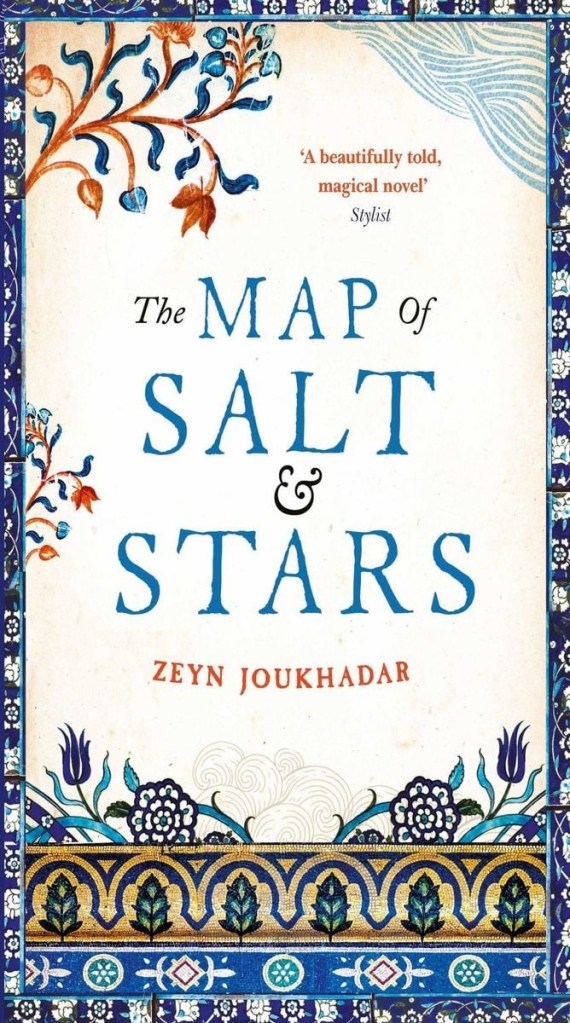
Unrest in Syria began on 15th March, 2011 as part of the wider 2011 Arab spring protests out of discontent with the Syrian government, eventually leading to an armed conflict. The war is currently fought by several factions. The Syrian Civil War is second deadliest conflict of the 21st century after the Second Congo War. The conflict has caused a major refugee crisis with millions fleeing to neighbouring countries (source Wikipedia). This book by Syrian American author, Zeyn Joukhadar, is rooted in Syria and celebrates it with a double tale of voyage and exile. The first tale is about 16 year old Rawiya, set in 12th century, who leaves her house in Benzu, near Ceuta (Ceuta is a Spanish autonomous city on the north coast of Africa), in search of adventure and with a quest to explore the world beyond the desert. She becomes an apprentice with the renowned explorer and mapmaker al-Idrisi and sets out on this perilous and unforeseeable odyssey to assist al-Idrisi in sketching the map through the Maghreb and the Mediterranean. During this adventure of a lifetime, she comes across blood thirsty mystical creatures; vicious men; cruel, tyrant kings and their armies; and difficult terrain and weather. This only establishes Rawiya as a gallant warrior. Rawiya single handedly helps al-Idrisi in completing his exploration of the world whilst constantly battling attackers and reminding everyone through this pursuit that her gender is no barrier in achieving accolades and appreciation and in being one of the greatest warriors of her time.

The second tale is of the present day, 12 year old Nour who has moved to Homs in Syria from Manhattan after her father’s death; with her mother, who is a mapmaker and two sisters, Zahra and Huda. As she is adjusting to her new life in Syria while knowing only a few words of Arabic, she is now one amongst many who has got trapped in the Civil war. She experiences bombing of her house and from there on, her ordeal for survival begins. Instantly her status becomes that of a refugee as she manages to escape from Syria. She has to let go of her mother and sister Huda during this gut wrenching journey which takes her through Jordan, Libya, Algeria and finally to Ceuta. The tale is as much a portrayal of Nour’s resilience, as much as it is, about her coming to terms with the menacing traits of human behaviour and the rot that has crept into humanity at large.

The narrative constantly flips between the stories of Rawiya and Nour. It’s a slow paced read. Islamic history and ancient names of cities find a constant mention through the book. I had to refer to Google lot many times to educate myself about the same. The author brilliantly depicts the striking geographical similarities between the old world and the current. Maps form an integral part of the storyline throughout the book. There are constant references about stars, galaxies and various constellations. I did find Nour’s narrative a bit tedious, since it gets a lot metaphorical at times. It isn’t an easy book to read. How would it even be? How can any book that talks about a devastating civil war be pleasant in any way? The author deftly portrays the geopolitical dissimilarity in tales of Rawiya and Nour. Rawiya’s is about bringing the world together by sketching the map and defining the borders, whilst ironically in Nour’s, it’s about a disintegrated world and the battles at the borders.

~ JUST A GAY BOY. 😞

The Desert and the Drum

📍 Mauritania 🇲🇷

Mauritania is a sovereign country in Northwest Africa. It is the 11th-largest country in Africa, and 90% of its territory is situated in the Sahara. It achieved independence in 1960 from French colonialism but has since experienced recurrent coups and periods of military dictatorship. Despite an abundance of natural resources, Mauritania remains poor. It was the last country in the world to abolish slavery, in 1981, and criminalised it only in 2007. (Source Wikipedia)

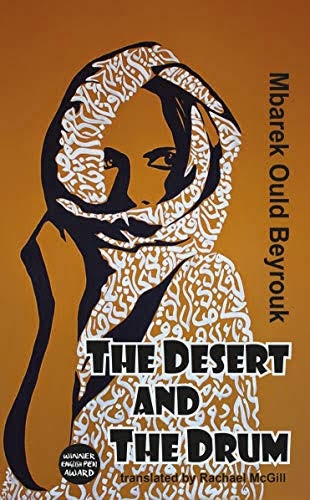
This book is the first novel ever to be translated into English from Mauritania. It was originally published in French in 2015 and translated by Rachael McGill in 2018. The book won the Ahmadou Kourouma Prize in 2016 (the prize was established in 2004 in honour of the Ivorian writer Ahmadou Kourouma, and it is awarded annually to works of fiction and nonfiction concerning Black Africa).

The story traces the journey of a young Bedouin girl, Rayhana, who has run away from her tribe and is on a mission to find the thing that has been snatched from her with force and deceit. While running away she has taken the sacred, symbolic and pious drum, rezzam, that belongs to her tribe and represents their pride and honour. She embarks on this perilous journey through the unforgiving Sahara and reaches a small town, Atar, and finally to the capital, Nouakchott. During this sojourn, she encounters various people who help her in their own ways, in achieving her mission, and also protect her from her tribe who are in search of her to retrieve their prized drum. Standout characters include that of the slave girl, Mbarka, who has now become a sex worker; and the very colourful and jovial queer guy, Hama.

The book is a raw, unapologetic and uncomfortable narrative of Rayhana’s turmoil. The chapters oscillate between the past and the present as does Rayhana’s thoughts from her secure yet stifling existence in her tribe, to the unknown and unwelcoming mores of the city life. She is torn about the fact that, she still cradles the belongingness she feels towards her tribe whilst despising the carefree and untethered cultural values of the city. She still remains a prisoner of her unpropitious upbringing, though freedom is now within her reach.

The author, Mbarek Ould Beyrouk, originally from Atar, is a journalist, who has written four books and has founded the country’s first ever independent newspaper. He gives an honest portrayal of the Bedouin life and their customs, and has kept the story rooted in Mauritanian ethos. The issues of patriarchy, misogyny, gender based violence, caste based oppression aren’t exclusive to Mauritania. Let’s get off our high horse, shed our condescension and pomposity, and examine the issues closely. They are as much prevalent behind the façades of glitzy high rises and modern lifestyles as they are in the humbling desert.

~ JUST A GAY BOY. 🥹

The Ardent Swarm

📍 North Africa

Tunisian author, Yamen Manai’s book, translated from French by Lara Vergnaud, is brooding and contemplative. This wonderful parable, can seem deceptively simple but is a rich tapestry of human emotions and behaviours. The story takes place in a far flung village of Nawa. Sidi, the beekeeper of the village, has devoted his life in taking care of his precious honeybees. However, one day when he finds them brutally massacred, he sets out on a quest to find the perpetrators behind the attack. He soon reckons that hornets are responsible for it and takes it upon himself to safeguard his bees from the menacing and dangerous hornets. At the same time, the unnamed country is going through a new post-Arab spring transition which sees the rise of radical fundamentalists to power. Using God, they are on a mission to convert the people into a bunch of zealots. As Sidi, grapples with the changing sociopolitical scenario and attitudes of people, juxtaposed with the imminent threat to his bees due to a natural predator, he comes to a realisation that human beings are far worse and vicious.

It won’t be too difficult to draw parallels, with the current political situation in our country. As zealotry and jingoism take centre stage, God has been weaponised to spread hatred, bigotry and radicalism. Is this going to be a massacre of our humanity?

~ JUST A GAY BOY. 😔🐝