

📍 Western Sahara 🇪🇭
Western Sahara is a disputed territory on the northwest coast of Africa and is among the most arid and inhospitable on the planet. Colonised by Spain until 1975, about 20% of the territory is controlled by the Saharawi Arab Democratic Republic (SADR); while the remaining 80% is occupied and administered by Morocco with tacit support from France and the United States. A nationalist movement, the Polisario Front, has proclaimed the rightful leadership of the SADR with a government in exile in Tindouf, Algeria. The UN considers the Polisario Front to be the legitimate representative of the Saharawi people and maintains the Saharawis have a right to self determination. Western Sahara is the last African colonial state yet to achieve its independence and has been dubbed “Africa’s last colony”.
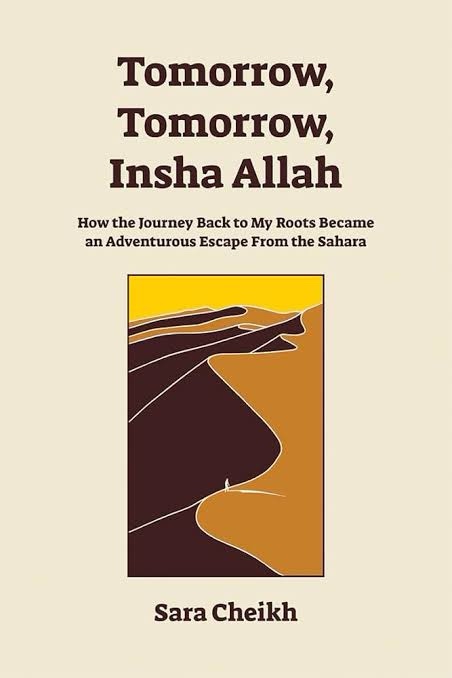
The book is a memoir of the Saharawi author, Sara Cheikh. Born in the Smara refugee camp in Tindouf, where she lived till the age of six, Sara later immigrated to Spain and is currently living in Paris. In the March of 2020, Sara decides to travel to Western Sahara to see her grandmother, Noa; just when the world is discovering about Covid-19. Despite a very uncertain and anxious start to her journey from Paris, she travels to Algiers, then Tindouf, then Smara and ultimately to Mheiriz in the liberated territory where she meets Noa and many members of her family. However, by this time, border closures have started happening all over the world and Sara is left panicking if she is ever going to go back to Europe. Her journey back from the desolate desert terrains forms the crux of this story that keeps us, the readers on the edge of our seats.
Sara’s writing is descriptive, nuanced and humorous. She carefully describes the geopolitical situation of the Saharawi people and benevolently introduces us to their culture, traditions and cuisine. The desert forms an important character in the prose and its harshness and kindness has been lucidly illustrated by the author. As you read the book, you discover that Saharawi women are fierce, independent and liberal minded. Sara’s mother, Gbnaha, comes across as this daring go-getter with a charming attitude who is tough and strong willed. The Saharawi men also appear to be supportive, convivial and progressive. The book is peppered with archival and personal pictures of the Saharawi territories and the people. Through the book, Sara tries portraying her juxtaposition as she battles her European upbringing with her Saharawi consciousness and makes a compelling case about a hyphenated existence.
Tomorrow, Tomorrow, Insha Allah is one of those rare books written by a Saharawi talking about the forgotten territory of Western Sahara. With this book, you realise that even in 2024, there’s colonialism present and the same colonisers are giving lessons to the world about freedom and equal rights. What a time to be alive!
~ JUST A GAY BOY. 🥹
 the shiny diaries