Juveniles & Other Stories

📍 Thailand 🇹🇭 

Juveniles & Other Stories is an anthology of short stories centered on queer narratives and queer characters. While the pieces may appear to be coming-of-age stories at first glance, a deeper reading reveals a tapestry of complex human emotions, rendered with remarkable empathy and compassion.

Nearly half of the book comprises the titular novella “Juveniles”. This is a story about two young boys Hai Saeng and Dao Nhue and their journey through adolescence. Dao Nhue gets enamoured with the mysterious Hai Saeng, who comes from a wealthy and privileged background. Hai Saeng seems to visit Dao Nhue’s village only during the summers and is never seen with his parents. His brooding and detached personality arouses Dao Nhue’s curiosity, and as they begin spending time together, he realises the dark secrets hiding behind the facade of congeniality. The innocent friendship blossoms into love and both of them find themselves in an inseparable dynamic of longing. However, Hai Saeng’s past looms large preventing him from embracing happiness or accepting love. The simmering anger, frustration and a sense of abandonment pushes him toward self sabotage and makes him lash out at times. The story builds toward a pivotal moment when Hai Saeng is forced to confront his worst fear leading to untoward repercussions that irrevocably alter the trajectory of both boys’ lives. Though the story is told through two young adults, it deals with adult issues of violence, neglect and emotional repression and how unchecked wounds can harden into self contempt, unworthiness and indifference. Hai Saeng’s attempt to walk through life unperturbed whilst bottling up rage and resentment only transforms him into a vehicle of pain. Ultimately, the boys do navigate their emotional burdens in flawed, confused, and profoundly human ways, thus offering an understated but resonant life lesson.

Amongst the accompanying stories, the one that caught my attention was, “Hirun and Beardy”. Again, this is about two men and the unspoken love between them. The fact that neither of them address a misunderstanding that occurred years ago, allowing it to fester and create a rift, says a lot about how adults choose to act immature and give in to their ego and false assumptions. Eventually it takes their perceptive nephew to bridge the gap and remind them of the unmistakable bond that has always existed between them. 

Apinuch Petcharapiracht, the author, (also known under the pen name ‘Moonscape’) is a Chinese-Thai writer based in Phetchaburi, Thailand, and who dreams of marrying her girlfriend. Her stories in the book repeatedly explore unrequited love, silent longing and suppressed desire. Themes of grief, loss and loneliness echo throughout the collection. Through Juveniles & Other Stories, which has been translated from Thai by Kornhirun Nikornsaen, Apinuch has demonstrated how queer individuals experience the same vast spectrum of human emotions like anybody else. Sometimes the simplest stories leave the deepest impressions and Apinuch’s collection is a testament to that truth.

~ JUST A GAY BOY. 🏳️‍🌈🌈

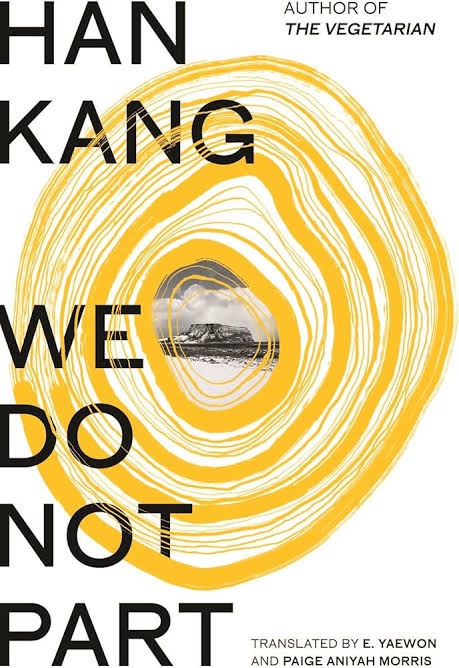
We Do Not Part

📍South Korea 🇰🇷

When Han Kang writes you dissolve and absolve; you assimilate and disintegrate; you discombobulate, yet transcend and transform. She writes so that we can feel the pain; she writes so that we can be bruised; she writes so that we can be healed. Her literature is enigmatic; brimming with incomprehensible and incongruent complexities which when mulled over reverberates, retaliates and reveals its naïveté and nuance. We Do Not Part is a summation of Kang’s ingenuity and humility in harnessing language to create a story that is literally haunting and sublime in equal measure.

Kyungha is having a miserable time bracing the sweltering heat of Seoul. She is simultaneously questioning her life’s choices and purpose, whilst being a recluse and starving herself. She reminisces and contemplates the changing dynamics of her relationship with her friend Inseon, a former documentarian, who now resides in Jeju island working as a carpenter and having her own studio. As the blistering summer gives way to chilly winter, Kyungha receives a frantic call from Inseon who is now hospitalised in Seoul following an accident. When Kyungha goes to visit her, learns about her medical predicament and observes the gruesome treatment being carried out; Inseon requests her to go to her home in Jeju island to feed her bird who has now been without any food or water since Inseon’s admission, hence could die anytime. Kyungha reluctantly proceeds on this arduous journey to Jeju in the midst of a severe blizzard probably thinking that saving the bird is her purpose. The blizzard is so extreme and violent that travel and communication become a nightmare. As Kyungha trudges through snow covered lonesome and terrifying terrain, enveloped in biting cold and formidable darkness, she falls, gets hurt, loses consciousness, wonders about an impending frostbite, and finally reaches Inseon’s house, only to find the bird dead.

With the relentless snowstorm and an ominous tenebrosity, Kyungha tries to make sense of her onerous journey while feeling marooned and helpless. Suddenly she finds Inseon in the house and it appears to her as if Inseon had been here all the while. As she is examining the impossibility of the current moment, and the possibility of her death, and all this being a subconscious spectacle or an apparition trick being played by her dying mind; Inseon starts narrating her story, why Jeju is so close to her heart and why has she chosen to be here despite it being far away from the mainland. She then recounts the horrendous Jeju massacre of 1948 through newspaper articles and old photographs wherein 30000 islanders were killed. Inseon highlights her mother, Jeongsim’s fight for justice who pressurises the authorities for an investigation, mobilises the aggrieved communities together to start a movement for identifying the victims that were killed and buried. Through this exercise, her mother hoped to heal her own loss that she and her family endured during the massacre and expected closure to an ambivalent grief. 

The three protagonists are the most unassuming, ordinary women who are weak and apathetic in many mundane scenarios but assuming stoicism and steely grit in extraordinary circumstances. Kyungha’s unwavering determination to reach Inseon’s house as she wades through knee deep snow in a no mans land, is of epic proportions. Inseon through her craft and values wants people to know the anguish her family and the islanders at large suffered in the massacre. Inseon’s mother, who becomes a postmemory in the narrative, embodies vulnerability in all its glory. She shows how vulnerability is a strength to reckon with. She demonstrates perseverance in the most punitive of circumstances. But the beauty of Han Kang’s three women, is their willingness and ability to confront cataclysm and catastrophe singularly, hence bringing plurality to the multidimensional multiverse that is womanhood. There are two other unlikely characters in the book; snow and flame. For the greater part of the book, the sinister snow keeps the characters and the readers almost in a chokehold. It’s merciless, icy, unyielding that is meant to suffocate. Then there’s flame, who is trying to provide a respite from the foreboding, yet the shadows that it brings in its wake intermingle with the prevailing doom. 

We Do Not Part is a shapeshifter. Scorching, sultry Seoul shifts into arctic Jeju. The narrative voice keeps shifting from Kyungha and Inseon; the women themselves shift from torpidity to vitality, from aggression to acquiescence. The story shifts between life and death effortlessly. Han Kang begins the story languidly, suddenly making it breathless and claustrophobic and decelerates just for a moment before introducing us to the historical carnage that ripped apart people and a peninsula. She wants us to gasp, squirm, question and feel uncomfortable. This is literature that is porous to humanity’s evils, disregards pragmatism and polity, and intends to induce a paralysis of hope. 

The Jeju massacre started as an uprising on Jeju island in April 1948 till May 1949. In the aftermath of World War Two, the newly liberated Korean Peninsula was emerging from Japanese colonisation (1910-1945), and Koreans were determined to develop a unified nation. Three months after the Japanese were ousted, a new occupying force, the USA, arrived on Jeju. On Jeju, opposition to a divided Korea was strong. At the heart of the incident was widespread opposition to US supported election that would create a separate Korean government in the south, dividing it from the north. The US was concerned about Jeju becoming a “red island”.  The left wing groups were crushed, police brutality increased leading to a thirst of vengeance among police, military and people’s committees on both the left and the right. What followed was violence, deaths, displacement and destruction of some 300 villages. Some of Jeju’s most popular tourist attractions today were the site of civilian massacres. Ultimately, a south only government was formed, the Republic of Korea, headed by US backed President. The fallout of this was the Korean War from 1950-53 between North Korea and South Korea that ended up having 3 million civilian deaths and 2 million civilian casualties.

We Do Not Part is a necessity as it exposes a forgotten, rather undisclosed part of history. e. yaewon and Paige Aniyah Morris have done the herculean task of translating Kang’s intricate and devastating prose from Korean to English. History has always been written by people in power. Majority of the history that we have been made to know is essentially a history that is whitewashed, with little to no reference of the colonised people and the atrocities committed to them, and it’s a history that forever exonerates the colonisers. Han Kang has taken the reigns to enlighten us about her Korean history as it happened and is demanding answers. Her prose shows us how memory outlasts violence. Sometimes, literature is supposed to trigger, to shame and to call out the so called powerful for their inherent perfidiousness. Kang’s literature does that. 

~ JUST A GAY BOY. ✨

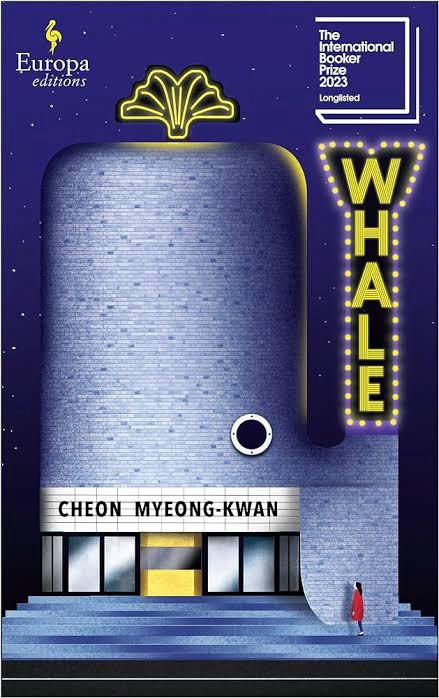
Whale

📍 South Korea 🇰🇷 

Geumbok is an extraordinarily fierce and courageous woman who is set out to expand her life, to bring enormity in all its glory and forms into her life, so that she can regale in its obscenity. As a child, she sees a whale and gets enamoured by it. The whale becomes an inspiration for her to dream big, to pursue and achieve impossible things, especially things that are deemed undoable by a woman. She runs away from her small village, comes to the Wharf, meets the fishmonger with whom she starts a fish drying business. There she encounters Geokjeong, falls in love with him, marries him and later realises his stupidity and inherent violent tendencies. Catastrophes befall her in continuum that leads her to a nondescript village, Pyeongdae. Here, she becomes the talk of the town, builds a cafe, starts a brick making business and opens a movie theatre designed as a whale. She becomes rich, arrogant and doesn’t predict the unfortunate destiny that is awaiting her, which true be told, had always been encircling her.

Chunhui, is Geumbok’s mute daughter, forgotten by the mother and the people around her. It’s her enormous size that gets people’s attention but soon their interest wades away because of her inability to communicate and comprehend. But she does possess a magical ability to talk to elephants and Jumbo becomes her only confidante. She learns to make bricks, adores daisy fleabanes and forever wonders why the world is the way it is. She becomes a suspect in a disaster that destroys Pyeongdae, gets incarcerated, undergoes unimaginable torture in the prison and is released after many years. She goes back to the ramshackle city only to find it in ruins. She then goes on to lead an absolutely lonely, marooned life making bricks.

There are hoards of interesting characters in the book like the one eyed woman, the old crone, the twins, Mun, Ladybug etc who bring their own whimsy, quirks and terror to the narrative. Pathos and grief await at every turn for all of these characters. Despondency and mayhem form the hallmarks of the plot. However, despite the grotesque events that make you squirm and your skin crawl, the ingenuity of the writing is such that it succeeds in keeping you hooked. 

Whale, shortlisted for the International Booker Prize 2023, is a story like no other. Even if I try my best, I wouldn’t be able to classify its genre or its style. To say it is unique would be a literary disservice. It’s a story that has history, folklore, magical realism, dark humour and feminism. The narrative for two thirds of the book is fast paced while the remaining third assumes a relaxed tone. The words are full of vivid imagery. They convey innocence, violence, hatred, longing, iniquity and doom. At the same time they also bring about revulsion by depicting bodily fluids, diseases and putrefaction. Sex finds liberal mention through the pages and the author doesn’t shy away from being graphic, problematic and harsh about it.

Geumbok’s character is one that is going to stay with me for a long time. She is multilayered, multifaceted and multitalented. She’s sexual and owns her sexuality. She resists every patriarchal norm and challenges everyone’s, including the readers, innate prejudices and chauvinism through her beguilingly subtle and brutally grandiose ways. She represents liberality and makes us question stereotypes. She’s selfish in her wants, selfless about her prowess. She’s flawed, witty, promiscuous, odious,mysterious and extremely narcissistic. There’s no one like Geumbok.

Though Geumbok grabs our attention, Chunhui asserts her presence with her silence. In silence, she finds her strength too. She epitomises resilience and perseverance. Often times, characters like Chunhui dont find mention in books and media, let alone be the protagonist, but in this book, the author has projected the boredom and mundanity of Chunhui to be purposeful leading to an awe inspiring but lugubrious climax. 

The author, Cheon Myeong-kwan, is a South Korean author, screenwriter and film director. This book has been translated into English by Chi-Young Kim who has done an incredible job in translating this phenomenal piece of Korean literature. Whale comes across as an astonishing feminist literature where women drive the story and men play second fiddle to them. Feminism, in this book doesn’t make men hapless and victimised, rather it asserts itself as being deliberately provocative and intentional. There’s three more things that enrapture the narrative; fishes and their fishy smell, bricks and daisy fleabanes.

Read Whale. Today!

~ JUST A GAY BOY. 🤓

The Restaurant of Lost Recipes

📍 Kyoto, Japan 🇯🇵 

In Kyoto’s Shomen-dori, in a nondescript building, lies a quaint restaurant, Kamogawa Diner. Run by the chef Nagare Kamogawa, it specialises in Kyoto cuisine. The food is wholesome and customer satisfaction is of paramount importance to the chef. But there’s something unique about this restaurant and it isn’t its no-frills food. The restaurant also doubles up a food detective agency, which is handled by Nagare’s daughter, Koishi.

People come to Kamogawa Diner not just to relish its simple yet delectable fare, but also in search of lost recipes. Recipes that have been forgotten through the sands of time but its flavour has lingered in their souls forever. Recipes that bring back emotional memories; recipes that remind people of their connections and relationships; recipes that rekindle grief, gratitude and gaiety; and recipes that evoke visceral and spiritual sensations. 

Anybody who comes to the diner for their food detective services is served a set menu by Nagare, followed by Koishi’s meticulous inquiry into the lost recipe that includes its origins, flavours and taste. The discussion often gets emotionally intimate and intense and segues into stories associated with the dish and the impact it has had on the person concerned. After two weeks, when the person comes back, Nagare whips up the exact same recipe which always leaves the guest/s spellbound. He then describes the ways in which he procured the recipe, through his uniquely inventive and intuitive tricks backed by his profound knowledge of Japanese cuisine. 

There are six stories in the book each dedicated to a particular dish. The ones that stood out to me were the following. Olympian Kyosuke Kitano, reminisces about his estranged dad’s nori-ben. Nagare’s version floods him with memories, prompting him to relook at the relationship in a new light. Kana Takeda is a single mother who wants the absolute best for her son, Yusuke. When her son keeps craving for her father’s hamburger steak, with whom she has had no contact in years, she is forced to take Nagare’s help. When she eats Nagare’s hamburger steak, she is reminded of familiar flavours and familial bonds. This experience forces her to forgive herself for events that happened outside of her control and simultaneously makes her confront her ego. Yoshie and Masayuki Sakamoto are struggling to grapple with the loss of their son. They request Nagare a particular Christmas cake to be made that their son loved, but they themselves are unable to remember its taste. Nagare jumps through hoops to make the impossible possible and presents them the cake which brings them a step closer to securing closure and processing their grief.

The Restaurant of Lost Recipes, is a feel good, cozy fiction and is the second part in the series. It’s not necessary to have read the first part, The Kamogawa Food Detectives, to read this one. The book is replete with scrumptious, luscious Kyoto dishes that are described punctiliously, akin to a culinary textbook. The author, Hisashi Kashiwai’s elaborate descriptions of the ingredients, textures, flavours and aromas are bound to make any reader salivate. Tofu, mushrooms, sushi, sashimi, broths, eel, mackerel, sardines, distinct Japanese herbs and the various techniques of cooking are elucidated with great detail in the book. You can literally smell the tantalising scents of dashi and miso wafting through the pages of the book. More importantly, the book becomes a melting pot of unpleasant, unresolved human emotions often brimming at the surface, needing just that extra stirring to achieve some sort of resolution. Since millennia, food has been a source to connect people and bring them together. It warms my heart to note how simplistically the author has achieved this feat in the book. 

The Restaurant of Lost Recipes is appetising till the last page. It feels moreish. So, are you ready to indulge? 

~ JUST A GAY BOY. 🍣🍱🍜

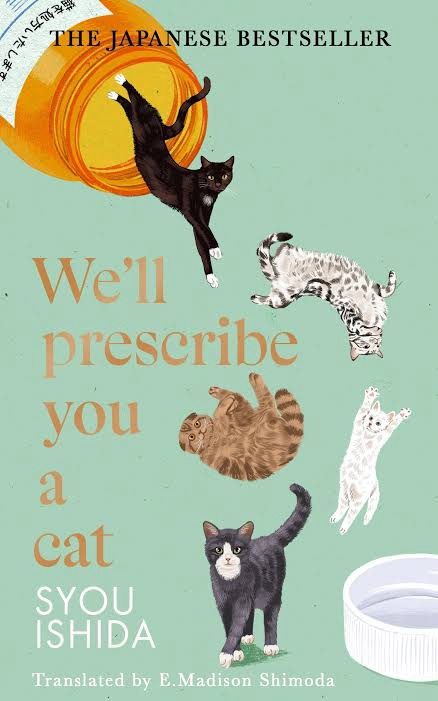
We’ll prescribe you a cat

📍 Kyoto, Japan 🇯🇵 

Located in one of the winding lanes of Kyoto, with an address as convoluted and discombobulating as, “East of Takoyakushi Street, south of Tominokoji Street, west of Rokkaku Street, north of Fuyacho Street, Nakagyō Ward, Kyoto”, lies a nondescript, difficult to spot, wellness clinic called, Nakagyō Kokoro Clinic for the Soul, run by Dr Nikké and nurse Chitose. People come here seeking help thinking it’s a mental health clinic and also having heard incredible healing stories, only to find Dr Nikké prescribing a cat (albeit a different cat for every patient) for any and all of their problems. Eccentric much?

The book has five chapters; Bee, Margot, Koyuki, Tank and Tangerine, and Mimita, named after the cat/s that have been prescribed. There’s a line drawing illustrating the cat at the beginning of every chapter. There are a couple of stories that stood out to me. The first is Bee. Shuta Kagawa, is unhappy with his monotonous job wherein his inability to perform the tasks, causes his manager to admonish and humiliate him incessantly. This translates to his personal life as well, having an untidy house and no social connections. On getting Bee, for the first time he starts to tidy up his place, to prevent the cat from swallowing harmful objects. Bee also becomes the reason for him losing his job, that leads him to finding a new job, which he actually starts liking and even the people he works with. Unknowingly Bee becomes instrumental in mediating this long overdue change in Shuta’s life, a change he was scared to seek and commit to, but done ever so organically by a cat. 

The second is Koyuki. Megumi Minamida, is having trouble dealing with her ten year old daughter, Aoba. She constantly criticises and reprimands her, gets annoyed with anything and everything that Aoba says. Aoba is having issues at her school which Megumi dismisses as being trivial and instead wonders if she is depressed. She comes to the clinic to seek therapy for Aoba and Dr Nikké hands out a kitten. Suddenly, Megumi is transported back to her childhood, where she too had rescued a kitten but was never allowed to keep it by her mother. Megumi’s mother constantly rebuked her and never let her have any agency. Inadvertently, the kitten becomes a medium for Megumi to address her repressed emotions, making her reflect on her past traumas, that paves a way for her to assuage her daughter’s concerns and forge a new improved relationship.

As you can see, the stories are simple and have been simplistically told. They tackle complex human issues and interactions without being presumptuous and patronising. A special mention of the character nurse Chitose, whose oddities are in a league of their own. 

The premise of a doctor prescribing a cat can seem bewilderingly outlandish but somehow manages to come across as heartwarming. Cats become the unlikely catalysts to troubled, irritated, grief stricken human beings in coming to terms with their choices and behaviours which in turn makes them contemplate on the same. Truth be told, cats in the book, don’t do anything magical. They just stare, eat and sleep; but for some unexplainable reason, they melt the stubborn hearts of the humans they have been prescribed to, ultimately bringing relief, joy and solace. 

We’ll prescribe you a cat, is a cozy fiction, a genre which is getting highly popular in Japanese literature. The author, Syou Ishida, is Kyoto born and adores her cats. The book has been translated from the Japanese by E Madison Shimoda. The writing is easy, considerate and brings a realm of calm upon the reader. It is quintessentially Japanese in its ethos and presentation. Kyoto comes alive with its quirks and charms through the words of Syou Ishida. However, at the heart of the book is the universal language of acceptance, bonding and belongingness. There isn’t any sermonising, just quiet realisations and reassurances that lift the collective human consciousness. 

This is a book that will brighten a dull day. The cats are luscious, fluffy and mysterious. I have always been a dog person, but Syou Ishida might have just converted me! 

(Ps. Be ready to meet more cats in, “We’ll prescribe you another cat” releasing later this year.)

~ JUST A GAY BOY. 😺😻

Greek Lessons

📍 South Korea 🇰🇷 

A woman is losing her ability to speak, for the second time in her life. A man is losing his vision. He is a teacher taking evening classes of Ancient Greek in Seoul. She is his student, wanting to learn a new language, hoping that, it would somehow help her speak. 

The woman, whose story is narrated in the third person, is bereaving her mother and is simultaneously fighting for the custody of her son. She feels devastated and defeated by death and separation. She overflows with rage and rancour that consume her. She is subsumed with an overwhelming sense of love which at the moment seems uncertain and unwanted even. The man, who is narrating his own story, is trying his best to acclimatise himself to Seoul after having moved from Germany. His anguish over his past strained relationships, strains his ability to adjust to his present situation. His loneliness, his longing for a city and people that are no longer present become the fodder for his lamentations on the pathological darkness that is enveloping him slowly and steadily. Through the class, the man and the woman, come together, to provide respite to their troubled yet kindred souls by being that requisite restrained sense to each other’s losing sensibilities.

Han Kang, is a South Korean writer, who was awarded the Nobel Prize in Literature in 2024, a first for an Asian woman and for a Korean. Her other book, The Vegetarian, became the first Korean language novel to win the International Booker Prize in 2016. This book, has been translated by Deborah Smith and Emily Yae Won.

Greek Lessons, is a master storytelling on grief and its flagrant consequences. The book is seeped in all kinds of grief and loss, portrayed at various levels of intensity, conscientiously. This subtextual presence makes it ominous and omnipresent. This book also meanders on the characters’ existentialism, romanticising the desperation and the futility of it. The author has depicted Seoul to be this unwanted and cold third character, that is failing to provide warmth to its people. Han Kang’s words are measured, meticulous and mundane. Language drives the pathos, at times its dissolution drives the sentiment. Words are metaphorical, full of palpable melancholy. This is a piece of literature that is deliberate and visceral, but beautiful nonetheless.

~ JUST A GAY BOY. 🌺

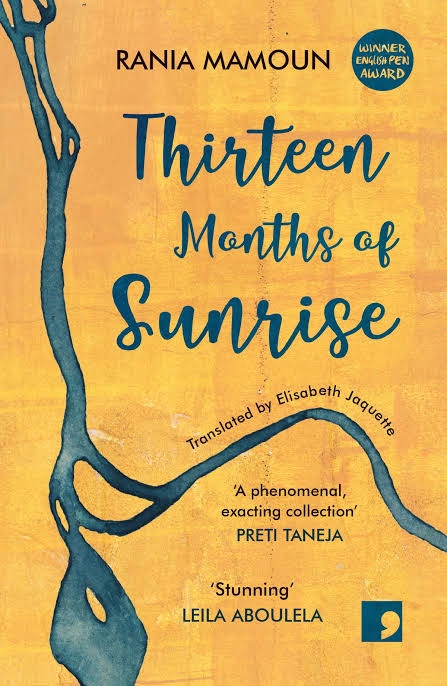
Thirteen Months of Sunrise

📍 Sudan 🇸🇩 

Sudan, is one of the poorest countries in Africa, and has been afflicted by repeated revolutions, civil wars and military dictatorships leading to international sanctions and isolation, internal instability and factional violence. Sudan achieved independence on 1st January 1956 from Egyptian and British colonisation. The partition of Sudan happened in 2011 and South Sudan was formed in July 2011. The war in Darfur was a major armed conflict in Sudan from 2003 to 2020, akin to a genocide, leading to hundreds of thousands of civilian casualties and deaths, brutal rapes and various other horrific human rights violations. 

This novella, my pick for Women in Translation Month, is an anthology of short stories, set in Khartoum, the capital of Sudan. These stories offer a contemporary outlook on Sudan but often replete with the issues plaguing Sudanese people such as poverty, insecurity and safety. The first story, titled ‘Thirteen months of Sunrise’, is about a bittersweet friendship between a Sudanese woman and an Ethiopian man; also why Ethiopia has thirteen months! The other stories that stood out were, ‘A woman asleep on her Bundle’, that spoke about a woman’s benevolence despite her abject poverty and hence forced ostracism; ‘Stray Steps’, that portrayed a diabetic woman’s ordeal with hunger and hypoglycaemia and how stray dogs come to her rescue; and ‘Doors’, a story about an unemployed man’s hope of securing a job only to be left despondent and indignant.

Rania Mamoun is a Sudanese fiction writer and journalist, known for her novels, poems and short stories. The book which has been translated from Arabic into English by Elisabeth Jaquette, won the Pen Translates Award in 2017 and was also shortlisted for the Warwick Prize for Women in Translation 2020. 

The ongoing civil war that began during Ramadan on 15th April, 2023, between the two rival factions of the military government of Sudan, has been concentrated around the capital city of Khartoum and the Darfur region. The country is facing one of the most severe humanitarian crises in recent history. According to the UN, UNHCR and Amnesty International; over 18,800 people have been killed; 6.7 million are at risk of gender-based violence, particularly women and girls; 755k people are on the brink of famine and 25.6 million people are in acute hunger that includes more than 8.5 million people facing emergency levels of hunger. Over 10 million people have been forced to flee their homes both within the country and across its borders; out of which over 7.7 million are internally displaced persons; as the devastating civil war heads for its 500th day. 

Sudan, Gaza, DR Congo, Burkina Faso, Myanmar, Bangladesh, Yemen, Afghanistan, Ukraine, Haiti, Manipur. The world in 2024. 

~ JUST A GAY BOY. 😞

Kairos

📍 Germany 🇩🇪

Katharina is a nineteen year old girl living in East Berlin. Hans is a fifty plus gentleman, a novelist and working for a local broadcaster, also living in East Berlin. The year is 1986. The Berlin Wall is intact. Katharina and Hans have a romantic meet cute and soon start dating each other. She gets completely besotted with Hans and turns a blind eye to his behaviours and transgressions. Hans is a married man and has a son. He has various extramarital relationships while being married to Ingrid. Katharina is aware of his philandering ways but is too consumed by his charm, his sex appeal, his taste in music, art and books to even subconsciously register it as a concern. When Katharina goes away to Frankfurt an der Oder for a year, for a theatre internship, she develops a close friendship with her colleague Vadim. He has feelings for Katharina and after multiple romantic and sexual advances from his side, one fine day, they end up having sex. Through one of the loose pages of her diary, Hans finds out about this affair and mayhem ensues.

Hans is mortified by Katharina’s behaviour and leaves no stone unturned in punishing her. He emotionally abuses her, threatens to end the relationship and even violates her sexually. He periodically records his disdain and hatred for her as cassettes, both sides, 60 minutes each and expects her to answer him. The verbal abuse meted out through these recordings is excruciating. Katharina continues to soothe his chauvinism and misplaced anger by dutifully listening to these recordings, genuinely begging for his forgiveness, despite the repeated attacks on her character and morality. The relentless oppression makes Katharina question the love if it exists between them, even forcing her to self censor at times, but is never able to end the relationship. She continues to suffer because she feels, she deserves it and Hans continues with his torture routine, because he believes, she deserves it.

At the same time, Germany is in the midst of the Cold War. The tensions between East and West Berlin continue to escalate. The political situation becomes volatile and chaotic leading to the fall of the Berlin Wall in 1989. Soon after the fall, it almost seems like an erasure of East Berlin as the West with its wealth and capitalism takes over, leaving no traces of what was once before, the people and the city. These developments run parallel to Katharina and Hans’ relationship, being metaphorical at times; creating an atmosphere of foreboding and unease.

This isn’t a love story, but a story about control. Hans wanted total control over Katharina’s mind and body under the garb of love, but the moment it faltered, control easily metamorphosed into misogyny and toxic masculinity, also under the garb of love. Katharina is groomed by Hans since the beginning of the relationship and because of her tender age and his towering seniority gets moulded into believing the necessity for her suffering because of her indiscretion, prompting acquiescence. At some point, as a reader, you wonder if Katharina wanted to sabotage herself and her happiness by being in this relationship. She represents millions of women worldwide who suffer through such sexist bullying and exploitation, because they aren’t aware of their worth, and of a life outside of emotional captivity.

Jenny Erpenbeck, a prolific German author and opera director, is the first German writer to win the International Booker Prize for Kairos, which is also the first novel originally written in German to win the award. Kairos has been written with a lot of consideration for German politics, the history and the societal structure of East and West Berlin. The book also makes a poignant case for ‘love bombing’ and ‘breadcrumbing’ in relationships. Erpenbeck takes us on Katharina’s traumatic journey of abuse without sugarcoating it. As a reader, you squirm and feel frustrated for Katharina and I wondered, if she felt ennui in Hans’ narcissism. Music, art and theatre play a significant part of the narrative and the author delves deep into them through conversations between the protagonists. Michael Hofmann, a German poet and translator, who shared the International Booker Prize with Erpenbeck, has done an exacting translation of the original.

Kairos is a multilayered sensory experience. The story and the politics kept me intrigued and exasperated simultaneously. Chopin’s Nocturne and Polonaise seem perfect for part one of the book, while Bach’s Well-Tempered Clavier and Goldberg Variations blend in seamlessly with the second and Mozart’s Symphony is the ideal score for the climax. Read the book with these musical masterpieces in the background! I am definitely doing a reread.

~ JUST A GAY BOY. 👏

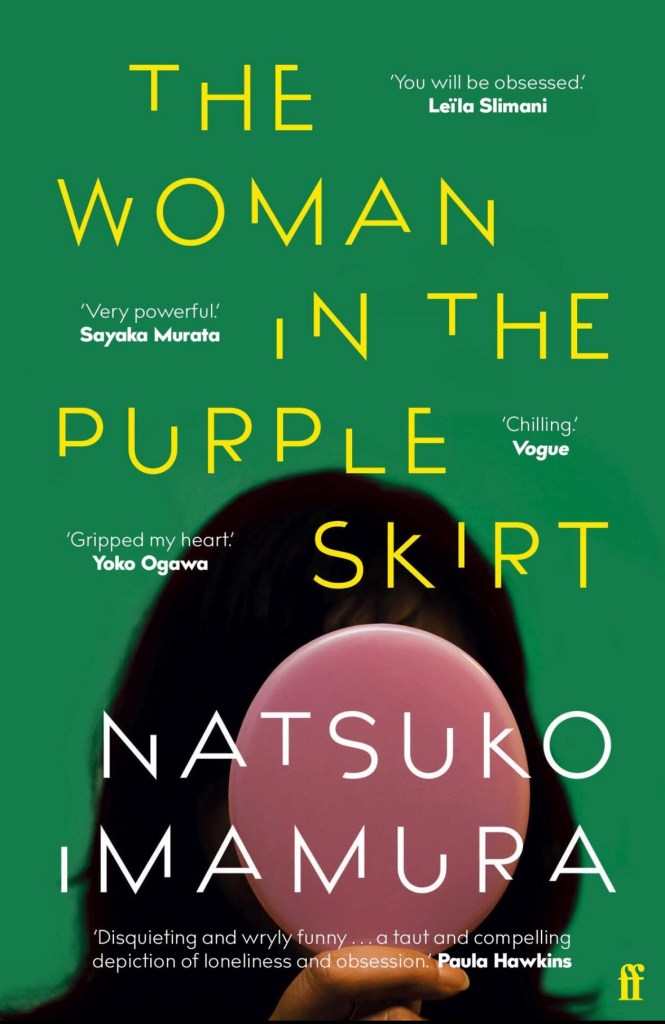
The Woman in the Purple Skirt

My pick for Read a Kitaab’s #januaryinjapan was, ‘The Woman in the Purple Skirt’. The book, written by the acclaimed Natsuko Imamura and translated from the Japanese by Lucy North, has garnered fairly positive reviews online, however I was left feeling disappointed. The book is about this eponymous Woman in the Purple Skirt who is being closely watched by the narrator who calls herself as the Woman in the Yellow Cardigan. She meticulously describes every move of the woman in the purple skirt, her daily routine, eavesdropping on conversations and even gets her a job in the hotel that she’s employed at. Despite this extremely voyeuristic snooping by the woman in the yellow cardigan, she remains inconspicuous and almost oblivious to the other woman. However, things take a more ominous turn after the woman in the purple skirt starts working earnestly in the hotel and the sequence of events leading upto the climax happen so rapidly, it almost feels like an antithesis to how the book began.

In summation, I felt the climax to be a major letdown despite the foreboding atmosphere it created and the thrilling subtext. Though the book discusses themes of loneliness and the yearning for a friendship, and the human need to be seen and validated, it gets lost in the narrative that remains hyper focused on the inconsequential daily mundane activities of the woman in the purple skirt for the greater part of the book.

Ultimately, I even wondered what was the purpose of the woman in the purple skirt? What was the author trying to convey? I remain discombobulated!

~ JUST A GAY BOY. 🫤

Minor Detail

📍 Palestine 🇵🇸

This novel has two parts. The first one is set in the year 1949, just after the Nakba of 1948. An Israeli officer is scouring the Negev desert for any remaining Arabs or Arab settlements. The blistering heat, a festering infection, dust, sweat do not deter him from going about his day in a regimented way. His single handed determination to find Arabs does lead him to a Palestinian girl, who is forcibly brought back to the Israeli military camp, where she is gangraped by the soldiers, later killed and buried in the sand. The second part, begins in the city of Ramallah, where a young Palestinian woman sets out to investigate this crime that happened 25 years ago. As she juggles her way through the innumerable military checkpoints in the West Bank and on her journey to the desert, she is also juggling anxiety and panic that have become ubiquitous in her life due to the Israeli occupation. Her single handed determination to find details about the gruesome incident despite the unforgiving heat through the lonesome desert unfortunately leads to a tragic penultimate moment.

The book is an uncomfortably simple yet unflinchingly honest prose on Palestine and Palestinian people living under the occupation and an apartheid regime. The first half focusses on the daily mundane activities of the officer over and over again, so much so that the brutality that occurs becomes a part of the same mundane. In the second half, the author literally places us in the passenger seat of the woman as she takes on the perilous journey, and we get to experience first-hand her anxiety, fear and trauma muddled in her determination and longing to unearth the truth. The author deftly shifts the narrative perspective from the Israeli officer whose intention and purpose is annihilation of Palestinians, to the Palestinian woman whose reality is obscured and dependent on the military occupation. Freedom is villainous in one while it’s the prisoner in another. Life is precious in one while for the other, death is a close ally.

Adania Shibli is a Palestinian author and essayist, born in Palestine, who has written three novels and lives between Jerusalem and Berlin. Minor Detail, translated from Arabic to English, by Elisabeth Jaquette, was longlisted for the International Booker Prize in 2021 and was also nominated for National Book Award for Translated Literature in 2020.

As of December 11th, 2023, over 17997 civilians which include 7729 children have been massacred in Gaza since the genocide began on October 7th, 2023. The dehumanisation of the Palestinian people by the entire world has never been more stark and atrocious. The global silence on the oppressed and the selective empathy towards the oppressors is a new abysmal low for our collective humanity. The total disregard towards the ethnic cleansing of the Palestinians, the absolute subservience towards the Israeli propaganda of self defence, the failure to distinguish between antisemitism and zionism is a telling of the dark times we are in. The next time when the world’s so called superpowers call for peace and human rights, you can gawk at the irony of it.

~ JUST A GAY BOY. 🇵🇸