Daybreak in Gaza: Stories of Palestinian Lives and Culture

📍 Gaza 🇵🇸 

Gaza, a city having history spanning thousands of years, that once celebrated life and laughter has now become synonymous with death and destruction since the Israeli occupation began. It’s become a graveyard of lost lives, homes and hopes. The book, Daybreak in Gaza, is an anthology of essays and short stories by Palestinians from Gaza, West Bank and the diaspora who recount an erstwhile Gaza, a Gaza of their dreams, a Gaza of their grandparents and great grandparents and a present day Gaza that is witnessing a relentless genocide from the 7th October, 2023. Many of the writers give first hand accounts of the bombing and devastation that has happened mercilessly in front of their eyes. Some of the stories are diary entries as bombs go off in the background, buildings collapse and cries of despair echo constantly. Some of these writers have been killed in the ongoing war. 

Gaza has been reduced to a rubble, Gazans as a statistic. This book, has allowed a different version of Gaza to be seen, albeit the grave circumstances currently. We see Gaza as a thriving center of trade, culture, education and living prior to the Nakba of 1948. Through the various stories we are introduced to the rich history of the city and Palestine even after the Nakba and all that followed with the Egyptian occupation to the First and Second Intifada and the Oslo Accords which turned out to be criminally counterproductive to the Palestinians. And then there are the horrifying, heart wrenching, soul shattering stories of the ongoing genocide replete with unimaginable sorrow that makes this book such a necessity.

Daybreak in Gaza is a difficult read. But to think about it, can this difficulty even come close to the horrendous atrocities being meted out to Gazans since forever and especially now since October 7th, 2023? After every chapter I had to pause. Because every chapter, every page, every word is imbued with the hurt and anger that the Gazans are facing. This book is drenched in their tears and wails that the world has turned a deaf ear to. This book is a testament to their rightful hatred towards all of us for our cowardice and consent for the genocide. 

Daybreak in Gaza has been edited by Mahmoud Muna and Matthew Teller with Juliette Touma and Jayyab Abusafia. Mahmoud is a writer, publisher and bookseller from Jerusalem. Matthew is a UK-based writer and broadcaster. Juliette works for the UNRWA and Jayyab is a London-based journalist from Jabalia refugee camp in the north of Gaza.

As of 5th November, 2024, 200,000+ Palestinians are projected to have been killed by Israel and the USA in Gaza since 7th October, 2023. Two thirds of the buildings have been damaged or destroyed by the Israeli occupation forces. The $3.8 billion in annual U.S. military aid to Israel, which is part of a $38 billion, 10 year deal signed by the Obama administration (2018-2028), has supported the occupation and the ethnic cleansing. Since October 2023, at least another $17.9 billion have been funnelled into Israel’s military. 

How have we let this happen? Is this the world we are a part of wherein a certain population can be ethnically cleansed while no one bats an eyelid? Is this the world where we still call America the greatest country and completely ignore its acts of terrorism? I think we certainly are. 

I shall end my review with these quotes from the book;

From the chapter, My heart is broken, by Saba Timraz:

Has our life become a game, controlled by America and the occupier? They kill, destroy and do whatever they can to harm us, and then tell the world that they are the victims, and we are the monsters. We are an occupied people and have been since 1917. Our lands were stolen, our honour was violated, and the building blocks of our lives were destroyed. We want to be liberated and to live in freedom and dignity. We will not surrender our rights, no matter how long it takes.

From the chapter, History will not lie, by Susan Abulhawa:

But history will not lie. It will record that Israel perpetrated a holocaust in the twenty-first century.

~ JUST A GAY BOY. 🍉

A General Theory of Oblivion

📍 Angola 🇦🇴

Angola is a country on the west central coast of Southern Africa. It is the second largest Portuguese speaking (Lusophone) country in the world. After a protracted anti-colonial struggle, Angola achieved independence in 1975 from Portuguese colonisation as a Marxist-Leninist one party Republic. The country descended into a devastating civil war the same year between the ruling People’s Movement for the Liberation of Angola (MPLA), the insurgent National Union for the Total Independence of Angola, and the militant organization National Liberation Front of Angola. The country has been governed by MPLA ever since its independence in 1975. Following the end of the war in 2002, Angola emerged as a relatively stable unitary, presidential constitutional republic. (Source- Wikipedia)

The book, originally written in Portuguese by Angolan writer, José Eduardo Agualusa in 2012, was translated into English by Daniel Hahn in 2015. The novel appeared on the shortlist for the 2016 Man Booker International Prize and has been the recipient of the 2017 International Dublin Literary Award. The story is about a woman, Ludovica, who seals herself off in her apartment in Luanda in 1975 at the time of Angola’s independence. As Luanda plunges into a civil car soon after, Ludovica watches it unfold in bits and pieces through her window, radio and sometimes overhearing people’s conversations. She’s also dealing with the abrupt disappearance of her sister and brother-in-law which happens around the same time. She sustains herself frugally by growing her own vegetables, catching pigeons, reading the books in her house and by scribbling her thoughts on the wall. Years pass by, and Ludovica, with her aging and diminishing eyesight often oscillates between periods of imagined insanity and hopeless reality. One day, a little boy, Sabalu comes into her life, at a time, when she’s immobile and sprawled out on the floor due to a fracture. He tends to her and gives her hope through his unconditional empathy and care. Just when Ludo starts considering Sabalu as her grandson and only family, she is confronted with an unexpected and unknown family member.

This dark and seemingly despondent life of Ludovica runs in parallel with the civil upheaval in Luanda and Angola. The author also introduces us to a myriad of other characters through the narrative, whose individual stories, purposes and intentions come together in the end. Each of them has a tale woven across Angola’s independence. He also takes time in explaining Ludovica’s painful past traumas leading her to live a life of confinement, self abandonment and shame.

Agualusa’s prose is purposeful, political and poetic. He crafts a meandering plot that traverses from Angola’s independence in 1975, through the civil war, till its end in 2002. He doesn’t shy away from layering the text with mentions of colonialism and white supremacy and it’s problematic effects. Ludovica comes across as a woman of steely grit having a resounding optimism to live, despite her circumstances and her own beliefs about her. That’s the genius of Agualusa’s writing. Do savour it.

~ JUST A GAY BOY. 🙃

The Map of Salt and Stars

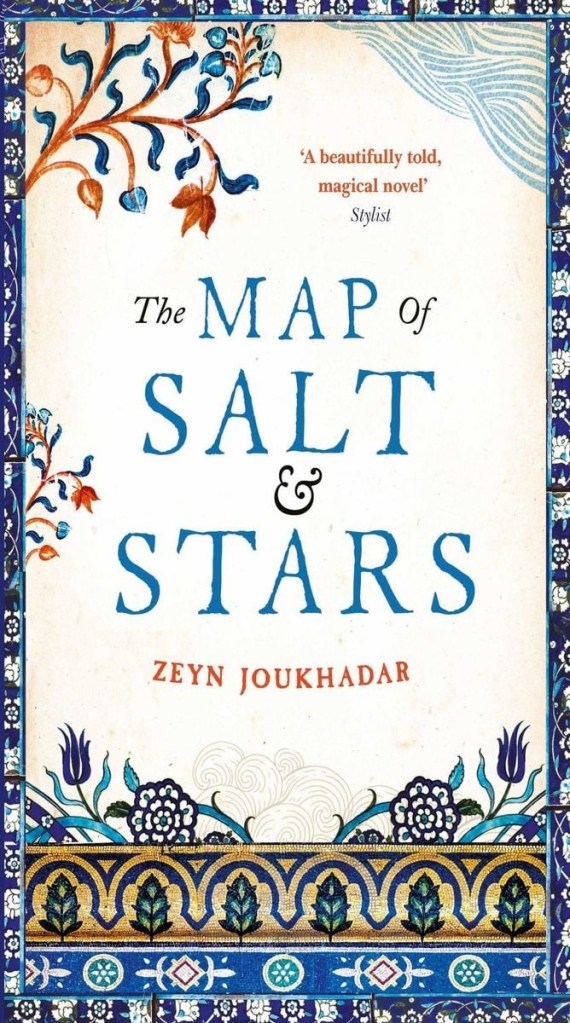
Unrest in Syria began on 15th March, 2011 as part of the wider 2011 Arab spring protests out of discontent with the Syrian government, eventually leading to an armed conflict. The war is currently fought by several factions. The Syrian Civil War is second deadliest conflict of the 21st century after the Second Congo War. The conflict has caused a major refugee crisis with millions fleeing to neighbouring countries (source Wikipedia). This book by Syrian American author, Zeyn Joukhadar, is rooted in Syria and celebrates it with a double tale of voyage and exile. The first tale is about 16 year old Rawiya, set in 12th century, who leaves her house in Benzu, near Ceuta (Ceuta is a Spanish autonomous city on the north coast of Africa), in search of adventure and with a quest to explore the world beyond the desert. She becomes an apprentice with the renowned explorer and mapmaker al-Idrisi and sets out on this perilous and unforeseeable odyssey to assist al-Idrisi in sketching the map through the Maghreb and the Mediterranean. During this adventure of a lifetime, she comes across blood thirsty mystical creatures; vicious men; cruel, tyrant kings and their armies; and difficult terrain and weather. This only establishes Rawiya as a gallant warrior. Rawiya single handedly helps al-Idrisi in completing his exploration of the world whilst constantly battling attackers and reminding everyone through this pursuit that her gender is no barrier in achieving accolades and appreciation and in being one of the greatest warriors of her time.

The second tale is of the present day, 12 year old Nour who has moved to Homs in Syria from Manhattan after her father’s death; with her mother, who is a mapmaker and two sisters, Zahra and Huda. As she is adjusting to her new life in Syria while knowing only a few words of Arabic, she is now one amongst many who has got trapped in the Civil war. She experiences bombing of her house and from there on, her ordeal for survival begins. Instantly her status becomes that of a refugee as she manages to escape from Syria. She has to let go of her mother and sister Huda during this gut wrenching journey which takes her through Jordan, Libya, Algeria and finally to Ceuta. The tale is as much a portrayal of Nour’s resilience, as much as it is, about her coming to terms with the menacing traits of human behaviour and the rot that has crept into humanity at large.

The narrative constantly flips between the stories of Rawiya and Nour. It’s a slow paced read. Islamic history and ancient names of cities find a constant mention through the book. I had to refer to Google lot many times to educate myself about the same. The author brilliantly depicts the striking geographical similarities between the old world and the current. Maps form an integral part of the storyline throughout the book. There are constant references about stars, galaxies and various constellations. I did find Nour’s narrative a bit tedious, since it gets a lot metaphorical at times. It isn’t an easy book to read. How would it even be? How can any book that talks about a devastating civil war be pleasant in any way? The author deftly portrays the geopolitical dissimilarity in tales of Rawiya and Nour. Rawiya’s is about bringing the world together by sketching the map and defining the borders, whilst ironically in Nour’s, it’s about a disintegrated world and the battles at the borders.

~ JUST A GAY BOY. 😞

Grey Bees

📍 Ukraine 🇺🇦

Andrey Kurkov, is a prolific Ukrainian author and independent thinker who writes in Russian. He is the author of 19 novels; the latest being Grey Bees, which has been translated by Boris Dralyuk. The story is about a middle aged, disabled pensioner and devoted beekeeper, Sergey Sergeyich, from the war torn region of Donbas in Eastern Ukraine. He is living in this three street village, Little Starhorodivka, along with its only other resident, Pashka, which falls in the grey zone, between the Ukrainian army on one side and the separatists supported by the Russians on the other side. Sergeyich has become accustomed to living without electricity; making do with whatever food is available. Bees are the only thing he truly cares for. Now with spring approaching, he needs to take the bees away from all the bombing and shelling happening in and around his village. As he sets off on this journey, which soon becomes an adventure, in the pursuit of providing his bees a secure environment, he lands in the Russian controlled territory of Crimea. His Interactions with a Crimean Tatar family whilst in the Crimean village of Albat, who provide him and his bees shelter, make the Russian officials suspicious of his intentions. Despite the bureaucratic surveillance on his activities, he takes it upon himself to help a young Tatar girl cross the Crimean border during the return journey to his home, in the grey zone.

Complex political decisions regarding geographical issues need not colour human emotions. The characters in the book have their humanity intact despite a ravaging war surrounding them. The author beautifully constructs their simple emotional arcs, at times peppering it with wry, dark humour. Kurkov takes times to build the narrative. He makes it atmospheric by indulging us in the mundane, boring yet terrifying life of Sergeyich. The moments at Border control and various checkpoints are so nerve racking, and described so viscerally, that you can feel Sergeyich’s anxiety and panic in you. That’s the brilliance of Kurkov. Through the characters of Aisylu and Bekir, he highlights the plight of the marginalised group of Crimean Tatars under the Russian regime, who are an indigenous people of Crimea. Not to forget, the honeybees are as much a central character in the book, as Sergeyich is. The author weaves in their life cycle, behaviour and discipline into the narrative in the most scientifically accurate and fascinating manner.

It’s evident that the whole of Ukraine has become a Donbas now. In a flash, citizens have become refugees. Because one day, a megalomaniac called Putin decided to assert his autocratic zealotry over the region. Not just Ukraine, there are so many countries (Yemen, Iraq, Syria, Afghanistan, Palestine) and regions (Tigray in Ethiopia) that are devastated by war. Wars have happened since time immemorial. Will this present war too become a piece of history for posterity? Or will we learn and strive to prevent such wars from happening again? Will we try to be humans first?

~ JUST A GAY BOY. 😓

SPARKS LIKE STARS

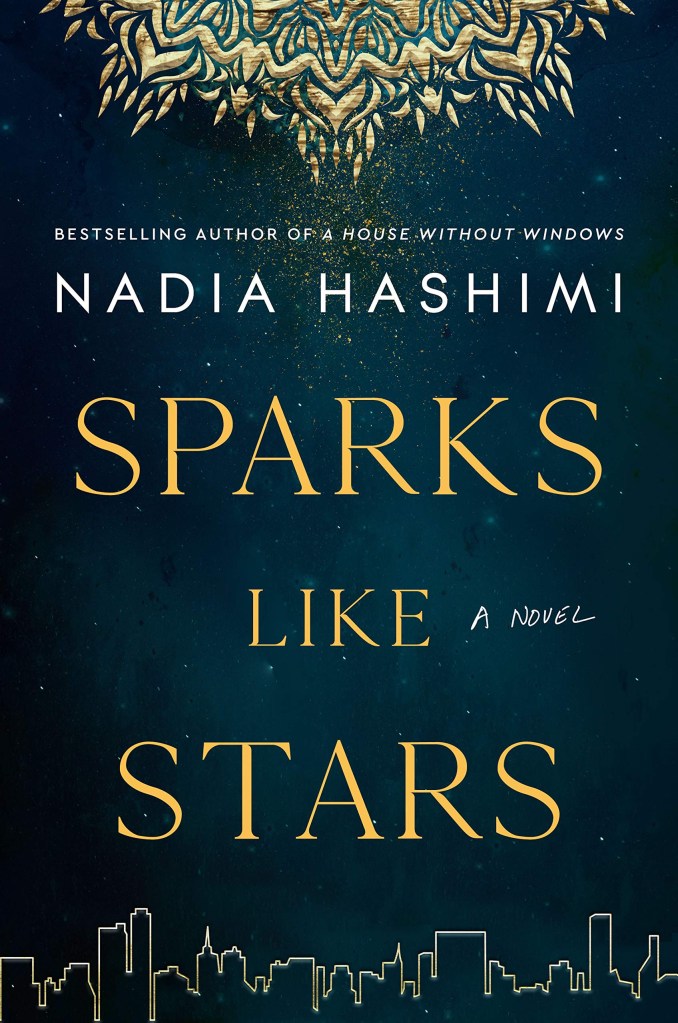
This book is about Afghanistan, it’s people and their truths. It’s never easy to talk about a country decimated by war and various vested interests which have given rise to the Taliban. So when Afghan American author and paediatrician, Nadia Hashimi, writes, you sit up and take notice. She has authored several books on Afghans; but in this recent release, she speaks about the trying and traumatic life of a person escaping death and war. The first half of the book, shows the protagonist Sitara, as a ten year old surviving the military coup against the Afghan government that happened in 1978 Kabul. She knows her family is dead and with the help of a palace guard Shair, she lands up with Antonia, an American embassy worker, who helps her escape from Kabul to the United States. The story then fast forwards to 2008 in the second half, where Sitara has a new name and is a practising onco-surgeon in NYC. However, after so many years, when a chance encounter happens with Shair who is now her patient, it brings back the pent up rage, hidden grief and all the unspeakable traumas of the past. She now has to navigate her present by acknowledging her desire to reclaim her family and heritage, which leads her back to Kabul.

The author, through Sitara, paints a moving picture about survivors guilt. The emotional turmoil of it can be seen in every aspect of her life. The book depicts the vibrant culture of the 1970s Afghanistan which is heartwarming. But it’s gut wrenching to think of the present day grim situation. The world has watched in silence as a beautiful country stands ruined, and it’s convivial people wronged.

~ JUST A GAY BOY. 😞

A Passage North

Sri Lankan author, Anuk Arudpragasam’s second book, and also shortlisted for Booker Prize 2021, is striking but deliberately difficult. The book is a meandering tale of a Sri Lankan Tamil man, Krishan, living in Colombo, who is now faced with the news of his grandmother Appamma’s caretaker, Rani’s death in the far flung village of Kilinochchi, in the Northern Province of Sri Lanka. As Krishan leaves on this train journey to the North, a region devastated by the civil war, he starts ruminating on his life’s choices and outcomes; philosophically analysing them, in the context of the inevitable truths of grief, loss, trauma and death.

As the author builds Krishan’s narrative, he also introduces us to the relationships he shares with all the women in his life including mother, grandmother, Rani and his former girlfriend Anjum. Anjum is an Indian girl, he meets while in Delhi. Though they share a “friend with benefits” relationship, more so from Anjum’s perspective; Krishan feels drawn to her romantically. Since separated and not in touch, Krishan keeps reminiscing about her; he remains in denial about the unrequited love and his inability to come to a closure.

Through the story of Rani, the Tamil woman, who loses both her sons to the war and is now battling severe clinical depression, the author brings to fore the turbulent times of the country when the Tigers and the military were engaged in a destructive duel. The book also has detailed multi-page recountings of Tamil poems, Buddha, and television documentaries.

Through the book, very little happens. While the author is adept at illustrating our most private and everyday emotions and thoughts lucidly; at the same time, it also feels like rambling. The dialogue-less prose, is full of long, laborious and word-y sentences. The character of Krishan comes across as inconsequential, indecisive and tedious.

To summarise, the book feels more like an indulgent experience, than immersive.

~ JUST A GAY BOY. 😶