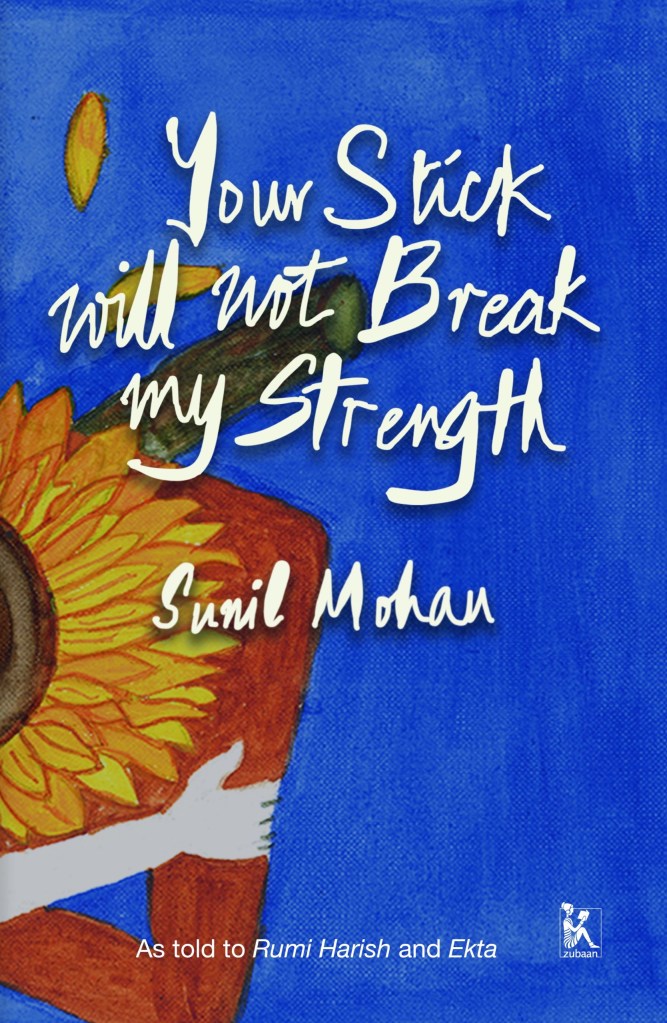
Your Stick Will Not Break My Strength

If Bernardine Evaristo’s Girl, Woman, Other functions as a bible on feminism and its intersectionality, then Sunil Mohan’s memoir is a meditation on masculinity, trans masculinity and their many intersections. Through his lived experiences, Sunil has dissected the concepts of masculinity and patriarchy and how in our societies, they become interchangeable, feeding into one another in deeply corrosive ways, and yet how societies and communities are built on a machinery that perpetuates their growth and favours the intermingling between them.

As a trans man, Sunil has brought to the fore the lived realities of being a trans individual in India whilst examining the same through the lens of societal prejudice and internalised conditioning. He has lamented on the absence of trans masculine narratives in public discourse and how even within the queer community and queer spaces, they remain invisible. Trans men continue to exist on the fringes of society despite their embrace of masculinity. Sunil also astutely questions if trans masculinity and cis masculinity have any commonality and whether masculinity itself can become intoxicating and addictive if one fails to interrogate the privileges it inadvertently bestows. 

Sunil shares his experiences of working in various NGOs throughout his career and how this has shaped his understanding of how these spaces operate. He candidly recounts instances where his unwavering demand for rights was labelled rebellious, within organisations meant to support him and his community. These experiences only strengthened his resolve to disrupt the hierarchies that plague NGOs working for the marginalised and often do more disservice than good due to the said hierarchy. He  simultaneously questions the cis heteronormative authority that governs trans upliftment spaces. Raahi, an organisation co-founded by Sunil, dedicated to the rights of marginalised genders and sexualities, was born out of such an angst and a necessity for people rehabilitating their own communities, one that is rooted in collective care rather than any of the institutionalised hierarchies.

Sunil Mohan has also confronted the oppressive nature of the Brahmanical system head on. He doesn’t shy away from enumerating the various ways in which this system has been synonymous with power and patriarchy. People get marginalised and deprived of their rights because of the casteist and capitalist ideas inherently embedded within this brahmanical system. Sunil’s emphatic voice through the book will be a reality check for all of us who belong to this system and continue to benefit from these structures without acknowledging the centuries of violence they have produced and continue to produce. Importantly, he urges readers to reflect on how one might detach from domination and meaningfully contribute to democratic, egalitarian futures.

Although Your Stick Will Not Break My Strength is a memoir, it defies the conventions of the genre. Sunil mentions his early days when he was a part of the Kerala Women’s cricket team, a time when the sport and its uniform offered temporary refuge from the alienation of his female-assigned body and the oppressive dominance of his father. He narrates his struggles with remarkable restraint, refusing to romanticise pain. He has used his decision to transition as a means to provide us with an invaluable insight into the mind of anyone who is thinking of transitioning. He also wonders about society’s fixation on penile bodies while keeping his transition in mind, and within the trans masculine community while also attempting to make everyone comprehend the infinite social and cultural supremacy and superiority that these penile bodies come to possess. 

Notably, Sunil chooses not to centre himself or his numerous achievements in his own memoir. Instead, he has used it as a platform to dismantle the potent patriarchal beliefs that promote casteism, queerphobia, transphobia and marginalisation. In fact, his nuanced exploration of hierarchies within the marginalised and the marginalisation within the marginalised is sensitive, intuitive and deeply intelligent. 

Your Stick Will Not Break My Strength is both an unflinching account of the perils plaguing the trans and trans masculine communities and a courageous introspection into their internal contradictions shaped by the dominion of patriarchy and the Brahmanical order. This book is a masterclass on humility, compassion, empathy, resilience and responsibility. Sunil has shown us how memoirs are to be written, how one can deconstruct the sociocultural mores and jingoistic politics through the power of one’s story. Finally, as a trans man, Sunil has written an autobiography (as narrated to Rumi Harish and Ekta) without making it a ‘trauma porn’ designed for the cis het gaze. He refuses victimhood and instead charts a path toward collective healing through friendship, community, silence, commitment, patience and perseverance. 

A must-read. Truly!

( Some quotes from the book: 

When we construct “our” spaces, why do we again recreate the same patriarchy and masculinity? Did we struggle to get out of the toxic masculine patriarchy that controls and puts boundaries on non-cis female bodies, only to recreate and reconstruct the same?

I often felt disturbed and uncomfortable about another issue: single-leader-driven movements.

When we were discussing masculinity, we realised that another masculine trait is to have the power to “correct” others through force and violence, to control and regulate everyone. This kind of power also pulls sexual violence into its ambit and is premised on “showing someone their place”.

Sometimes, I have felt that feudalism, monarchy, fundamentalism, fascism, religious superiority, sexual actions and reproduction, marriage, morality, the supposed superiority of the self, caste, race, blood, lineage, and food are all different expressions of “masculinity”.” )

~ JUST A GAY BOY. 👏👏
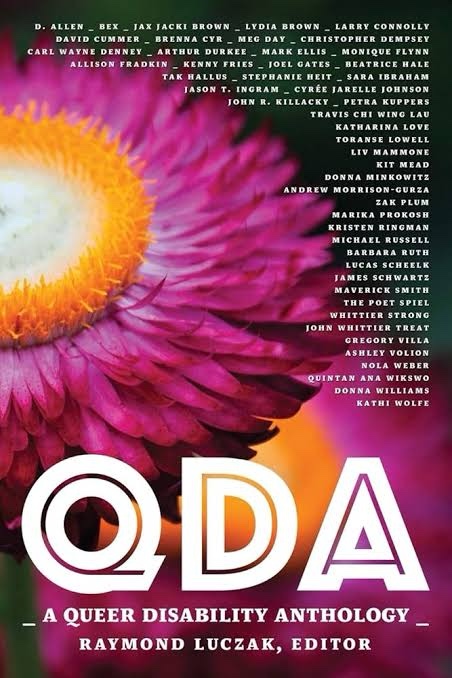
QDA – A Queer Disability Anthology 

July is Disability Pride Month and it was born out of the ‘Disability Rights Movement’ in America. It is built on intersectional identity politics and social justice. The core concept of Disability Pride is based on the tenet of rewriting the negative narratives and biases that frequently surround the concept of disability. 

QDA isn’t just another anthology, rather it stands out for its thoughtful and considerate approach to queer disability. Each of the 48 writers/contributors is queer and disabled. The writers are diverse in terms of their race, gender, sexuality, identity and disability type which includes physical disability, sensory disability, neurodivergence, psychiatric disability, chronic illness and even invisible disability. The book also is an amalgamation of different literary forms such as essays, short fiction, poems, comics and hybrid writing. 

QDA asserts itself as a commanding voice against ableism, dismantling the various ways in which it stigmatises and sidelines disabled people. The writings unapologetically express the anger and frustration felt by the writers and at the same time, they do not read as pleas for pity or assistance. The narratives are focussed on representation and resistance, where intersectionality isn’t just glossy platitude but a lived reality. The contributors have not flinched from exploring topics of sexuality, intimacy, eroticism and body politics. Out of the many writings, the ones that stood out to me were as follows. 

  1. No more Inspiration Porn: Introduction by Raymond Luczak rightfully introduces us to the necessity of a shame-free approach to disability, the blatant normalisation of ableism and the necessary nuance needed while discussing and implementing diversity. He makes a strong case against using disability as “inspiration porn” to fuel ableist goals. 
  2. Liv Mammone’s Advice to the Able-Bodied Poet entering a Disability Poetics Workshop, is a searing and scathing critique on the default ableist behaviours. It is a catalogue of reminders for engaging with a disabled person including checking one’s own misplaced courtesy and concern. A notable quote from the essay was, “The words disability, disorder, and disease aren’t synonymous”. 
  3. Kit Mead in Missing What You Never Had: Autistic and Queer, speaks for the autistic and queer who tend to become the invisible queers, as most queer spaces being too loud, prohibit many in the community from seeking them out and hence many of them feel their queerness to be fake as they are unable to assimilate with something that is a part of the cultural zeitgeist. 
  4. In Love Me, Love My Ostomy, Tak Hallus speaks about his struggles with Ulcerative Colitis and living with an ostomy; confronting the rejection he faces from within the gay community because his disability is not pretty, popular, obvious, and conventionally palatable. 
  5. Maverick Smith in Invisible Within the Ten Percent, laments the normalisation of ableism and audism, even in Pride celebrations.
  6. In The Ides of April, Barbara Ruth takes us through her everyday life as a disabled person while also living with her disabled partner, Nora. In the aftermath of a terrorist attack on the Boston Marathon, her attendant Aisha fears for her racial profiling and Barbara wonders if she has become a quintessential clicktivist.
  7. In Learning to Fall in Love, Katharina Love, decides to fall in love with herself first and accept her condition of Möbius Syndrome, her love for women and make peace with the fact that her mother’s love may always remain unattainable. 

And finally, the crown jewel of this anthology for me, was the brilliant, satirical piece by Lydia Brown called, How Not to Plan Disability Conferences (or, How to Be an Ableist Asswipe While Planning a Disability Conference). Lydia meticulously enumerates the ways in which ableist people use disability to virtue signal diversity to an ableist audience essentially and how ableism takes centre stage and disability and disabled individuals remain mere props for motivational tokenism and triumph voyeurism. This short essay is biting, belligerent and bold and it should make everyone scrutinise their own diversity agendas. 

Raymond Luczak, the editor of QDA, is a prolific Deaf gay writer, editor, poet, and filmmaker whose work often explores Deaf culture, disability, queerness, and identity. He has written/edited over 30 books, spanning poetry, fiction, memoir, anthologies, and plays. QDA reads like an act of defiance. It’s an anthem against the erasure of disability. It’s provocative and rambunctious; necessarily caustic yet relentlessly truthful, indulgent yet raw, but always delightfully queer. 

~ JUST A GAY BOY.

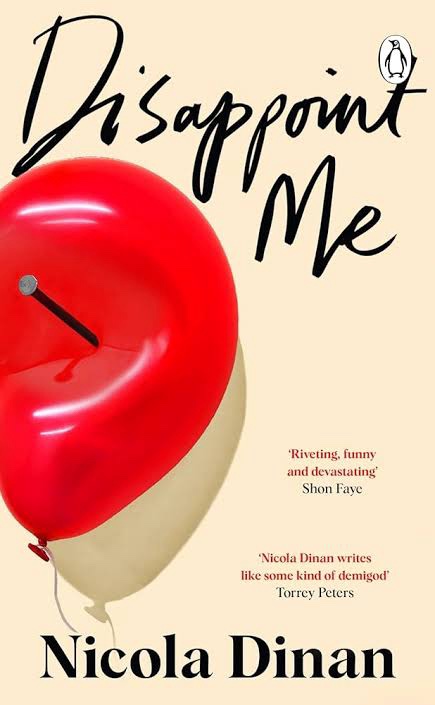
Disappoint Me

When Max, a thirty something trans woman wakes up in the hospital after falling down a flight of stairs at a New Year’s party, she decides to take charge of her life. She has split from her boyfriend, Arthur, and the modern dating scene in London makes her anxious, where every swipe feels like a psychological landmine. Nonetheless she decides to sample its myriad offerings by deciding to go on a date with Vincent. His Asian background reassures her a bit and she soon also realises that he is thoughtful, kind and caring. As they embark upon this journey together, Max understands the love Vincent harbours for her and his earnest commitment towards being in a relationship with a trans woman. He is considerate with his words and language and ready to accept his misgivings. However, he is hesitant about telling his conservative Chinese parents about Max. This irks Max and despite her best attempts at trying not to dwell on it, subconsciously it keeps gnawing at her. An innocuous thing soon becomes a bone of contention and every banter and argument starts to carry its essence implicitly. If that were not enough, and add to it current dating culture’s panic and emotional pandemonium, there’s a troubled past that Vincent harbours in secret, which is bound to disrupt his relationship with Max once she finds out. 

Disappoint Me is a meticulously clever and nuanced take on contemporary relationships and partnerships. Max and Vincent embody the quintessential emotionally dysregulated millennials as they navigate a relatively new and fragile relationship. Max is secure in her trans personhood but now, after being pair-bonded with Vincent she starts questioning everything about it, from its integrity to its malleability with a straight partner. Vincent on the other hand, seems to be unsure of his wholehearted attempts at traversing this queer relationship and is constantly wondering if he’s failing Max. Both Max and Vincent seem to be holding back their true selves during much of their communication for the irrational fear they feel in revealing their real personalities. Vincent straddles the romantic pressures of being the partner who is expected to introduce Max to his family, and the parental pressures of being the ideal son who will give his parents, their grandchildren. Max’s tryst with the complex emotions of self sabotage prevents her from being fully transparent with her feelings, instead, it leads to misunderstanding and misinterpretation. As she is settling into the ennui of having a new boyfriend post the breakup, doubts, revelations and reservations take her back into a state of restlessness and a previous, familiar world of disappointment.

While Max and Vincent come across as scattered, confused and a tad obsequious; some of the supporting characters bring the humour and spontaneity to the mundanity of a bougie existence in London. Max’s friend, Simone, is pragmatic about dealing with everyday situations but punishing when dealing with race and gender politics. The duality and dubiety of her personality comes forth when she gets accused of body shaming and unprofessional conduct. The standout character for me was Alex, whose unfading presence in the book heightens the narrative. She is assiduous and prudent about her decisions. Her quiet fortitude and restraint speak volumes in contrast to the emotional volatility around her. The author’s portrayal of most of her characters as sanctimonious, impetuous and solipsistic feels deliberate and conforming to the evolution of romance, camaraderie and cultural mores. 

Nicola Dinan, is a British-Malaysian novelist and essayist who has swiftly become a celebrated voice in contemporary literary fiction. Her debut novel, Bellies won the Polari First Book Prize and was a finalist for the Lambda Literary Award. Nicola’s writing is witty, perceptive, conspicuous, incisive and complex. She meanders and ruminates on the real life trans experience through Max’s character, hence presenting her as layered, multidimensional and deeply human. That’s the beauty and purpose of Dinan’s language which presents people with flaws, insecurities and imperfections, and yet who are committed to living and loving. Her prose doesn’t cater to the gaze of cisnormative audiences; it gives trans women the room to be everything: angry, confused, loved, lonely and free. Her writing feels untethered, grounded in emotional realism and disinterested in perfection. Queer relationships and trans representation are the necessity of the hour and Dinan’s narrative puts it at the forefront of the social milieu in all its glory. Disappoint Me is so frighteningly accurate that it’s certainly going to be a part of the literary zeitgeist and Nicola Dinan’s voice, agency and craft are here to stay. 

~ JUST A GAY BOY. 🏳️‍⚧️🏳️‍🌈

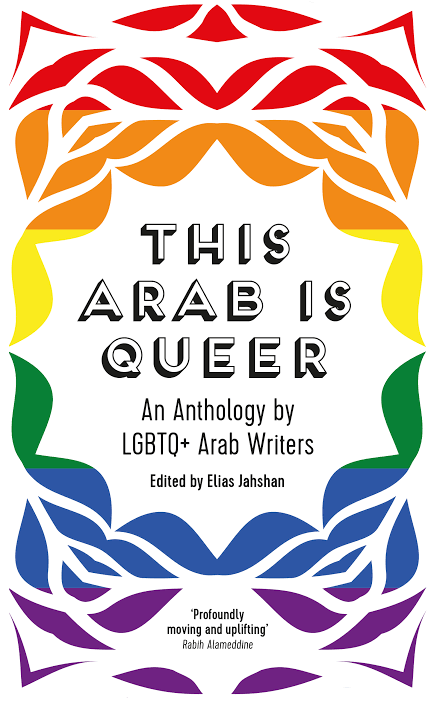
This Arab is Queer

I feel, I am blessed to have read this book, that too during pride month. The book, which the Time magazine hailed as ‘groundbreaking’, is indeed that. It’s also trailblazing in so many ways. It’s an anthology of 18 essays written by queer Arab writers from the SWANA region, edited by Elias Jahshan, a Palestinian Lebanese journalist living in Australia. Now when was the last time you heard or saw space for a queer arab? And that’s the power this book yields. By asking 18 brilliant writers to write their stories, their way, many through their lived experiences, this book embodies the queer arab narrative, emboldens the queer arab and makes their visibility and intersectionality a necessity. While the stories are rooted in the arab-ness and queerness, diaspora or otherwise, the feelings of dignity, safety, and belongingness remain universal.

The book begins with the feminist giant (that’s also her newsletter) Mona Eltahawy’s essay, The decade of saying all that I could not say. Mona, a survivor of sexual assault, has been a crusader against patriarchy. In her essay she astutely describes her reckoning of owning her sexuality, her bisexuality, and the umpteen nuances that make it so. Her liberation by shedding the shame surrounding sex, has been an act of rebellion. As a Muslim woman, her vehement uprising against heteronormativity has been her emancipation. Mona writes not just to inspire us but to instigate our power.

Though each essay is profound, I would like to highlight a few that stayed with me. Amrou Al-kadhi’s essay, You made me your Monster, is a fierce, defiant take on Arab-ness, Quran and his Islamic identity. His transgressions viewed as blasphemous in the Arab world are just his ways of honouring his own authentic existence. Through his flamboyant, glamorous drag persona, Glamrou; Amrou is reinforcing the power in provocation.

Danny Ramadan, in his essay, The Artist’s portrait of a marginalised man, talks about how his writing is always up for debate, whether it’s fiction or non fiction and if it’s based on his real life experiences, simply because he’s a queer Syrian man with a refugee experience. He poignantly points out people’s assumptions about him and his work since he’s a queer arab and also worries if his real life trauma is going to unknowingly and inadvertently slip into his every narrative.

Amna Ali’s essay, My intersectionality was my biggest bully, is an eye opening piece about her journey as a Black Queer Arab. Growing up as and being a visibly Black person in a racism predominant society like UAE, Amna had a tumultuous upbringing wherein she was taught to be shameful about her blackness. Later, she became shameful about her queerness too. This amalgamation of multiple identities made her distraught, caused her abuse and violence, until she learnt to make peace with them. Amna has since realised her intersectionality as a Somali-Yemeni-Emirati queer person, is her true strength and yet it continues to be an arduous journey.

Hasan Namir’s story, Dancing like Sherihan, is about his tryst with shame due to his queerness leading to his ingrained belief about him being a sinner. His strict Iraqi Muslim upbringing was always at odds despite him moving to Canada and experiencing queer freedom. His essay deftly portrays the internal struggles of a queer person as they oscillate between religious virtues, familial pressures, internalised shame and queer trauma. Hasan’s relationship with Tarn, leading to their marriage and later having a child is one that of queer joy. It makes you misty-eyed, it makes you hopeful and it feels like a collective queer victory.

Madian Al Jazerah’s moving piece, Then came Hope, is an ode to him as a displaced Palestinian Queer man who is constantly engaged in an embittered battle with shame whilst remaining hopeful that he would emerge triumphant. His trauma is multilayered as he navigates zionism and homophobia. His astute observations on the blatant yet veiled discrimination in the gay world is one that many of us can identify with. Madian has a beautiful bookstore in Amman which I had visited back in 2019. It’s now through this book that I know the connection between the bookstore and him and have been so ecstatic since. Queer joy indeed comes in so many forms and experiences. I would like to quote a couple of lines from his essay which I felt were earth shatteringly brilliant. Here goes;

I know from experience that you can put shame on the highest shelf and forget about it for a while, but bigots and bullies can smell it and it is always within their reach.

When we talk about love, the image of a heterosexual couple is accompanied by a thousand positive romantic associations. When we talk about gay men, the image is of two men having sex.’

Many or most of these stories are about shame and trauma, and that’s so true since those are the first feelings one experiences as a queer person. They also highlight the yearning for love, acceptance and inclusion. These stories are a lot tragic, which just goes on to show the commonality in their lived experiences as a queer arab. At the same time, the writers have done a commendable job in instilling faith and hope despite their grim realities of being a queer arab in a world so hostile towards them. This is a book that is going to jolt you out of your assumptions, privileges and entitlements. Burst that bubble, it’s time for a masterclass on humility and humanity.

Elias Jahshan has done beyond stellar work as an editor. Bringing together each of these supremely talented and gifted writers is not just groundbreaking but distinctively exceptional. Take a bow!

~ JUST A QUEER HUMAN. 🥹🥲

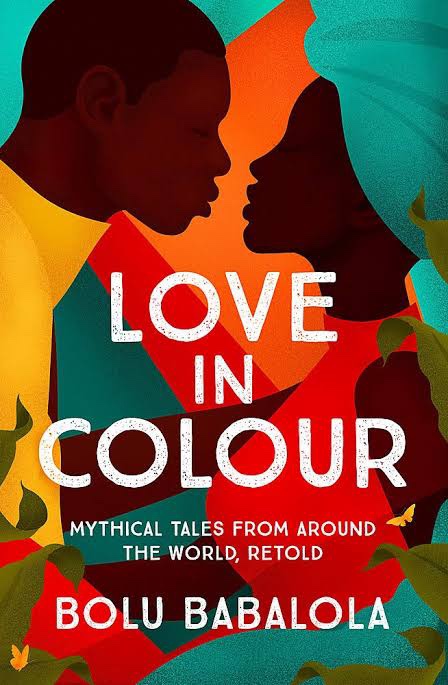
Love in Colour

Nigerian British author, Bolu Babalola’s book is a symphony orchestrated in shades of love and romance. It’s an anthology of thirteen short stories, ten retellings of myths from around the world, and three original stories. These retellings range from Ghana to Greece to Egypt to Lesotho. She has reimagined certain Yoruba and Chinese mythical stories and made it her own. The original mythical stories were essentially told from the male perspective and had tinges of patriarchy and misogyny. However, the genius that Bolu is, has flipped that very narrative, that very story and given the agency and power to the female characters. These stories are now intersectional, rooted in feminism and coloured ever so beautifully with the myriad hues of love and romance; which in reality, if you observe, love is a spectrum and there can never be one rigid definition of it.

Out of all these stories, a few stood out for me. The story of Scheherazade may seem like a movie but the emotions running through it are so pure, almost scared. One can’t help but get misty eyed at the end of it. The banter between the lovers is so real, so convivial. The tale of Attem is all about a woman’s agency and control over her desires and sexuality, and the mighty prowess that she exudes when she celebrates herself. Nefertiti’s story is about feminism that’s active, affirmative and audacious. It’s also about sexuality that’s languid, undefined yet completely your own. The story of Naleli is empowering in so many ways as she comes to terms with her medical condition, her self acceptance of the same and basking in its glory whilst navigating teenage angst and politics. The breakup scene in Tiara’s story is breathtakingly heartbreaking and intimate. In fact the distance that creeps up between them during the conversation is deafening but deftly portrayed. The way Bolu has crafted the nitty-gritty of a modern day relationship involving long distance, jealousy and insecurity is ingenious to say the least. Lastly, Orin’s tale is fun, flirty and humorous. The scene in the bar, I wish I were Orin!

One doesn’t need to know or be familiar with the myths. The author at no point makes the reader feel abandoned for not knowing them. She in fact takes us on this lyrical, poetic journey of love through her writing. This book is lush, the writing is stellar. Bolu has achieved the indomitable feat of marrying ancestry with modernism. In fact, this is one of those very few books where the language is dripping with love, the emotions tug at your heart and the characters make you laugh and cry with them. It’s not a cliché, if I will tell you that this book will want you to fall in love and if you are already in love with a wonderful partner/s, then you would want to hug them tightly as you relish the book.

Take a bow, Bolu Babalola!

~ JUST A GAY BOY. 🫶

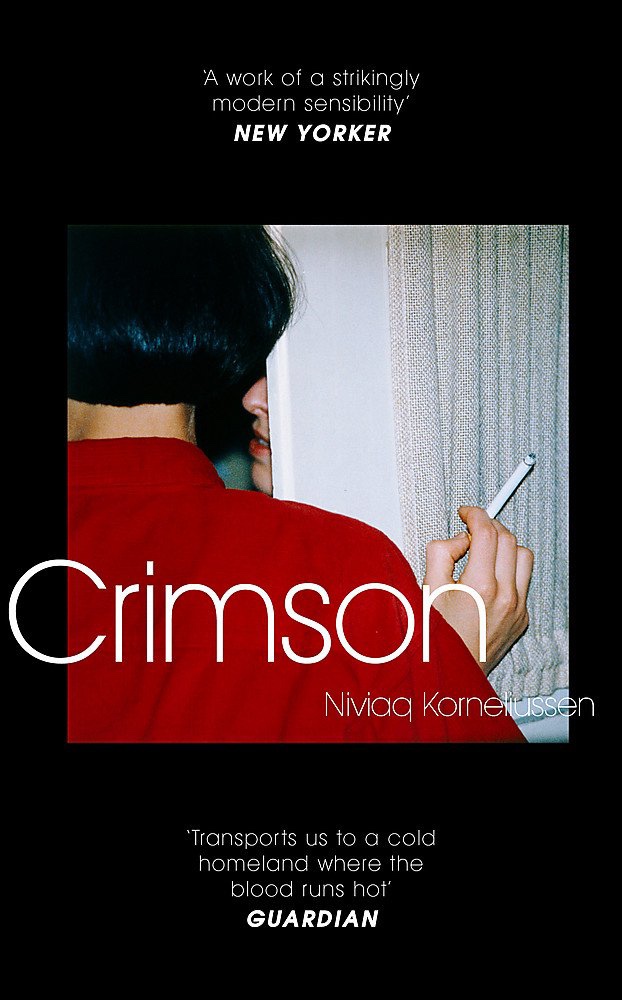
Crimson by Niviaq Korneliussen

📍Greenland 🇬🇱

First published in Greenlandic in 2014 as Homo Sapienne, the book was then translated by the author into Danish, a version that went on to receive Nordic acclaim, being nominated for the Nordic Council’s Literature Prize. In 2018, the UK translation, Crimson (released as Last Night in Nuuk in the US in 2019) was published, converted from Danish by Anna Halager. Events unfold at a startling pace in this book, told through the lives and stories of its five protagonists. Fia, has no love for her longtime boyfriend, and is now repulsed by his touch and presence. She breaks up with him, only to fall head over heels for Sara. Inuk, Fia’s brother, is a closeted gay guy and is in a secret relationship with a prominent personality from Nuuk. Arnaq, Inuk’s best friend and who is temporarily hosting Fia at her apartment, has unresolved childhood traumas which has lead her to alcoholism and a self destructive “party” lifestyle. She is smitten with Ivik. Ivik, who’s story is the most heartwarming and queer affirming, is struggling with the label of being a lesbian and sexual intimacy with girlfriend Sara; later realises his gender dysphoria. Sara, who actually makes Ivik realise the above, is grappling with loss of the relationship, the birth of her niece, and her simmering attraction for Fia.

The book is an exploration of various nuances of gender and sexuality. The author, a queer woman and native Greenlander herself, asserts that queerness cannot be explained by a stringent and linear definition. Queer individuals define it for themselves. Through it’s myriad characters, Niviaq, makes space for an unbridled queer narrative that’s messy, flawed, imperfect, inconsistent and even inconsequential at times. Their internal dialogues and personal struggles, conveyed effortlessly by the author, is reminiscent of every queer person’s journey, irrespective of their country of origin. The book also gives us a glimpse into Greenland (a former Danish colony which became self governing in 2009 after a referendum), it’s culture and life in its capital city, Nuuk. I feel, the original in Greenlandic, was way ahead of its time, since queer discourses and identities have become and are becoming mainstream only since the last couple of years. Bravo, Niviaq!

~ JUST A GAY BOY. 🥹

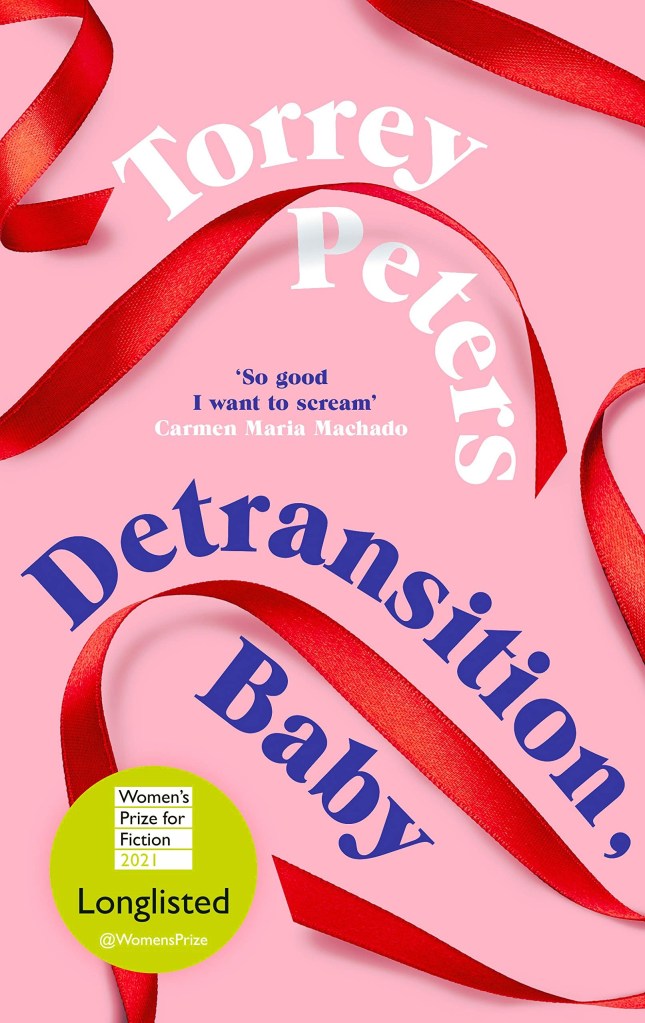
Detransition, Baby

This book, longlisted for the Women’s Prize for Fiction, is about trans feminine culture. The story navigates between it’s three principle characters; Reese, Amy/Ames and Katrina. Reese is a trans woman who is forever walking a fine line of societal perception of her trans-ness and her own reality of being a woman. She is desperately wanting to be a mother however her inherent resentment and angst makes her sabotage all the good choices and relationships. It makes her seek transphobic and misogynistic men for sexual gratification who leave her depleted and consumed.

Amy is a trans woman who later detransitions to Ames, due to complicated reasons. Amy and Reese were in a romantic relationship previously. However, Ames now is involved with Katrina who is a cis woman and has got her pregnant. This circumstance and each of the characters’ insecurities forces the three of them to consider the possibility of all three parenting the unborn child.

This book is a no nonsense yet vulnerable storytelling of trans lives. The characters are damaged and dysfunctional and the author doesn’t try to sugarcoat or patronise it. It’s a believably chaotic and nuanced exploration of modern relationships and parenting. The author deftly handles issues of gender, detransitioning, heteronormativity and queer culture with sensitivity and impartiality.

Through the book, Torrey Peters, brings to life an experience of human relations via trans and cis lived truths and bourgeois realities. Torrey who is a trans woman herself, presents intersectionality as a layered subtext throughout the book. This leaves us, as a reader, questioning a lot of our assumptions and prejudices.

In a word, Triumphant!

~ JUST A GAY BOY. 🥳

The Vanishing Half by Brit Bennett

This is a historical fiction on the American history of passing. The term ‘passing’ has been used primarily in the United States to describe a person of color or of multiracial ancestry who assimilated into the white majority to escape the legal and social conventions of racial segregation and discrimination ( source – Wikipedia). The story describes the lives of the light-skinned African American Vignes twins Stella and Desiree from the 1950s to the 1990s, wherein one twin lives life as a black woman in a small nondescript town of Mallard with her mother while the other passes as white and chooses to live an uppity life built on lies and deceit. The non linear narrative also weaves in the stories of their daughters, Jude and Kennedy, who live lives as a black and white woman respectively until their chance encounter, whereupon their lives, racial identities, beliefs collide and consume their existence. Jude and Desiree’s longing to unite the family is a juxtaposition to the denial and unwillingness of Stella and Kennedy. As their worlds clash and coincide, the women must now decide and redefine their racial histories within their current existence.

The brilliance of this book is indescribable. Brit Bennett holds a master class with this poignant and subtle rendition on race, gender, economic inequality and privilege. I particularly loved the character of Reese, a trans man going through gender affirming surgery. The relationship between Reese and Jude is tender and intimate as they discover love, respect and kindness for each other.

The book which has won Goodreads choice award and long listed for National book award is a compassionate telling of onerous issues. The writing has a subtext of poetic melancholy. The words of Brit Bennett are so powerful, they can echo your hidden fears and prejudices and at times subsume differences.

“Gratitude only emphasized the depth of your lack, so she tried to hide it.”

“You could drown in two inches of water. Maybe grief was the same.”

Ingenious!

~ JUST A GAY BOY. 🥲