Crafting the Word: Writings from Manipur

📍 Manipur

The book is an anthology of short stories, essays and poems, many of which are translations from the Manipuri into English, all written and translated by women writers from Manipur; edited and put together by Imphal based independent journalist, writer and translator, Thingnam Anjulika Samom. Many prominent Manipuri writers feature in the book from the yesteryears to the current. Particularly noteworthy amongst them was Binodini, who was a Manipuri novelist, essayist, playwright, screenwriter and lyricist. Her collection of short stories in 1965 was the first by a Manipuri woman. Her story, Girls’ Hostel Sri Bhavana; translated by L. Somi Roy, evokes a sense of nostalgia and grips us with the tenderness of love and belonging.

The book begins with an elaborate and nuanced essay, The Journey of Women’s Writing in Manipuri Literature, by Nahakpam Aruna, on the various Manipuri women writers and their contributions to the craft and society at large. The writings in the book form a social discourse on the position of women and women’s rights in Manipur. Patriarchy, misogyny, abuse, gender and caste based discrimination, menstruation form recurring topics in the various stories and poems. Though every story is profound, three of them caught my attention. These are: 1) Sati interview by Ningobam Sanatombi, translated by Kundo Yumnam, which takes a very poignant and satirical look on women’s rights in Hindu mythology; 2) Nightmare by Nee Devi, translated by Soibam Haripriya, is a tragic lesbian love story wherein the lesbian lovers, Somo and Leishna, are at the receiving end of their respective homophobic and abusive families; 3) The Defeat by Ningombam Surma, translated by Bobo Khuraijam, which, through the story of a married couple, Bipin and Nalini, brings forth the hidden chauvinism present in the often revered so-called feminist men.

The writings are simple and the language lucid, but they pack a punch. The messages that they convey can keep echoing long after you have finished the book. Manipur is currently in a state of utmost unrest, turmoil and despair. I hold this book close to my heart whilst thinking about all the people there, especially the women and these brilliant women writers. May peace and stability reign.

~ JUST A GAY BOY. 🫥
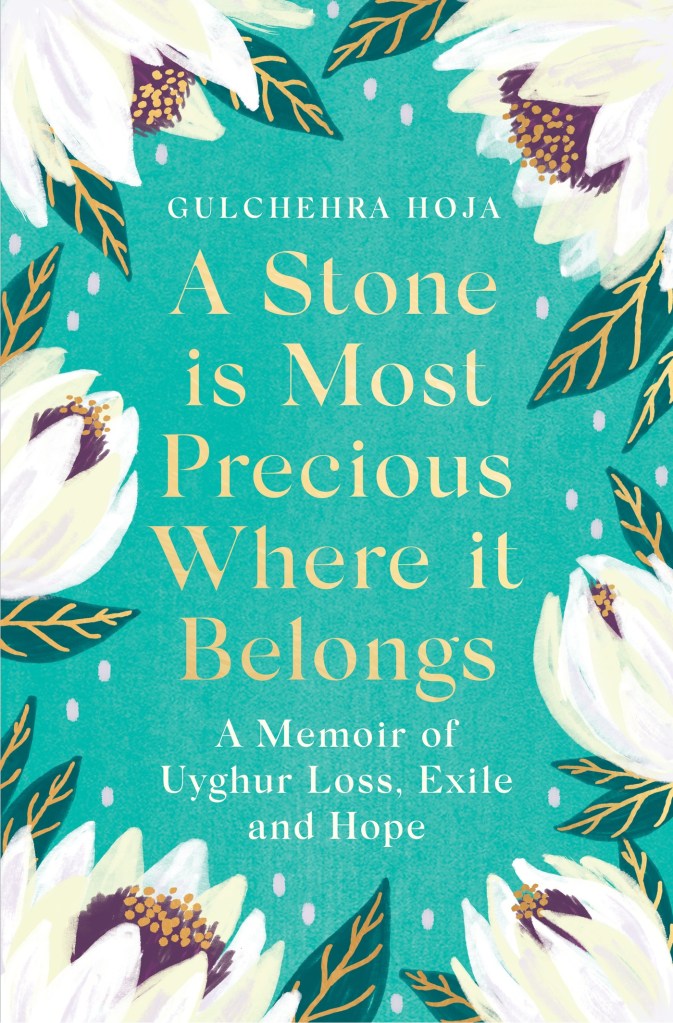
A stone is most precious where it belongs

This book is a compelling narrative on Uyghurs; their life, culture, geography and the strife unleashed upon them by the Chinese government or the CCP (Chinese Communist Party). The Uyghurs are a Turkic ethnic group from the autonomous region of Northwest China known as East Turkestan, which has been renamed as Xinjiang by the CCP. Modern Uyghurs are primarily Muslims and they are the second largest predominantly Muslim ethnicity in China after the Hui. The modern Uyghur language is classified under the Turkic language family and has an Arabic script. Gulchehra Hoja, author of this book, has written a memoir and through that, has encapsulated the trials and tribulations of her people and the ongoing modern day genocide.

Hoja, born and raised in Ürümchi, the capital of the then erstwhile East Turkestan, comes from a lineage of musicians and artists. Her family was known for their contributions towards the Uyghurs’ cultural landscape, and she had a very liberal upbringing. Gulchehra, upon completing her studies was chosen to be the face of Xinjiang Television’s children’s show. Whilst the show initially started off as a celebration of Uyghur culture and traditions, it gradually morphed into a CCP propaganda piece. Soon she realised how little to no control she had in the proceedings of the show and that, that she was becoming a puppet at the hands of the Han authorities running the channel. Now, the Chinese government had always wanted complete control of the Uyghur region and had started asserting their supremacy by sending Han Chinese civilians to live and work there. Chinese language was forcibly introduced in schools and other governmental establishments. Uyghur civilians were finding it more and more difficult to be themselves or practice their faith. The more Gulchehra understood the threats to her freedom and her Uyghur people, the more uncomfortable she got. One fine day, when she got an opportunity to go to Europe, she learnt starker truths and gory details of the Chinese government in the programmed oppression of the Uyghur, thanks to the free internet available in Europe. This prompted her to make a life changing decision to go America and work for Radio Free Asia (RFA), which simultaneously meant that, she could never come back to her land and her family.

As a journalist at RFA, Hoja gave the Uyghurs a voice that could be heard all across the globe. She brought to light the brutality and racial killing perpetuated by the CCP while promoting their ethnocentric agenda. This bold and fearless reporting only meant trouble for her family back home. She was soon branded as a separatist/ terrorist and her immediate and extended family were imprisoned and treated in the most inhuman way possible. Gulchehra battled immeasurable feelings of guilt and sorrow, but she continued her reporting nonetheless. Her personal life was a complete mess too, with an estranged husband and a budding love interest. However, Gulchehra remained committed to her Uyghur people, never lost focus of her responsibility towards them and through this extremely difficult journey, she portrayed her resilience, compassion and bravado.

What is happening to Uyghurs, is a genocide. The Islamophobia that is rampantly being broadcasted by the CCP is dangerous. There’s genocide happening of the Palestinians by apartheid Israel as well. The world, somehow has turned a blind eye to these genocides and various such Islamophobic propagandas. As I read this book, a chill ran down my spine. The measures taken by the CCP for this ethnic cleansing include detention camps (euphemised as vocational skills education training centers), forced sterilisation, disappearance of dissenting civilians, torture, violation of privacy, hi-tech mass surveillance, religious persecution, unreasonable incarcerations, suppression of free press. Now, only an imbecile or a fanatic should be able to not draw parallels to the situation here at home. Maybe there aren’t any detention camps or forced sterilisations yet, but Islamophobic rhetoric has become mainstream. And if you broaden the scope and look beyond the lens of any kind of phobia, you shall note that this is signalling of a rise in autocracy and complete totalitarianism. Let’s not shun an Uyghur or a Palestine as a localised geopolitical issue. The fanaticism used in this oppression has worldwide ramifications and replications. After the Holocaust, the world vowed that it would never ever allow another humanitarian catastrophe. Yet in 2023, we are not only seeing such events and genocides happening but also becoming widespread. How many more of such massacres would it take for the world, for us to get out of our ignorant slumber?

~ JUST A GAY BOY. 🥺

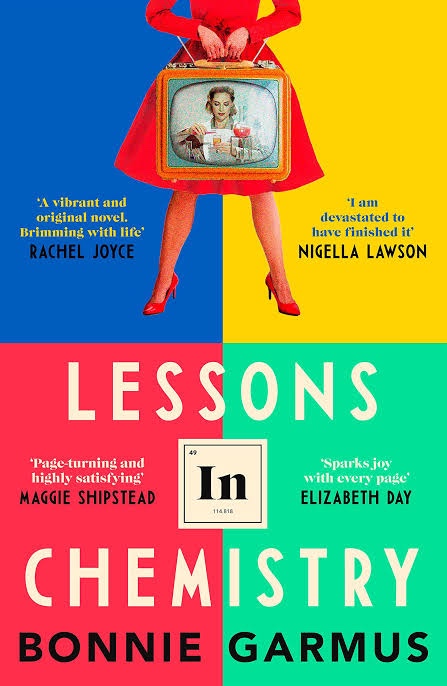
Lessons in chemistry

When was the last time you were taught lessons in feminism that was easy breezy, devoid of angst and presented with hilarity? I don’t think ever. It’s rather unfortunate that feminism has to be schooled. Also, this isn’t any kind of shade on all those glorious women who have taught feminism with an angry diatribe. Because clearly the world hasn’t been kind to women since time immemorial. And we get a sneak peak into this unjust scheme of things through the book’s main protagonist Elizabeth Zott. The story is about this fierce woman scientist who is never taken seriously because of her gender. Set in the 1950s America, the book takes a hard look at the subordinate and often demeaning outlook of the society towards women then. Elizabeth is passionate about chemistry and struggles to make herself seen in the overwhelming and dismissive world of men. Adversities and inappropriate men force her to switch her career quite reluctantly. From a scientist she soon becomes a television cooking show host. Despite her rather unconventional approach to anchoring, she becomes very popular and women all across America can’t seem to get enough of her show. Because hers is a first show of its kind wherein women are tutored to think they matter; they are important and they are equal. All this whilst cooking up a storm and diligently doling out chemical equations and reactions.

To say this book is unbridled joy would be an understatement. Elizabeth Zott defies all the societal conventions and expectations and still remains an embodiment of womanhood. Her bold choices which if you examine carefully, were just about what mattered to her and what was convenient; can actually trigger the chauvinists and misogynists. Her decision to have a child without being married, to have a live-in partner, to be an atheist, to question authority are just some amongst many reasons which make Elizabeth Zott unique and her own person. She epitomises freedom, equality, independence, intelligence and her actions can inspire women all across the globe to stand up for themselves, to speak up for other women, and to support one other in solidarity.

Bonnie Garmus, the ingenious author and who’s debut book this is, gives us a taut and crisp story that never falters, never slackens its pace and delves deep into feminism while serving a healthy dose of uncanny, straight-faced humour. The author deftly handles complicated and emotional topics of sexual abuse, rape, patriarchy, and childhood trauma. Garmus gives us this iconic character of Elizabeth Zott, who strives for rationality every step of the way. Not just Elizabeth, the book is peppered with various other notable characters. Be it Mad Zott, her daughter who questions the necessity for the hoopla surrounding her status as ‘a child born out of wedlock’; and Harriet the neighbour who forges a rather quirky friendship with Elizabeth and later the same relationship turns out to be a force of strength for both of them. But the most delightful character of them all, has to be the dog, Six Thirty. Bonnie Garmus humanises the dog giving it the most cheeky one liners.

Lessons in chemistry is one of those rare books that will shock you one moment and make you guffaw the next. The fact that women are equal and should be treated with respect, irrespective of their status and stature shouldn’t be taught, rather it should be a no brainer. But here we are, even in 2023, subjecting them to inequality, disrespect and trauma. This book from Garmus is a necessity, rather a compulsory read for everyone to know these invaluable lessons in humanity.

(Psst..can’t wait for Brie Larson as Elizabeth Zott!)

~ JUST A GAY BOY. 📚 🧪

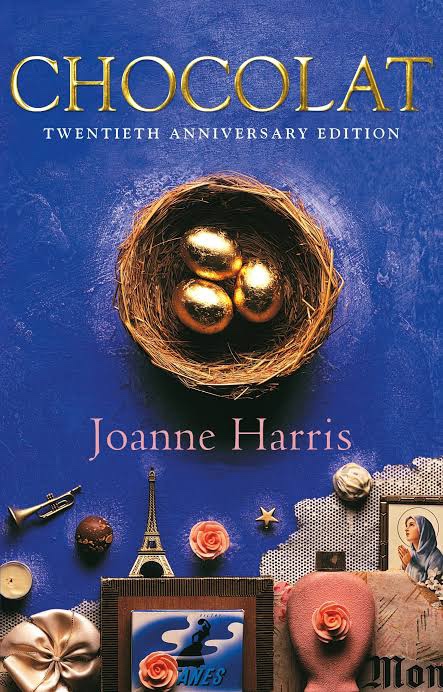
Chocolat

This book by the very acclaimed author, Joanne Harris, left me with quite a bitter aftertaste. The story is about a single mother and chocolatier, Vianne Rocher, who arrives in the quaint French village of Lansquenet-sous-Tannes at the beginning of Lent with her young daughter Anouk. She sets up her chocolaterie, La Céleste Praline, just opposite the village church. Her flamboyance and audacity irks the village priest Francis Reynaud, who takes it upon himself to boycott her business and also sees to it that he publicly denounces her in front of his congregation. However, Vianne goes about her day despite the seething disapprovals from Reynaud and his loyal cronies. In fact, she manages to charm many of the villagers through her irresistible confectioneries and gains their unflinching support, admiration and confidence. This further infuriates Reynaud to the point of psychosis and paranoia leading to spiteful actions ultimately causing his own tomfoolery.

The plot does sound tempting as does the evocative prose on chocolate and decadent French confectionery. However, Joanne Harris gets a little too carried away and forgets trying to reign in her condemnation of the church. Her forever babble on the proclivities of the church and its believers is extremely one dimensional. It almost seems as if the author is pushing forward her beliefs onto the reader. The characterisation of the priest remains a caricature. The various other characters in the book are poorly etched with uninteresting plot lines. For that matter, Vianne’s character itself appears to be quite implausible. Despite a very unconventional and irrational childhood, tethered on anxiety and dubiety, and now facing the villagers’ ire and reproach; she seems to appear overtly secure, unaffected and very mundane. Though the book talks about patriarchy, sexism and gender based violence, none of it is dealt with the nuance and sensitivity that it deserves. If anything, it’s a very kindergarten approach at that. Yes, the language in the book is rich and exquisite. Although, I wish that the author had tempered her story to perfection as Vianne does her des chocolats.

This chocolat is a Cadbury presented as a La Maison du Chocolat. Eat at your own risk.

~ JUST A GAY BOY. 🍫

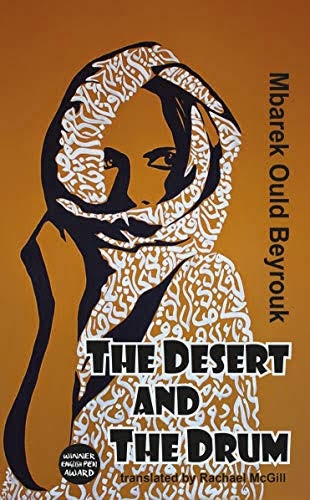
The Desert and the Drum

📍 Mauritania 🇲🇷

Mauritania is a sovereign country in Northwest Africa. It is the 11th-largest country in Africa, and 90% of its territory is situated in the Sahara. It achieved independence in 1960 from French colonialism but has since experienced recurrent coups and periods of military dictatorship. Despite an abundance of natural resources, Mauritania remains poor. It was the last country in the world to abolish slavery, in 1981, and criminalised it only in 2007. (Source Wikipedia)

This book is the first novel ever to be translated into English from Mauritania. It was originally published in French in 2015 and translated by Rachael McGill in 2018. The book won the Ahmadou Kourouma Prize in 2016 (the prize was established in 2004 in honour of the Ivorian writer Ahmadou Kourouma, and it is awarded annually to works of fiction and nonfiction concerning Black Africa).

The story traces the journey of a young Bedouin girl, Rayhana, who has run away from her tribe and is on a mission to find the thing that has been snatched from her with force and deceit. While running away she has taken the sacred, symbolic and pious drum, rezzam, that belongs to her tribe and represents their pride and honour. She embarks on this perilous journey through the unforgiving Sahara and reaches a small town, Atar, and finally to the capital, Nouakchott. During this sojourn, she encounters various people who help her in their own ways, in achieving her mission, and also protect her from her tribe who are in search of her to retrieve their prized drum. Standout characters include that of the slave girl, Mbarka, who has now become a sex worker; and the very colourful and jovial queer guy, Hama.

The book is a raw, unapologetic and uncomfortable narrative of Rayhana’s turmoil. The chapters oscillate between the past and the present as does Rayhana’s thoughts from her secure yet stifling existence in her tribe, to the unknown and unwelcoming mores of the city life. She is torn about the fact that, she still cradles the belongingness she feels towards her tribe whilst despising the carefree and untethered cultural values of the city. She still remains a prisoner of her unpropitious upbringing, though freedom is now within her reach.

The author, Mbarek Ould Beyrouk, originally from Atar, is a journalist, who has written four books and has founded the country’s first ever independent newspaper. He gives an honest portrayal of the Bedouin life and their customs, and has kept the story rooted in Mauritanian ethos. The issues of patriarchy, misogyny, gender based violence, caste based oppression aren’t exclusive to Mauritania. Let’s get off our high horse, shed our condescension and pomposity, and examine the issues closely. They are as much prevalent behind the façades of glitzy high rises and modern lifestyles as they are in the humbling desert.

~ JUST A GAY BOY. 🥹

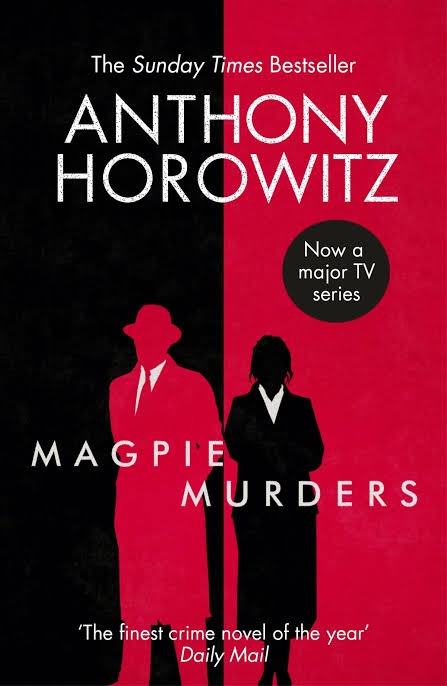
Magpie Murders

This book is so indescribably clever. It’s a book within a book, mystery within a mystery. The plot is incredibly intelligent, so much so that, trying to give a synopsis of it, would be a complete killjoy and a spoiler. After a really long time, I have come across a murder mystery that’s taut, sharp, compelling and a page turner from the word go. The narrative is atmospheric whilst the attention to detail is phenomenal. The language used is rich, articulate and eloquent. And for once, there isn’t a damaged and dysfunctional woman as a protagonist here. Thank you, Anthony Horowitz, for bringing the joy back to reading thrillers and for keeping it so unpredictable. Also, can’t thank Read a Kitaab Bookclub enough for picking this gem as their December Book of the Month. Now, I can’t wait to read the next one in the series; Moonflower Murders.

Must, must read.

~ JUST A GAY BOY. 👏

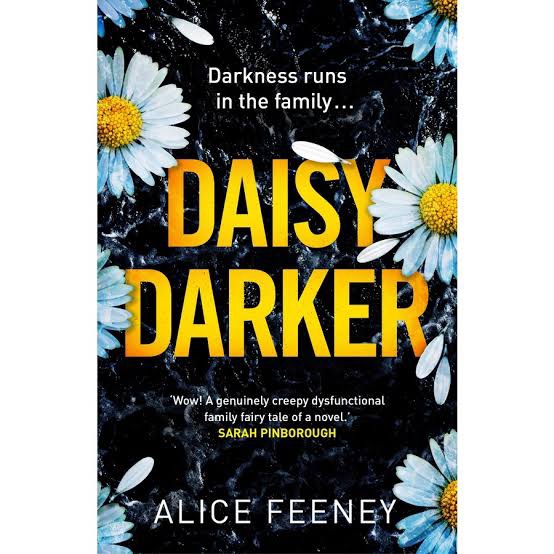
Daisy Darker

Daisy Darker, the protagonist, is born with a broken heart. And now, she has come over to her Nana’s house, Seaglass, for her eightieth birthday which also doubles up as a family reunion. Her estranged family, which includes her parents who are divorced, her two elder sisters and her niece all land up at Seaglass one after another. Seaglass is an old house on the Cornish coast, on an isolated island at the bottom of a cliff that’s only accessible at low tide. As the night progresses, Nana lays out her feast and reads out her will, which displeases all of them. Soon, someone is found dead. This is followed by more murders with every passing hour. Nobody is able to leave the house till sunrise because of the high tide. Everyone who hasn’t been murdered is frantically trying to save themselves whilst also trying to find out the killer.

The above plot does seem very intriguing and has been written in a gripping manner. However the climax is a major letdown. Honestly it’s laughable and extremely frustrating. The explanation for all the killings is so simplistic and so juvenile that you end up feeling exasperated for the author having wasted your time. How is this book even a best-seller? Who are these people who are liking this idiotic mystery?

Total trash! Avoid.

~ JUST A GAY BOY. 🤬

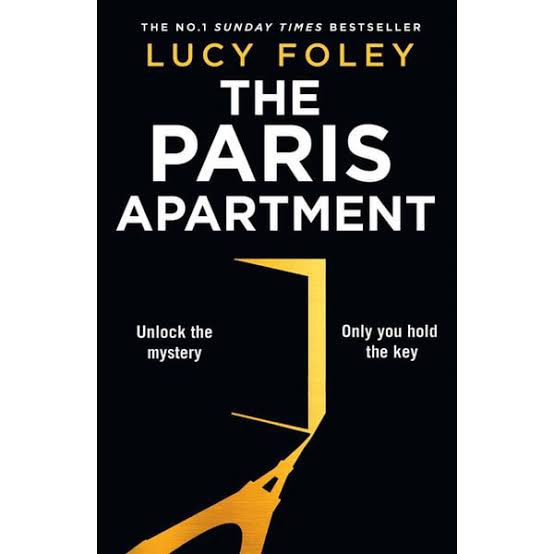
The Paris Apartment

Lucy Foley’s latest is another one of her slow burn thrillers that keeps you hooked till the last page. This time the story is set in the stylishly seductive city of Paris. The main protagonist, Jess, has run away from her dysfunctional and troubled life back in London. She has come to Paris to be with her brother Ben, who has always maintained a distance from her. She lands in Ben’s uber luxurious apartment located in the most upscale neighbourhood of Paris, only to find him missing. As time passes by, Jess begins to worry and starts searching for her brother with whatever little clues she’s able to decipher. She finds herself in the midst of extremely unfriendly and brusque neighbours who vehemently refuse to divulge any details regarding him. She begins to wonder if Ben is even alive and suspects each one of the residents of this Paris apartment, responsible for his disappearance.

The story has all the requisite elements, making it an edge of the seat thriller. The narrative is told from each of the characters’ viewpoint. The setting is atmospheric and deliberately dark. Paris becomes this silent hum in the background and its mysterious beauty etched ever so beautifully in Lucy Foley’s writing. The climax, just like her previous book, The Guest List, did make me wanting for more; but nonetheless, it’s definitely worth the read.

~ JUST A GAY BOY. 🫣

Kurdish Women’s Stories

📍 Kurdistan

Kurdistan is a roughly defined geo-cultural territory in Western Asia wherein the Kurds form a prominent majority population. It comprises the following four regions: southeastern Türkiye (Northern Kurdistan), northern Iraq ( Southern Kurdistan), northwestern Iran (Eastern Kurdistan), and northern Syria (Western Kurdistan). Certain Kurdish nationalist organisations seek to create an independent nation state while others campaign for greater autonomy within the existing national boundaries. Iraqi Kurdistan first gained autonomous status in a 1970 agreement with the Iraqi government, and its status was reconfirmed as the autonomous Kurdistan region within the federal Iraqi republic in 2005. There is also a Kurdistan Province in Iran but it is not self ruled. Kurds fighting in the Syrian Civil War were able to take control of large sections of northern Syria and establish self governing regions in an Autonomous Administration of North and East Syria (Rojava). [ source: Wikipedia]

This book is an anthology of 25 stories, told by Kurdish women themselves. The book spans five generations and starts with the oldest woman and ends with the youngest. There are voices from each of the four regions of Kurdistan. The book is a nuanced, poignant, first person account of the lives of Kurdish women, a nation without a state; fighting authoritarian governments, patriarchy, discrimination and gender based violence. But more importantly, it’s an inspiring and reverberating narration of the resilience, courage, determination of these fierce and independent Kurdish women. These valiant women wore their Kurdish patriotism and pride on their sleeve and fought for their region through art, poetry, education, whilst braving grief due to death and separation from their loved ones. None of the women, in these stories portray themselves as victims, despite the adverse circumstances; instead only speak about their outstanding valorous actions in an understated and pragmatic way. The stories edited and put together by Houzan Mahmoud, is a testament to the brave, crucial and exceptional women revolutionists and crusaders who are often forgotten by the media and the world at large.

~ JUST A GAY BOY. 👏

The Bride of Amman

📍Jordan 🇯🇴

This debut novel by the Jordanian writer, Fadi Zaghmout, originally written in Arabic (Aroos Amman), later translated into English by Ruth Ahmedzai Kemp, caused quite a stir when it was released. Understandably so, considering the bold and controversial issues it explores, which are often deemed taboo and blasphemous in the traditional Jordanian society. The story is told through five characters of Leila, Salma, Rana, Hayat and Ali; all living in the capital city, Amman. Through these stories, the author tackles the persistent and pertinent issues of patriarchy, misogyny, chauvinism, incest, rape, sexual abuse, homophobia, widely prevalent in the conservative Arab community. An Arab woman’s worth is equated with her ability to get married at the right age, be a dazzling bride and bear children, especially sons. Her career and education are just an ornament. Zaghmout repeatedly asserts how women have no authority or agency over their own lives and bodies, and their choices are subject to male dominance and approval. Particularly disturbing story is that of Hayat, who is raped and sexually abused by her own father; later chooses promiscuity with multiple married men to escape this horrid truth.

Zaghmout’s narrative is a poignant reflection of contemporary Amman, however, I felt, that at many instances, he has tried to infantilise the grave problems. Hayat, as a rape survivor, is shown to forgive her father for his unpardonable crime. Her choice of being promiscuous seems to be very flippant and it seems as the only way a woman can get over her sexual abuse past. Ali, a closeted Iraqi gay man, gets married to Leila, has a child, and continues to have gay sexual encounters on the sly. Leila later discovers his homosexuality and upon confrontation, chooses to accept her life as his wife, devoid of sex, delves steadfast into her career and turns a blind eye to his indiscretions. In the book, the men are forever exonerated for their crimes and wrongdoings, by the women. There’s always some “logical” reasoning to the way the men have behaved. This almost invisible, subtextual chauvinism can’t be ignored. Also, other than Salma’s story, the others seem to have the proverbial happy ending. This smacks of immature writing.

Majority of Indian gay men remain closeted and continue to have heterosexual marriages and children under the pretext of parental pressure and culture. They also have multiple gay liaisons after marriage with gay abandon (no pun intended) and literally no remorse. Are the Indian women too, like Leila, choosing to not see the obvious because of the pressure to stay married and the stigma of divorce? Or are they truly oblivious?

Though the book is about Ammani women, one can’t miss the fact, how close this hits home. Indian women, are still governed by the cis men around them, and it remains an ongoing struggle for them to establish their equality and agency.

~ JUST A GAY MAN. 🥺