Everything Is Fine Here

📍 Uganda 🇺🇬 

Eighteen-year-old Aine Kamara is excited to meet her elder sister Mbabazi at their university, where Mbabazi, a gynecologist practising in Kampala, has been invited as a guest speaker. Aine is aware that her sister is a lesbian and is pleasantly surprised when she arrives with her partner Achen to deliver the guest lecture. Aine and Achen hit it off instantly, and soon Achen assumes the role of a confidante. Mbabazi and Achen try their best to keep their relationship discreet from the prying eyes of a very homophobic and biblically grounded society, despite the challenges it brings. Aine is juggling her passion for ornithology and her yearning to work in a sanctuary with her upcoming university exams and the overbearing aspirations of her parents regarding her future educational prospects. Unfortunately, a tragedy upends their lives, and a seemingly benevolent decision taken by Aine during this turbulent time fractures her relationship with her sister and even threatens the love between Mbabazi and Achen.

Everything Is Fine Here does come across as Aine’s coming-of-age story, but Mbabazi and her queer relationship feature prominently in the narrative. In fact, it has been a deliberate attempt by the author to narrate a queer relationship through the eyes of a straight ally. Aine becomes privy to the nuances of queer love and what it takes to be queer and have a relationship in a country that punishes homosexuality. As an ally, Aine embodies the role and offers her unwavering support to her sister and her partner. She has a falling out with her devout Christian mother over Mbabazi’s relationship, which prompts her to leave her house in Bigodi and travel to Kampala. Through these trials and tribulations, Aine comes into her own, understands her tenacity, acknowledges her overwhelming grief, and affirms her own sexual awakening.

This is a book that celebrates relationships; whether it is Aine and Mbabazi processing their loss together by honouring and remembering the person lost, or Mbabazi and Achen working together to value their commitment and love by understanding and accepting each other’s differences, or Aine and Achen discovering this new bond that helps them confide without judgement. This is a thoroughly Ugandan book. Ugandan culture and cuisine are effortlessly embedded in the narrative, as are the language and various dialects. This is also a book that attempts to normalise queer relationships in a homophobic and fundamentalist society. Though Mbabazi and Achen keep their relationship under the radar, it still epitomises an act of defiance and the necessity to have agency over one’s life; and how authenticity can act like a permission slip for others to self-express and embrace their individuality.

Iryn Tushabe, who identifies as bisexual, is a Ugandan-Canadian writer and journalist, born in Uganda and now based in Regina. Her work, spanning creative nonfiction and short fiction, has appeared in several prestigious outlets. She was also a finalist for the Caine Prize for African Writing in 2021. Everything Is Fine Here is her debut novel.

Homosexuality has been illegal in Uganda since 1950, a law enacted during British protectorate rule (1894–1962). The Anti-Homosexuality Act was passed by the Ugandan Parliament in March 2023 and was signed into law by President Museveni on May 26, 2023. The key provisions include life imprisonment, prison terms for up to 20 years, and even the death penalty. The law has led to increased arrests, raids, extortion, violence, and widespread persecution of LGBTQ+ individuals and supporters. India decriminalised homosexuality on September 6, 2018; however, societal acceptance has been hard to come by. Queer individuals and those in queer relationships that challenge heteronormativity and the gender binary still face ridicule, discrimination, prejudice, and violence. The U.K. decriminalised homosexuality in 1967 but left colonial versions in place in its protectorates and colonies. Yet these same colonisers do have the audacity to preach equality, inclusivity, and human rights. The colonised peoples need to realise that homosexuality was never a Western import. In fact, to quote from the book:

Did they not know this bit of history? Was it lost on them that homophobia, not homosexuality, was the import?

~ JUST A GAY BOY. 🏳️‍🌈

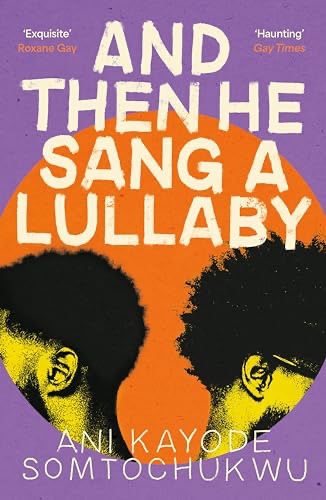
And Then He Sang A Lullaby

📍 Nigeria 🇳🇬

My pick for Pride Month is a searingly honest and often heartbreaking story of two gay men finding love and themselves in a country that is decidedly against them. August Akasike, whose mother dies while giving birth to him, is often tormented by the same fact and considers her foolish for going ahead with the pregnancy despite the doctor’s warnings. He lives in Enugu and has three older sisters who dote on him and mollycoddle his every action and achievement. They along with an emotionally indifferent father entrust him with the responsibility of protecting the Akasike family name. However, August who is a phenomenal track star, is naturally attracted towards men and often admonishes himself in the harshest way possible for even having these thoughts. Despite the strong self reluctance in wanting to engage in sex with men, he does have a few dalliances, which end up causing him extreme emotional turmoil, so much so that in University he tries having a relationship with a girl, Betty, until he meets Segun.

Segun, who lives in Iyana-Ipaja near Lagos, is the only child to a fierce mother and an impassive father. His body language and gesticulations which get perceived as being “effeminate” attract teasing, bullying and even assaults from a very young age. Tanko, his first boyfriend, gaslights him, physically manipulates and harms him until Tanko himself becomes a victim of homophobic attack. His other failed relationships and random sexual encounters make him cynical of love. He refuses to be discreet and starts living openly as a queer man, picking up fights, and being borderline reckless in his defiance. He wants his partner to be as open as him until he meets August.

Segun and August meet at the University in Enugu and despite their reservations regarding each other, fall in love. At the beginning of their relationship, August is secretive and ashamed of their affair. This irks Segun to no end and they have multiple heated arguments over it. Later, a brutal mob attack on Segun at his hostel, changes him completely. The once bold and rebellious Segun becomes submissive and docile. He loses his will to live and to fight. This prompts almost a role reversal and August becomes the new rebel; comes out to his bewildered sisters and his peers, inviting contempt. However, nothing that he does, is able to shake Segun out of his despair.

The author, Ani Kayode Somtochukwu, is a Nigerian writer and a prominent LGBTQ+ activist who is known for his advocacy and criticism of anti-LGBTQ+ laws. This book, his debut work, published at the age of 23, is a purely African queer story and Nigeria remains the front and center of it. As the story unfolds, the author simultaneously introduces us to the political scenario in his country and the rising hostility towards queer people. Some of the striking moments in the book are about the Nigerian President Goodluck Jonathan signing into law the Same Sex Marriage Prohibition Act in 2014, to cheers from a largely homophobic society and disputes between August and Segun. But the real beauty of the book lies in the way, Somtochukwu has written his characters. They are as real as it gets, brimming with temerity and perseverance but also being flawed in their own ignorant way. The tender moments between August and Segun are affirming and written with so much consideration. August’s love for Segun is all encompassing and immersive yet helpless. Ani Kayode has written with such empathy that never overburdens the reader. His prose is exacting in the grimness of the realities faced by August and Segun and still offering a vague semblance of mundanity to their romance. His depiction of sexual scenes is exemplary and one where in other writers could take notes from. Kudos to him for championing compelling themes of internalised homophobia, closeted gays, emotional and physical violence in gay relationships with the requisite sensitivity and nuance. This story is truly a lullaby, a lullaby you will hum long after you finish reading it, reminiscing August and Segun and their love which was never meant to be.

As I write this, LGBTQIA+ individuals are criminalised in Nigeria and various states of the country have extremely harsh laws for the same. In fact, worldwide 64 countries criminalise homosexuality as of 2024. In 12 countries, the death penalty is imposed. Here, in our country, we may have decriminalised article 377, but LGBTQ+ individuals still remain second class citizens with no equal rights. I wonder, how long would it take for others to see us as humans? How many lives need to be lost, and hopes to be crushed for a positive change to happen?

Happy Pride indeed!

~ JUST A GAY BOY. 🏳️‍🌈🏳️‍⚧️

The Bride of Amman

📍Jordan 🇯🇴

This debut novel by the Jordanian writer, Fadi Zaghmout, originally written in Arabic (Aroos Amman), later translated into English by Ruth Ahmedzai Kemp, caused quite a stir when it was released. Understandably so, considering the bold and controversial issues it explores, which are often deemed taboo and blasphemous in the traditional Jordanian society. The story is told through five characters of Leila, Salma, Rana, Hayat and Ali; all living in the capital city, Amman. Through these stories, the author tackles the persistent and pertinent issues of patriarchy, misogyny, chauvinism, incest, rape, sexual abuse, homophobia, widely prevalent in the conservative Arab community. An Arab woman’s worth is equated with her ability to get married at the right age, be a dazzling bride and bear children, especially sons. Her career and education are just an ornament. Zaghmout repeatedly asserts how women have no authority or agency over their own lives and bodies, and their choices are subject to male dominance and approval. Particularly disturbing story is that of Hayat, who is raped and sexually abused by her own father; later chooses promiscuity with multiple married men to escape this horrid truth.

Zaghmout’s narrative is a poignant reflection of contemporary Amman, however, I felt, that at many instances, he has tried to infantilise the grave problems. Hayat, as a rape survivor, is shown to forgive her father for his unpardonable crime. Her choice of being promiscuous seems to be very flippant and it seems as the only way a woman can get over her sexual abuse past. Ali, a closeted Iraqi gay man, gets married to Leila, has a child, and continues to have gay sexual encounters on the sly. Leila later discovers his homosexuality and upon confrontation, chooses to accept her life as his wife, devoid of sex, delves steadfast into her career and turns a blind eye to his indiscretions. In the book, the men are forever exonerated for their crimes and wrongdoings, by the women. There’s always some “logical” reasoning to the way the men have behaved. This almost invisible, subtextual chauvinism can’t be ignored. Also, other than Salma’s story, the others seem to have the proverbial happy ending. This smacks of immature writing.

Majority of Indian gay men remain closeted and continue to have heterosexual marriages and children under the pretext of parental pressure and culture. They also have multiple gay liaisons after marriage with gay abandon (no pun intended) and literally no remorse. Are the Indian women too, like Leila, choosing to not see the obvious because of the pressure to stay married and the stigma of divorce? Or are they truly oblivious?

Though the book is about Ammani women, one can’t miss the fact, how close this hits home. Indian women, are still governed by the cis men around them, and it remains an ongoing struggle for them to establish their equality and agency.

~ JUST A GAY MAN. 🥺