This Arab is Queer

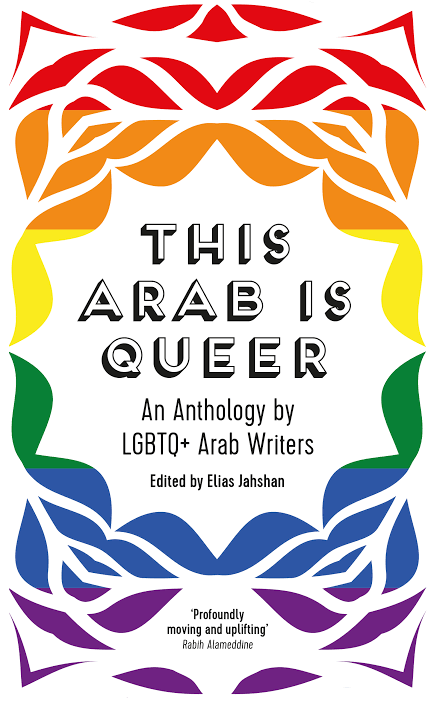
I feel, I am blessed to have read this book, that too during pride month. The book, which the Time magazine hailed as ‘groundbreaking’, is indeed that. It’s also trailblazing in so many ways. It’s an anthology of 18 essays written by queer Arab writers from the SWANA region, edited by Elias Jahshan, a Palestinian Lebanese journalist living in Australia. Now when was the last time you heard or saw space for a queer arab? And that’s the power this book yields. By asking 18 brilliant writers to write their stories, their way, many through their lived experiences, this book embodies the queer arab narrative, emboldens the queer arab and makes their visibility and intersectionality a necessity. While the stories are rooted in the arab-ness and queerness, diaspora or otherwise, the feelings of dignity, safety, and belongingness remain universal.

The book begins with the feminist giant (that’s also her newsletter) Mona Eltahawy’s essay, The decade of saying all that I could not say. Mona, a survivor of sexual assault, has been a crusader against patriarchy. In her essay she astutely describes her reckoning of owning her sexuality, her bisexuality, and the umpteen nuances that make it so. Her liberation by shedding the shame surrounding sex, has been an act of rebellion. As a Muslim woman, her vehement uprising against heteronormativity has been her emancipation. Mona writes not just to inspire us but to instigate our power.

Though each essay is profound, I would like to highlight a few that stayed with me. Amrou Al-kadhi’s essay, You made me your Monster, is a fierce, defiant take on Arab-ness, Quran and his Islamic identity. His transgressions viewed as blasphemous in the Arab world are just his ways of honouring his own authentic existence. Through his flamboyant, glamorous drag persona, Glamrou; Amrou is reinforcing the power in provocation.

Danny Ramadan, in his essay, The Artist’s portrait of a marginalised man, talks about how his writing is always up for debate, whether it’s fiction or non fiction and if it’s based on his real life experiences, simply because he’s a queer Syrian man with a refugee experience. He poignantly points out people’s assumptions about him and his work since he’s a queer arab and also worries if his real life trauma is going to unknowingly and inadvertently slip into his every narrative.

Amna Ali’s essay, My intersectionality was my biggest bully, is an eye opening piece about her journey as a Black Queer Arab. Growing up as and being a visibly Black person in a racism predominant society like UAE, Amna had a tumultuous upbringing wherein she was taught to be shameful about her blackness. Later, she became shameful about her queerness too. This amalgamation of multiple identities made her distraught, caused her abuse and violence, until she learnt to make peace with them. Amna has since realised her intersectionality as a Somali-Yemeni-Emirati queer person, is her true strength and yet it continues to be an arduous journey.

Hasan Namir’s story, Dancing like Sherihan, is about his tryst with shame due to his queerness leading to his ingrained belief about him being a sinner. His strict Iraqi Muslim upbringing was always at odds despite him moving to Canada and experiencing queer freedom. His essay deftly portrays the internal struggles of a queer person as they oscillate between religious virtues, familial pressures, internalised shame and queer trauma. Hasan’s relationship with Tarn, leading to their marriage and later having a child is one that of queer joy. It makes you misty-eyed, it makes you hopeful and it feels like a collective queer victory.

Madian Al Jazerah’s moving piece, Then came Hope, is an ode to him as a displaced Palestinian Queer man who is constantly engaged in an embittered battle with shame whilst remaining hopeful that he would emerge triumphant. His trauma is multilayered as he navigates zionism and homophobia. His astute observations on the blatant yet veiled discrimination in the gay world is one that many of us can identify with. Madian has a beautiful bookstore in Amman which I had visited back in 2019. It’s now through this book that I know the connection between the bookstore and him and have been so ecstatic since. Queer joy indeed comes in so many forms and experiences. I would like to quote a couple of lines from his essay which I felt were earth shatteringly brilliant. Here goes;

I know from experience that you can put shame on the highest shelf and forget about it for a while, but bigots and bullies can smell it and it is always within their reach.

When we talk about love, the image of a heterosexual couple is accompanied by a thousand positive romantic associations. When we talk about gay men, the image is of two men having sex.’

Many or most of these stories are about shame and trauma, and that’s so true since those are the first feelings one experiences as a queer person. They also highlight the yearning for love, acceptance and inclusion. These stories are a lot tragic, which just goes on to show the commonality in their lived experiences as a queer arab. At the same time, the writers have done a commendable job in instilling faith and hope despite their grim realities of being a queer arab in a world so hostile towards them. This is a book that is going to jolt you out of your assumptions, privileges and entitlements. Burst that bubble, it’s time for a masterclass on humility and humanity.

Elias Jahshan has done beyond stellar work as an editor. Bringing together each of these supremely talented and gifted writers is not just groundbreaking but distinctively exceptional. Take a bow!

~ JUST A QUEER HUMAN. 🥹🥲

Blue Skinned Gods

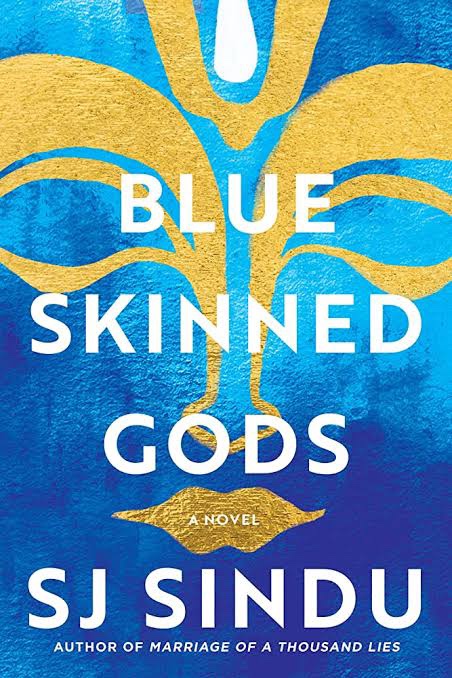
A story that weaves a rich tapestry of emotions embedded in superstitions and beliefs need not be the most unusual or awe inducing. However, Blue Skinned Gods, finalist in bisexual fiction in the 2022 Lambda Literary Awards, is a story that gives layers to the same emotions, provides nuances in the narrative and simultaneously transports you to a world that’s at times unbelievably despondent and many a times believably blindsided.

The story set in Tamil Nadu, is about a blue skinned boy, Kalki, who is made to believe and thought to be as the last avatar of Vishnu; because of his skin colour. His father, Ayya, forces this belief not just onto Kalki and his entire family but the whole village, so much so that be builds an ashram for him, which also serves as a healing space for people troubled by physical and mental ailments. To perpetuate his notion, Ayya doesn’t shy away from deceit, abuse, punishments and emotional torture. Kalki soon starts believing in his own godliness and prowess, despite nagging doubts regarding the same. He becomes codependent on Ayya and no amount of abuse, including his mother’s loss, seems to make him stand up against his father. However, when he lands in New York city as part of his world tour, reality hits hard and Kalki begins his journey of emancipation and self discovery albeit through alcohol, sex and being emotionally distraught.

S J Sindu (she/they), Tamil and genderqueer, has masterfully authored this complex narrative of regret, remorse and redemption, through the lens of a docile, bereft and fragile character like Kalki. There are times when as a reader you want Kalki to rebel and retaliate, however his ingrained trauma and abuse prevents him from doing so. And this is the truth for many such childhood trauma survivors. Sindu presents trauma as this multilayered annihilator that destroys a person’s sense of being despite the right reckoning.

Blue Skinned Gods is rooted in Tamizh culture. The narrative is peppered with beautiful, lyrical Tamizh words. Hindu religious beliefs and mythology form the backbone of the story. Sindu has presented this alongside science and rationalism without putting them at loggerheads. The nuanced references to casteism and sexism in Hindiusm has been done ever so poignantly without being provocative. The various queer characters in the book bring their own uniqueness to this moving tale centred on humanity.

Do read!

~ JUST A GAY BOY. 😇

Crimson by Niviaq Korneliussen

📍Greenland 🇬🇱

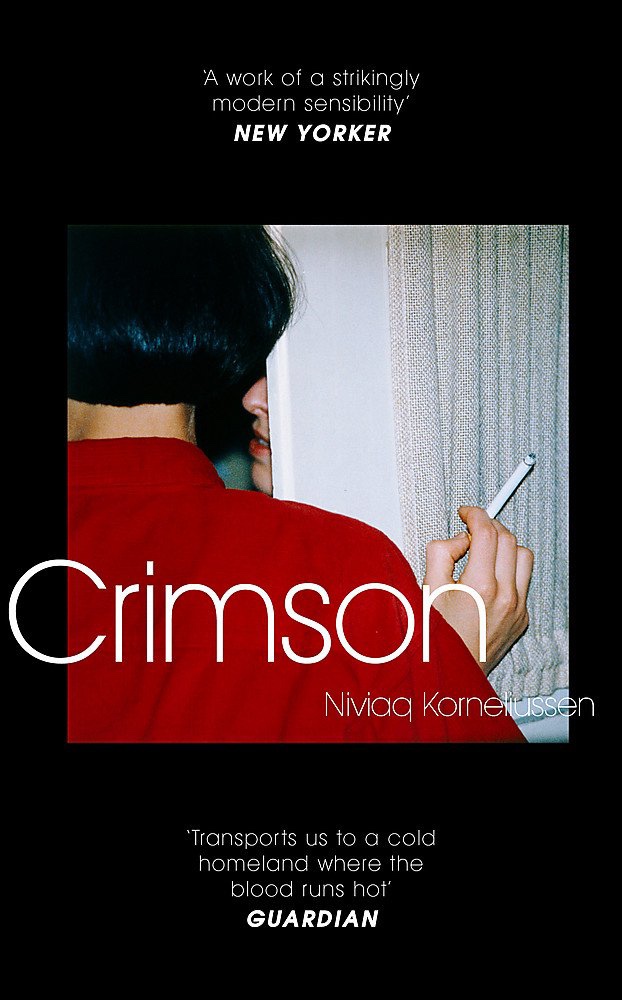
First published in Greenlandic in 2014 as Homo Sapienne, the book was then translated by the author into Danish, a version that went on to receive Nordic acclaim, being nominated for the Nordic Council’s Literature Prize. In 2018, the UK translation, Crimson (released as Last Night in Nuuk in the US in 2019) was published, converted from Danish by Anna Halager. Events unfold at a startling pace in this book, told through the lives and stories of its five protagonists. Fia, has no love for her longtime boyfriend, and is now repulsed by his touch and presence. She breaks up with him, only to fall head over heels for Sara. Inuk, Fia’s brother, is a closeted gay guy and is in a secret relationship with a prominent personality from Nuuk. Arnaq, Inuk’s best friend and who is temporarily hosting Fia at her apartment, has unresolved childhood traumas which has lead her to alcoholism and a self destructive “party” lifestyle. She is smitten with Ivik. Ivik, who’s story is the most heartwarming and queer affirming, is struggling with the label of being a lesbian and sexual intimacy with girlfriend Sara; later realises his gender dysphoria. Sara, who actually makes Ivik realise the above, is grappling with loss of the relationship, the birth of her niece, and her simmering attraction for Fia.

The book is an exploration of various nuances of gender and sexuality. The author, a queer woman and native Greenlander herself, asserts that queerness cannot be explained by a stringent and linear definition. Queer individuals define it for themselves. Through it’s myriad characters, Niviaq, makes space for an unbridled queer narrative that’s messy, flawed, imperfect, inconsistent and even inconsequential at times. Their internal dialogues and personal struggles, conveyed effortlessly by the author, is reminiscent of every queer person’s journey, irrespective of their country of origin. The book also gives us a glimpse into Greenland (a former Danish colony which became self governing in 2009 after a referendum), it’s culture and life in its capital city, Nuuk. I feel, the original in Greenlandic, was way ahead of its time, since queer discourses and identities have become and are becoming mainstream only since the last couple of years. Bravo, Niviaq!

~ JUST A GAY BOY. 🥹

Jamie’s Story

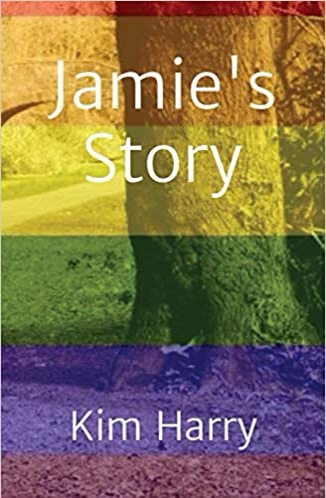
Jamie’s story is about Jamie Taylor. She is a lesbian woman, a nightclub owner, living in Cardiff. The book traces her story from adolescence to late twenties. Growing up in an extremely dysfunctional family, to an abusive and homophobic father; Jamie is forever looking to escape. Her home is never the safe place because it’s filled with fear and hate. Her father, an out of work veteran, is an alcoholic, wife beater and a bully. Even in her school, Jamie becomes a victim of bullying and homophobia. During these trying times, she develops a romantic relationship with another girl, Heather. However, misunderstandings, deceit and a series of unfortunate events make them go their separate ways.

Now when Jamie is an adult, her life is still chaos. It comprises of hookups, late nights, binge drinking. She remains emotionally scattered and unavailable to her own self. She intentionally tries to keep romance and love at bay. But a chance encounter with Heather, after so many years, reignites the forgotten passion. This leads her to question the self sabotaging behaviour and makes her receptive and accepting of new, beautiful and fulfilling possibilities.

The book is a brilliant take on the life of a queer, troubled woman who not just manages to survive but thrive. The narrative is fast paced; a page turner in fact! The climax has elements of mystery and suspense to it. The book addresses the realities of domestic violence and bullying in gory details; which can be triggering for some. However, the delicate and nuanced portrayal of the complicated relationships of Jamie with Heather and Sarah, is queer affirming and sensitive.

Despite the grim beginning, the end is uplifting and inspiring. We Lgbtqia+ people need such stories that celebrate our authenticity, spirit, resilience and humanity. We need stories where the end is filled with happiness.

Thank you Kim Harry for choosing me to read your book. Astounding debut!

~ JUST A GAY BOY. 🏳️‍🌈🏳️‍⚧️

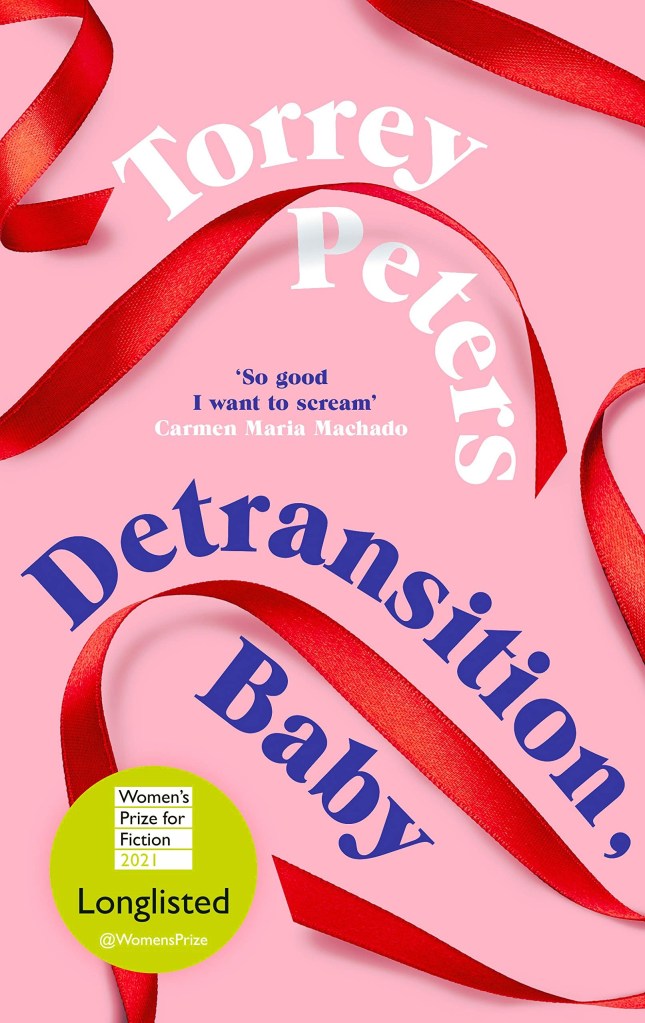
Detransition, Baby

This book, longlisted for the Women’s Prize for Fiction, is about trans feminine culture. The story navigates between it’s three principle characters; Reese, Amy/Ames and Katrina. Reese is a trans woman who is forever walking a fine line of societal perception of her trans-ness and her own reality of being a woman. She is desperately wanting to be a mother however her inherent resentment and angst makes her sabotage all the good choices and relationships. It makes her seek transphobic and misogynistic men for sexual gratification who leave her depleted and consumed.

Amy is a trans woman who later detransitions to Ames, due to complicated reasons. Amy and Reese were in a romantic relationship previously. However, Ames now is involved with Katrina who is a cis woman and has got her pregnant. This circumstance and each of the characters’ insecurities forces the three of them to consider the possibility of all three parenting the unborn child.

This book is a no nonsense yet vulnerable storytelling of trans lives. The characters are damaged and dysfunctional and the author doesn’t try to sugarcoat or patronise it. It’s a believably chaotic and nuanced exploration of modern relationships and parenting. The author deftly handles issues of gender, detransitioning, heteronormativity and queer culture with sensitivity and impartiality.

Through the book, Torrey Peters, brings to life an experience of human relations via trans and cis lived truths and bourgeois realities. Torrey who is a trans woman herself, presents intersectionality as a layered subtext throughout the book. This leaves us, as a reader, questioning a lot of our assumptions and prejudices.

In a word, Triumphant!

~ JUST A GAY BOY. 🥳