

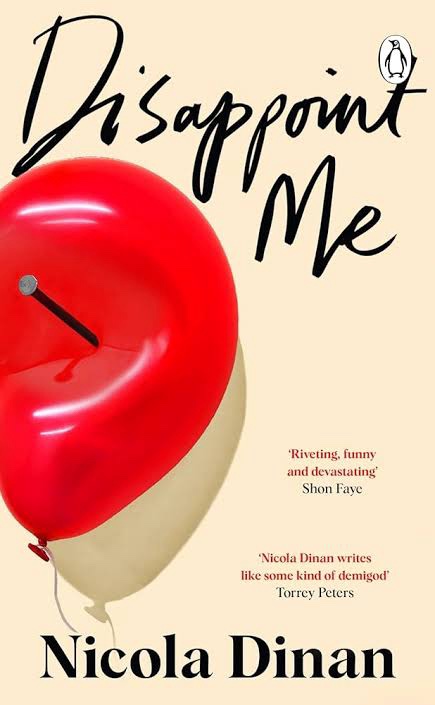
When Max, a thirty something trans woman wakes up in the hospital after falling down a flight of stairs at a New Year’s party, she decides to take charge of her life. She has split from her boyfriend, Arthur, and the modern dating scene in London makes her anxious, where every swipe feels like a psychological landmine. Nonetheless she decides to sample its myriad offerings by deciding to go on a date with Vincent. His Asian background reassures her a bit and she soon also realises that he is thoughtful, kind and caring. As they embark upon this journey together, Max understands the love Vincent harbours for her and his earnest commitment towards being in a relationship with a trans woman. He is considerate with his words and language and ready to accept his misgivings. However, he is hesitant about telling his conservative Chinese parents about Max. This irks Max and despite her best attempts at trying not to dwell on it, subconsciously it keeps gnawing at her. An innocuous thing soon becomes a bone of contention and every banter and argument starts to carry its essence implicitly. If that were not enough, and add to it current dating culture’s panic and emotional pandemonium, there’s a troubled past that Vincent harbours in secret, which is bound to disrupt his relationship with Max once she finds out.
Disappoint Me is a meticulously clever and nuanced take on contemporary relationships and partnerships. Max and Vincent embody the quintessential emotionally dysregulated millennials as they navigate a relatively new and fragile relationship. Max is secure in her trans personhood but now, after being pair-bonded with Vincent she starts questioning everything about it, from its integrity to its malleability with a straight partner. Vincent on the other hand, seems to be unsure of his wholehearted attempts at traversing this queer relationship and is constantly wondering if he’s failing Max. Both Max and Vincent seem to be holding back their true selves during much of their communication for the irrational fear they feel in revealing their real personalities. Vincent straddles the romantic pressures of being the partner who is expected to introduce Max to his family, and the parental pressures of being the ideal son who will give his parents, their grandchildren. Max’s tryst with the complex emotions of self sabotage prevents her from being fully transparent with her feelings, instead, it leads to misunderstanding and misinterpretation. As she is settling into the ennui of having a new boyfriend post the breakup, doubts, revelations and reservations take her back into a state of restlessness and a previous, familiar world of disappointment.
While Max and Vincent come across as scattered, confused and a tad obsequious; some of the supporting characters bring the humour and spontaneity to the mundanity of a bougie existence in London. Max’s friend, Simone, is pragmatic about dealing with everyday situations but punishing when dealing with race and gender politics. The duality and dubiety of her personality comes forth when she gets accused of body shaming and unprofessional conduct. The standout character for me was Alex, whose unfading presence in the book heightens the narrative. She is assiduous and prudent about her decisions. Her quiet fortitude and restraint speak volumes in contrast to the emotional volatility around her. The author’s portrayal of most of her characters as sanctimonious, impetuous and solipsistic feels deliberate and conforming to the evolution of romance, camaraderie and cultural mores.
Nicola Dinan, is a British-Malaysian novelist and essayist who has swiftly become a celebrated voice in contemporary literary fiction. Her debut novel, Bellies won the Polari First Book Prize and was a finalist for the Lambda Literary Award. Nicola’s writing is witty, perceptive, conspicuous, incisive and complex. She meanders and ruminates on the real life trans experience through Max’s character, hence presenting her as layered, multidimensional and deeply human. That’s the beauty and purpose of Dinan’s language which presents people with flaws, insecurities and imperfections, and yet who are committed to living and loving. Her prose doesn’t cater to the gaze of cisnormative audiences; it gives trans women the room to be everything: angry, confused, loved, lonely and free. Her writing feels untethered, grounded in emotional realism and disinterested in perfection. Queer relationships and trans representation are the necessity of the hour and Dinan’s narrative puts it at the forefront of the social milieu in all its glory. Disappoint Me is so frighteningly accurate that it’s certainly going to be a part of the literary zeitgeist and Nicola Dinan’s voice, agency and craft are here to stay.
~ JUST A GAY BOY. 🏳️⚧️🏳️🌈
 the shiny diaries