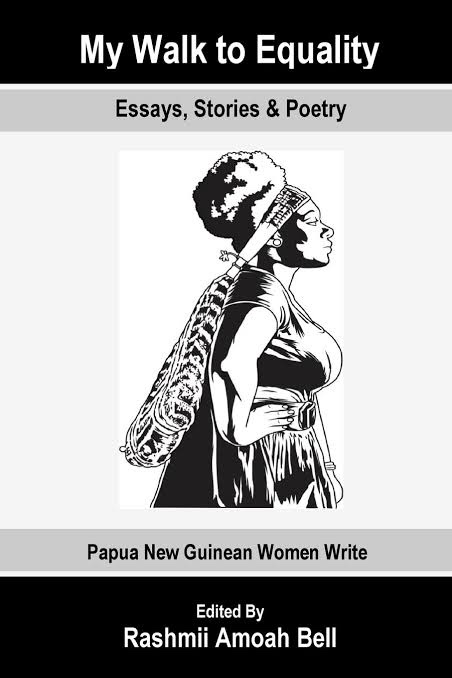
My Walk to Equality: Essays, Stories and Poetry- Papua New Guinean Women Write

📍 Papua New Guinea 🇵🇬

May is celebrated as the Pacific Islander Heritage Month and my pick this year was from Papua New Guinea (PNG). The book is an anthology of essays, poems and stories, written exclusively by Papua New Guinean women. There are more than 80 contributions from 40 writers, and the majority are in their 30s. For the uninitiated, PNG is a country located in Southwestern Pacific Ocean, occupying half of the island of New Guinea (the western half belongs to Indonesia). The country gained independence from Australia on September 16, 1975. It is one of the most rural countries and comprises of over 800 tribes. It’s also the most linguistically diverse country in the world, and about 839 languages are spoken in PNG. It also has the dubious distinction of having one of the highest rates of violence against women in the world. This book, therefore, captues the ongoing struggles of women who are trying to achieve a semblance of equality in a particularly patriarchal society.

The book has been divided into sections; Relationships, Self Awareness and Challenging gender roles and breaking glass ceilings. However, the overarching theme throughout is the demand for women’s rights and equality, the necessity to disband the deep rooted misogyny and the call for action against sexual and domestic violence. The writers boldly dissect the prevailing patriarchal culture in which young women are being brought up and how men are groomed to be sexist and gynophobic. The society at large is perverse to women being educated and taking up spaces in public and private sectors. Working women are often scorned at, receive no help at home and face uphill battles navigating professional environments. These courageous women writers, many of whom are teachers and working professionals, have urged PNG women to fight for their education and never to dismiss any opportunity that could guarantee financial independence, which can then pave the way for the upliftment of their collective consciousness and thus inspire future generations.

Rashmii Amoah Bell, who has edited this book, is a Papua New Guinean writer and editor renowned for her contributions to amplifying women’s voices in her country. From this book, a few writings stood out to me for their poignancy and simplicity yet relaying the angst, anguish and resilience. The Expectation of Marriage by Watna Mori explores how colonial past and intergenerational traumas shape the reality of PNG women; how the entirety of a woman in PNG has been reduced to her marital status and the writer wonders what happens to women who consciously decide to live outside this boxed existence. Betty Lovai writes in her essay, Papua New Guinean women in Leadership, the harsh truths about securing leadership roles as a woman in PNG and the governmental and societal inertia in bringing about any positive impact. In the story, On the hunt for a New Language in Papua New Guinea, Samantha Kusari, makes a case for languages that are dying across the country. In the search for a tokples (dialect), the writer gets introduced to another rare dialect, Akadou, and hence realises the rich legacy of a language that now has only three living people speaking it. In Walk to Equality in Education, Roslyn Tony, laments about the insurmountable hardships met by teachers and women principals in the field of education. Caroline Evari’s poem, Who are you to tell me it’s wrong, explores the possibility of an egalitarian household in PNG. The brilliant essay, The Inappropriate Cultural Appropriation of the Bilum by Elvina Ogil, articulates the perils of the harmful practice of such a cultural theft. She provides the nuances that make us ponder the consequences of a heritage hijack, that which can undermine and undervalue an entire civilisation. Tanya Zeriga-Alone, in her thought provoking essay, Which way Papua New Guinea? Look in the Mirror; presents an insider’s perspective on the current situation in the country and says, that the only way PNG can move forward towards ensuring equality and equity, is by disregarding mediocrity, respecting fellow citizens and local talents, and understanding the collective resilience shared by all the tribes of PNG

Having read this book, I wonder if the conditions for Indian women are any different; rather how eerily similar are Indian and PNG women’s struggles. On the surface of it, we may seem to be a society where women have rights, but certainly there’s no equality yet. If you scratch this surface, you will notice uncomfortable truths and predatory practices of misogyny, chauvinism, sexism and violence deeply rooted and being disguised as appropriated and misplaced feminism. We may be into our 79th year of independence and the fastest growing economy in the world, but none of that or the current ubiquitous vermilion can hide the fact, that women in our country are unsafe, undervalued, excluded, oppressed (especially Dalit and tribal women) and marginalised. 

~ JUST A GAY BOY. 🧐

Behind You Is The Sea

The book is a collection of stories by Palestinian Americans living in Baltimore. Each chapter is dedicated to a different character and as you read along, you realise all of these characters and their families are interconnected. 

With this book, the author, Susan Muaddi Darraj, has tried to reflect upon the intergenerational chasm that exists inevitably and yet how the various generations are inextricably linked. Though Palestinian heritage is the commonality, the newer generations are more American than Palestinian in their personalities and perspectives. This remains the bone of contention among the older folks who are unable to make peace with their diasporic status and are torn living a life that oscillates between reminiscences and resentments. 

The book also tackles some serious issues that plague the Palestinian society such as honour killing, patriarchy, chauvinism, domestic violence and misogyny. Women are expected to be subservient to men, regardless of their achievements. The chapter in which a father is disgruntled and disowns his daughter for having an abortion sans marriage and having a Black boyfriend is unnerving. The chapter wherein a mother constantly chastises one of her professionally successful daughters for being divorced and not having children in comparison to her other daughter who is married and has numerous children, speaks highly about internalised patriarchy. Only the last chapter takes place in Palestine, when one of the characters is forced to bring his father’s corpse to Palestine for burial as per his last wish. What was supposed to be a solemn event, turns into an emotionally frustrating exercise when the son learns the benevolent side to his father’s personality, especially when not even an iota of that benevolence was ever bestowed upon him or his sister. 

Susan Muaddi Darraj is a Palestinian American writer who has authored several collections of fiction, young adult and children’s books. She is the recipient of various awards; winning the Arab American Book award in 2021 and 2016 for Farah Rocks and A Curious Land, respectively. A Curious Land was also shortlisted for Palestine Book Award. 

Behind You Is The Sea, my pick for Arablit April, was a unique reading experience for me because this was the first Palestinian book that I have read, (and I have read a few!) that spoke about Palestinian Christian families compared to the majority of Palestinian literature that is about Palestinian Arabs. Palestinian Christians form a sizeable minority in Palestine and the book helped me understand the inseparability and intertwining of Christian and Arab cultures. 

Now, almost all of the social ills highlighted in this book are inherently prevalent in our Indian society. This goes to show that Indians and Palestinians are not very different because we were all colonised people and carry the repercussions of the British colonisation and occupation through generations. Having said that, it doesn’t mean we continue to have these colonial hangovers till today. Yet somehow, the general Indian population now supports Israel, a current day coloniser, who has mercilessly and relentlessly continued the genocide in Gaza since October 7, 2023. Have we forgotten our own history or has the prevailing Islamophobic jingoism made us all intellectually bankrupt commentators?

~ JUST A GAY BOY. 🍉

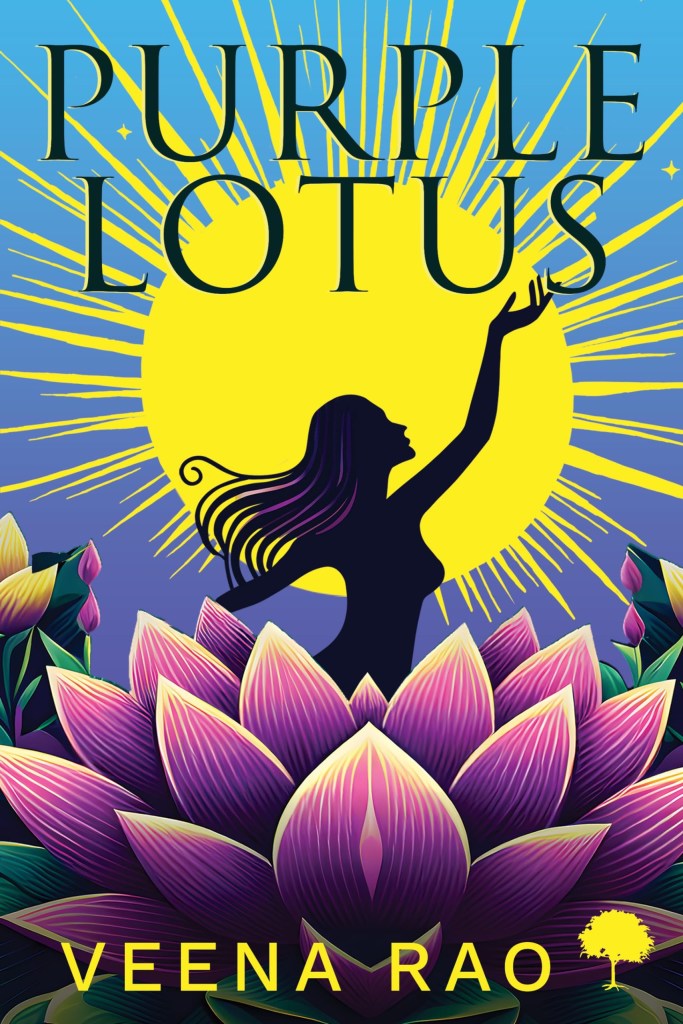
Purple Lotus

Tara, is a reticent and docile girl, who grows up in Mangalore with her grandparents and a schizophrenic uncle. Her parents along with her younger brother, move to Dubai during her formative years leaving her with her grandparents despite her disapproval and reluctance. She grows up to becomes a journalist, works for the local newspaper and has an arranged marriage with Sanjay who lives in Atlanta. After the marriage, he leaves her behind in Mangalore and Tara is only able to meet him after three years once she herself goes there. Undeterred by the abandonment and the questionable intentions of Sanjay, Tara hopes for a blissful life in the US. However, all her hopes come crashing down, as Sanjay continues to ignore her, remains non communicative and disapproving of her likes, behaviour and even her friendship with a Russian girl, Alyona. Tara continues to tolerate his mercurial temperament, his gaslighting, his passive aggression which gradually morph into physical and verbal abuse. When her parents dismiss her concerns about Sanjay and instead ask her to compromise, she feels betrayed. One day, after a particularly violent incident, she leaves her house and Sanjay, and with the help of friends manages to start her life from scratch. Later on she meets Cyrus, who develops feelings for her, as does Tara; but her unresolved past issues come to wreck havoc in her new oasis and she doesn’t stop short of self sabotaging everything that is loving and deserving of her.

Purple Lotus is an intense meditation on abandonment and shame. Through Tara, the author has portrayed how these emotions overpower our lives until a resolution is achieved. Brushing them aside, never makes them go away, rather they always come back with a vengeance in the most vulnerable of times. Tara is made to feel guilty by her parents for choosing her freedom from an abusive marriage. She carries this shame and countless other moments of shame from her growing up years, till it snowballs into a disaster that is ready to upend her life. Unbeknownst to Tara, others’ disappointment in her for her actions, and her constant longing for their approval, makes her tied to them in an emotionally calamitous way. However, through her self-actualisation which is indeed painful and unpleasant, the author shows us all that, there is always the proverbial light at the end of the tunnel.

Veena Rao’s debut work, Purple Lotus, is a poignant and urgent read on abuse, domestic violence and its unsettling impact on the victims. Though the language is easy to read and engaging, the story does hit you hard. Through this book, she highlights the various ways in which abuse can present itself and it necessarily needn’t be physical and torturous. She also makes an emphatic case for gross emotional abuse that is often disregarded not just by the victim but by the people close to her. The narrative does a sharp commentary on how Indian parents especially ignore their daughters’ call to distress and instead of comforting and supporting them, often reprimand them for even having such thoughts. 

2024 is coming to an end and Indian women are still fighting off abuse and striving for an equal stance in a marriage. Indian men are very easily given the benefit of doubt, let off the hook even in grave circumstances and celebrated for just being in the relationship. The fact that nobody questions them and challenges their innate chauvinism and misogyny, sometimes deceptively disguised as feminism and hence difficult to decode, has created this dictatorial monster that is soon becoming a monolith of unwavering patriarchy. 

That’s why we need to read this book, Purple Lotus

~ JUST A GAY BOY. 🪷

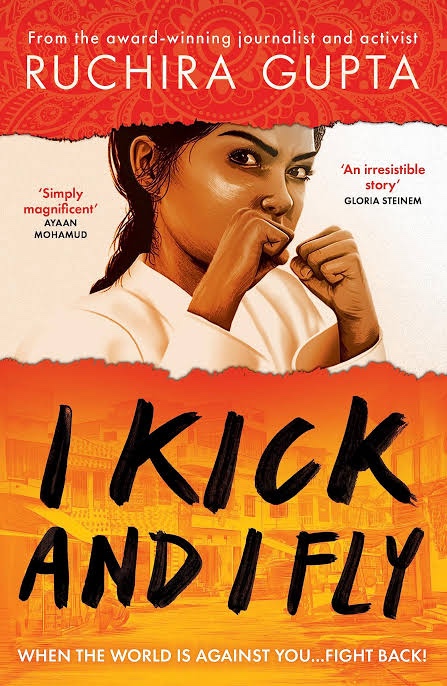
I Kick and I Fly

Ruchira Gupta, journalist, activist, Emmy award winning documentarian, has written this ‘social justice adventure novel’ that celebrates hope even in the pit of despair. Heera, the fourteen year old girl protagonist in the book, lives in the red light district of Forbesganj, Bihar that borders Nepal. Her entire life, she has witnessed women being forced into prostitution, tortured and brutally abused. Since she belongs to the Nat tribe where there is intergenerational prostitution, her father is keen for her to carry on with this abominable tradition. While Heera vehemently opposes this, and is keen to pursue education, she faces innumerable struggles and ostracism at her school due to her caste and where she comes from. Her mother and her brother Salman remain her only support system. But one day, when she is expelled from her school and the threat of her being sold off as a prostitute at a local fair starts becoming more real, she seeks help from Rini Di who runs a girls hostel. Rini is actively fighting prostitution in the locality while taking on all the big names who are involved in this global trafficking racket. She also is providing a safe haven to the rescued girls and survivors. She imparts kung fu training to them and Heera soon becomes proficient in it, which slowly changes the entire trajectory of her life.

The book is a gritty retelling of the horrific realities of child trafficking and human trafficking that abound our cities, towns and villages. While we often turn a blind eye to this grim actuality, Ruchira Gupta has made it her life’s mission to rescue and rehabilitate the vulnerable women survivors; and she does it through her Nonprofit organisation, Apne Aap. The story too is inspired by real life events and characters, and while it begins on a very hopeless note, she sees to it that as it progresses, hopelessness keeps turning into hopefulness, and the proverbial hope just doesn’t remain an elusive dream but something real that can be claimed, built and asserted, even when all odds are against you.

Not just Heera, the narrative is peppered with various strong women characters such as Mai, Azra and Mira Di. The book celebrates resilience, determination, sisterhood and the joys of conviviality, friendship and community. While we feel shame in even uttering the word prostitution and prostitute; the women survivors of this profession are now looking us in the eye and demanding their rightful respect and dignity. Ruchira Gupta is helping countless such women to regain their self respect and this book, ‘I kick and I fly’ is just another resounding message for the same.

Must read.

~ JUST A GAY BOY. 🙌

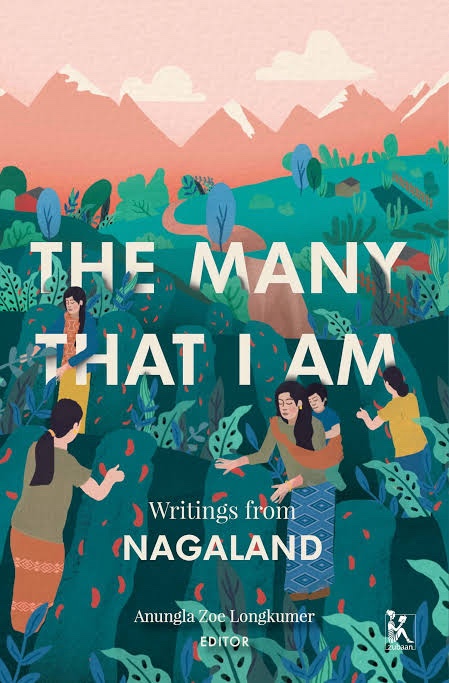
The Many That I Am : Writings from Nagaland

📍 Nagaland

Nagaland has been mired in political turmoil and various occupations. From the British to the Japanese and the Indian state, the Nagas have suffered violence and persecution. Hence, there isn’t much literature from those troubled times. However, they do have a rich tradition of oral literature, history and culture passed down through word of mouth from generation to generation. It’s only after the formation of Nagaland statehood in 1963 that some writings started appearing. By the turn of the century is when the dawn of writing in Nagaland truly began.

This book is an anthology of short stories, personal essays and poems interspersed with painting prints. What makes this book compelling is that all of the writers and artists are women, and it has equal space for contemporary and debutantes alongside prominent, established writers such as Temsula Ao, Easterine Kire and Avinuo Kire.

The writings essentially reflect the issues plaguing Naga society and Naga women. Patriarchy is the biggest social evil and most of the essays and poems portray its intergenerational traumatic consequences due to the abject denial of its existence. The poems, I wish you were a man by Abokali Jimoni, I just hate and NoNoNo woman by rōzumarī raṁsāra, are poetic lashings at the rigid patriarchal constructs and how women are now walking away from them. The story, My Mother’s Daughter by Neikehienuo Mepfhüo, brings about the widely prevalent but silenced epidemic of domestic violence; which when unchallenged becomes the norm of a woman’s lived experience. The power to forgive by Avinuo Kire, is a gut wrenching story on rape and what happens when righteous anger, hatred and the decision to forgive are taken away from the victim. Many of the stories depict the sense of belonging that Nagas have for their land and their peoples. Martha’s mother by Hekali Zhimoni was a stand out story for the sheer wit, resilience and composure shown by the mother when faced with an emotionally volatile predicament.

Anungla Zoe Longkumer is a writer, musician and filmmaker, based in Dimapur, Nagaland. Through this genre defying book, she has unleashed the creative pursuits of Naga women writers and has presented to the world the glorious literature from Nagaland that is steeped in folklore and continues to challenge myths, traditions and our collective consciousness.

~ JUST A GAY BOY. 😇

Crafting the Word: Writings from Manipur

📍 Manipur

The book is an anthology of short stories, essays and poems, many of which are translations from the Manipuri into English, all written and translated by women writers from Manipur; edited and put together by Imphal based independent journalist, writer and translator, Thingnam Anjulika Samom. Many prominent Manipuri writers feature in the book from the yesteryears to the current. Particularly noteworthy amongst them was Binodini, who was a Manipuri novelist, essayist, playwright, screenwriter and lyricist. Her collection of short stories in 1965 was the first by a Manipuri woman. Her story, Girls’ Hostel Sri Bhavana; translated by L. Somi Roy, evokes a sense of nostalgia and grips us with the tenderness of love and belonging.

The book begins with an elaborate and nuanced essay, The Journey of Women’s Writing in Manipuri Literature, by Nahakpam Aruna, on the various Manipuri women writers and their contributions to the craft and society at large. The writings in the book form a social discourse on the position of women and women’s rights in Manipur. Patriarchy, misogyny, abuse, gender and caste based discrimination, menstruation form recurring topics in the various stories and poems. Though every story is profound, three of them caught my attention. These are: 1) Sati interview by Ningobam Sanatombi, translated by Kundo Yumnam, which takes a very poignant and satirical look on women’s rights in Hindu mythology; 2) Nightmare by Nee Devi, translated by Soibam Haripriya, is a tragic lesbian love story wherein the lesbian lovers, Somo and Leishna, are at the receiving end of their respective homophobic and abusive families; 3) The Defeat by Ningombam Surma, translated by Bobo Khuraijam, which, through the story of a married couple, Bipin and Nalini, brings forth the hidden chauvinism present in the often revered so-called feminist men.

The writings are simple and the language lucid, but they pack a punch. The messages that they convey can keep echoing long after you have finished the book. Manipur is currently in a state of utmost unrest, turmoil and despair. I hold this book close to my heart whilst thinking about all the people there, especially the women and these brilliant women writers. May peace and stability reign.

~ JUST A GAY BOY. 🫥

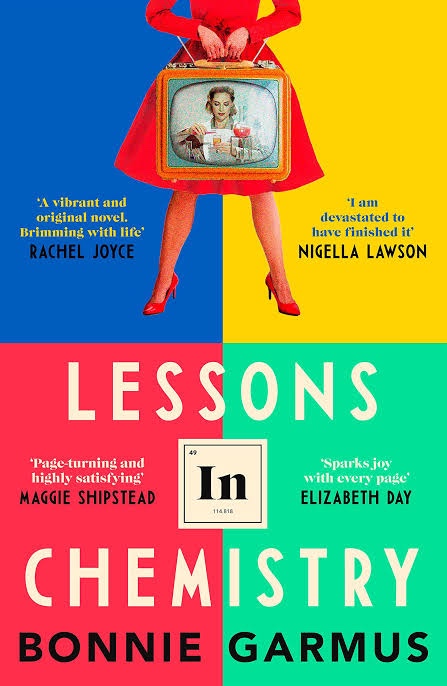
Lessons in chemistry

When was the last time you were taught lessons in feminism that was easy breezy, devoid of angst and presented with hilarity? I don’t think ever. It’s rather unfortunate that feminism has to be schooled. Also, this isn’t any kind of shade on all those glorious women who have taught feminism with an angry diatribe. Because clearly the world hasn’t been kind to women since time immemorial. And we get a sneak peak into this unjust scheme of things through the book’s main protagonist Elizabeth Zott. The story is about this fierce woman scientist who is never taken seriously because of her gender. Set in the 1950s America, the book takes a hard look at the subordinate and often demeaning outlook of the society towards women then. Elizabeth is passionate about chemistry and struggles to make herself seen in the overwhelming and dismissive world of men. Adversities and inappropriate men force her to switch her career quite reluctantly. From a scientist she soon becomes a television cooking show host. Despite her rather unconventional approach to anchoring, she becomes very popular and women all across America can’t seem to get enough of her show. Because hers is a first show of its kind wherein women are tutored to think they matter; they are important and they are equal. All this whilst cooking up a storm and diligently doling out chemical equations and reactions.

To say this book is unbridled joy would be an understatement. Elizabeth Zott defies all the societal conventions and expectations and still remains an embodiment of womanhood. Her bold choices which if you examine carefully, were just about what mattered to her and what was convenient; can actually trigger the chauvinists and misogynists. Her decision to have a child without being married, to have a live-in partner, to be an atheist, to question authority are just some amongst many reasons which make Elizabeth Zott unique and her own person. She epitomises freedom, equality, independence, intelligence and her actions can inspire women all across the globe to stand up for themselves, to speak up for other women, and to support one other in solidarity.

Bonnie Garmus, the ingenious author and who’s debut book this is, gives us a taut and crisp story that never falters, never slackens its pace and delves deep into feminism while serving a healthy dose of uncanny, straight-faced humour. The author deftly handles complicated and emotional topics of sexual abuse, rape, patriarchy, and childhood trauma. Garmus gives us this iconic character of Elizabeth Zott, who strives for rationality every step of the way. Not just Elizabeth, the book is peppered with various other notable characters. Be it Mad Zott, her daughter who questions the necessity for the hoopla surrounding her status as ‘a child born out of wedlock’; and Harriet the neighbour who forges a rather quirky friendship with Elizabeth and later the same relationship turns out to be a force of strength for both of them. But the most delightful character of them all, has to be the dog, Six Thirty. Bonnie Garmus humanises the dog giving it the most cheeky one liners.

Lessons in chemistry is one of those rare books that will shock you one moment and make you guffaw the next. The fact that women are equal and should be treated with respect, irrespective of their status and stature shouldn’t be taught, rather it should be a no brainer. But here we are, even in 2023, subjecting them to inequality, disrespect and trauma. This book from Garmus is a necessity, rather a compulsory read for everyone to know these invaluable lessons in humanity.

(Psst..can’t wait for Brie Larson as Elizabeth Zott!)

~ JUST A GAY BOY. 📚 🧪

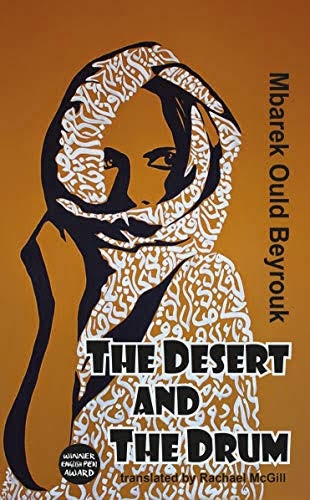
The Desert and the Drum

📍 Mauritania 🇲🇷

Mauritania is a sovereign country in Northwest Africa. It is the 11th-largest country in Africa, and 90% of its territory is situated in the Sahara. It achieved independence in 1960 from French colonialism but has since experienced recurrent coups and periods of military dictatorship. Despite an abundance of natural resources, Mauritania remains poor. It was the last country in the world to abolish slavery, in 1981, and criminalised it only in 2007. (Source Wikipedia)

This book is the first novel ever to be translated into English from Mauritania. It was originally published in French in 2015 and translated by Rachael McGill in 2018. The book won the Ahmadou Kourouma Prize in 2016 (the prize was established in 2004 in honour of the Ivorian writer Ahmadou Kourouma, and it is awarded annually to works of fiction and nonfiction concerning Black Africa).

The story traces the journey of a young Bedouin girl, Rayhana, who has run away from her tribe and is on a mission to find the thing that has been snatched from her with force and deceit. While running away she has taken the sacred, symbolic and pious drum, rezzam, that belongs to her tribe and represents their pride and honour. She embarks on this perilous journey through the unforgiving Sahara and reaches a small town, Atar, and finally to the capital, Nouakchott. During this sojourn, she encounters various people who help her in their own ways, in achieving her mission, and also protect her from her tribe who are in search of her to retrieve their prized drum. Standout characters include that of the slave girl, Mbarka, who has now become a sex worker; and the very colourful and jovial queer guy, Hama.

The book is a raw, unapologetic and uncomfortable narrative of Rayhana’s turmoil. The chapters oscillate between the past and the present as does Rayhana’s thoughts from her secure yet stifling existence in her tribe, to the unknown and unwelcoming mores of the city life. She is torn about the fact that, she still cradles the belongingness she feels towards her tribe whilst despising the carefree and untethered cultural values of the city. She still remains a prisoner of her unpropitious upbringing, though freedom is now within her reach.

The author, Mbarek Ould Beyrouk, originally from Atar, is a journalist, who has written four books and has founded the country’s first ever independent newspaper. He gives an honest portrayal of the Bedouin life and their customs, and has kept the story rooted in Mauritanian ethos. The issues of patriarchy, misogyny, gender based violence, caste based oppression aren’t exclusive to Mauritania. Let’s get off our high horse, shed our condescension and pomposity, and examine the issues closely. They are as much prevalent behind the façades of glitzy high rises and modern lifestyles as they are in the humbling desert.

~ JUST A GAY BOY. 🥹

The Bride of Amman

📍Jordan 🇯🇴

This debut novel by the Jordanian writer, Fadi Zaghmout, originally written in Arabic (Aroos Amman), later translated into English by Ruth Ahmedzai Kemp, caused quite a stir when it was released. Understandably so, considering the bold and controversial issues it explores, which are often deemed taboo and blasphemous in the traditional Jordanian society. The story is told through five characters of Leila, Salma, Rana, Hayat and Ali; all living in the capital city, Amman. Through these stories, the author tackles the persistent and pertinent issues of patriarchy, misogyny, chauvinism, incest, rape, sexual abuse, homophobia, widely prevalent in the conservative Arab community. An Arab woman’s worth is equated with her ability to get married at the right age, be a dazzling bride and bear children, especially sons. Her career and education are just an ornament. Zaghmout repeatedly asserts how women have no authority or agency over their own lives and bodies, and their choices are subject to male dominance and approval. Particularly disturbing story is that of Hayat, who is raped and sexually abused by her own father; later chooses promiscuity with multiple married men to escape this horrid truth.

Zaghmout’s narrative is a poignant reflection of contemporary Amman, however, I felt, that at many instances, he has tried to infantilise the grave problems. Hayat, as a rape survivor, is shown to forgive her father for his unpardonable crime. Her choice of being promiscuous seems to be very flippant and it seems as the only way a woman can get over her sexual abuse past. Ali, a closeted Iraqi gay man, gets married to Leila, has a child, and continues to have gay sexual encounters on the sly. Leila later discovers his homosexuality and upon confrontation, chooses to accept her life as his wife, devoid of sex, delves steadfast into her career and turns a blind eye to his indiscretions. In the book, the men are forever exonerated for their crimes and wrongdoings, by the women. There’s always some “logical” reasoning to the way the men have behaved. This almost invisible, subtextual chauvinism can’t be ignored. Also, other than Salma’s story, the others seem to have the proverbial happy ending. This smacks of immature writing.

Majority of Indian gay men remain closeted and continue to have heterosexual marriages and children under the pretext of parental pressure and culture. They also have multiple gay liaisons after marriage with gay abandon (no pun intended) and literally no remorse. Are the Indian women too, like Leila, choosing to not see the obvious because of the pressure to stay married and the stigma of divorce? Or are they truly oblivious?

Though the book is about Ammani women, one can’t miss the fact, how close this hits home. Indian women, are still governed by the cis men around them, and it remains an ongoing struggle for them to establish their equality and agency.

~ JUST A GAY MAN. 🥺

The Tale of Aypi

Country : Turkmenistan 🇹🇲

This book set in Turkmenistan, focusses on the lives of the inhabitants of a small Turkmen fishing village located on the banks of the Caspian Sea. As the story begins, the people have been ordered by the central government to relocate to a nearby city and have been forbidden from fishing, since the government plans to build a hospice in the village along the coast. As the villagers acquiesce to the pressure, and lament on their loss; there’s one defiant man though, Araz, who takes it upon himself to fight the authorities against their autocracy, and also his own village folks against their docility and subservience. Araz’s story is interwoven with the fable of Aypi. Aypi was a girl from the same village known for her beauty and is wrongfully killed for her so-called transgressions then. Now, centuries later, Aypi comes back to haunt the villagers and confronts their unconcerned, chauvinistic and vapid behaviours. Through Aypi, the author depicts society’s nonchalant normalisation of patriarchy and misogyny. With its myriad other characters and their interpersonal dialogues and arguments, the book constantly debates the traditional versus modern ways of living.

While the events in the book take place during the country’s Soviet past, the author’s depiction of its authority then, is as much a social commentary on modern-day Turkmenistan’s totalitarian governance. This book is one of the first from Turkmenistan to be translated into English (by W.M. Coulson) for the international market. Despite being the country’s most internationally recognised and appreciated authors, A K Welsapar’s books have been banned in Turkmenistan. He was exiled in 1993 and currently lives in Sweden.

Though this story is about Turkmenistan, one can draw parallels to current day India. That’s the most disturbing bit.

~ JUST A GAY BOY. 😓