Universality

A lockdown rave by a group of nouveau political activists, The Universalists, becomes a crime scene that involves a gold ingot. Hannah is an investigative journalist trying to unearth the happenings of that day. Hannah has not had any luck in her professional life. She has been largely dissatisfied with her work and income and the pandemic has made it worse. So she jumps at the opportunity to investigate this outlandish story. The reportage propels her into the limelight; though when a movie adaptation of the crime is commissioned, she finds herself oddly sidelined.

The crime in question and also the first chapter of the book involves a young man, Jake, who bludgeons another guy, Richard Spencer, a capitalist mogul, with a gold bar and runs away with it. Jake is the son of Lenny, a journalist whose incendiary writing garners both controversy and admiration. These characters and a gold bar form the crux around which the author weaves in the story that becomes a powerful meditation on language, ideology and social justice. 

Natasha Brown’s’ second book, Universality, is a searing satire on the misuse, misinterpretation and manipulation of wokeness. The necessity of diversity in every sphere of life which had a global public interest leading to an awakening almost, has soon been chastised politically and has become a polarising topic. The liberality and equity that should be the cornerstone of any impartial society has become a means to manoeuvre the marginalised sections towards so called inclusive spaces just for tokenism and at the same time, these virtues have been weaponised as an attack on the meritocracy and social standing of the privileged and essentially a colourblind class. Through the characters in this book, Brown dissects the appalling banality of virtue signalling under the guise of which, multitudes of covert racism and ethnic appropriation take place and remain unchallenged. Brown’s language in the book reflects the performative morality that has become a part of the societal zeitgeist and goes unchecked in these polite, progressive circles which simultaneously is also quietly dismantling the real woke phenomenon and anti-capitalist doctrine.

The character that stood out to me in this ensemble of white characters was Lenny. A provocative writer who has positioned herself as an antiwoke messiah and whose speeches and writings now provide succour to the disgruntled elite. Her flippancy, her disregard for any possible retribution for her acerbic vitriol on liberalism yet commanding applause and admiration for her attack on chauvinism and misogyny, makes her a morally grey character. Despite her obviously problematic persona, I couldn’t stop myself from rooting for her when she stands her ground against the chauvinistic interviewer at the literature festival. This left me questioning my own moral compass and I was bewildered at my judgement or lack there of; that, when I was faced with racism and feminism, I chose a racist feminist without a second thought. And this brings me to the brilliance of Natasha Brown’s Universality, which has shown that racism, colorism and featurism can come disguised as feminism and diversity, and it can remain undisputed and oblivious. 

Natasha Brown, as an author has grown with this book. In Assembly, her writing was a tad stifling and claustrophobic. It almost felt, she was being cautious. However, with Universality, she is decidedly defiant. She’s unabashed, unapologetic and completely fearless. As a Black author, Brown has written Universality, which is about white people and their morbid obsession to be seen as an all-encompassing and racially benevolent group. Hence, the book is radical in many ways and presents a brand new voice that is determined to make you uncomfortable about your conscious and unconscious biases. 

Now, I do have a thought. If one were to replace the whites in the book with the upper castes in India, the language would not change at all. The dynamics would hold. Because there is, I believe, a sinister universality that ties racism and casteism together. 

~ JUST A GAY BOY. 🌝🌚

Assembly

A Black British woman whose family is from Jamaica, has had a good education and is now working as a financial executive in London who’s slated for a promotion. She has a white boyfriend whose family has an estate and has been bestowed with ancestral wealth. She is hesitant to attend the boyfriend’s parents’ anniversary party at their estate over the weekend. The boyfriend adores her and is excited to introduce her to his family. Now, from the outside, everything seems like a dream and the narrator is seemingly living the proverbial good life. Is she really?

Assembly is an internal monologue of the narrator as she goes about living her life. A life that appears perfect to the world, is in actuality, diametrically opposite to it. The narrator visualises herself and her life through the racial constructs of an apparently colourblind society only to find it hypocritical and dismissive of her struggles and lived experience. Colourism and chauvinism come disguised as diversity that beguilingly disregards her competence and contribution. Microaggressions become insidiously inherent part of her personal and professional relationships. Her existence always gets measured by her achievements and simultaneously the same achievements get scrutinised for their authenticity and credibility. The narrator is forever filtering and self editing her thoughts and actions leading to an unconscious reaction or an instinctual internal censoring. This habitual silencing results in extreme frustration, repressed emotions, distress, resentment causing alienation, emotional dysfunction and cognitive dissonance. 

Natasha Brown’s Assembly is a brave new voice in the world of literature that is trying to dismantle racism and colourism. The acerbic rhetoric feels like a whiplash at times. The brevity of the writing is no hindrance to the profundity each word provides to the central issue. Brown’s economy of language is a reflection on the stifling effects of racism on consciousness and conditioning. However, despite the meritocracy, I did find the rendition a tad flawed, especially when the narrator gets diagnosed with a disease. I couldn’t help but wonder, the necessity of that incident and also the intention of the author behind it. Was the disease introduced as a way to mollycoddle the readers into sympathising with the narrator and to align us with her complicity? Was it an easy way out for the author to refrain the readers from taking a stand against the narrator for the choices she never makes and for her perpetual rumination on society’s racism? Was Natasha Brown subtly illustrating the physical toll of suppressed anger and racial frustration? I know my opinion does appear controversial, but I wouldn’t have minded the narrator’s connivance, hesitancy to question and non confrontational stand, because she’s the victim of covert racism and that is something, that is always deemed speculative and unsubstantiated. So though we readers would have wanted the narrator to take a stand, to pacify our unsettled emotional core, we need to ask ourselves, if the narrator had a choice. And if she did have a choice, could she have executed it and at what cost? Hence, I wonder again, if Natasha Brown was deliberate in sugarcoating the narrator’s helpless reality. 

Nonetheless, keeping my nitpicking aside, I do strongly recommend Assembly

~ JUST A GAY BOY. 😐

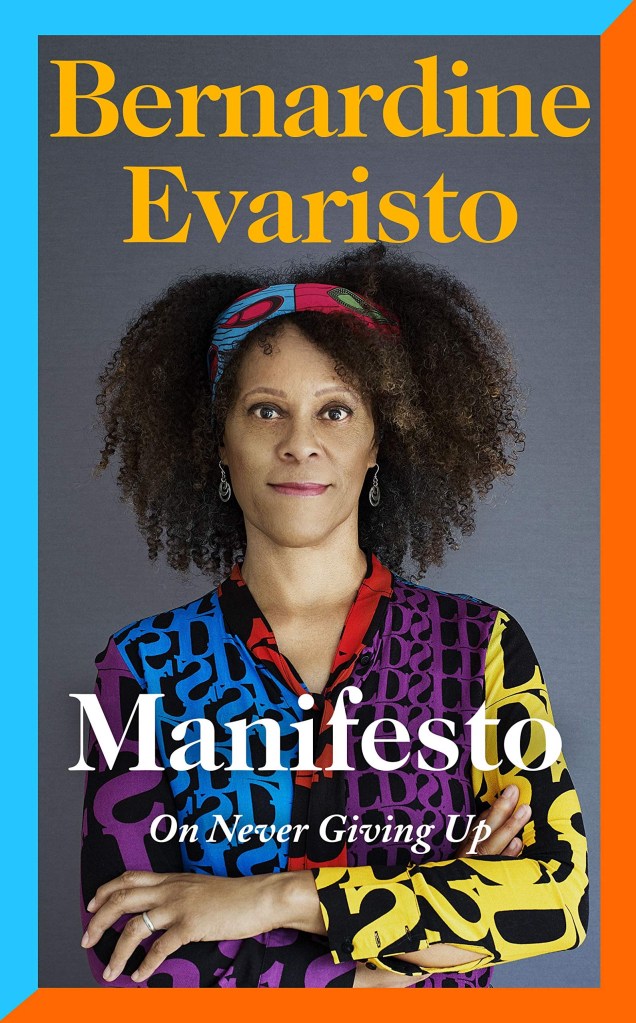
Manifesto

After having read the brilliant “fusion fiction” book, GIRL, WOMAN, OTHER by the astute and dynamic writer, Bernardine Evaristo, which was a vibrant and unapologetic narrative on race, intersectional feminism, ageism, gender, sexuality told by a plethora of Black women; it completely shifted my understanding about the said things. The book also won the Booker Prize in 2019 and hence she became the first Black woman and first Black British person to have won the award. I personally feel, Bernardine Evaristo, is one the best writers of our times who doesn’t shy away from decoding false narratives surrounding complex sociopolitical issues. Her unabashed truth telling jolts us from our stupor and makes us see the world through a more humane lens. And now, the writer’s latest book is a memoir manual, wherein, she talks about her life from growing up years to relationships to her writing methodology, in the most candid manner. The book is divided into seven chapters and through this she takes us on this journey of self exploration and growth. Growing up as a mixed race woman in a white-washed London society of the 1960s and 70s, was challenging. However her bold and nonconformist attitude made her convert these challenges into moments of opportunities. She says, up until the Booker Prize win, there were people who never took her seriously despite having published seven books by then. While describing her flings and romantic relationships she doesn’t shy away from taking ownership of her flaws in a particular relationship, and at the same time also acknowledges how each relationship, whether good, bad or ugly; has shaped her to be the woman she is today. She ponders over various aspects of her sexuality from being a lesbian lover to currently being married to a man. A greater part of the book, she meticulously describes her writing process; how she evolved from being a poet to a prose and fiction writer. She brazenly admits to having insecurities and fears regarding her writing. It took years and lots of self assurance and self belief to negate her own scepticism. As she elucidates the process of owning her agency on her creativity, it serves as a manual for all the writers and creative professionals who are stuck and keep questioning their ability to write and create.

Memoirs can be tricky. It can become very indulgent. It’s always a fine line to tread from it not seeming like a boastful venture. However the ingenious and modest, Bernardine Evaristo, does this job with utmost precision. As you read the book, through all her experiences and expertise, you get a sense of humility and grace that’s at the core of her writing and existence. This isn’t one of those flippant and narcissistic autobiographies; instead, it’s intelligent, intuitive and incandescent. You come out of it feeling restful and seen.

~ JUST A GAY BOY. 🤓

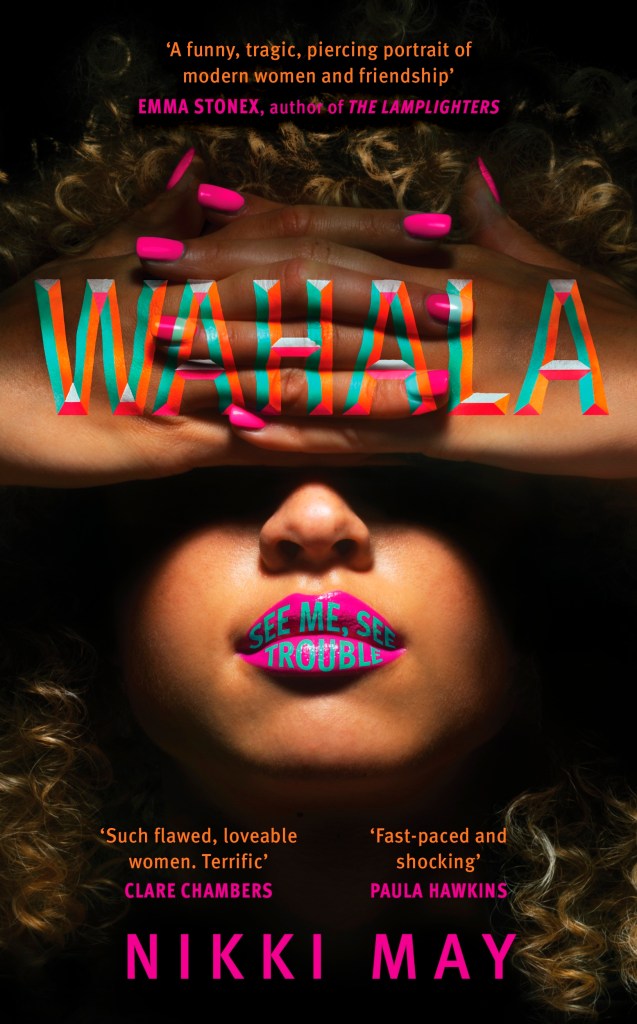
Wahala

Wahala in Nigerian Pidgin (Naija) means trouble. The three central characters of this book are mixed race women, Anglo-Nigerian; Simi, Boo and Ronke; who live and work in London. Simi and Boo are married to white men, Martin and Didier respectively; while Ronke’s boyfriend, Kayode is Nigerian. Enter wahala aka Isobel, a friend of Simi’s, who is now hell bent on being ‘best friend’ with each of the three women. Isobel is adept in creating a world of misunderstandings and the women find themselves embroiled in this mayhem. What had seemed to be a smooth and perfect friendship pre-Isobel, had now morphed into an ambiguous, erratic and frustrating experience lacking mutual trust and respect, post-Isobel. Isobel becomes this catalyst in exposing their dark secrets, emotional infractions and lies. As a master puppeteer, she manipulates their insecurities and fears and makes them dance out of their friendships and relationships.

Nikki May, writes this captivating story about flawed friendships with brutal honesty. She keeps it emotionally fertile while exploring its various psychological aspects. She drives through the point that just because a friendship has survived many years; it needn’t be the best. For that matter, any relationship that hasn’t nurtured a feeling of equality amongst its members, is destined for an upheaval.

The book is full of rich Nigerian culture. Food forms an important part of the narration and it has been written in the most visually delectable manner. At the end of the book, recipes for the most famous Nigerian dishes have been mentioned too. Though the climax felt a bit hurried and a tad dramatic, the book in itself is striking.

Of course, we don’t need an Isobel in our lives to cause Wahala and hence realisations. Maybe a keen insight would do!

~ JUST A GAY BOY. 👿

The Vanishing Half by Brit Bennett

This is a historical fiction on the American history of passing. The term ‘passing’ has been used primarily in the United States to describe a person of color or of multiracial ancestry who assimilated into the white majority to escape the legal and social conventions of racial segregation and discrimination ( source – Wikipedia). The story describes the lives of the light-skinned African American Vignes twins Stella and Desiree from the 1950s to the 1990s, wherein one twin lives life as a black woman in a small nondescript town of Mallard with her mother while the other passes as white and chooses to live an uppity life built on lies and deceit. The non linear narrative also weaves in the stories of their daughters, Jude and Kennedy, who live lives as a black and white woman respectively until their chance encounter, whereupon their lives, racial identities, beliefs collide and consume their existence. Jude and Desiree’s longing to unite the family is a juxtaposition to the denial and unwillingness of Stella and Kennedy. As their worlds clash and coincide, the women must now decide and redefine their racial histories within their current existence.

The brilliance of this book is indescribable. Brit Bennett holds a master class with this poignant and subtle rendition on race, gender, economic inequality and privilege. I particularly loved the character of Reese, a trans man going through gender affirming surgery. The relationship between Reese and Jude is tender and intimate as they discover love, respect and kindness for each other.

The book which has won Goodreads choice award and long listed for National book award is a compassionate telling of onerous issues. The writing has a subtext of poetic melancholy. The words of Brit Bennett are so powerful, they can echo your hidden fears and prejudices and at times subsume differences.

“Gratitude only emphasized the depth of your lack, so she tried to hide it.”

“You could drown in two inches of water. Maybe grief was the same.”

Ingenious!

~ JUST A GAY BOY. 🥲