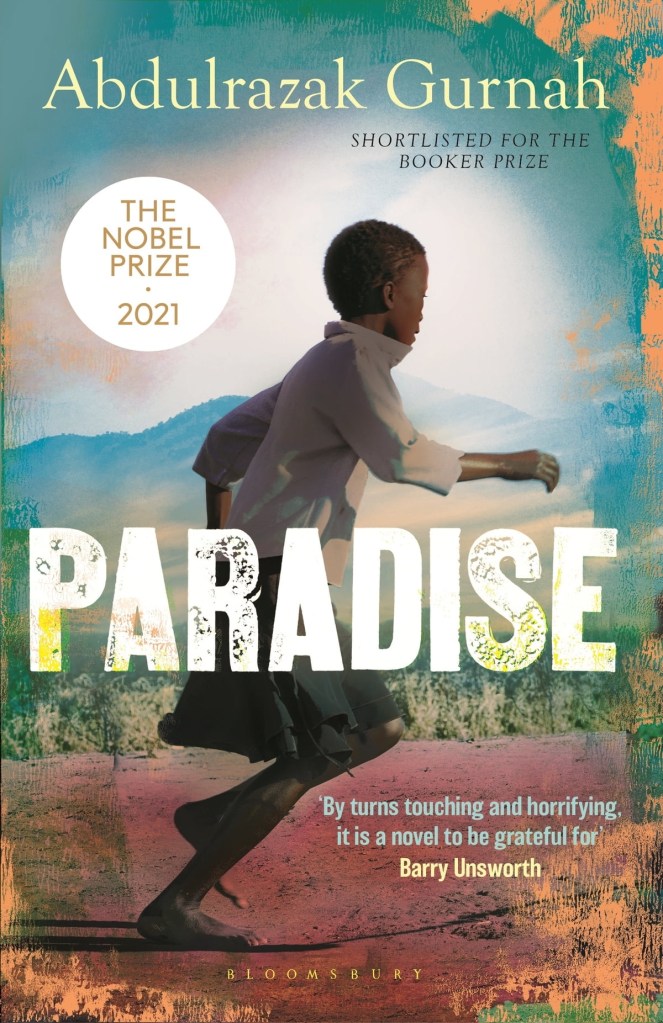
Paradise by Abdulrazak Gurnah

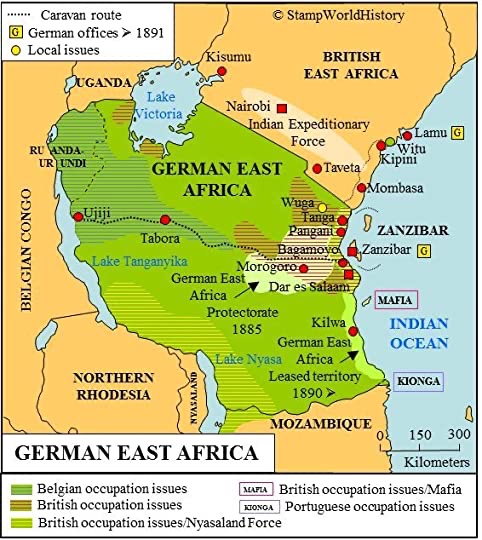
📍East Africa (Kenya/ Tanzania)

Nobel laureate, Abdulrazak Gurnah, needs no introduction. He won the Noble Prize in Literature in 2021, for his uncompromising and consistent retelling of stories from East Africa. He was born in 1948 and grew up in Zanzibar, and arrived in England as a refugee in the end of 1960s. Gurnah has published ten novels and a number of short stories. However, his fourth novel, Paradise; was a breakthrough, and was shortlisted for the Booker Prize and the Whitbread Award in 1994.

Paradise tells the story of Yusuf set during the late nineteenth century. Born in a remote village in East Africa, Yusuf gets sold off as a child, by his parents, to a wealthy Arab merchant, Aziz. The story then tracks his journey as he grows into his adolescence whilst being a servant and unpaid labourer to Aziz. As the region becomes increasingly colonised by the Europeans, the book draws parallels to the captive life of Yusuf. When he accompanies Aziz on one of the caravan journeys to the interiors of African hinterland, he encounters trading, enslaving, combat, and forms of human misery. This is when he also gets introduced to the Quran and the Muslim way of life. As Yusuf questions his purpose and principles in life, he seesaws between feelings of love and bereavement for his parents and the angst over his abandonment. He is also embittered by the cruel systems of patriarchy overwhelmingly prevalent in the region. Whilst toying with these mental conflicts, he also experiences nuances of romantic love. The climax is unnerving and surreal as Yusuf voluntarily chooses captivity over freedom. With this Gurnah makes this poignant observation of how humans would prefer their comfort zones, even if that meant being enslaved. Paradise can be paradoxical.

The book is unapologetically African in its presentation. The author takes us on this uncomfortable tour through parts of Africa, where poverty, classism and slavery remain cornerstones of the societal narrative. He doesn’t shy away from presenting differing opinions on various religions and their beliefs spoken through a myriad of characters including an Indian. He also vehemently discusses imperialism through the lens of a marginalised and colonised race. Stellar!

Gurnah’s latest book, After Lives, released in 2020, takes up where Paradise ends. Can’t wait to read!

~ JUST A GAY BOY. 😌

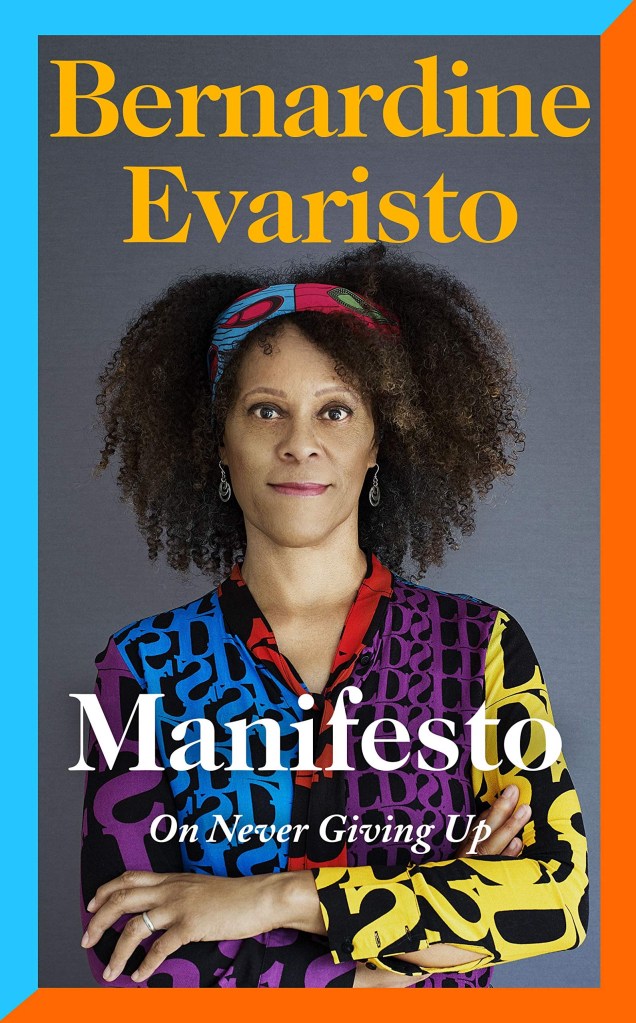
Manifesto

After having read the brilliant “fusion fiction” book, GIRL, WOMAN, OTHER by the astute and dynamic writer, Bernardine Evaristo, which was a vibrant and unapologetic narrative on race, intersectional feminism, ageism, gender, sexuality told by a plethora of Black women; it completely shifted my understanding about the said things. The book also won the Booker Prize in 2019 and hence she became the first Black woman and first Black British person to have won the award. I personally feel, Bernardine Evaristo, is one the best writers of our times who doesn’t shy away from decoding false narratives surrounding complex sociopolitical issues. Her unabashed truth telling jolts us from our stupor and makes us see the world through a more humane lens. And now, the writer’s latest book is a memoir manual, wherein, she talks about her life from growing up years to relationships to her writing methodology, in the most candid manner. The book is divided into seven chapters and through this she takes us on this journey of self exploration and growth. Growing up as a mixed race woman in a white-washed London society of the 1960s and 70s, was challenging. However her bold and nonconformist attitude made her convert these challenges into moments of opportunities. She says, up until the Booker Prize win, there were people who never took her seriously despite having published seven books by then. While describing her flings and romantic relationships she doesn’t shy away from taking ownership of her flaws in a particular relationship, and at the same time also acknowledges how each relationship, whether good, bad or ugly; has shaped her to be the woman she is today. She ponders over various aspects of her sexuality from being a lesbian lover to currently being married to a man. A greater part of the book, she meticulously describes her writing process; how she evolved from being a poet to a prose and fiction writer. She brazenly admits to having insecurities and fears regarding her writing. It took years and lots of self assurance and self belief to negate her own scepticism. As she elucidates the process of owning her agency on her creativity, it serves as a manual for all the writers and creative professionals who are stuck and keep questioning their ability to write and create.

Memoirs can be tricky. It can become very indulgent. It’s always a fine line to tread from it not seeming like a boastful venture. However the ingenious and modest, Bernardine Evaristo, does this job with utmost precision. As you read the book, through all her experiences and expertise, you get a sense of humility and grace that’s at the core of her writing and existence. This isn’t one of those flippant and narcissistic autobiographies; instead, it’s intelligent, intuitive and incandescent. You come out of it feeling restful and seen.

~ JUST A GAY BOY. 🤓

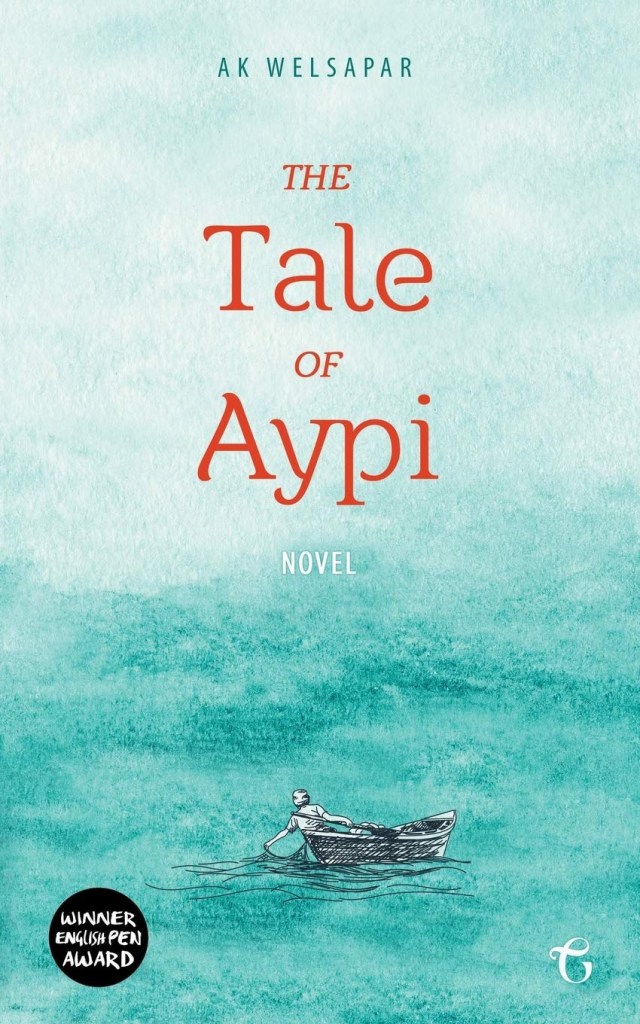
The Tale of Aypi

Country : Turkmenistan 🇹🇲

This book set in Turkmenistan, focusses on the lives of the inhabitants of a small Turkmen fishing village located on the banks of the Caspian Sea. As the story begins, the people have been ordered by the central government to relocate to a nearby city and have been forbidden from fishing, since the government plans to build a hospice in the village along the coast. As the villagers acquiesce to the pressure, and lament on their loss; there’s one defiant man though, Araz, who takes it upon himself to fight the authorities against their autocracy, and also his own village folks against their docility and subservience. Araz’s story is interwoven with the fable of Aypi. Aypi was a girl from the same village known for her beauty and is wrongfully killed for her so-called transgressions then. Now, centuries later, Aypi comes back to haunt the villagers and confronts their unconcerned, chauvinistic and vapid behaviours. Through Aypi, the author depicts society’s nonchalant normalisation of patriarchy and misogyny. With its myriad other characters and their interpersonal dialogues and arguments, the book constantly debates the traditional versus modern ways of living.

While the events in the book take place during the country’s Soviet past, the author’s depiction of its authority then, is as much a social commentary on modern-day Turkmenistan’s totalitarian governance. This book is one of the first from Turkmenistan to be translated into English (by W.M. Coulson) for the international market. Despite being the country’s most internationally recognised and appreciated authors, A K Welsapar’s books have been banned in Turkmenistan. He was exiled in 1993 and currently lives in Sweden.

Though this story is about Turkmenistan, one can draw parallels to current day India. That’s the most disturbing bit.

~ JUST A GAY BOY. 😓

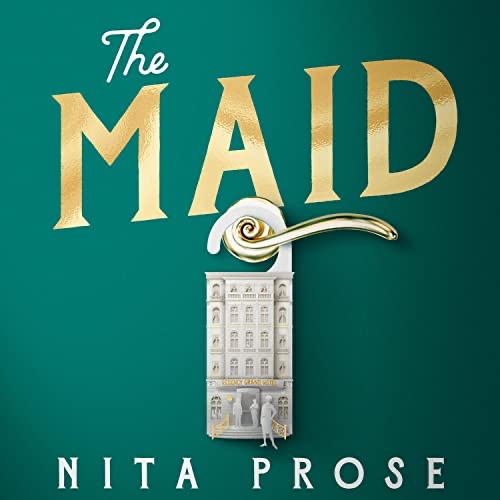
The Maid

This story is so much more than just a murder mystery. At the heart of it, it’s a story that encapsulates the human spirit; celebrates humanity and drives home the message that all of us are the same and kindness matters to each one of us. The protagonist is Molly Gray, a maid at the Regency Grand Hotel. She’s proud of her job and takes it seriously. Her personality and traits show similarities with Sheldon Cooper from TBBT. She finds it difficult to read people and surroundings, interpret their emotions, and decipher sarcasm. Hence she has a structure to her day and goes about it in the most meticulous manner. One day, when Molly discovers the dead body of a wealthy businessman, Mr Black, whilst cleaning his suite; she becomes caught up in the aftermath of the event, soon becoming the prime murder suspect.

Throughout the narration, Molly comes across resilient and determined. Despite her inability to understand the world around her, which does chip away at her confidence and makes her question her self worth; she stands tall and never lets go of her pride and dignity. Her command of the English language coupled with requisite politeness, makes Molly Gray, the most lovable character.

Kudos to the author, Nita Prose, for portraying such a delightful character like Molly and centring her in the midst of a murder mystery. Through her, the author makes a strong case for, how assumptions based on someone’s appearance and station can be detrimental to them. The narration is fast paced and by the time it’s the end, you are rooting for Molly and the real murderer remains just an afterthought.

“It’s not your station in life that matters. It’s how you conduct yourself that counts.”

“Everything will be okay in the end. If it’s not okay, it’s not the end.”

~ JUST A GAY BOY. 🤗

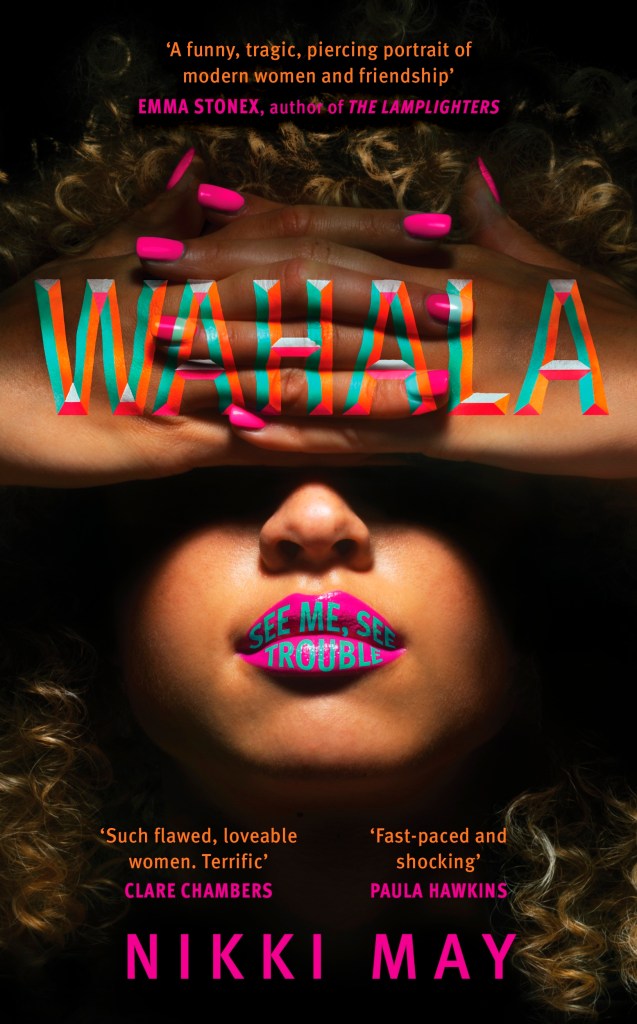
Wahala

Wahala in Nigerian Pidgin (Naija) means trouble. The three central characters of this book are mixed race women, Anglo-Nigerian; Simi, Boo and Ronke; who live and work in London. Simi and Boo are married to white men, Martin and Didier respectively; while Ronke’s boyfriend, Kayode is Nigerian. Enter wahala aka Isobel, a friend of Simi’s, who is now hell bent on being ‘best friend’ with each of the three women. Isobel is adept in creating a world of misunderstandings and the women find themselves embroiled in this mayhem. What had seemed to be a smooth and perfect friendship pre-Isobel, had now morphed into an ambiguous, erratic and frustrating experience lacking mutual trust and respect, post-Isobel. Isobel becomes this catalyst in exposing their dark secrets, emotional infractions and lies. As a master puppeteer, she manipulates their insecurities and fears and makes them dance out of their friendships and relationships.

Nikki May, writes this captivating story about flawed friendships with brutal honesty. She keeps it emotionally fertile while exploring its various psychological aspects. She drives through the point that just because a friendship has survived many years; it needn’t be the best. For that matter, any relationship that hasn’t nurtured a feeling of equality amongst its members, is destined for an upheaval.

The book is full of rich Nigerian culture. Food forms an important part of the narration and it has been written in the most visually delectable manner. At the end of the book, recipes for the most famous Nigerian dishes have been mentioned too. Though the climax felt a bit hurried and a tad dramatic, the book in itself is striking.

Of course, we don’t need an Isobel in our lives to cause Wahala and hence realisations. Maybe a keen insight would do!

~ JUST A GAY BOY. 👿

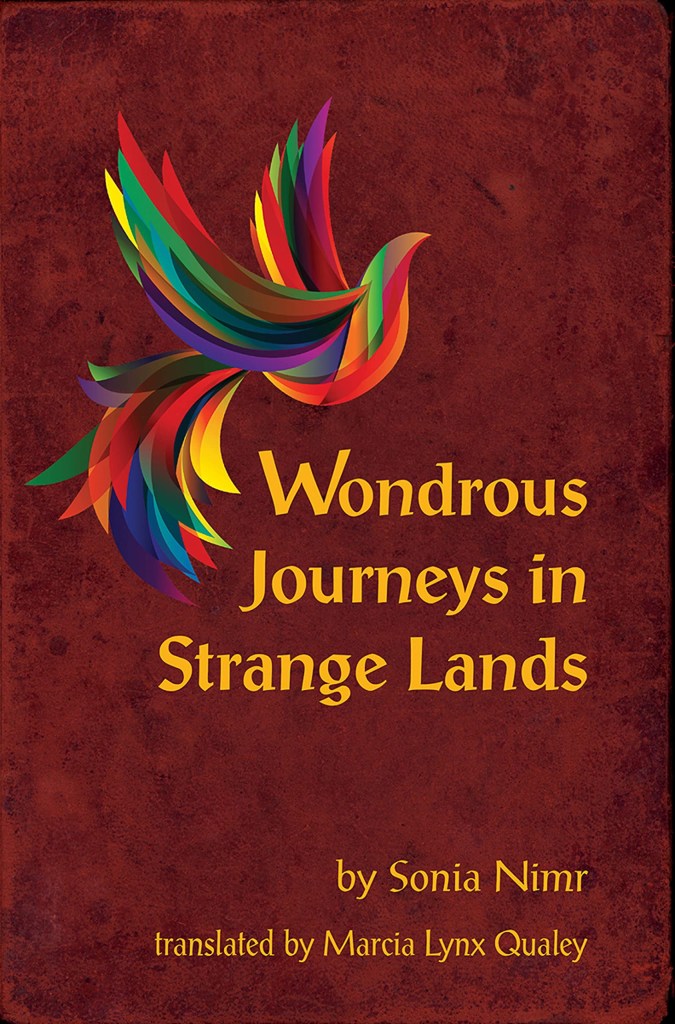
Wondrous Journeys in Strange Lands

This wonderment of a book, written by Palestinian author, Sonia Nimr; and remarkably translated by Marcia Lynx Qualey; is winner of the prestigious Etisalat Award and also the recipient of the Translation award at the Palestine Book Awards 2021. It’s a historical fantasy and literary folklore that follows the journey of the protagonist Qamar. Qamar, who is born in a village in Palestine, decides to travel the world after the death of her parents, to honour their dreams. This decision takes her on a roller coaster ride, crossing deserts and seas, to Jerusalem and Gaza, Egypt, Morocco, Tangier, Andalusia , Genoa, Abyssinia, India, Ceylon, Maldives and Eden in Yemen. From being sold off as a slave to disguising herself as a man to become one of pirates in a pirate ship, to ultimately finding the love of her life and marrying him, Qamar, has an adventure like no other. Through this, she assumes the role of a healer, utilising her knowledge of herbal medicine to heal and cure diseases. Her empathetic persona wins her friends and confidantes; while her gift of storytelling gets her out of the strangest situations. During this wondrous journey, as Qamar, battles grief, hopelessness and heartache, she remains determined and never lets her gender act as a barrier to learning, to travel and to pursue. This feminist fable is not just an exploration of the cultures and stories of the Arab world, but also an effective combination of legend and history.

~ JUST A GAY BOY. 🤓

Co-wives, Co-widows

I am beyond delighted to have come across this gem of a book, thanks to Brittlepaper, an Instagram account dedicated to African literature. The book, originally written in French, by Adrienne Yabouza and translated by Rachael McGill, is set in Bangui, the capital of Central African Republic (CAR). It’s a story of two women, Ndongo Passy and Grekpoubou, wives of Lidou. Both women live amicably in adjacent houses and are fond of each other. When Lidou suddenly dies, the women are left bereft and are forcibly expelled from their homes with their children by Lidou’s cousin and his sister, who plan on taking away all of his inheritance. The co-widows then take it upon themselves to seek justice for the retribution inflicted on them just because they are widows. However, the justice system of CAR fails them and both women are forced to return to their respective parents’ homes. But grit and determination never leave Ndongo Passy and Grekpoubou, who choose to be hopeful and don’t shy away from owning their share of joy and happiness.

Yabouza tells a very compelling and uplifting story. This is an exemplary narration of women supporting women and gaining confidence and strength from each other. Set in the backdrop of political turmoil and presidential elections in CAR, the author paints a very poignant picture of the plight of women in the country, especially widows. She highlights the deep rooted patriarchy and chauvinism in her unwavering writing. And at the same time, it’s a joy to discover and imbibe oneself in the culture and tradition of the people of CAR. I found the descriptions on food and clothes so beautiful, that I couldn’t stop romanticising Bangui.

Books can transcend borders even during a pandemic. Allow this one to take you to CAR!

~ JUST A GAY BOY. 🥰

The Promise

The 2021 Booker Prize winning book is piercing and provocative. It delves into our hidden subconscious racist mentalities which can seem subtle and harmless from the outside. The story is about a white South African family, the Swart’s, and is told through four funerals extending over different time periods, encompassing South Africa’s transition out of apartheid. When Rachel Swart is on her death bed, she asks of her husband, Manie, for a promise, wherein he would give the ownership of their current home and it’s accompanying land to their black caretaker/ maid, Salome. This conversation is overheard by their youngest daughter Amor. However, the promise is never kept and is conveniently forgotten or shelved citing legalities. Despite Amor reminding her father and her other siblings, Astrid and Anton, of this promise, nobody bothers to consider it. This betrayal sort of falls as a curse on this family wherein everyone, other than Amor, dies a tragic death. And that’s when, Amor hands over the property to Salome, but is then forced to confront her subdued racism and her inherent fecklessness.

The book focuses deeply on the skewed and troubled interpersonal relationships between the parents and the siblings and between the siblings themselves. The dysfunctional and patriarchal upbringing damages each of the children, as they suffer from insecurity, lack of self worth, and body image, relationship and mental health issues. The author, Damon Galgut, doesn’t shy away from addressing the reader directly in the midst of the narration to point out our prejudices and bigotry. His rendition of complex human emotions and the subliminal satire is ingenious. Restitution when not done on time, need not guarantee absolution.

This book set during the apartheid times has won the prize this year, when we are also witnessing a travel apartheid against South Africa and other African countries due to omicron.

Have we, as a world, learnt anything?

~ JUST A GAY BOY. 😔

The Sanatorium

Another lengthy and laborious read from the thriller stack of Reese Witherspoon’s book club, Hello Sunshine. With this, I am beginning to doubt her choices when it comes to thrillers. Even her previous picks were duds. In this book, the protagonist, Elin, a detective in the UK, who is battling PTSD associated with the death of her younger brother; is now on a vacation with her boyfriend, Will, in a luxury hotel in the Swiss Alps. The hotel has a dark and sinister past. Before the renovation, it used to be a sanatorium for Tuberculosis patients where some questionable practices were carried out. However, Elin and Will are here in the hotel for the engagement party of her other brother Isaac with Laure. As the weather becomes increasingly harsh with an impending blizzard, Laura disappears suddenly on the eve of the engagement. This is followed by a spate of brutal murders and Elin takes it upon herself to find the murderer.

Elin, does the most shoddy job as a detective. Also her intuitions are forever wrong. Her obstinacy to remain deliberately difficult because of the traumatic past, makes her the most annoying character. Will comes across as a narcissist who keeps gaslighting Elin. It’s appalling to note that the author, Sarah Pearse, has allowed it and has shown Elin to be accepting of it.

It’s become a trend to put troubled and damaged women as protagonists of thrillers. Very few authors are able to do justice to it and hence assimilate the personal traumas with the thriller plot line. This story should have been buried in the blizzard itself. It’s so ridiculous and drab, which makes me wonder at my own weird compulsion to having completed it.

Avoid!

~ JUST A GAY BOY. 🤢

SPARKS LIKE STARS

This book is about Afghanistan, it’s people and their truths. It’s never easy to talk about a country decimated by war and various vested interests which have given rise to the Taliban. So when Afghan American author and paediatrician, Nadia Hashimi, writes, you sit up and take notice. She has authored several books on Afghans; but in this recent release, she speaks about the trying and traumatic life of a person escaping death and war. The first half of the book, shows the protagonist Sitara, as a ten year old surviving the military coup against the Afghan government that happened in 1978 Kabul. She knows her family is dead and with the help of a palace guard Shair, she lands up with Antonia, an American embassy worker, who helps her escape from Kabul to the United States. The story then fast forwards to 2008 in the second half, where Sitara has a new name and is a practising onco-surgeon in NYC. However, after so many years, when a chance encounter happens with Shair who is now her patient, it brings back the pent up rage, hidden grief and all the unspeakable traumas of the past. She now has to navigate her present by acknowledging her desire to reclaim her family and heritage, which leads her back to Kabul.

The author, through Sitara, paints a moving picture about survivors guilt. The emotional turmoil of it can be seen in every aspect of her life. The book depicts the vibrant culture of the 1970s Afghanistan which is heartwarming. But it’s gut wrenching to think of the present day grim situation. The world has watched in silence as a beautiful country stands ruined, and it’s convivial people wronged.

~ JUST A GAY BOY. 😞