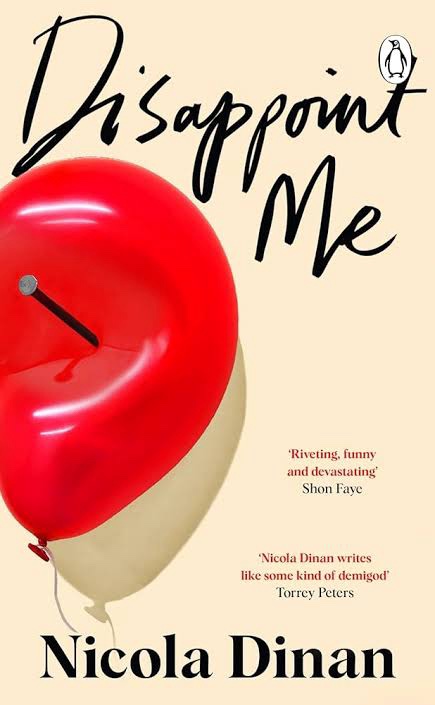
Disappoint Me

When Max, a thirty something trans woman wakes up in the hospital after falling down a flight of stairs at a New Year’s party, she decides to take charge of her life. She has split from her boyfriend, Arthur, and the modern dating scene in London makes her anxious, where every swipe feels like a psychological landmine. Nonetheless she decides to sample its myriad offerings by deciding to go on a date with Vincent. His Asian background reassures her a bit and she soon also realises that he is thoughtful, kind and caring. As they embark upon this journey together, Max understands the love Vincent harbours for her and his earnest commitment towards being in a relationship with a trans woman. He is considerate with his words and language and ready to accept his misgivings. However, he is hesitant about telling his conservative Chinese parents about Max. This irks Max and despite her best attempts at trying not to dwell on it, subconsciously it keeps gnawing at her. An innocuous thing soon becomes a bone of contention and every banter and argument starts to carry its essence implicitly. If that were not enough, and add to it current dating culture’s panic and emotional pandemonium, there’s a troubled past that Vincent harbours in secret, which is bound to disrupt his relationship with Max once she finds out. 

Disappoint Me is a meticulously clever and nuanced take on contemporary relationships and partnerships. Max and Vincent embody the quintessential emotionally dysregulated millennials as they navigate a relatively new and fragile relationship. Max is secure in her trans personhood but now, after being pair-bonded with Vincent she starts questioning everything about it, from its integrity to its malleability with a straight partner. Vincent on the other hand, seems to be unsure of his wholehearted attempts at traversing this queer relationship and is constantly wondering if he’s failing Max. Both Max and Vincent seem to be holding back their true selves during much of their communication for the irrational fear they feel in revealing their real personalities. Vincent straddles the romantic pressures of being the partner who is expected to introduce Max to his family, and the parental pressures of being the ideal son who will give his parents, their grandchildren. Max’s tryst with the complex emotions of self sabotage prevents her from being fully transparent with her feelings, instead, it leads to misunderstanding and misinterpretation. As she is settling into the ennui of having a new boyfriend post the breakup, doubts, revelations and reservations take her back into a state of restlessness and a previous, familiar world of disappointment.

While Max and Vincent come across as scattered, confused and a tad obsequious; some of the supporting characters bring the humour and spontaneity to the mundanity of a bougie existence in London. Max’s friend, Simone, is pragmatic about dealing with everyday situations but punishing when dealing with race and gender politics. The duality and dubiety of her personality comes forth when she gets accused of body shaming and unprofessional conduct. The standout character for me was Alex, whose unfading presence in the book heightens the narrative. She is assiduous and prudent about her decisions. Her quiet fortitude and restraint speak volumes in contrast to the emotional volatility around her. The author’s portrayal of most of her characters as sanctimonious, impetuous and solipsistic feels deliberate and conforming to the evolution of romance, camaraderie and cultural mores. 

Nicola Dinan, is a British-Malaysian novelist and essayist who has swiftly become a celebrated voice in contemporary literary fiction. Her debut novel, Bellies won the Polari First Book Prize and was a finalist for the Lambda Literary Award. Nicola’s writing is witty, perceptive, conspicuous, incisive and complex. She meanders and ruminates on the real life trans experience through Max’s character, hence presenting her as layered, multidimensional and deeply human. That’s the beauty and purpose of Dinan’s language which presents people with flaws, insecurities and imperfections, and yet who are committed to living and loving. Her prose doesn’t cater to the gaze of cisnormative audiences; it gives trans women the room to be everything: angry, confused, loved, lonely and free. Her writing feels untethered, grounded in emotional realism and disinterested in perfection. Queer relationships and trans representation are the necessity of the hour and Dinan’s narrative puts it at the forefront of the social milieu in all its glory. Disappoint Me is so frighteningly accurate that it’s certainly going to be a part of the literary zeitgeist and Nicola Dinan’s voice, agency and craft are here to stay. 

~ JUST A GAY BOY. 🏳️‍⚧️🏳️‍🌈

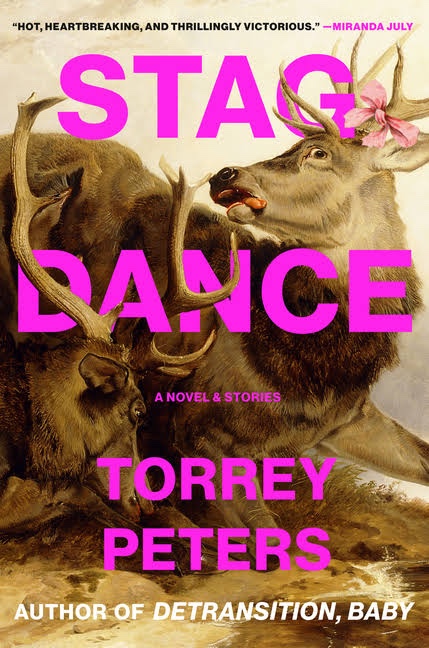
Stag Dance

Torrey Peters is back with a brand new book after her phenomenally successful  genre bending debut, “Detransition, Baby”. Her debut work made her one of the best trans writers of our times and also got her many awards and nominations. Now, does this new book, follow its predecessor’s footsteps? Let’s find out.

Stag Dance is a collection of three short stories and a novella. There’s no theme that’s connecting the stories. They range from dystopia to old world, from rigid sexuality to fluid and questioning genders and sexualities, from morality to immoral obsessions, from functionally perverse to dysfunctionally obtuse narratives.

The story, Infect your friends and loved ones, set in a dystopian future, has two trans women, exploring their troubled and harmful relationship dynamics, through emotionally abusive codependency that’s morphed into a toxic, traumatic bond. They navigate the above entanglement in a world where humans have lost the ability to produce their own sex hormones after a pandemic and these and other trans women are obsessing over animal estrogens. In the story, The Chaser, the narrator is a boy sharing a boarding school room with another boy, Robbie, who’s effeminate mannerisms and curvy body gets the narrator infatuated with him. What follows is a sequence of events in which the narrator gets sexually intimate with Robbie multiple times and even convinces him to cross dress for him. Later he ignores Robbie and when Robbie confronts him about his problematic attitude, the narrator refuses to acknowledge it at first as he feels obligated to safeguard his puritanical masculinity which he thinks is being threatened by Robbie. Eventually he does understand his feelings for Robbie but that comes with a grotesque scene involving the butchering of an animal and a hormonally charged climax. The story, The Masker, involves a cross dresser guy, Krys, exploring his new found identity but soon finds himself being emotionally manipulated by an elder trans woman and another cross dresser called, The Masker. The story does touch upon issues of self determination and fetishisation of queer identities and the obstacles one faces with the gatekeepers of gender and sexuality. The scenes of physical violence and emotional abuse by the Masker were unnerving and can open a pandora’s box of the untold, unreported assaults and aggressions that are prevalent and pervasive in the queer and trans communities.

The titular novella, Stag Dance, was the weakest link. Set somewhere in the past, it’s a story of timber pirates. The leader of the pack, Daglish, is organising a stag dance, wherein few of these brawny, muscular men dress up as women for a night of drinking, dancing and debauchery. One of the beefy guys, Babe, fancies Daglish, while Daglish is already having a clandestine sexual relationship with another guy Lisen. The days leading upto the dance sees a rise in the sexual tensions between the trio. In the meantime, there occurs a slip up and betrayal from both Babe and Lisen respectively towards Daglish when they are assigned a task. As we approach the apogee of the novella, we find the three characters trying to decipher their ambivalent and ambiguous sexuality in this hyper masculine and chauvinistic setting. The novella is tedious, underwhelming and the usage of rural western American lexicon makes it dreary.

Stag Dance, the book, seems like a missed opportunity. I did say in the beginning that there wasn’t an obvious theme connecting the stories, but on examining carefully, all the stories carry the underlying subtext of shame and bullying. There are a lot of bullies in the book and they seem to have the most prominent voice. Rationality and nuance get lost in the overbearing attack by prejudice and stereotypes, which is what majorly happens in the real world too. Probably, Peters deliberately wanted to portray this dichotomy of existence between what is seen and unseen, felt and unfelt. Though the author’s intentions are brave and righteous, they get muddled in the irreverent and irrational script. I understand, it’s a tough act to follow something as groundbreaking as Detransition, Baby. While Detransition, Baby was a uniquely liberating singular voice that stood out in the queer and trans literature landscape; Stag Dance feels like a cacophony of many confusing and confining voices. It does come across as an experimental piece of writing, but was this risky experiment necessary?

~ JUST A GAY BOY. 🫣

Wild Geese

Wild Geese, written by trans writer, Soula Emmanuel; the 2024 Lambda Literary Awards winner for Transgender Fiction; is a vivid exploration of the complexities of human existence, especially when people refuse to conform to their societal perceptions. Phoebe Forde, is a thirty year old Irish trans woman, three years into her transition, pursuing her PhD from a Swedish University and living in Copenhagen, Denmark. She leaves Ireland to chart a new life for her as a trans woman, and to escape from a life that was no longer serving her. She is living a pretty nondescript life in Copenhagen with her dog, when suddenly one day, her ex girlfriend Grace, shows up at her doorstep.

The book is essentially what happens between Phoebe and Grace over one weekend. Their past lives, their individual and shared traumas, their anger and insecurities, their contemplations about a blurry future get sometimes muddled, sometimes real and many times jarring in the present, as they speak unfiltered, not shying from the awkwardness of each other’s presence, yet getting caught in the awkwardness of their truth and lies, things said and unsaid, emotions discerned and disregarded, leading to an incongruence of expectations and a cacophony of explicit suppositions often blanketed by a symphony of territorial understanding.

Phoebe comes across as a very real person having the rightful fears and anxieties about her existence so much so that, she prefers anonymity. The author sensitively and sensibly portrays her experience as a trans woman without making it a spectacle ever. Phoebe isn’t out there to challenge people’s beliefs and wage a war against transphobia, rather through her confusions and complications, shows her authenticity, vulnerability and reality. Even when Grace, with her preconceived notions provokes Phoebe, she prefers to remain calm and engages her in an esoteric debate over bodies, minds and belongingness.

The writer, Soula Emmanuel, an Irish trans woman, whose debut work is Wild Geese, has used the book as a meditative consideration on a trans person’s lived experience. It is quiet, benevolent and benign. Soula tactfully never tries to answer all the questions that readers may have about Phoebe. Through her nuanced writing, she emphatically states that trans lives are not for scrutiny and examination. The dreamy Copenhagen forms the perfect backdrop to stage Phoebe and Grace’s chance rendezvous. However, there were times, wherein I felt, the prose to be too metaphorical and the language difficult. The conversations between Phoebe and Grace are easy to read, but Phoebe’s internal monologue seems demanding in terms of the language. My pedantic views shouldn’t really stop anyone from picking this profoundly glorious book. An astute, unambiguous, unapologetic and forthright voice in Trans literature. Bravo Soula!

~ JUST A GAY BOY. 🏳️‍⚧️

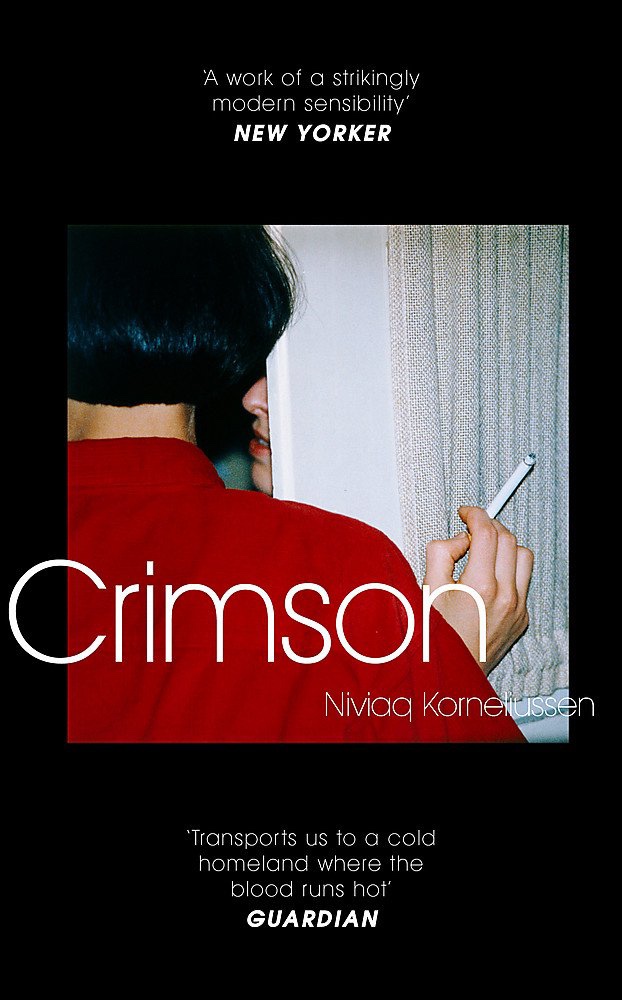
Crimson by Niviaq Korneliussen

📍Greenland 🇬🇱

First published in Greenlandic in 2014 as Homo Sapienne, the book was then translated by the author into Danish, a version that went on to receive Nordic acclaim, being nominated for the Nordic Council’s Literature Prize. In 2018, the UK translation, Crimson (released as Last Night in Nuuk in the US in 2019) was published, converted from Danish by Anna Halager. Events unfold at a startling pace in this book, told through the lives and stories of its five protagonists. Fia, has no love for her longtime boyfriend, and is now repulsed by his touch and presence. She breaks up with him, only to fall head over heels for Sara. Inuk, Fia’s brother, is a closeted gay guy and is in a secret relationship with a prominent personality from Nuuk. Arnaq, Inuk’s best friend and who is temporarily hosting Fia at her apartment, has unresolved childhood traumas which has lead her to alcoholism and a self destructive “party” lifestyle. She is smitten with Ivik. Ivik, who’s story is the most heartwarming and queer affirming, is struggling with the label of being a lesbian and sexual intimacy with girlfriend Sara; later realises his gender dysphoria. Sara, who actually makes Ivik realise the above, is grappling with loss of the relationship, the birth of her niece, and her simmering attraction for Fia.

The book is an exploration of various nuances of gender and sexuality. The author, a queer woman and native Greenlander herself, asserts that queerness cannot be explained by a stringent and linear definition. Queer individuals define it for themselves. Through it’s myriad characters, Niviaq, makes space for an unbridled queer narrative that’s messy, flawed, imperfect, inconsistent and even inconsequential at times. Their internal dialogues and personal struggles, conveyed effortlessly by the author, is reminiscent of every queer person’s journey, irrespective of their country of origin. The book also gives us a glimpse into Greenland (a former Danish colony which became self governing in 2009 after a referendum), it’s culture and life in its capital city, Nuuk. I feel, the original in Greenlandic, was way ahead of its time, since queer discourses and identities have become and are becoming mainstream only since the last couple of years. Bravo, Niviaq!

~ JUST A GAY BOY. 🥹

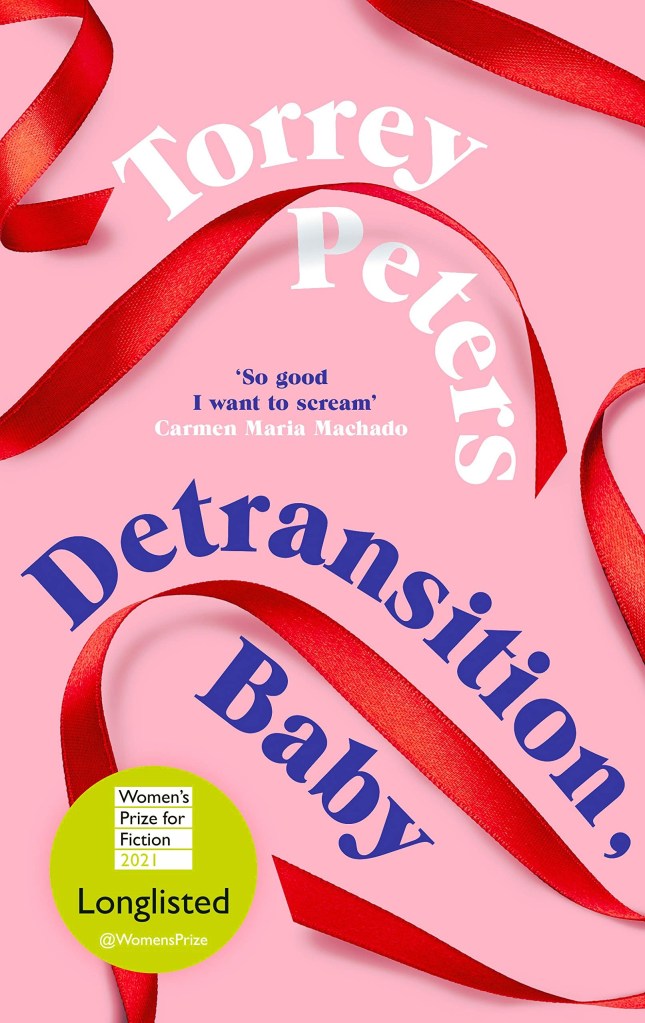
Detransition, Baby

This book, longlisted for the Women’s Prize for Fiction, is about trans feminine culture. The story navigates between it’s three principle characters; Reese, Amy/Ames and Katrina. Reese is a trans woman who is forever walking a fine line of societal perception of her trans-ness and her own reality of being a woman. She is desperately wanting to be a mother however her inherent resentment and angst makes her sabotage all the good choices and relationships. It makes her seek transphobic and misogynistic men for sexual gratification who leave her depleted and consumed.

Amy is a trans woman who later detransitions to Ames, due to complicated reasons. Amy and Reese were in a romantic relationship previously. However, Ames now is involved with Katrina who is a cis woman and has got her pregnant. This circumstance and each of the characters’ insecurities forces the three of them to consider the possibility of all three parenting the unborn child.

This book is a no nonsense yet vulnerable storytelling of trans lives. The characters are damaged and dysfunctional and the author doesn’t try to sugarcoat or patronise it. It’s a believably chaotic and nuanced exploration of modern relationships and parenting. The author deftly handles issues of gender, detransitioning, heteronormativity and queer culture with sensitivity and impartiality.

Through the book, Torrey Peters, brings to life an experience of human relations via trans and cis lived truths and bourgeois realities. Torrey who is a trans woman herself, presents intersectionality as a layered subtext throughout the book. This leaves us, as a reader, questioning a lot of our assumptions and prejudices.

In a word, Triumphant!

~ JUST A GAY BOY. 🥳