A Guardian and a Thief

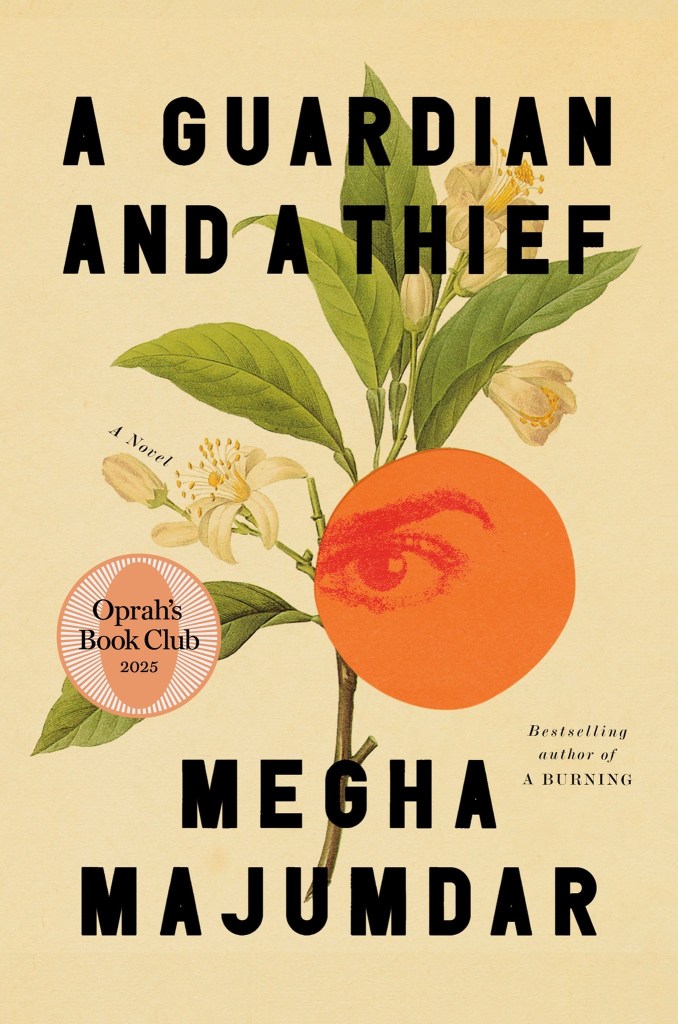
Some books are so bad that there can be no redemption for them. That’s precisely how Megha Majumdar’s A Guardian and a Thief appears to be. Since it came with great appreciation from none other than Oprah and was even her book club’s pick, also having been shortlisted for the National Book Awards, it made me wonder what exactly made this book a “shining jewel”, particularly in the eyes of an American readership. To put it bluntly, this book has been written by an NRI for a Western, specifically American, audience. It ticks every box when it comes to caricaturing and stereotyping Indians through a familiar western gaze. What is especially astonishing is that despite having lived in India for nineteen years, Majumdar still chooses to pander to this gaze by reproducing a shoddy and pathetic poverty porn. This raises a larger and more troubling question: what should be said about the literary genius of someone like Oprah when they champion a book like this which exemplifies lazy writing highlighting all the tropes, has a flimsy storyline and actively perpetuates stereotypes. Shouldn’t Oprah have known better? 

The story is set in a climate-stricken Kolkata of the future where poverty, famine and scarcity form the backdrop of an anarchic society. The billionaires continue to profit obscenely making billions out of the misery of the poor while hoarding resources. There’s the protagonist, Ma, who is desperate to migrate to America with her father and her two-year-old daughter, Mishti, to reunite with her husband. Battling the everyday challenges of extreme heat and hunger, she does secure the visas for their journey. However, fate has other plans when a thief steals her bag containing their passports, leaving Ma helpless and hopeless, just days before their scheduled flight.

What follows is so tedious, disjointed, and incoherent that one loses track of the entire story. Calamity after calamity befalls Ma, but her otherworldly, almost supernatural stoicism feels performative and implausible. The city of Kolkata experiencing the effects of the climate crisis that Megha has tried to depict, is reduced to cursory descriptions of poverty, emotional apathy and belligerence amongst its inhabitants without allowing for nuance, insight, or interpretation. It feels as though the author has simply taken the tropes of a ‘third world country’ and transplanted them into a speculative future, where little has changed, an exercise that caters neatly to a voyeuristic western imagination. 

More than being disappointed, I am angry. Ma is singularly the most frustrating character I have encountered in recent literature. Not merely one-dimensional, she is also burdened by an unnecessary, almost theatrical resilience and pretence. She seems to be the living embodiment of somebody who is deliberately delusional. Mishti, her daughter, emerges as one of the most irritating child characters I have ever read and I bemoan the author’s craft in making me dislike even a toddler. 

The book leaves me with a host of unanswered questions. What was the author trying to convey with the supposedly shocking climax? What traumas has Ma endured that explain her behaviour and why is there little to no mention of the same? Does the text hint at child abuse, and if so, why is it merely gestured at and abandoned? Why is the narrative energy spent building empathy for the thief while Ma, the ostensible victim, remains alienating and opaque? Lastly, why did Majumdar write this book at all? If the aim was only to appease an American audience, then it’s worked brilliantly. 

This brings me back to those who have praised the book, Oprah included. Where does the responsibility of the reader lie when a book such as this gets promoted as one of the “best books of the year”? For Oprah did this book tick the ‘diversity reads’ box and hence the appropriation of India and Indians by a diaspora author was never examined or interrogated? Should diaspora authors get away with such misrepresentation simply because they are Indian by origin, even though their work is divorced from the lived realities it claims to portray and their writing is nothing but a patronising paean? 

I have said this before and I will say it again, diaspora Indian authors should write about their diaspora clan. Everything else risks becoming appropriation. To imagine an India steeped in suffering and mythological misery, written for western consumption and for pacifying one’s misplaced patriotism, serves neither literature nor truth.

It genuinely pains me to criticise my forever idol, Oprah for choosing Megha Majumdar’s A Guardian and a Thief. Oprah will continue to remain my idol, but at times it’s imperative we question our idols too for their choices. If not, we become equally complicit. 

Postscript: I am aware that this review may be misconstrued as misogynistic and dismissed for mansplaining, because I, as a cis-presenting queer man is criticising two women, but I still stand by my review nonetheless. After all, this critical thinking is also inspired by Oprah and her penchant for speaking truth to power. 

~ JUST A GAY BOY. 🫣😠

Juveniles & Other Stories

📍 Thailand 🇹🇭 

Juveniles & Other Stories is an anthology of short stories centered on queer narratives and queer characters. While the pieces may appear to be coming-of-age stories at first glance, a deeper reading reveals a tapestry of complex human emotions, rendered with remarkable empathy and compassion.

Nearly half of the book comprises the titular novella “Juveniles”. This is a story about two young boys Hai Saeng and Dao Nhue and their journey through adolescence. Dao Nhue gets enamoured with the mysterious Hai Saeng, who comes from a wealthy and privileged background. Hai Saeng seems to visit Dao Nhue’s village only during the summers and is never seen with his parents. His brooding and detached personality arouses Dao Nhue’s curiosity, and as they begin spending time together, he realises the dark secrets hiding behind the facade of congeniality. The innocent friendship blossoms into love and both of them find themselves in an inseparable dynamic of longing. However, Hai Saeng’s past looms large preventing him from embracing happiness or accepting love. The simmering anger, frustration and a sense of abandonment pushes him toward self sabotage and makes him lash out at times. The story builds toward a pivotal moment when Hai Saeng is forced to confront his worst fear leading to untoward repercussions that irrevocably alter the trajectory of both boys’ lives. Though the story is told through two young adults, it deals with adult issues of violence, neglect and emotional repression and how unchecked wounds can harden into self contempt, unworthiness and indifference. Hai Saeng’s attempt to walk through life unperturbed whilst bottling up rage and resentment only transforms him into a vehicle of pain. Ultimately, the boys do navigate their emotional burdens in flawed, confused, and profoundly human ways, thus offering an understated but resonant life lesson.

Amongst the accompanying stories, the one that caught my attention was, “Hirun and Beardy”. Again, this is about two men and the unspoken love between them. The fact that neither of them address a misunderstanding that occurred years ago, allowing it to fester and create a rift, says a lot about how adults choose to act immature and give in to their ego and false assumptions. Eventually it takes their perceptive nephew to bridge the gap and remind them of the unmistakable bond that has always existed between them. 

Apinuch Petcharapiracht, the author, (also known under the pen name ‘Moonscape’) is a Chinese-Thai writer based in Phetchaburi, Thailand, and who dreams of marrying her girlfriend. Her stories in the book repeatedly explore unrequited love, silent longing and suppressed desire. Themes of grief, loss and loneliness echo throughout the collection. Through Juveniles & Other Stories, which has been translated from Thai by Kornhirun Nikornsaen, Apinuch has demonstrated how queer individuals experience the same vast spectrum of human emotions like anybody else. Sometimes the simplest stories leave the deepest impressions and Apinuch’s collection is a testament to that truth.

~ JUST A GAY BOY. 🏳️‍🌈🌈

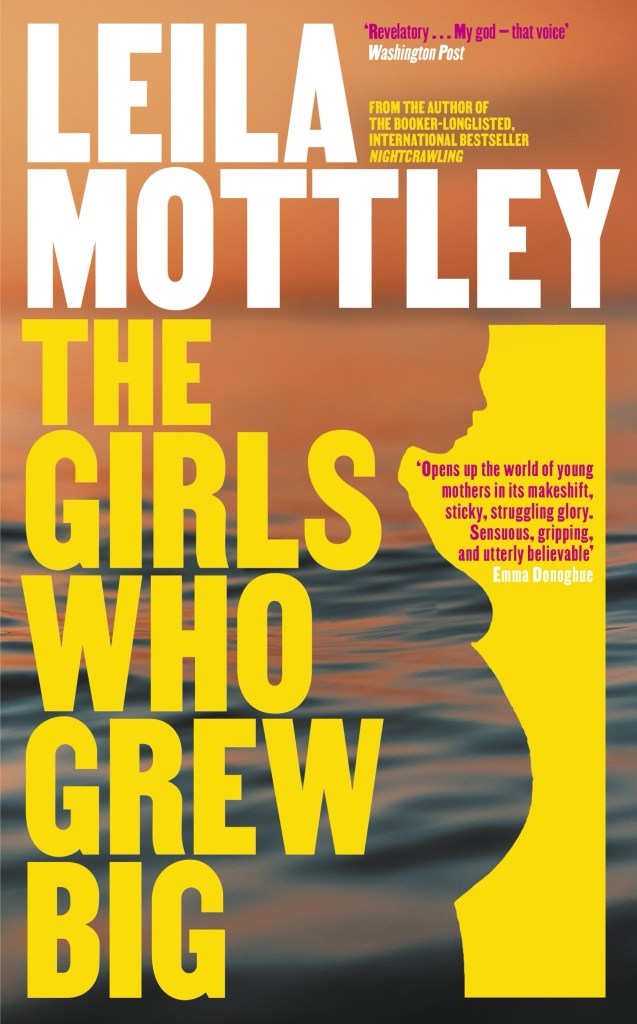
The Girls Who Grew Big

Leila Mottley’s second outing has grown bigger in terms of its stature, calibre, characterisation and language. Her first book, Nightcrawling, confronted racism, police brutality, vulnerability and poverty; The Girls Who Grew Big tackles the uncomfortable realities of teenage pregnancy and the familial and societal ostracism that accompany it, all set against the backdrop of eroding reproductive rights and restricted abortion access in contemporary America.

Set in the beach town of Padua, in the Florida panhandle, the story is about a group of young teenage girls banding together as they face rejection, ridicule and discrimination for being pregnant. Calling themselves ‘The Girls’, they find a sense of community, safety and emotional security through this sisterhood. Among them, the author principally focuses on three protagonists: Simone, Emory and Adela. 

Simone, the eldest at twenty, is raising her twins, Luck and Lion. Their father is a wayward, irresponsible guy called Tooth with whom she tries to maintain civility for the sake of her children, despite the disgust she feels for him. When she discovers she’s pregnant again, her desperate attempts to find a safe abortion lays bare the grim realities of reproductive inequity in America today. 

Emory, a white girl disowned by her family for getting pregnant with a Black guy, finds solace with the Girls. She comes to live with her grandparents who aren’t the most welcoming of her or her situation. The constant rebuke, revulsion and mistreatment that she experiences at her grandparents’ home makes her determined to complete her education despite the odds. After she gives birth to Kai, her vulnerability coupled with maternal guilt makes her reconsider her earlier choice and instead she decides on marrying the father of her child when he proposes to her, though she is now in love with another girl. The emotional chaos paves the way to a penultimate moment that is singularly powerful and unconventionally self-affirming that forms the emotional heart of her narrative. 

Adela, who comes from a privileged background, is sent away from Indianapolis to Padua by her conservative, devout parents to stay with her grandmother Noni, so that her pregnancy, which they consider an abomination, can continue in secrecy and after the delivery, she can come back to them sans the child and go back to living her original life of becoming the best swimmer in the country. After she meets Simone and Emory, her priorities start to shift and she starts enjoying their camaraderie. However, impulsive decisions and a string of reckless behaviours soon upend her life and her friendship with Simone and Emory, so much so that the three girls are forced to arrive at the thresholds of an emotional precipice that will reshape and realign their lives forever. 

Simone, Emory and Adela represent the section of the society who are always shunned into oblivion for an occurrence that involved an equal contribution from a man. Their stories are a telling of the unprovoked patriarchy, chauvinism and misogyny that comes disguised as morality. Their standing in the face of social adversity that demands obscurity of them, which often gets labelled as resilience and courage, is in fact a mirror of the helplessness and humiliation bestowed upon them by the society at large. Simone nurtures her children and the other girls in spite of her dire financial and living circumstances, to build this sisterhood, which she knows is going to protect them all. Emory’s radical decision, which can be perceived as selfish and antithetical to motherhood, is essentially a defiant act of self compassion that speaks of her need to self actualise her reality, rather than be consumed by its consequences, hence reframing motherhood through the lens of autonomy. Adela’s necessity to build a falsified image of herself to gain affection is symbolic of the various ways in which patriarchy operates. She does reclaim her dignity through self acceptance, refuses to self flagellate, despite the retribution and continues to take accountability for her actions without letting them define her. 

The Girls Who Grew Big, as a book, is an intricate, intimate portrait of pregnant teenage girls that doesn’t resort to sensationalism or melodrama. There is a quiet fortitude in its pages that gets revealed slowly and steadily. It’s a scathing commentary on the circumstantial evolution of motherhood from romanticism to ostracism, invisibility to hypervisibility, pride to shame. Leila Mottley has proven once again that she is a master storyteller and a gifted writer, and one who can navigate the most complex human emotions and experiences with the needed attention and affirmation. If Nightcrawling demanded a brutal urgency, then this book requires and delivers, patience and tenderness, empathy and nuance. Mottley,  through her ingenious writing, has kept sisterhood as the overarching theme, and hasn’t reduced it to a trope or made it synonymous with toxic positivity. Instead, she has shown sisterhood to be a living, shifting force, that can empower, protect and ultimately redeem.

As the girls grow, physically, emotionally and spiritually, so too does Mottley, cementing The Girls Who Grew Big as a work of remarkable maturity and depth. 

~ JUST A GAY BOY. 😇

Off-White

📍 Suriname 🇸🇷 

Bee Vanta is sick and she knows she’s dying. She is the matriarch of her large estranged family and has been disappointed with everyone’s life choices. She, a white Dutch woman married a Black man, Anton, who served in the military. Winston, the apple of her eye, abandons her and goes off to the Netherlands, and establishes a life there with his partner Lya, never to return. Louise, her daughter, has four children, Heli, Imker, Babs and Audi, from different men, and has difficulty in sustaining relationships with men because of the cycles of exploitation and abuse. Laura, her other daughter, suffers a psychological collapse after her partner’s deception and now resides in an asylum. Rogier, her last son, is a doctor in the Netherlands, who left Bee and Suriname for a better life. Bee suffers the biggest setback when her favourite granddaughter, Heli, also decides to go to the Netherlands to pursue her dreams. Imker takes it upon herself to care for her grandmother and decides to live with Bee and tends to her with utmost love and affection, cooking for her, cleaning the house and even bathing her. As Bee navigates her distraught relationships both in memory and in person, she struggles to accept the crumbling dynamics of her family, the love which seems distant and unattainable, and she questions everything that has led her to this day, her decisions and mistakes including a secret, a dark and ruthless chapter of her life, that has cost her equanimity and composure leading to a permanent fissure within her heart. 

Off-White is a story that is embroiled in the familial interpersonal relationships and unresolved conflicts, differences and heartaches. The various mother-daughter relationships which form the greater part of the narrative are shrouded in lethargic love, abysmal animosity and a conspicuous callousness. These women seem to carry the intergenerational traumas and a sense of repentance unbeknownst to them, struggling to understand its history, that has cast a spell on their present and that which is also threatening to ruin their future. 

Bee hasn’t come to terms with Louise’s choices in life and doesn’t think highly about her. According to Bee, Louise’s inability to have a husband has been her downfall and hence the necessity for her promiscuity. Bee has also internalised Laura’s shame for being unstable and depressed. Louise tries to maintain a stoic facade when internally she remains fragile and fundamentally distracted. Her repeated attempts to seek companionship, despite countless betrayals, can seem as a call of defiance in the times of hopelessness, but simultaneously it also portrays her adamancy in embracing solitude. Heli, though charted her own escape from the confines and traps of an overbearing and dysfunctional family, is unable to resist the melancholy that it has brought in its wake. She is also juggling a strangely toxic relationship with a married man, who is in Suriname while indulging in passionate encounters with another man in the Netherlands. This dichotomy and dishonesty claims her spirit and consciousness as she meanders through one questionable choice after another. Imker, seems to have intentionally decided to clean up the emotional mess of her family. Whilst caring for Bee, she chooses to distance herself from a maternal illusion and a sisterly loss. As she focuses on her two other siblings, she tries to objectively analyse the desolation that Louise and Heli have left in her life. Her relationship with a Muslim man, Umar, gives her perspective, possibility and permission to have wants and needs and somewhere during this journey she starts to find her personality.

Off-White is one of those demanding works of literature that has been written deliberately to unsettle you. It is controversial, convoluted and courageous. It hides the blasphemy in the whispers of secrecy and inconvenience. It is inconsistent, indelibly unconventional yet remains as a potent offering of love, compassion and forgiveness. The book explores dysfunctional relationships and dissects its origins and decay. The narrative sensitively captures the sexual exploration, experience and exploitation of the various women characters. The sexuality is boldly infinite, the sexual violence squeamish and shocking. The book also delves into the politics of colourism and racism and how skin colour can influence kinship and familial ties. The title of the book, Off-White, is in fact rather symbolic and almost feels like a scathing critique on the racial inadequacies of the society at large. 

The characters in the book provoke you as a reader, compel you to submit to their chosen adversities, to accept their misfortunes and mindless perversity. At the same time, they exhibit catharsis through their flaws and friction. The daughters and granddaughters of Bee seem to be acting as a receptacle of her maternal malevolence and benevolence, as Bee continues to self-flagellate for her prejudices and pride. This trickles down through the progeny as her children and grandchildren inherit the same tendencies and continue to lead lives that can only be described as off-colour. 

Astrid Roemer, is a Surinamese Dutch writer and teacher, and the first Caribbean author to win the P.C. Hooft Award (a Dutch-language literary lifetime achievement award) in 2016. In 2021, she received the Prijs der Nederlandse Letteren (the most prestigious literary award in the Dutch speaking world, awarded every three years) becoming the first Surinamese winner. Her book, On A Woman’s Madness, first published in Dutch in 1982, was translated into English and published in February 2023. In September 2023, it was longlisted for the National Book Award for Translated Literature, and in 2025 was longlisted for the International Booker Prize. Off-White, was first published in Dutch in 2019, and its English translation was published in 2024. The translators, Lucy Scott and David McKay, have done a prodigious job in translating this monumental work of Roemer

Astrid Roemer is a tour de force in the world of literature. Her writing is problematic, poignant and purposeful. She writes to explore the endless possibilities of living and existing. Suriname is the soul of Off-White as she takes us on a geographical journey from Paramaribo to Nieuw Nickerie. The story is Surinamese in its entirety and Roemer hasn’t made any concessions or given any explanations for people who aren’t Surinamese or familiar with the country. The colonial history of Suriname is the silent subtext that courses through every page in the book. The language is piercing and punishing in equal measure. Roemer’s Off-White is an affirmation of the fact that a book can be a masterclass in storytelling and a masterpiece of literature while retaining its integrity and authenticity. 

If Han Kang illuminated the fragility of the human condition, Astrid Roemer exposes its fractures with equal brilliance. Having said that, I think I have a new favourite. 

~ JUST A GAY BOY. 👏👏

Vera Wong’s Guide to Snooping (on a Dead Man)

The bold and irrepressible Vera Wong is back! For her second outing as a murder investigator, she no longer considers herself an amateur sleuth. After her successful first case, she proudly thinks of herself as a professional and hence believes that the relentless and reckless snooping is mandatory and an obvious part of the investigatory process. 

The story begins when Vera spots a distraught Millie outside the police station where Vera herself had been to report an internet scam. She comforts Millie as a Chinese mother would do, brings her to ‘Vera Wang’s World-Famous Teahouse’, and soon learns about her missing friend Thomas. Around the same time, while snooping through her son Tilly’s apartment, she discovers his police officer girlfriend Selena’s private files. There she notices photos of a man, resembling Thomas, but labelled as John Doe, and a suicide victim. Snooping through social media, Vera stumbles upon photos of a social media sensation Xander Lin, who looks eerily similar to Thomas. All of this makes Vera suspicious and convinced to investigate the curious case of Thomas/Xander Lin/John Doe who according to her, has been murdered. 

Vera’s snooping leads her to a plethora of interesting characters connected to Xander. Aimes, a rising social media star, and girlfriend of Xander, seems evasive about their relationship, and oddly detached about his death. TJ, his manager, remains guarded about their professional ties. Vera also learns that Xander has a grandfather, who turns out to be a friend she has known for a while and now feels indignant that he kept this a secret from her, which also makes her wonder, his reasons for doing so. As Vera gets pulled into the fray, she realises that Xander had wanted to come clean about each of these relationships in front of the world, only for him to be wound up dead, before he could do so.

The book, just like its predecessor (Vera Wong’s Unsolicited Advice for Murderers), is a taut, fast-paced thriller that keeps the tension crackling right through to the end. The climax was unexpected and nothing like what I had anticipated. All of the characters from the previous book make an appearance in this and it feels like a natural progression. The new characters turn out to be unique, multidimensional and mysterious. Beyond Vera, the standout for me was Robin, whose spunk and chutzpah matches perfectly with that of Vera’s. And finally, Vera Wong herself is a character like no other, who is determined on shattering all your preconceived notions about what a sixty-year-old woman can and should do. If you thought she was over the top in her first outing, then she has only pushed things to the next level with this one. She’s a mesmerising, witty, unfiltered Chinese mother who brews delicious teas, casually solves a murder, eases the stresses and anxieties of those around her and never stops being fabulously fearless. 

Through this book, the author, Jesse Sutanto, has given us a grim insight into the glamorous world of social media superstars and the perils of this fickle, frivolous stardom. Xander, Aimes and TJ embody a generation living on social media and believing curated realities to be legitimate. This intersection and intermingling of real and performative blurs the true lived experience that soon transcends into emotional chaos and fractured identities causing a general disbelief in the collective humanity. The book is also a sharp commentary on the current epidemic of instant fame synonymous with an insatiable hunger for likes and followers that’s distorting one’s perception of success and failure. 

The Vera Wong series retains its brand of being an enjoyable and engaging read effortlessly blending humour and homicide. Jesse Sutanto has created an unconventional heroine who is breaking stereotypes with her quirks and curiosity. The only lingering question I have is, what delightfully outrageous case will Vera tackle next? 

~ JUST A GAY BOY. 😀☕️

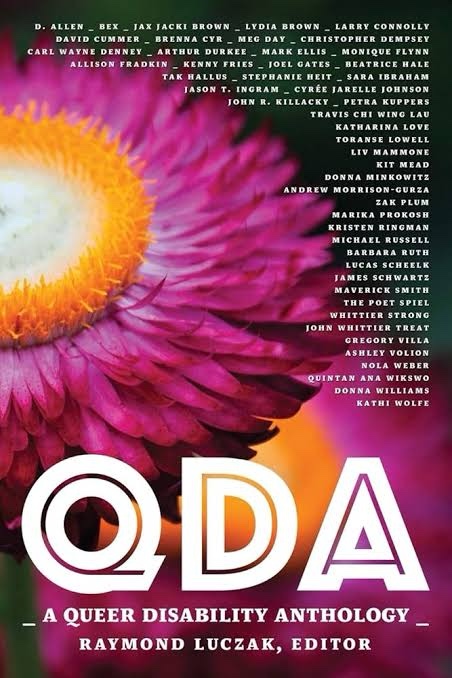
QDA – A Queer Disability Anthology 

July is Disability Pride Month and it was born out of the ‘Disability Rights Movement’ in America. It is built on intersectional identity politics and social justice. The core concept of Disability Pride is based on the tenet of rewriting the negative narratives and biases that frequently surround the concept of disability. 

QDA isn’t just another anthology, rather it stands out for its thoughtful and considerate approach to queer disability. Each of the 48 writers/contributors is queer and disabled. The writers are diverse in terms of their race, gender, sexuality, identity and disability type which includes physical disability, sensory disability, neurodivergence, psychiatric disability, chronic illness and even invisible disability. The book also is an amalgamation of different literary forms such as essays, short fiction, poems, comics and hybrid writing. 

QDA asserts itself as a commanding voice against ableism, dismantling the various ways in which it stigmatises and sidelines disabled people. The writings unapologetically express the anger and frustration felt by the writers and at the same time, they do not read as pleas for pity or assistance. The narratives are focussed on representation and resistance, where intersectionality isn’t just glossy platitude but a lived reality. The contributors have not flinched from exploring topics of sexuality, intimacy, eroticism and body politics. Out of the many writings, the ones that stood out to me were as follows. 

  1. No more Inspiration Porn: Introduction by Raymond Luczak rightfully introduces us to the necessity of a shame-free approach to disability, the blatant normalisation of ableism and the necessary nuance needed while discussing and implementing diversity. He makes a strong case against using disability as “inspiration porn” to fuel ableist goals. 
  2. Liv Mammone’s Advice to the Able-Bodied Poet entering a Disability Poetics Workshop, is a searing and scathing critique on the default ableist behaviours. It is a catalogue of reminders for engaging with a disabled person including checking one’s own misplaced courtesy and concern. A notable quote from the essay was, “The words disability, disorder, and disease aren’t synonymous”. 
  3. Kit Mead in Missing What You Never Had: Autistic and Queer, speaks for the autistic and queer who tend to become the invisible queers, as most queer spaces being too loud, prohibit many in the community from seeking them out and hence many of them feel their queerness to be fake as they are unable to assimilate with something that is a part of the cultural zeitgeist. 
  4. In Love Me, Love My Ostomy, Tak Hallus speaks about his struggles with Ulcerative Colitis and living with an ostomy; confronting the rejection he faces from within the gay community because his disability is not pretty, popular, obvious, and conventionally palatable. 
  5. Maverick Smith in Invisible Within the Ten Percent, laments the normalisation of ableism and audism, even in Pride celebrations.
  6. In The Ides of April, Barbara Ruth takes us through her everyday life as a disabled person while also living with her disabled partner, Nora. In the aftermath of a terrorist attack on the Boston Marathon, her attendant Aisha fears for her racial profiling and Barbara wonders if she has become a quintessential clicktivist.
  7. In Learning to Fall in Love, Katharina Love, decides to fall in love with herself first and accept her condition of Möbius Syndrome, her love for women and make peace with the fact that her mother’s love may always remain unattainable. 

And finally, the crown jewel of this anthology for me, was the brilliant, satirical piece by Lydia Brown called, How Not to Plan Disability Conferences (or, How to Be an Ableist Asswipe While Planning a Disability Conference). Lydia meticulously enumerates the ways in which ableist people use disability to virtue signal diversity to an ableist audience essentially and how ableism takes centre stage and disability and disabled individuals remain mere props for motivational tokenism and triumph voyeurism. This short essay is biting, belligerent and bold and it should make everyone scrutinise their own diversity agendas. 

Raymond Luczak, the editor of QDA, is a prolific Deaf gay writer, editor, poet, and filmmaker whose work often explores Deaf culture, disability, queerness, and identity. He has written/edited over 30 books, spanning poetry, fiction, memoir, anthologies, and plays. QDA reads like an act of defiance. It’s an anthem against the erasure of disability. It’s provocative and rambunctious; necessarily caustic yet relentlessly truthful, indulgent yet raw, but always delightfully queer. 

~ JUST A GAY BOY.

Disappoint Me

When Max, a thirty something trans woman wakes up in the hospital after falling down a flight of stairs at a New Year’s party, she decides to take charge of her life. She has split from her boyfriend, Arthur, and the modern dating scene in London makes her anxious, where every swipe feels like a psychological landmine. Nonetheless she decides to sample its myriad offerings by deciding to go on a date with Vincent. His Asian background reassures her a bit and she soon also realises that he is thoughtful, kind and caring. As they embark upon this journey together, Max understands the love Vincent harbours for her and his earnest commitment towards being in a relationship with a trans woman. He is considerate with his words and language and ready to accept his misgivings. However, he is hesitant about telling his conservative Chinese parents about Max. This irks Max and despite her best attempts at trying not to dwell on it, subconsciously it keeps gnawing at her. An innocuous thing soon becomes a bone of contention and every banter and argument starts to carry its essence implicitly. If that were not enough, and add to it current dating culture’s panic and emotional pandemonium, there’s a troubled past that Vincent harbours in secret, which is bound to disrupt his relationship with Max once she finds out. 

Disappoint Me is a meticulously clever and nuanced take on contemporary relationships and partnerships. Max and Vincent embody the quintessential emotionally dysregulated millennials as they navigate a relatively new and fragile relationship. Max is secure in her trans personhood but now, after being pair-bonded with Vincent she starts questioning everything about it, from its integrity to its malleability with a straight partner. Vincent on the other hand, seems to be unsure of his wholehearted attempts at traversing this queer relationship and is constantly wondering if he’s failing Max. Both Max and Vincent seem to be holding back their true selves during much of their communication for the irrational fear they feel in revealing their real personalities. Vincent straddles the romantic pressures of being the partner who is expected to introduce Max to his family, and the parental pressures of being the ideal son who will give his parents, their grandchildren. Max’s tryst with the complex emotions of self sabotage prevents her from being fully transparent with her feelings, instead, it leads to misunderstanding and misinterpretation. As she is settling into the ennui of having a new boyfriend post the breakup, doubts, revelations and reservations take her back into a state of restlessness and a previous, familiar world of disappointment.

While Max and Vincent come across as scattered, confused and a tad obsequious; some of the supporting characters bring the humour and spontaneity to the mundanity of a bougie existence in London. Max’s friend, Simone, is pragmatic about dealing with everyday situations but punishing when dealing with race and gender politics. The duality and dubiety of her personality comes forth when she gets accused of body shaming and unprofessional conduct. The standout character for me was Alex, whose unfading presence in the book heightens the narrative. She is assiduous and prudent about her decisions. Her quiet fortitude and restraint speak volumes in contrast to the emotional volatility around her. The author’s portrayal of most of her characters as sanctimonious, impetuous and solipsistic feels deliberate and conforming to the evolution of romance, camaraderie and cultural mores. 

Nicola Dinan, is a British-Malaysian novelist and essayist who has swiftly become a celebrated voice in contemporary literary fiction. Her debut novel, Bellies won the Polari First Book Prize and was a finalist for the Lambda Literary Award. Nicola’s writing is witty, perceptive, conspicuous, incisive and complex. She meanders and ruminates on the real life trans experience through Max’s character, hence presenting her as layered, multidimensional and deeply human. That’s the beauty and purpose of Dinan’s language which presents people with flaws, insecurities and imperfections, and yet who are committed to living and loving. Her prose doesn’t cater to the gaze of cisnormative audiences; it gives trans women the room to be everything: angry, confused, loved, lonely and free. Her writing feels untethered, grounded in emotional realism and disinterested in perfection. Queer relationships and trans representation are the necessity of the hour and Dinan’s narrative puts it at the forefront of the social milieu in all its glory. Disappoint Me is so frighteningly accurate that it’s certainly going to be a part of the literary zeitgeist and Nicola Dinan’s voice, agency and craft are here to stay. 

~ JUST A GAY BOY. 🏳️‍⚧️🏳️‍🌈

Nobody Needs To Know

Nobody needs to know, that’s exactly what is being told to intersex children and their parents. It’s as if intersex bodies are a pathology to be diagnosed and then treated. As if intersex bodies are embodiments of shame that need to be hidden, corrected or obliterated. This is what Pidgeon Pagonis, the author experienced as an intersex person, when they were a child. They were subjected to brutal corrective surgeries while their parents were being misguided and misinformed about their condition. The doctors at the Lurie Children’s Hospital in Chicago, took it upon themselves to pathologise Pidgeon’s intersexuality, performed the unnecessary surgeries and decided that they were to be raised as a girl. Years later, as an adolescent, when Pidgeon realises that they are intersex and that what they had was in fact, Androgen Insensitivity Syndrome, which doesn’t warrant invasive and intrusive medical intervention, they decide to be an advocate for their own intersexuality which later organically morphs into activism for the advocacy and upliftment of the intersex community. 

The book, Pidgeon’s memoir, is a testament of the medical gaslighting that they endured for years and the erasure they experienced of their personhood. The refusal to acknowledge the bodily harm that was voluntarily inflicted on Pidgeon by the doctors is bewildering. They decide to fight the system that denies intersex individuals their bodily autonomy by taking on the doctors at the hospital. Pidgeon repeatedly makes the case for intersex individuals having the right to choose their surgery if they wish to, once they are able enough and grown enough to make such an informed decision. This arduous journey sees its fair share of trials and tribulations as Pidgeon grows from being timid to tenacious, from being gullible to informed, and from being a single person to becoming a community. As the hospital and one particular doctor, Dr Earl Cheng, continue to perform unwarranted surgeries under the garb of parental pressures, Pidgeon takes the battle to the streets of Chicago that sees an unprecedented support from their network, friends, and also the transgender community. 

Nobody needs to know is a bold and moving memoir about securing belief in one’s body especially when the world has made one disbelieve its beauty. Through this, the author continually comments on the harms that get perpetuated due to the obduracy of a binary mentality and hence viewing the society at large as binary. They also highlight the fraught relationship with their mother when they decide to live their truth unapologetically and simultaneously also decide to launch a full challenge against a revered medical institution like Lurie. The book, unbeknownst to Pagonis, tacitly celebrates their generosity of spirit, in bringing together everyone who has ever been wronged by the bigotry of a binary society, to become a force that will challenge these notions and help everyone visualise an existence that’s unique and congruent with their truth. 

There is no reliable national data on the number of intersex individuals in India. Estimates cited by activists point to approximately 10,000 intersex babies born each year in India. In April 2019, the Madras High Court (Madurai Bench) issued a landmark ruling banning non-essential “sex-normalizing” surgeries on infants and children with intersex traits, allowing exceptions only for life-threatening situations. Hundreds of such surgeries are still being performed in Tamil Nadu despite the 2019 ban. There is no centralized registry or national data on intersex surgeries in India. There is no pan-India law yet that bans these needless and exploitative intersex surgeries. Intersex individuals are often rendered invisible or they are mislabeled and misidentified and continue to be subjected to societal and medical abuse due to absence of education, awareness, culpability and law enforcement. They remain invisible even in the LGBTQIA+ spaces. This begs the question of whether we, the queers have let an entire community down? Is ‘I’ in the LGBTQIA+ spectrum just a letter or does it also call for more inclusivity?

~ JUST A GAY BOY. 🏳️‍🌈

Everything Is Fine Here

📍 Uganda 🇺🇬 

Eighteen-year-old Aine Kamara is excited to meet her elder sister Mbabazi at their university, where Mbabazi, a gynecologist practising in Kampala, has been invited as a guest speaker. Aine is aware that her sister is a lesbian and is pleasantly surprised when she arrives with her partner Achen to deliver the guest lecture. Aine and Achen hit it off instantly, and soon Achen assumes the role of a confidante. Mbabazi and Achen try their best to keep their relationship discreet from the prying eyes of a very homophobic and biblically grounded society, despite the challenges it brings. Aine is juggling her passion for ornithology and her yearning to work in a sanctuary with her upcoming university exams and the overbearing aspirations of her parents regarding her future educational prospects. Unfortunately, a tragedy upends their lives, and a seemingly benevolent decision taken by Aine during this turbulent time fractures her relationship with her sister and even threatens the love between Mbabazi and Achen.

Everything Is Fine Here does come across as Aine’s coming-of-age story, but Mbabazi and her queer relationship feature prominently in the narrative. In fact, it has been a deliberate attempt by the author to narrate a queer relationship through the eyes of a straight ally. Aine becomes privy to the nuances of queer love and what it takes to be queer and have a relationship in a country that punishes homosexuality. As an ally, Aine embodies the role and offers her unwavering support to her sister and her partner. She has a falling out with her devout Christian mother over Mbabazi’s relationship, which prompts her to leave her house in Bigodi and travel to Kampala. Through these trials and tribulations, Aine comes into her own, understands her tenacity, acknowledges her overwhelming grief, and affirms her own sexual awakening.

This is a book that celebrates relationships; whether it is Aine and Mbabazi processing their loss together by honouring and remembering the person lost, or Mbabazi and Achen working together to value their commitment and love by understanding and accepting each other’s differences, or Aine and Achen discovering this new bond that helps them confide without judgement. This is a thoroughly Ugandan book. Ugandan culture and cuisine are effortlessly embedded in the narrative, as are the language and various dialects. This is also a book that attempts to normalise queer relationships in a homophobic and fundamentalist society. Though Mbabazi and Achen keep their relationship under the radar, it still epitomises an act of defiance and the necessity to have agency over one’s life; and how authenticity can act like a permission slip for others to self-express and embrace their individuality.

Iryn Tushabe, who identifies as bisexual, is a Ugandan-Canadian writer and journalist, born in Uganda and now based in Regina. Her work, spanning creative nonfiction and short fiction, has appeared in several prestigious outlets. She was also a finalist for the Caine Prize for African Writing in 2021. Everything Is Fine Here is her debut novel.

Homosexuality has been illegal in Uganda since 1950, a law enacted during British protectorate rule (1894–1962). The Anti-Homosexuality Act was passed by the Ugandan Parliament in March 2023 and was signed into law by President Museveni on May 26, 2023. The key provisions include life imprisonment, prison terms for up to 20 years, and even the death penalty. The law has led to increased arrests, raids, extortion, violence, and widespread persecution of LGBTQ+ individuals and supporters. India decriminalised homosexuality on September 6, 2018; however, societal acceptance has been hard to come by. Queer individuals and those in queer relationships that challenge heteronormativity and the gender binary still face ridicule, discrimination, prejudice, and violence. The U.K. decriminalised homosexuality in 1967 but left colonial versions in place in its protectorates and colonies. Yet these same colonisers do have the audacity to preach equality, inclusivity, and human rights. The colonised peoples need to realise that homosexuality was never a Western import. In fact, to quote from the book:

Did they not know this bit of history? Was it lost on them that homophobia, not homosexuality, was the import?

~ JUST A GAY BOY. 🏳️‍🌈

My Walk to Equality: Essays, Stories and Poetry- Papua New Guinean Women Write

📍 Papua New Guinea 🇵🇬

May is celebrated as the Pacific Islander Heritage Month and my pick this year was from Papua New Guinea (PNG). The book is an anthology of essays, poems and stories, written exclusively by Papua New Guinean women. There are more than 80 contributions from 40 writers, and the majority are in their 30s. For the uninitiated, PNG is a country located in Southwestern Pacific Ocean, occupying half of the island of New Guinea (the western half belongs to Indonesia). The country gained independence from Australia on September 16, 1975. It is one of the most rural countries and comprises of over 800 tribes. It’s also the most linguistically diverse country in the world, and about 839 languages are spoken in PNG. It also has the dubious distinction of having one of the highest rates of violence against women in the world. This book, therefore, captues the ongoing struggles of women who are trying to achieve a semblance of equality in a particularly patriarchal society.

The book has been divided into sections; Relationships, Self Awareness and Challenging gender roles and breaking glass ceilings. However, the overarching theme throughout is the demand for women’s rights and equality, the necessity to disband the deep rooted misogyny and the call for action against sexual and domestic violence. The writers boldly dissect the prevailing patriarchal culture in which young women are being brought up and how men are groomed to be sexist and gynophobic. The society at large is perverse to women being educated and taking up spaces in public and private sectors. Working women are often scorned at, receive no help at home and face uphill battles navigating professional environments. These courageous women writers, many of whom are teachers and working professionals, have urged PNG women to fight for their education and never to dismiss any opportunity that could guarantee financial independence, which can then pave the way for the upliftment of their collective consciousness and thus inspire future generations.

Rashmii Amoah Bell, who has edited this book, is a Papua New Guinean writer and editor renowned for her contributions to amplifying women’s voices in her country. From this book, a few writings stood out to me for their poignancy and simplicity yet relaying the angst, anguish and resilience. The Expectation of Marriage by Watna Mori explores how colonial past and intergenerational traumas shape the reality of PNG women; how the entirety of a woman in PNG has been reduced to her marital status and the writer wonders what happens to women who consciously decide to live outside this boxed existence. Betty Lovai writes in her essay, Papua New Guinean women in Leadership, the harsh truths about securing leadership roles as a woman in PNG and the governmental and societal inertia in bringing about any positive impact. In the story, On the hunt for a New Language in Papua New Guinea, Samantha Kusari, makes a case for languages that are dying across the country. In the search for a tokples (dialect), the writer gets introduced to another rare dialect, Akadou, and hence realises the rich legacy of a language that now has only three living people speaking it. In Walk to Equality in Education, Roslyn Tony, laments about the insurmountable hardships met by teachers and women principals in the field of education. Caroline Evari’s poem, Who are you to tell me it’s wrong, explores the possibility of an egalitarian household in PNG. The brilliant essay, The Inappropriate Cultural Appropriation of the Bilum by Elvina Ogil, articulates the perils of the harmful practice of such a cultural theft. She provides the nuances that make us ponder the consequences of a heritage hijack, that which can undermine and undervalue an entire civilisation. Tanya Zeriga-Alone, in her thought provoking essay, Which way Papua New Guinea? Look in the Mirror; presents an insider’s perspective on the current situation in the country and says, that the only way PNG can move forward towards ensuring equality and equity, is by disregarding mediocrity, respecting fellow citizens and local talents, and understanding the collective resilience shared by all the tribes of PNG

Having read this book, I wonder if the conditions for Indian women are any different; rather how eerily similar are Indian and PNG women’s struggles. On the surface of it, we may seem to be a society where women have rights, but certainly there’s no equality yet. If you scratch this surface, you will notice uncomfortable truths and predatory practices of misogyny, chauvinism, sexism and violence deeply rooted and being disguised as appropriated and misplaced feminism. We may be into our 79th year of independence and the fastest growing economy in the world, but none of that or the current ubiquitous vermilion can hide the fact, that women in our country are unsafe, undervalued, excluded, oppressed (especially Dalit and tribal women) and marginalised. 

~ JUST A GAY BOY. 🧐