Lessons in chemistry

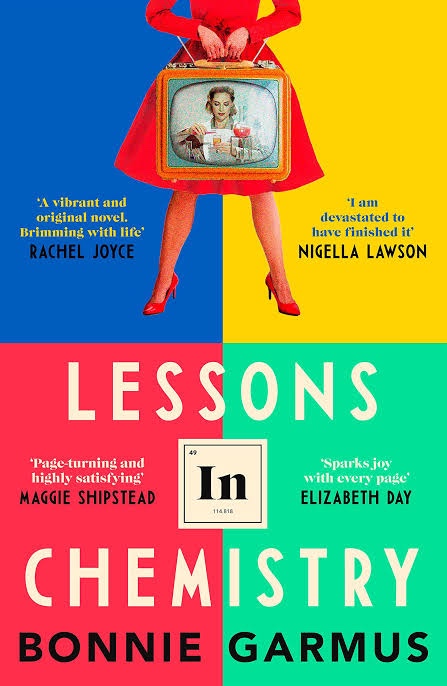
When was the last time you were taught lessons in feminism that was easy breezy, devoid of angst and presented with hilarity? I don’t think ever. It’s rather unfortunate that feminism has to be schooled. Also, this isn’t any kind of shade on all those glorious women who have taught feminism with an angry diatribe. Because clearly the world hasn’t been kind to women since time immemorial. And we get a sneak peak into this unjust scheme of things through the book’s main protagonist Elizabeth Zott. The story is about this fierce woman scientist who is never taken seriously because of her gender. Set in the 1950s America, the book takes a hard look at the subordinate and often demeaning outlook of the society towards women then. Elizabeth is passionate about chemistry and struggles to make herself seen in the overwhelming and dismissive world of men. Adversities and inappropriate men force her to switch her career quite reluctantly. From a scientist she soon becomes a television cooking show host. Despite her rather unconventional approach to anchoring, she becomes very popular and women all across America can’t seem to get enough of her show. Because hers is a first show of its kind wherein women are tutored to think they matter; they are important and they are equal. All this whilst cooking up a storm and diligently doling out chemical equations and reactions.

To say this book is unbridled joy would be an understatement. Elizabeth Zott defies all the societal conventions and expectations and still remains an embodiment of womanhood. Her bold choices which if you examine carefully, were just about what mattered to her and what was convenient; can actually trigger the chauvinists and misogynists. Her decision to have a child without being married, to have a live-in partner, to be an atheist, to question authority are just some amongst many reasons which make Elizabeth Zott unique and her own person. She epitomises freedom, equality, independence, intelligence and her actions can inspire women all across the globe to stand up for themselves, to speak up for other women, and to support one other in solidarity.

Bonnie Garmus, the ingenious author and who’s debut book this is, gives us a taut and crisp story that never falters, never slackens its pace and delves deep into feminism while serving a healthy dose of uncanny, straight-faced humour. The author deftly handles complicated and emotional topics of sexual abuse, rape, patriarchy, and childhood trauma. Garmus gives us this iconic character of Elizabeth Zott, who strives for rationality every step of the way. Not just Elizabeth, the book is peppered with various other notable characters. Be it Mad Zott, her daughter who questions the necessity for the hoopla surrounding her status as ‘a child born out of wedlock’; and Harriet the neighbour who forges a rather quirky friendship with Elizabeth and later the same relationship turns out to be a force of strength for both of them. But the most delightful character of them all, has to be the dog, Six Thirty. Bonnie Garmus humanises the dog giving it the most cheeky one liners.

Lessons in chemistry is one of those rare books that will shock you one moment and make you guffaw the next. The fact that women are equal and should be treated with respect, irrespective of their status and stature shouldn’t be taught, rather it should be a no brainer. But here we are, even in 2023, subjecting them to inequality, disrespect and trauma. This book from Garmus is a necessity, rather a compulsory read for everyone to know these invaluable lessons in humanity.

(Psst..can’t wait for Brie Larson as Elizabeth Zott!)

~ JUST A GAY BOY. 📚 🧪

Rain and other stories

📍 Mozambique 🇲🇿

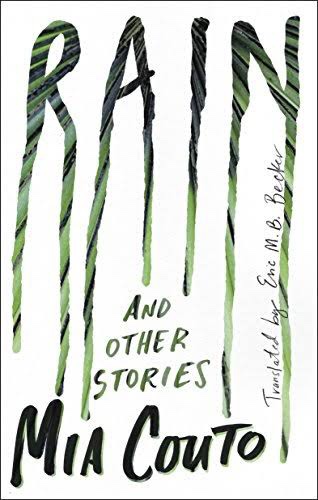
Mozambican writer Mia Couto is one of the most prominent Portuguese language writers of today. After studying medicine and biology, he worked as a journalist and headed several national newspapers and magazines in Mozambique. He has published more than thirty books that have been translated in thirty different countries.

He won the Camões Prize in 2013, the most important literary award in the Portuguese language, and the Neustadt International Prize for Literature (The Prize is a biennial award sponsored by the University of Oklahoma and World Literature Today since 1970, and is one of the few international prizes for which poets, novelists, and playwrights are equally eligible) in 2014. He was shortlisted for his entire body of work for the Man Booker International Prize 2015. In many of his texts, he undertakes to recreate the Portuguese language by infusing it with regional vocabulary and structures from Mozambique, thus producing a new model for African narrative. He lives in Maputo, Mozambique.

Mozambique, a country located in southeastern Africa, gained independence from Portuguese colonial rule in 1975. After only two years following independence, the country descended into a bloody and protracted civil war lasting from 1977 to 1992. This book was first published in 1994, shortly after the 1992 peace agreement and has been translated by Eric M.B. Becker.

The book is a collection of 26 short stories. Though the book has received wide critical acclaim internationally, I completely failed to connect with it. The stories are extremely fable like, many inspired by Mozambican folklore while others oscillate between the real world and an imaginary magical realm. The stories start and end abruptly and the author fails to provide any nuanced significance for each of them. Reading these stories I wondered, if there was a purpose for this kind of pithy yet tedious storytelling. Are Mozambicans only supposed to understand them?

Disappointed.

~ JUST A GAY BOY. 😑

Pyre

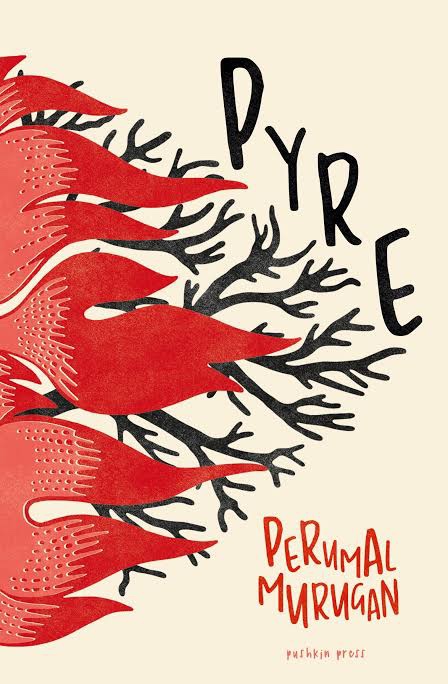
Perumal Murugan is an author, scholar and literary chronicler who writes in Tamizh. He has written ten novels; five of them have been translated into English. As a professor of Tamizh literature, he has made several contributions to research and academic study of Tamizh literature specific to Konganadu region. He courted controversy with his book Madhorubhagan which made him announce, ‘Perumal Murugan the writer is dead’. His novel Pookuzzhi (Pyre) was originally published in Tamizh in 2013 and translated into English by Aniruddhan Vasudevan in 2016. It has now been longlisted for The International Booker Prize 2023.

Pyre is a heart wrenching story of an intercaste couple, Saroja and Kumaresan. Saroja elopes and marries Kumaresan, who then brings her to his remote, arid and decrepit village of Kattuppatti, in the hinterland of Tamil Nadu. Upon arrival, the couple are welcomed with abuses, mourning and threats. Saroja becomes their easy target, and is showered with expletives and profanities, especially from the womenfolk, and Marayi, her mother-in-law. Each passing day becomes a living hell as the villagers become hell bent on knowing Saroja’s caste. As the story progresses, there seems to be no sympathy or changed behaviour by the villagers towards the couple, who believe that this marriage is an impending doom, and start plotting a heinous crime against them. The couple though, remain in love, crave love yet have no idea that the same love is a harbinger of hatred and enmity.

Pyre is a grim telling of the realities of caste differences and discriminations present in our society. Through this lens, Murugan tells a riveting tale of the people who put caste on a pedestal. He centres caste as the unrelenting, unforgiving protagonist in the book. You may despise its presence, still remain helpless, just like Saroja and Kumaresan. The internalised misogyny that Marayi spews onto Saroja, is a depiction of the ways in which caste and such other forms of bigotry manoeuvre, such that those who are oppressed become the oppressors.

The harsh landscapes and terrains of Kongunadu form an integral part of this story. The barrenness of the land which the author describes evocatively becomes deafening through the narrative. The villagers’ reverence to caste whilst ignoring its beguiling notoriety to cause persecution remains a passive subtext all through. Perumal has fleshed out his characters; be it a listless yet restive Saroja, a pensive yet petulant Kumaresan or a scornful and savage Marayi. Aniruddhan Vasudevan’s translation of Perumal’s crude and caustic prose is unparalleled. He has managed to imbibe the nuances of the original language during the tender moments in the book as well as during the diatribe. Being a Tamizh speaker myself, I appreciate and applaud the sensitivity and restraint in Aniruddhan’s translation.

Pyre is a disturbing read. Perumal Murugan writes to unnerve you, to push you out of your bubble, to give your prejudices and preordained thoughts a 360 degree spin. He makes us, the reader, a mute spectator to the atrocities as they unfold. But isn’t that true in real life too? Aren’t we/ haven’t we become mute spectators to all kinds of caste, gender, religion, social status based atrocities? Aren’t we/ haven’t we become complicit in this despotism?

~ JUST A GAY BOY. 😓

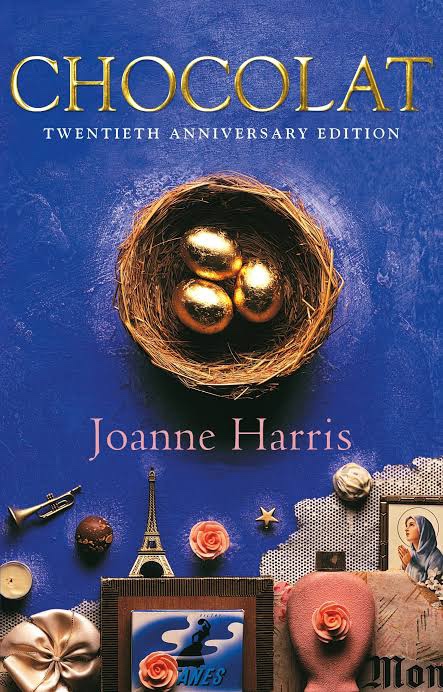
Chocolat

This book by the very acclaimed author, Joanne Harris, left me with quite a bitter aftertaste. The story is about a single mother and chocolatier, Vianne Rocher, who arrives in the quaint French village of Lansquenet-sous-Tannes at the beginning of Lent with her young daughter Anouk. She sets up her chocolaterie, La Céleste Praline, just opposite the village church. Her flamboyance and audacity irks the village priest Francis Reynaud, who takes it upon himself to boycott her business and also sees to it that he publicly denounces her in front of his congregation. However, Vianne goes about her day despite the seething disapprovals from Reynaud and his loyal cronies. In fact, she manages to charm many of the villagers through her irresistible confectioneries and gains their unflinching support, admiration and confidence. This further infuriates Reynaud to the point of psychosis and paranoia leading to spiteful actions ultimately causing his own tomfoolery.

The plot does sound tempting as does the evocative prose on chocolate and decadent French confectionery. However, Joanne Harris gets a little too carried away and forgets trying to reign in her condemnation of the church. Her forever babble on the proclivities of the church and its believers is extremely one dimensional. It almost seems as if the author is pushing forward her beliefs onto the reader. The characterisation of the priest remains a caricature. The various other characters in the book are poorly etched with uninteresting plot lines. For that matter, Vianne’s character itself appears to be quite implausible. Despite a very unconventional and irrational childhood, tethered on anxiety and dubiety, and now facing the villagers’ ire and reproach; she seems to appear overtly secure, unaffected and very mundane. Though the book talks about patriarchy, sexism and gender based violence, none of it is dealt with the nuance and sensitivity that it deserves. If anything, it’s a very kindergarten approach at that. Yes, the language in the book is rich and exquisite. Although, I wish that the author had tempered her story to perfection as Vianne does her des chocolats.

This chocolat is a Cadbury presented as a La Maison du Chocolat. Eat at your own risk.

~ JUST A GAY BOY. 🍫

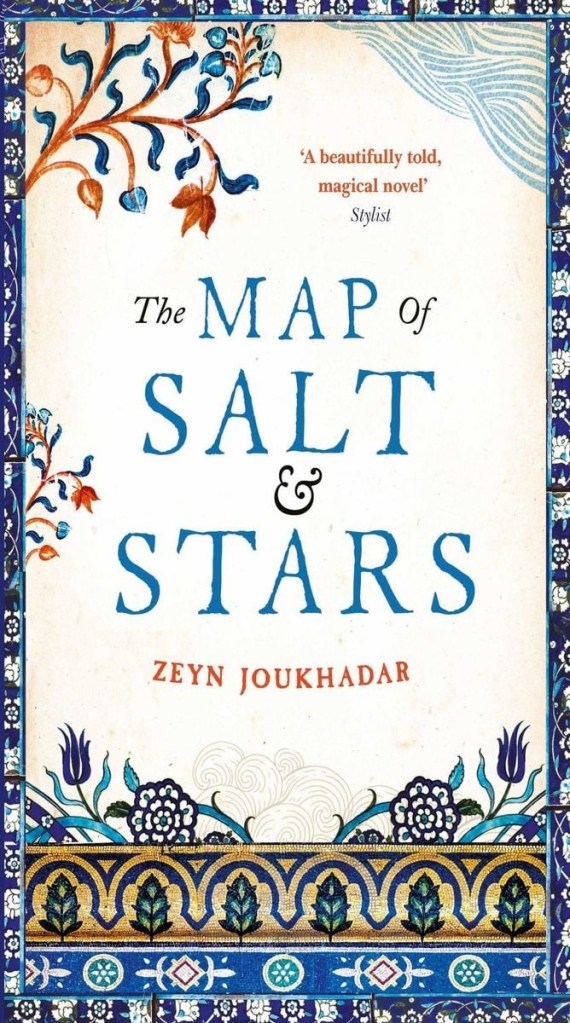
The Map of Salt and Stars

Unrest in Syria began on 15th March, 2011 as part of the wider 2011 Arab spring protests out of discontent with the Syrian government, eventually leading to an armed conflict. The war is currently fought by several factions. The Syrian Civil War is second deadliest conflict of the 21st century after the Second Congo War. The conflict has caused a major refugee crisis with millions fleeing to neighbouring countries (source Wikipedia). This book by Syrian American author, Zeyn Joukhadar, is rooted in Syria and celebrates it with a double tale of voyage and exile. The first tale is about 16 year old Rawiya, set in 12th century, who leaves her house in Benzu, near Ceuta (Ceuta is a Spanish autonomous city on the north coast of Africa), in search of adventure and with a quest to explore the world beyond the desert. She becomes an apprentice with the renowned explorer and mapmaker al-Idrisi and sets out on this perilous and unforeseeable odyssey to assist al-Idrisi in sketching the map through the Maghreb and the Mediterranean. During this adventure of a lifetime, she comes across blood thirsty mystical creatures; vicious men; cruel, tyrant kings and their armies; and difficult terrain and weather. This only establishes Rawiya as a gallant warrior. Rawiya single handedly helps al-Idrisi in completing his exploration of the world whilst constantly battling attackers and reminding everyone through this pursuit that her gender is no barrier in achieving accolades and appreciation and in being one of the greatest warriors of her time.

The second tale is of the present day, 12 year old Nour who has moved to Homs in Syria from Manhattan after her father’s death; with her mother, who is a mapmaker and two sisters, Zahra and Huda. As she is adjusting to her new life in Syria while knowing only a few words of Arabic, she is now one amongst many who has got trapped in the Civil war. She experiences bombing of her house and from there on, her ordeal for survival begins. Instantly her status becomes that of a refugee as she manages to escape from Syria. She has to let go of her mother and sister Huda during this gut wrenching journey which takes her through Jordan, Libya, Algeria and finally to Ceuta. The tale is as much a portrayal of Nour’s resilience, as much as it is, about her coming to terms with the menacing traits of human behaviour and the rot that has crept into humanity at large.

The narrative constantly flips between the stories of Rawiya and Nour. It’s a slow paced read. Islamic history and ancient names of cities find a constant mention through the book. I had to refer to Google lot many times to educate myself about the same. The author brilliantly depicts the striking geographical similarities between the old world and the current. Maps form an integral part of the storyline throughout the book. There are constant references about stars, galaxies and various constellations. I did find Nour’s narrative a bit tedious, since it gets a lot metaphorical at times. It isn’t an easy book to read. How would it even be? How can any book that talks about a devastating civil war be pleasant in any way? The author deftly portrays the geopolitical dissimilarity in tales of Rawiya and Nour. Rawiya’s is about bringing the world together by sketching the map and defining the borders, whilst ironically in Nour’s, it’s about a disintegrated world and the battles at the borders.

~ JUST A GAY BOY. 😞

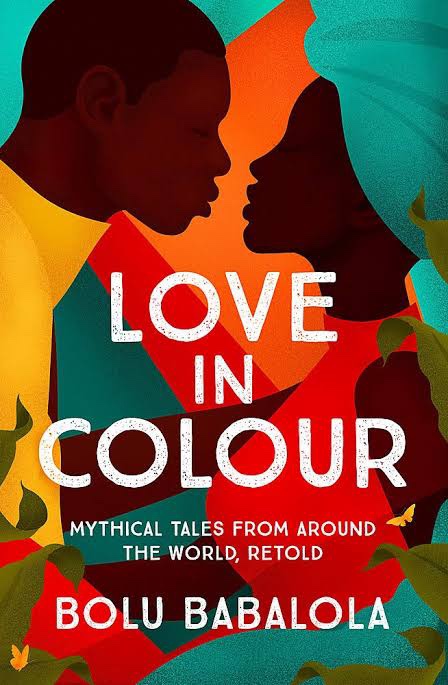
Love in Colour

Nigerian British author, Bolu Babalola’s book is a symphony orchestrated in shades of love and romance. It’s an anthology of thirteen short stories, ten retellings of myths from around the world, and three original stories. These retellings range from Ghana to Greece to Egypt to Lesotho. She has reimagined certain Yoruba and Chinese mythical stories and made it her own. The original mythical stories were essentially told from the male perspective and had tinges of patriarchy and misogyny. However, the genius that Bolu is, has flipped that very narrative, that very story and given the agency and power to the female characters. These stories are now intersectional, rooted in feminism and coloured ever so beautifully with the myriad hues of love and romance; which in reality, if you observe, love is a spectrum and there can never be one rigid definition of it.

Out of all these stories, a few stood out for me. The story of Scheherazade may seem like a movie but the emotions running through it are so pure, almost scared. One can’t help but get misty eyed at the end of it. The banter between the lovers is so real, so convivial. The tale of Attem is all about a woman’s agency and control over her desires and sexuality, and the mighty prowess that she exudes when she celebrates herself. Nefertiti’s story is about feminism that’s active, affirmative and audacious. It’s also about sexuality that’s languid, undefined yet completely your own. The story of Naleli is empowering in so many ways as she comes to terms with her medical condition, her self acceptance of the same and basking in its glory whilst navigating teenage angst and politics. The breakup scene in Tiara’s story is breathtakingly heartbreaking and intimate. In fact the distance that creeps up between them during the conversation is deafening but deftly portrayed. The way Bolu has crafted the nitty-gritty of a modern day relationship involving long distance, jealousy and insecurity is ingenious to say the least. Lastly, Orin’s tale is fun, flirty and humorous. The scene in the bar, I wish I were Orin!

One doesn’t need to know or be familiar with the myths. The author at no point makes the reader feel abandoned for not knowing them. She in fact takes us on this lyrical, poetic journey of love through her writing. This book is lush, the writing is stellar. Bolu has achieved the indomitable feat of marrying ancestry with modernism. In fact, this is one of those very few books where the language is dripping with love, the emotions tug at your heart and the characters make you laugh and cry with them. It’s not a cliché, if I will tell you that this book will want you to fall in love and if you are already in love with a wonderful partner/s, then you would want to hug them tightly as you relish the book.

Take a bow, Bolu Babalola!

~ JUST A GAY BOY. 🫶

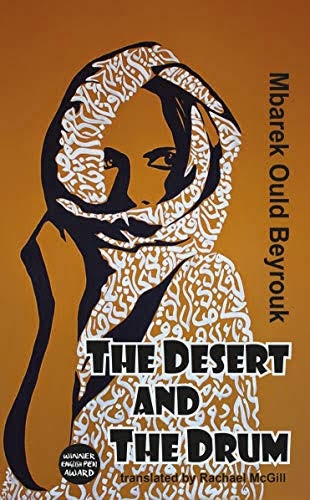
The Desert and the Drum

📍 Mauritania 🇲🇷

Mauritania is a sovereign country in Northwest Africa. It is the 11th-largest country in Africa, and 90% of its territory is situated in the Sahara. It achieved independence in 1960 from French colonialism but has since experienced recurrent coups and periods of military dictatorship. Despite an abundance of natural resources, Mauritania remains poor. It was the last country in the world to abolish slavery, in 1981, and criminalised it only in 2007. (Source Wikipedia)

This book is the first novel ever to be translated into English from Mauritania. It was originally published in French in 2015 and translated by Rachael McGill in 2018. The book won the Ahmadou Kourouma Prize in 2016 (the prize was established in 2004 in honour of the Ivorian writer Ahmadou Kourouma, and it is awarded annually to works of fiction and nonfiction concerning Black Africa).

The story traces the journey of a young Bedouin girl, Rayhana, who has run away from her tribe and is on a mission to find the thing that has been snatched from her with force and deceit. While running away she has taken the sacred, symbolic and pious drum, rezzam, that belongs to her tribe and represents their pride and honour. She embarks on this perilous journey through the unforgiving Sahara and reaches a small town, Atar, and finally to the capital, Nouakchott. During this sojourn, she encounters various people who help her in their own ways, in achieving her mission, and also protect her from her tribe who are in search of her to retrieve their prized drum. Standout characters include that of the slave girl, Mbarka, who has now become a sex worker; and the very colourful and jovial queer guy, Hama.

The book is a raw, unapologetic and uncomfortable narrative of Rayhana’s turmoil. The chapters oscillate between the past and the present as does Rayhana’s thoughts from her secure yet stifling existence in her tribe, to the unknown and unwelcoming mores of the city life. She is torn about the fact that, she still cradles the belongingness she feels towards her tribe whilst despising the carefree and untethered cultural values of the city. She still remains a prisoner of her unpropitious upbringing, though freedom is now within her reach.

The author, Mbarek Ould Beyrouk, originally from Atar, is a journalist, who has written four books and has founded the country’s first ever independent newspaper. He gives an honest portrayal of the Bedouin life and their customs, and has kept the story rooted in Mauritanian ethos. The issues of patriarchy, misogyny, gender based violence, caste based oppression aren’t exclusive to Mauritania. Let’s get off our high horse, shed our condescension and pomposity, and examine the issues closely. They are as much prevalent behind the façades of glitzy high rises and modern lifestyles as they are in the humbling desert.

~ JUST A GAY BOY. 🥹

Magpie Murders

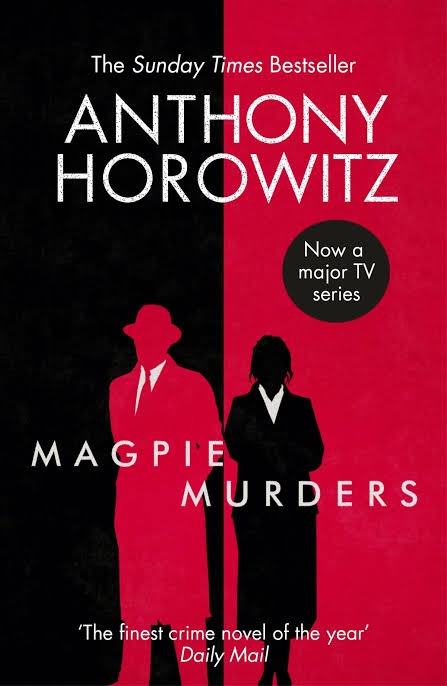
This book is so indescribably clever. It’s a book within a book, mystery within a mystery. The plot is incredibly intelligent, so much so that, trying to give a synopsis of it, would be a complete killjoy and a spoiler. After a really long time, I have come across a murder mystery that’s taut, sharp, compelling and a page turner from the word go. The narrative is atmospheric whilst the attention to detail is phenomenal. The language used is rich, articulate and eloquent. And for once, there isn’t a damaged and dysfunctional woman as a protagonist here. Thank you, Anthony Horowitz, for bringing the joy back to reading thrillers and for keeping it so unpredictable. Also, can’t thank Read a Kitaab Bookclub enough for picking this gem as their December Book of the Month. Now, I can’t wait to read the next one in the series; Moonflower Murders.

Must, must read.

~ JUST A GAY BOY. 👏

The Seven Moons of Maali Almeida

This 2022 Booker Prize winner book is like no other. The protagonist, Maali Almeida is dead. He has been killed and his body dumped in Colombo’s Beira Lake. His ghost is now narrating the story and trying to find out his killer/s. The premise is happening in the very nebulous In Between, wherein ghosts are looming large over Colombo’s skyline and constantly trying to interact or distract the living mortals Down There. If this has intrigued you already, wait till you read the brilliance with which Shehan Karunatilaka has authored this story. It is set in the extremely turbulent times of Sri Lanka’s civil war circa 1989. Maali is a war photographer who clicks unfiltered, raw and controversial photos of war victims, ruthless politicians and the civil unrest per se. Debauchery forms his middle name, as he parties with Colombo’s elite and canoodles countless young men. Now that he’s dead, he’s got “Seven Moons” to sort out his grievances. He tries desperately to reach and send signals to his people Down There, especially his best friend Jaki and his on-off boyfriend DD. Other ghosts inadvertently and reluctantly help him with this pursuit. As Maali finds out his killer, whilst protecting the war photographs that could expose the dirty politics of the country, he also tries to make amends with all his strained relationships, albeit, its now in the afterlife.

This roller coaster of a story gains momentum from the start and constantly shifts between the past and present; real and otherworldly. Shehan doesn’t shy away from presenting the gory details of the politics behind the war using satire and dark humour; at the same time also blasphemously portraying the privileged ignorance of other countries and international organisations in mindlessly sustaining the war. The mastery of his writing is evident in the way he has fleshed out Maali’s character who you want to sympathise with just because he’s dead but are also put off by his arrogance, audacity and impetuous attitude. The nuanced portrayal of the various messy relationships between the characters and their interplays in the backdrop of a war and an afterlife is ingenious to say the least. Shehan has been able to translate the palpable frustration of Maali in us as his ghost looks arounds furtively and helplessly for answers. Also, very rarely do you come across such an effortless writing which doesn’t take sides despite a raging war, countless deaths, and a humanity at loss.

Stellar!

~ JUST A GAY BOY. 🤩

Daisy Darker

Daisy Darker, the protagonist, is born with a broken heart. And now, she has come over to her Nana’s house, Seaglass, for her eightieth birthday which also doubles up as a family reunion. Her estranged family, which includes her parents who are divorced, her two elder sisters and her niece all land up at Seaglass one after another. Seaglass is an old house on the Cornish coast, on an isolated island at the bottom of a cliff that’s only accessible at low tide. As the night progresses, Nana lays out her feast and reads out her will, which displeases all of them. Soon, someone is found dead. This is followed by more murders with every passing hour. Nobody is able to leave the house till sunrise because of the high tide. Everyone who hasn’t been murdered is frantically trying to save themselves whilst also trying to find out the killer.

The above plot does seem very intriguing and has been written in a gripping manner. However the climax is a major letdown. Honestly it’s laughable and extremely frustrating. The explanation for all the killings is so simplistic and so juvenile that you end up feeling exasperated for the author having wasted your time. How is this book even a best-seller? Who are these people who are liking this idiotic mystery?

Total trash! Avoid.

~ JUST A GAY BOY. 🤬