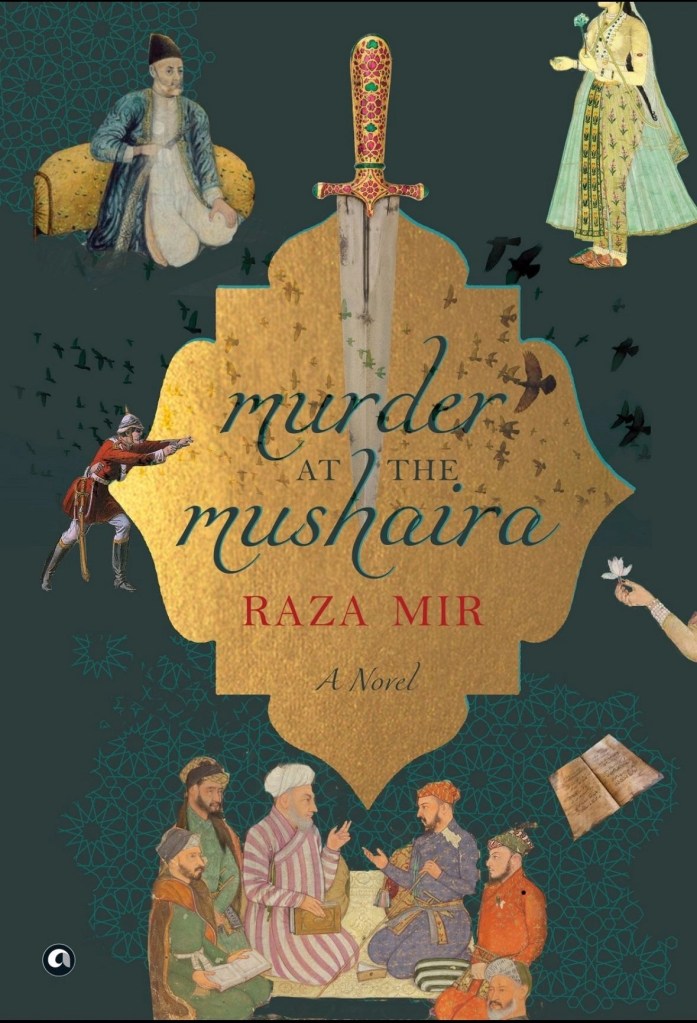
A murder mystery set during India’s First War of Independence, does sound scrumptious. It’s 1857, the British and the East India Company have started controlling greater parts of the country. It’s the last days of the erstwhile Mughal empire with many of the Nawabs surrendering to the British. There’s also a rebellion that’s brewing in various parts of the country that collectively takes the form of the Uprising of 1857. In the midst of this, Delhi is still trying to hold onto its Mughal administration. May of 1857, it’s Ramzan and there are soirées, feasts and mushairas happening in Delhi. At one such mushaira, hosted at Nawab Iftikhar Hasan’s haveli, a poet, Sukhan Khairabadi, is found to be murdered. The poet laureate, Mirza Ghalib, who also masquerades as an amateur sleuth, gets tasked with investigating this murder alongside the policeman Kirorimal Chainsukh. What unfolds next is pure delight in terms of storytelling, as history and mystery get beautifully intertwined in this marvellous fictional narrative.
A myriad of interesting characters make their appearance in this novel. Mirza Ghalib, the protagonist has his wit, charm and Urdu couplets in tow. Master Ramachandra, his accomplice in solving the crime, brings science and sincerity to the proceedings. Whilst a haggered Nawab Iftikhar, is contemptuous of Ghalib; his wife, Roshan Ara Begum has a great deal of affection for him. Various women characters such as Hyderi Begum Zutshi, Syeda Zainab, Ratna Bai make their presence felt in this story just by their steely grit, fearlessness and defiance.
Raza Mir’s story is an ode to the cultured and mellifluous Mughal era. Recently when there has been a movement to wipe out the Mughal presence from our country, Raza reminds us of their regality, their majestic architecture, their delectable cuisine and their venerable mushairas steeped in exquisite Urdu poetry. Every chapter begins with a haunting Sher in Urdu. Raza’s narrative is a rich amalgamation of fiction and accurate historical events. He’s also incorporated an innocuous and heartwarming queer plot line in the story. Such ingenuity!
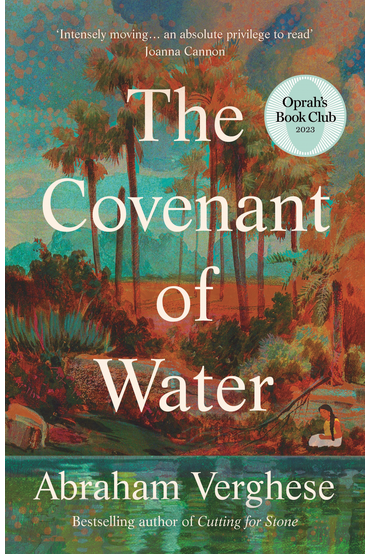
Oprah’s book club pick, is indeed a modern day masterpiece. It’s grand, it’s moving, it’s all encompassing. It’s a historical fiction, a medical mystery and a multigenerational saga. Abraham Verghese’s epic tale, ‘The Covenant of Water’, is all this and so much more. It’s a story that shape shifts its way across generations and timelines, still retaining generosity of the human spirit at its core. It feels like a grandiose gesture on the part of Verghese to have told us this story; something that’s unflinchingly brutal, unapologetically morbid yet when the author writes it the way he writes it, that is to say, so evocatively tethered; it feels tender, considerate and benevolent.
It begins in the year 1900 in the village of Parambil, in Kerala where a twelve year old girl, is about to be married to a 40 year old man. The story progresses, and the girl soon comes to be known as the matriarch, Big Ammachi. She has been married to a man who’s family suffers from a “condition”, the men are afraid of water and the deaths have occurred because of drowning. Nobody is able to explain this strange phenomenon, until Big Ammachi’s granddaughter, becomes a doctor and unearths the mystery behind the “condition”. From 1900 to 1977, the story traverses geographies and politics, medicines and diseases; poetically; introducing us to a plethora of interesting characters and throwing a few riddles along the way. We come across Philipose, Big Ammachi’s son, a writer, who gets lost in his chauvinism and addiction, only to regain his lost ardency. His tumultuous relationship with Elsie, stands out in the prose, due to its fecklessness, its reality rooted in ambivalence and ego. Elsie, is stoic yet yielding, an artist who is wronged by Philipose’s austere callousness and detachment. Elsie’s daughter and Big Ammachi’s namesake, is a passionate doctor, yearning to be a surgeon, who is constantly juggling between her familial attachments, medical duties and heartaches. Her discovery of the “condition“ is a sublime moment in medicine; a moment that stands still for its enormity and humility.
Verghese also acquaints us with a myriad of interesting doctors. Rune Orqvist, a clinician extraordinaire, committed to his profession and people, opens a leprosarium, not just to treat leprosy, but to heal its ostracism, and provide patients with empathy and kindness. Digby Kilgour, misunderstood and misplaced, often lost in predicaments of love and longing, finds his calling in the leprosarium. The moments leading upto it, though seeped in pathos and despondency, ultimately celebrate resilience.
Abraham Verghese has a gift for words. His words, his text, interspersed with Malayalam, are so detailed yet exact. He transports us effortlessly to Parambil, Glasgow, Madras; so much so that it begins to feel like we are witnesses to the happenings in the narrative. A colonial India and an Independent India get beautifully worded; the former has angst, desperation and bondage, while the latter has a bittersweet joyous effervescence. It’s incredible to note the tapestry of the language as he describes the topography of Kerala in the 1900s. Similarly his musings with Madras city are so thorough. Just as geography provides the lush landscape to Abraham’s story, emotions provide a realness to the words. They form the undulating subtext to each of the characters’ struggles in undoing their trials and tribulations. The author provides an incredible emotional arc to each of them. Their internal struggles in coping with their unresolved traumas, and unspoken mental issues often gets reflected externally in their unparliamentary conversations and wrong decisions. This dichotomy of distress gets explored by Verghese subtly and sensitively. Also poignant and piercing are the conversations on caste between Philipose and his lower caste pulayan friend Joppan.
Death and disease form an integral part of this narrative. Since the author is a doctor, medicine gets centre stage in the proceedings. It’s magnificent to note the diagnoses being made in the early 1900s. He doesn’t shy away from getting into the details of the anatomy, physiology and grotesque pathology of it all. The surgical scenes are almost musical, so anatomically accurate. Leprosy, a disease such, that even the pen refrains from writing about it, gets its biggest attention since the medical textbooks. The conscientious decision to portray a disease that’s synonymous with exclusion and abandonment, is humbling.
It is a big book, but an easy read. Abraham Verghese’s words are captivating and commiserating. It’s a story of epic proportions and is told such. Every character adds layers and nuances to this riveting family and medical drama. There lies an undercurrent of melancholy in every page. There remains an enigmatic dread at every turn. However, the author infuses hope even in the moments of despair by singling out compassion, love and kindness in his characters and situations.
The Covenant of Water, is a triumph of human spirit. It leaves you feeling calm and contented long after you have finished reading it.
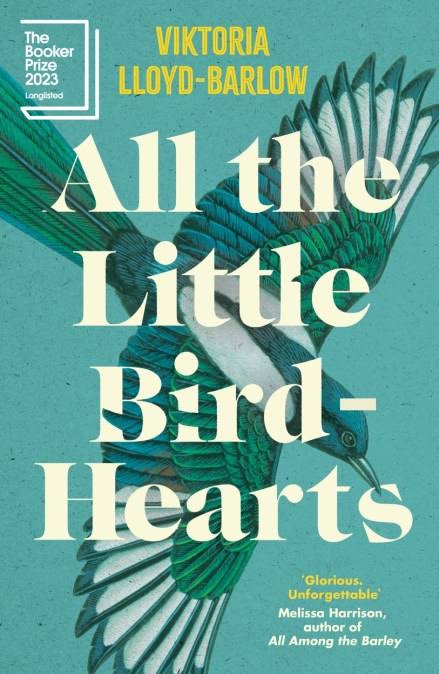
Longlisted for The Booker Prize 2023, this phenomenal book, is a heartfelt, yet emotionally brutal look at love that’s lost in relationships. Sunday, the principal protagonist, lives with her teenage daughter Dolly, in a modest house on a quiet street and living an orderly life. Sunday is neurodivergent and makes no bones about having difficulty in negotiating and understanding the simplest neurotypical situations. Hence, she finds it necessary to stick to a routine, even if it means eating only white food and relying heavily on an etiquette book. Her life seems to get upended when a glamorous couple move next doors. Vita, is a larger than life character, who uses her charm, wit and captivating personality to mesmerise Sunday and Dolly; while her husband Rollo, is calm and collected, having a suave impressionable style. In no time, they are in and out of each other’s house, having regular dinners and brunches. Dolly is so taken by Vita’s magnetism, that she starts spending more and more time at Vita and Rollo’s place; soon taking her clothes there, starting to work for them in their construction business and even having her own room in their house. Sunday begins to wonder at this rapid rate of detachment of Dolly from her and starts questioning Vita’s real intentions behind the same. These, of course, aren’t met with favourable outcomes and Sunday is left abandoned by everyone.
The book is an open canvas of Sunday’s mind. The author gives us a detailed and unfiltered blueprint of her thoughts and triggers. The first half of the book may seem a tad slow and repetitive, simply because the author is making us accustomed to Sunday’s neurodivergence, her vulnerability, her ways of tackling everyday conversations and interactions, and her perplexities in understanding others’ ease in navigating the same. Sunday is a fierce character who owns her neurodivergence in spite of the negativity and deliberate ambiguity that others display around her. The author also gives us an insight into her childhood traumas, her highly volatile relationship with her mother and her incongruous marriage. The disintegration of Sunday and Dolly’s relationship is heartbreaking, so is Dolly’s disregard and contempt of her mother for a more attractive Vita. Despite this anguish, Sunday exhibits steely grit and acceptance of her agony, and also of her daughter’s estrangement.
The author, Viktoria Lloyd-Barlow, is autistic and through this book has given a voice that’s authentic to so many other autistic people who are underrepresented and often misrepresented too. It’s a searing yet poignant rendition on motherhood, flawed relationships, and unequal societal dynamics. As you read the book, you understand the fact, that the author isn’t wanting our sympathy, rather wants us to check in with our prejudices and privileges. Such a stellar debut!
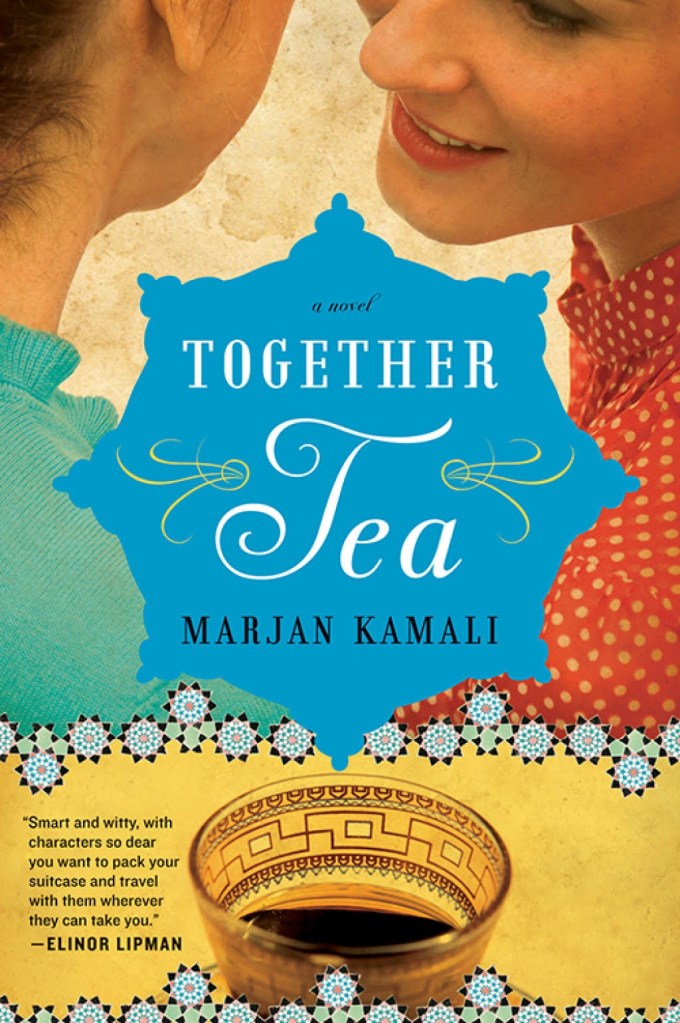
Marjan Kamali’s debut book, Together Tea, is a heartwarming rendition of the dichotomy of displacement and belongingness. The author explores this difficult predicament through an Iranian family and especially through the lives of the mother and daughter, Darya and Mina, respectively. The Rezayis are forced to immigrate to the US after the 1979 Revolution that lead to the establishment of a new Islamic regime in Iran. Darya, who’s an avid mathematician has to forgo her career plans and become accustomed to the life of being a home maker. However, she has her own maths club with two other women of her neighbourhood through which she gets to exercise her love for numbers and complicated equations. She’s also become intent on finding the most eligible husband for Mina. Mina on the other hand is torn between the frustration over her mother’s incessant obsession with her marriage, and the inability to make a conclusive decision regarding her career. Then one day when Darya and Mina decide to go to Tehran despite their family’s reservations about it, they discover each other and their relationship in a new light.
Marjan gives a detailed insight into the family’s lives in 1996 New York City and 1978 Tehran. Through the entire narrative, the author has kept Iran as the real protagonist. She has layered the story with its history, its effervescence and the political upheaval that wronged its very own people. She has captured the conspicuous changes that have occurred in Tehran, pre and post, the Islamic Revolution. The curtailment of women’s rights and their freedom to choose and express themselves, is palpable through Mina’s experience when she goes back to Iran in 1996. Juxtaposed to that is Bita, Mina’s friend living her life to the fullest and scandalously in Tehran, albeit discreetly. The author has handled these conflicting realities in the sincere conversations between Bita and Mina.
But, at the heart of this story, is the tender, often fraught and feckless relationship of Darya and Mina. The author has deftly portrayed the nuances of their hyphenated existence. The feeling of belongingness remains nebulous and unattainable for Darya and Mina. Coming to terms with their displaced identities and the bittersweet actualities of Iran has been done ever so delicately by the author. As with her more popular book, ‘The Stationary Shop of Tehran’, Marjan has infused this book too, with the sights and smells of Iranian culture and cuisine. Indulge in the tantalising aromas of ghormeh sabzi and baklava as Marjan takes you on this sublime sojourn of love, relationships and misplaced longings.
Angola is a country on the west central coast of Southern Africa. It is the second largest Portuguese speaking (Lusophone) country in the world. After a protracted anti-colonial struggle, Angola achieved independence in 1975 from Portuguese colonisation as a Marxist-Leninist one party Republic. The country descended into a devastating civil war the same year between the ruling People’s Movement for the Liberation of Angola (MPLA), the insurgent National Union for the Total Independence of Angola, and the militant organization National Liberation Front of Angola. The country has been governed by MPLA ever since its independence in 1975. Following the end of the war in 2002, Angola emerged as a relatively stable unitary, presidential constitutional republic. (Source- Wikipedia)
The book, originally written in Portuguese by Angolan writer, José Eduardo Agualusa in 2012, was translated into English by Daniel Hahn in 2015. The novel appeared on the shortlist for the 2016 Man Booker International Prize and has been the recipient of the 2017 International Dublin Literary Award. The story is about a woman, Ludovica, who seals herself off in her apartment in Luanda in 1975 at the time of Angola’s independence. As Luanda plunges into a civil car soon after, Ludovica watches it unfold in bits and pieces through her window, radio and sometimes overhearing people’s conversations. She’s also dealing with the abrupt disappearance of her sister and brother-in-law which happens around the same time. She sustains herself frugally by growing her own vegetables, catching pigeons, reading the books in her house and by scribbling her thoughts on the wall. Years pass by, and Ludovica, with her aging and diminishing eyesight often oscillates between periods of imagined insanity and hopeless reality. One day, a little boy, Sabalu comes into her life, at a time, when she’s immobile and sprawled out on the floor due to a fracture. He tends to her and gives her hope through his unconditional empathy and care. Just when Ludo starts considering Sabalu as her grandson and only family, she is confronted with an unexpected and unknown family member.
This dark and seemingly despondent life of Ludovica runs in parallel with the civil upheaval in Luanda and Angola. The author also introduces us to a myriad of other characters through the narrative, whose individual stories, purposes and intentions come together in the end. Each of them has a tale woven across Angola’s independence. He also takes time in explaining Ludovica’s painful past traumas leading her to live a life of confinement, self abandonment and shame.
Agualusa’s prose is purposeful, political and poetic. He crafts a meandering plot that traverses from Angola’s independence in 1975, through the civil war, till its end in 2002. He doesn’t shy away from layering the text with mentions of colonialism and white supremacy and it’s problematic effects. Ludovica comes across as a woman of steely grit having a resounding optimism to live, despite her circumstances and her own beliefs about her. That’s the genius of Agualusa’s writing. Do savour it.
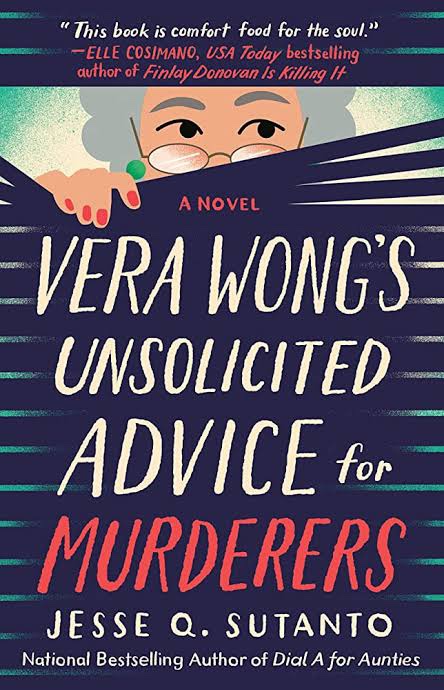
Vera Wong is a punctilious, loquacious sexagenarian who runs Vera Wang’s World Famous Teahouse in the Chinatown area of San Francisco. But here’s the thing, the tea house isn’t famous (even in Chinatown!) and she has no one to talk to (her only son Tilbert ignores her for the most bit). It all changes the day she discovers the dead body of a certain Marshall Chen in her tea house. This attracts a slew of new visitors to her establishment, who also turn out be murder suspects. When Vera fails to get a satisfactory response from the local police, she takes it upon herself to solve the murder mystery.
Amateur sleuth Vera’s list of suspects include Julia, the wife; Oliver, the brother and Marshal’s two other acquaintances Riki and Sana. As she goes about her way in knowing these people and unearthing their motives and intentions; she also starts forming unlikely and unforeseen bonds with them. The camaraderie between all of them develops so organically that Vera feels hesitant to know who the murderer is. Nonetheless her forthrightness makes her go all the way till she actually nabs the culprit.
As much as the book is a taut, crisp whodunnit; it’s also a heartwarming story about human relationships and friendships. The author has written every character with utmost consideration and has spent time in developing each of their mental and emotional arcs. But the stand out has to be Vera Wong. She is fiesty and funny with a pertinent dislike for mendacity. Though she mostly despises youngsters and their nonchalant way of life; she remains the most inquisitive person when it comes to new technology, terminology and even tiktok. The highlight of the book has to be the uplifting narrative, the unassuming feminism and Vera’s pragmatic attack on misogyny and chauvinism. Jesse Sutanto’s emphasis on the need for building social connections and a safe community is so relevant in these current times of a loneliness epidemic.
The book brews over with an abundance of aromatic teas and concoctions. Vera serves us steaming cups of delicious teas for every occasion and emotion. She has a solution for everything in a tea. Well not just that, she cooks up a storm and the pages are laden with scrumptious and luscious Chinese dishes. The author meticulously describes the cuisine such that, you can smell the piquant aromas whilst reading the book.
This murder mystery is one delectable fare. Dig in, as I sip on my tea whilst not spilling any!
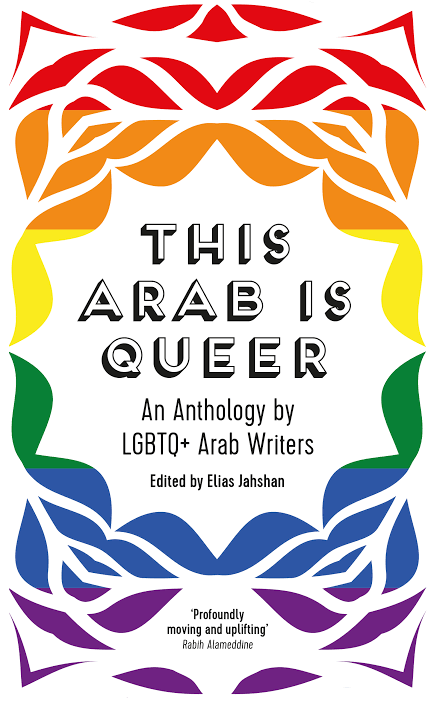
I feel, I am blessed to have read this book, that too during pride month. The book, which the Time magazine hailed as ‘groundbreaking’, is indeed that. It’s also trailblazing in so many ways. It’s an anthology of 18 essays written by queer Arab writers from the SWANA region, edited by Elias Jahshan, a Palestinian Lebanese journalist living in Australia. Now when was the last time you heard or saw space for a queer arab? And that’s the power this book yields. By asking 18 brilliant writers to write their stories, their way, many through their lived experiences, this book embodies the queer arab narrative, emboldens the queer arab and makes their visibility and intersectionality a necessity. While the stories are rooted in the arab-ness and queerness, diaspora or otherwise, the feelings of dignity, safety, and belongingness remain universal.
The book begins with the feminist giant (that’s also her newsletter) Mona Eltahawy’s essay, The decade of saying all that I could not say. Mona, a survivor of sexual assault, has been a crusader against patriarchy. In her essay she astutely describes her reckoning of owning her sexuality, her bisexuality, and the umpteen nuances that make it so. Her liberation by shedding the shame surrounding sex, has been an act of rebellion. As a Muslim woman, her vehement uprising against heteronormativity has been her emancipation. Mona writes not just to inspire us but to instigate our power.
Though each essay is profound, I would like to highlight a few that stayed with me. Amrou Al-kadhi’s essay, You made me your Monster, is a fierce, defiant take on Arab-ness, Quran and his Islamic identity. His transgressions viewed as blasphemous in the Arab world are just his ways of honouring his own authentic existence. Through his flamboyant, glamorous drag persona, Glamrou; Amrou is reinforcing the power in provocation.
Danny Ramadan, in his essay, The Artist’s portrait of a marginalised man, talks about how his writing is always up for debate, whether it’s fiction or non fiction and if it’s based on his real life experiences, simply because he’s a queer Syrian man with a refugee experience. He poignantly points out people’s assumptions about him and his work since he’s a queer arab and also worries if his real life trauma is going to unknowingly and inadvertently slip into his every narrative.
Amna Ali’s essay, My intersectionality was my biggest bully, is an eye opening piece about her journey as a Black Queer Arab. Growing up as and being a visibly Black person in a racism predominant society like UAE, Amna had a tumultuous upbringing wherein she was taught to be shameful about her blackness. Later, she became shameful about her queerness too. This amalgamation of multiple identities made her distraught, caused her abuse and violence, until she learnt to make peace with them. Amna has since realised her intersectionality as a Somali-Yemeni-Emirati queer person, is her true strength and yet it continues to be an arduous journey.
Hasan Namir’s story, Dancing like Sherihan, is about his tryst with shame due to his queerness leading to his ingrained belief about him being a sinner. His strict Iraqi Muslim upbringing was always at odds despite him moving to Canada and experiencing queer freedom. His essay deftly portrays the internal struggles of a queer person as they oscillate between religious virtues, familial pressures, internalised shame and queer trauma. Hasan’s relationship with Tarn, leading to their marriage and later having a child is one that of queer joy. It makes you misty-eyed, it makes you hopeful and it feels like a collective queer victory.
Madian Al Jazerah’s moving piece, Then came Hope, is an ode to him as a displaced Palestinian Queer man who is constantly engaged in an embittered battle with shame whilst remaining hopeful that he would emerge triumphant. His trauma is multilayered as he navigates zionism and homophobia. His astute observations on the blatant yet veiled discrimination in the gay world is one that many of us can identify with. Madian has a beautiful bookstore in Amman which I had visited back in 2019. It’s now through this book that I know the connection between the bookstore and him and have been so ecstatic since. Queer joy indeed comes in so many forms and experiences. I would like to quote a couple of lines from his essay which I felt were earth shatteringly brilliant. Here goes;
‘I know from experience that you can put shame on the highest shelf and forget about it for a while, but bigots and bullies can smell it and it is always within their reach.’
‘When we talk about love, the image of a heterosexual couple is accompanied by a thousand positive romantic associations. When we talk about gay men, the image is of two men having sex.’
Many or most of these stories are about shame and trauma, and that’s so true since those are the first feelings one experiences as a queer person. They also highlight the yearning for love, acceptance and inclusion. These stories are a lot tragic, which just goes on to show the commonality in their lived experiences as a queer arab. At the same time, the writers have done a commendable job in instilling faith and hope despite their grim realities of being a queer arab in a world so hostile towards them. This is a book that is going to jolt you out of your assumptions, privileges and entitlements. Burst that bubble, it’s time for a masterclass on humility and humanity.
Elias Jahshan has done beyond stellar work as an editor. Bringing together each of these supremely talented and gifted writers is not just groundbreaking but distinctively exceptional. Take a bow!
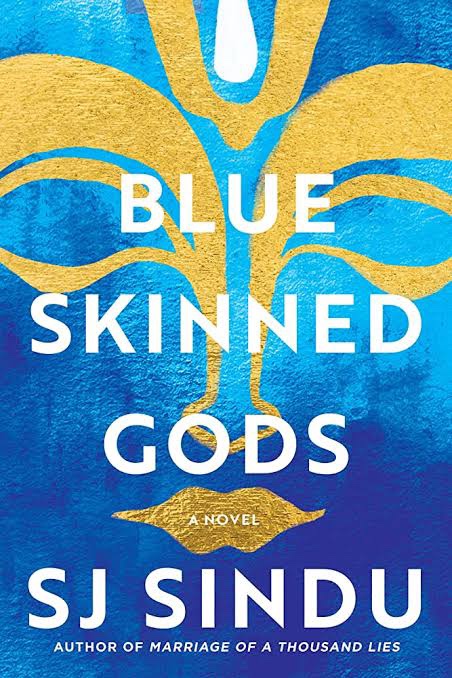
A story that weaves a rich tapestry of emotions embedded in superstitions and beliefs need not be the most unusual or awe inducing. However, Blue Skinned Gods, finalist in bisexual fiction in the 2022 Lambda Literary Awards, is a story that gives layers to the same emotions, provides nuances in the narrative and simultaneously transports you to a world that’s at times unbelievably despondent and many a times believably blindsided.
The story set in Tamil Nadu, is about a blue skinned boy, Kalki, who is made to believe and thought to be as the last avatar of Vishnu; because of his skin colour. His father, Ayya, forces this belief not just onto Kalki and his entire family but the whole village, so much so that be builds an ashram for him, which also serves as a healing space for people troubled by physical and mental ailments. To perpetuate his notion, Ayya doesn’t shy away from deceit, abuse, punishments and emotional torture. Kalki soon starts believing in his own godliness and prowess, despite nagging doubts regarding the same. He becomes codependent on Ayya and no amount of abuse, including his mother’s loss, seems to make him stand up against his father. However, when he lands in New York city as part of his world tour, reality hits hard and Kalki begins his journey of emancipation and self discovery albeit through alcohol, sex and being emotionally distraught.
S J Sindu (she/they), Tamil and genderqueer, has masterfully authored this complex narrative of regret, remorse and redemption, through the lens of a docile, bereft and fragile character like Kalki. There are times when as a reader you want Kalki to rebel and retaliate, however his ingrained trauma and abuse prevents him from doing so. And this is the truth for many such childhood trauma survivors. Sindu presents trauma as this multilayered annihilator that destroys a person’s sense of being despite the right reckoning.
Blue Skinned Gods is rooted in Tamizh culture. The narrative is peppered with beautiful, lyrical Tamizh words. Hindu religious beliefs and mythology form the backbone of the story. Sindu has presented this alongside science and rationalism without putting them at loggerheads. The nuanced references to casteism and sexism in Hindiusm has been done ever so poignantly without being provocative. The various queer characters in the book bring their own uniqueness to this moving tale centred on humanity.
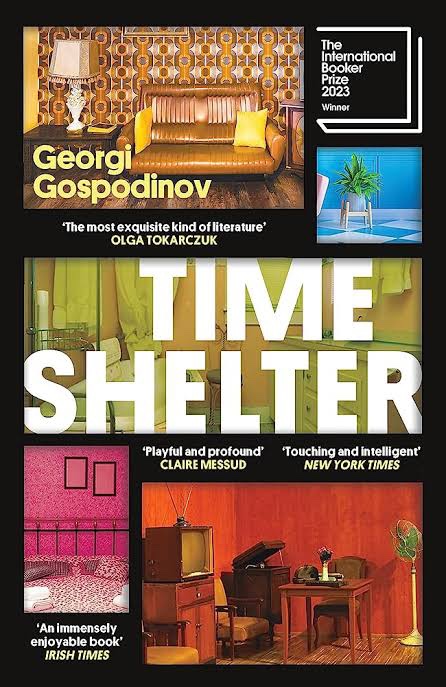
There’s a reason why certain books win the coveted International Booker Prize. Simply put, there isn’t a book like that; a writing like that, a story like that; that you would have read or ever come across. Time Shelter, winner of the 2023 International Booker Prize, is certainly one such book of course, but more than a book, it’s a collection of nostalgia, of memories; and of the times when these memories start fading.
The story is about a psychiatrist, Gaustine and an unnamed narrator. Gaustine opens a clinic for patients suffering from Alzheimer’s disease in Zürich. Each decade has been recreated in this clinic from the decor to the newspapers of that time. Patients come into the clinic, and through this memory evoking therapeutic sensory experience, start remembering, recognising and reliving the forgotten time. The narrator becomes fascinated, almost borderline obsessed with Gaustine’s ingenious idea and becomes a part of his team in building such clinics all across Europe. Before you know it, the entire world is now building these clinics, even planning cities dedicated to certain eras and decades. Countries have referendums on which past year or decade be chosen to be recreated. As with any fantastic idea, this ambitious project too, marred by its pomposity, soon starts to disintegrate into chaos and mayhem.
There was this surreal moment whilst reading the book, when the penny dropped for me. I realised the beauty of this book and the craftsmanship of the author, Georgi Gospodinov (masterly translated from the Bulgarian to English by Angela Rodel) in writing a tale like this. The author has exposed us to the mind of the narrator who is writing this book and who is losing his mind. Now what starts as a story soon morphs into his recollections and learnings of history and later into a series of uncoordinated events. We become witness to his dementia. We are put onto the edge of the precipice of an individual losing himself and his autonomy. This realisation jolted me, suddenly the book developed an eerie undercurrent because what I had thought to be benign till now, wasn’t really so. So I wondered, did Gaustine ever exist? Or was the narrator Gaustine?
The book is rich in Bulgarian and European history. The author juxtaposes this richness with the hypocrisy prevalent in European politics. His satirical narrative takes us on a raucous journey from World War II to Brexit. The author deliberately changes the writing style and language through the course of the book. What starts off as poetic, lyrical and contemplative in the beginning, later becomes tedious and monotonous, only to end disjointed. Through Time Shelter, Gospodinov, has attempted to highlight people’s obsession with the past, only so much as to stall the future whilst forever remaining oblivious to the present. Not an easy book to read for sure, but if you do read (which you must!), you can marvel at Georgi’s innate literary genius. Now let’s ruminate on the title. Goosebumps!
The book is an anthology of short stories, essays and poems, many of which are translations from the Manipuri into English, all written and translated by women writers from Manipur; edited and put together by Imphal based independent journalist, writer and translator, Thingnam Anjulika Samom. Many prominent Manipuri writers feature in the book from the yesteryears to the current. Particularly noteworthy amongst them was Binodini, who was a Manipuri novelist, essayist, playwright, screenwriter and lyricist. Her collection of short stories in 1965 was the first by a Manipuri woman. Her story, Girls’ Hostel Sri Bhavana; translated by L. Somi Roy, evokes a sense of nostalgia and grips us with the tenderness of love and belonging.
The book begins with an elaborate and nuanced essay, The Journey of Women’s Writing in Manipuri Literature, by Nahakpam Aruna, on the various Manipuri women writers and their contributions to the craft and society at large. The writings in the book form a social discourse on the position of women and women’s rights in Manipur. Patriarchy, misogyny, abuse, gender and caste based discrimination, menstruation form recurring topics in the various stories and poems. Though every story is profound, three of them caught my attention. These are: 1) Sati interview by Ningobam Sanatombi, translated by Kundo Yumnam, which takes a very poignant and satirical look on women’s rights in Hindu mythology; 2) Nightmare by Nee Devi, translated by Soibam Haripriya, is a tragic lesbian love story wherein the lesbian lovers, Somo and Leishna, are at the receiving end of their respective homophobic and abusive families; 3) The Defeat by Ningombam Surma, translated by Bobo Khuraijam, which, through the story of a married couple, Bipin and Nalini, brings forth the hidden chauvinism present in the often revered so-called feminist men.
The writings are simple and the language lucid, but they pack a punch. The messages that they convey can keep echoing long after you have finished the book. Manipur is currently in a state of utmost unrest, turmoil and despair. I hold this book close to my heart whilst thinking about all the people there, especially the women and these brilliant women writers. May peace and stability reign.




 the shiny diaries