Everything Is Fine Here

📍 Uganda 🇺🇬 

Eighteen-year-old Aine Kamara is excited to meet her elder sister Mbabazi at their university, where Mbabazi, a gynecologist practising in Kampala, has been invited as a guest speaker. Aine is aware that her sister is a lesbian and is pleasantly surprised when she arrives with her partner Achen to deliver the guest lecture. Aine and Achen hit it off instantly, and soon Achen assumes the role of a confidante. Mbabazi and Achen try their best to keep their relationship discreet from the prying eyes of a very homophobic and biblically grounded society, despite the challenges it brings. Aine is juggling her passion for ornithology and her yearning to work in a sanctuary with her upcoming university exams and the overbearing aspirations of her parents regarding her future educational prospects. Unfortunately, a tragedy upends their lives, and a seemingly benevolent decision taken by Aine during this turbulent time fractures her relationship with her sister and even threatens the love between Mbabazi and Achen.

Everything Is Fine Here does come across as Aine’s coming-of-age story, but Mbabazi and her queer relationship feature prominently in the narrative. In fact, it has been a deliberate attempt by the author to narrate a queer relationship through the eyes of a straight ally. Aine becomes privy to the nuances of queer love and what it takes to be queer and have a relationship in a country that punishes homosexuality. As an ally, Aine embodies the role and offers her unwavering support to her sister and her partner. She has a falling out with her devout Christian mother over Mbabazi’s relationship, which prompts her to leave her house in Bigodi and travel to Kampala. Through these trials and tribulations, Aine comes into her own, understands her tenacity, acknowledges her overwhelming grief, and affirms her own sexual awakening.

This is a book that celebrates relationships; whether it is Aine and Mbabazi processing their loss together by honouring and remembering the person lost, or Mbabazi and Achen working together to value their commitment and love by understanding and accepting each other’s differences, or Aine and Achen discovering this new bond that helps them confide without judgement. This is a thoroughly Ugandan book. Ugandan culture and cuisine are effortlessly embedded in the narrative, as are the language and various dialects. This is also a book that attempts to normalise queer relationships in a homophobic and fundamentalist society. Though Mbabazi and Achen keep their relationship under the radar, it still epitomises an act of defiance and the necessity to have agency over one’s life; and how authenticity can act like a permission slip for others to self-express and embrace their individuality.

Iryn Tushabe, who identifies as bisexual, is a Ugandan-Canadian writer and journalist, born in Uganda and now based in Regina. Her work, spanning creative nonfiction and short fiction, has appeared in several prestigious outlets. She was also a finalist for the Caine Prize for African Writing in 2021. Everything Is Fine Here is her debut novel.

Homosexuality has been illegal in Uganda since 1950, a law enacted during British protectorate rule (1894–1962). The Anti-Homosexuality Act was passed by the Ugandan Parliament in March 2023 and was signed into law by President Museveni on May 26, 2023. The key provisions include life imprisonment, prison terms for up to 20 years, and even the death penalty. The law has led to increased arrests, raids, extortion, violence, and widespread persecution of LGBTQ+ individuals and supporters. India decriminalised homosexuality on September 6, 2018; however, societal acceptance has been hard to come by. Queer individuals and those in queer relationships that challenge heteronormativity and the gender binary still face ridicule, discrimination, prejudice, and violence. The U.K. decriminalised homosexuality in 1967 but left colonial versions in place in its protectorates and colonies. Yet these same colonisers do have the audacity to preach equality, inclusivity, and human rights. The colonised peoples need to realise that homosexuality was never a Western import. In fact, to quote from the book:

Did they not know this bit of history? Was it lost on them that homophobia, not homosexuality, was the import?

~ JUST A GAY BOY. 🏳️‍🌈

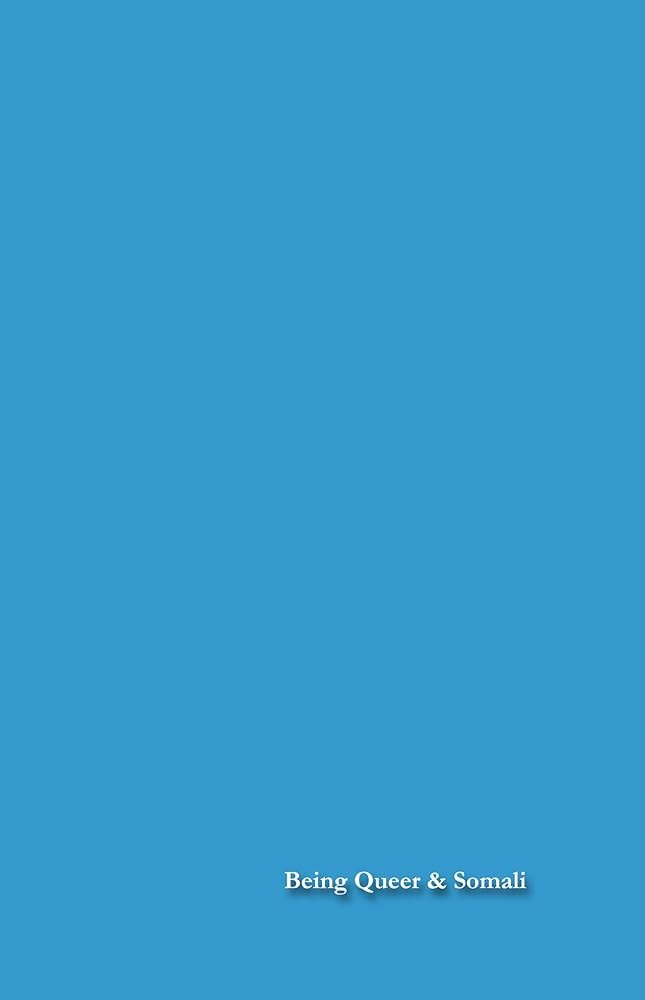
Being Queer and Somali: LGBT Somalis at Home and Abroad 

📍 Somalia 🇸🇴 

Somalia is the easternmost country in Africa and located in the Horn of Africa. Mogadishu is the capital and largest city. Around 85% of Somalia’s residents are ethnic Somalis; and Somali is the primary language. The country has been ravaged by a civil war that started in the 1980s as a resistance to the military junta. There is an ongoing phase of the civil war which is concentrated in southern and central Somalia that began in January 2009. Al-Shabaab, a militant terrorist organisation who have pledged allegiance to al-Qaeda is actively involved in the war and despite the growing challenges, still controls large swathes of territory in southern Somalia. LGBTQ people in Somalia face severe adversity and consensual same sex sexual activity is illegal for men and women. In areas controlled by al-Shabaab and in Jubaland, capital punishment is frequently executed.

Afdhere Jama is a Somali writer and filmmaker, born and raised in Somalia who moved to America as a teenager. Jama identifies as queer and Muslim. He has written six books till date.

Now, who would have thought about Queer Somalis? Hardly any! Nobody thinks about queer people in Africa and definitely not in a Muslim majority country like Somalia. And that’s where, the author, through this book, not only has shattered our preconceived notions and ill informed opinions and prejudices, but also has shown that, queer Somalis are living their lives unapologetically. This book is a testament to the fact that LGBT individuals in Somalia despite being in a hostile environment have had the courage to navigate the precarious circumstances to thrive, some doing it cautiously in the country, others having escaped to other countries and being advocates for the diaspora queer Somalis and also for those back home. 

The book starts with the author giving us a comprehensive overview of the country, culture, history, geography and the various tribes with their languages and dialects. He has also provided an essay on what it means to be queer, as a Muslim and as a Somali. He has given us a snapshot on the bullying faced by LGBT people in the country and the everyday slangs that are used for them. Through the book, he has also explained the origins, the continuity and the consequences of the civil war. With this background, he introduces us to a diverse and interesting plethora of LGBT Somalis who he has interviewed for the book. These individuals, resplendent in their own uniqueness, tell their stories of identity, struggle, escape, vulnerability, grief and fear; but forever standing tall and constantly reminding us readers of their supreme fortitude, resilience and charisma. 

The stories span from Mogadishu to cities and towns in Somalia, and to cities across the world such as Paris, London, Toronto, Oslo, Dubai, Jeddah, Cape Town, Nairobi, Washington, Atlanta and even our very own Mumbai. The Mumbai story features a Somali gay guy Kamal, working as a high profile escort in the city, living the good life who decides to quit the profession in the future and pursue his career in IT. Many stories about individuals fleeing the country as a refugee and/or illegal immigrant are gut wrenching for the sheer amount of brutality that they experience. But what’s even more astonishing is their ability to reconcile with their traumas, not dwelling in them and ultimately choosing to live, dream and hope. 

Every story is a gem but the ones that touched me deeply are as follows, described in a nutshell. Badal from Bosaaso comes out to his family after being married, is forced to flee to Mogadishu and establishes a relationship with a married man, Mubarak. The story of a labeeb, (a person who is neither a boy nor a girl; as said by the narrator Abshir), whose gender remains ambiguous, amongst the Sufis in the city of Bardera, is fascinating to say the least. Nuuroow’s a gay boy living in the town of Baraawe; a town controlled by al-Shabaab. Despite the overbearing presence of radicalism and homophobia, Nuuroow and his friends indulge in clandestine gay parties dancing to Bollywood music and living life in debauchery and defiance. Shamsa and Isfahan are a lesbian couple from Hargeisa, Somaliland, who had lived together in Rome, and are back in Hargeisa living in a seven bedroom house with four other lesbian couples. Rahma’s from Geneva, Switzerland, who has finished her medical school and waiting to be a gynaecologist; is a fierce feminist educating the Somali community on the horrible practice of FGM (Female Genital Mutilation); loves her vagina and is looking forward to marrying her girlfriend. Hamdi, a Somali trans woman, from Waqooyi in Northern Somalia, ran away from an abusive gay relationship to Mogadishu, then to a Kenyan refugee camp in Mombasa, finally emigrating to Seattle and has undergone gender reassignment surgery. She’s now a nurse in the US and happily married to a Somali man. Dadirow’s a black, muscular, gay man; is HIV positive, who experienced a traumatic childhood due to an abusive father, escaped to Ethiopia before coming to the US. Now he leads a disciplined life, loving and respecting his body, things that never occurred to him during his recalcitrant and reckless years. 

February is LGBTQ History Month. I am ecstatic to have read this book during this month. World over when LGBTQ individuals are being mistreated, misunderstood, misrepresented, maligned and marginalised, the Somalis are showing us how to survive these odds and make your voice heard. Through this book and their glorious existence, they are paving the way for so many of us to emulate and hence discover ourselves. Afdhere Jama, through his stellar writing, interviewing and compassion, has shown how to portray diversity and inclusivity. He has represented gay, lesbian, bisexual and transgender people from Somalia and the Somalian diaspora with equity, dignity and integrity. The book is a masterclass in writing and representation which when done rightfully, makes the unseen seen and the unheard heard. 

Read this book to be inspired, read it to be humbled; every step of the way. 

~ JUST A GAY BOY. 🏳️‍🌈🏳️‍⚧️

Thirteen Months of Sunrise

📍 Sudan 🇸🇩 

Sudan, is one of the poorest countries in Africa, and has been afflicted by repeated revolutions, civil wars and military dictatorships leading to international sanctions and isolation, internal instability and factional violence. Sudan achieved independence on 1st January 1956 from Egyptian and British colonisation. The partition of Sudan happened in 2011 and South Sudan was formed in July 2011. The war in Darfur was a major armed conflict in Sudan from 2003 to 2020, akin to a genocide, leading to hundreds of thousands of civilian casualties and deaths, brutal rapes and various other horrific human rights violations. 

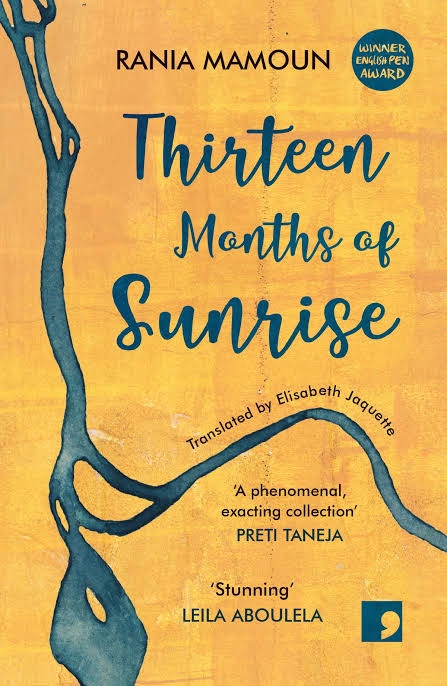
This novella, my pick for Women in Translation Month, is an anthology of short stories, set in Khartoum, the capital of Sudan. These stories offer a contemporary outlook on Sudan but often replete with the issues plaguing Sudanese people such as poverty, insecurity and safety. The first story, titled ‘Thirteen months of Sunrise’, is about a bittersweet friendship between a Sudanese woman and an Ethiopian man; also why Ethiopia has thirteen months! The other stories that stood out were, ‘A woman asleep on her Bundle’, that spoke about a woman’s benevolence despite her abject poverty and hence forced ostracism; ‘Stray Steps’, that portrayed a diabetic woman’s ordeal with hunger and hypoglycaemia and how stray dogs come to her rescue; and ‘Doors’, a story about an unemployed man’s hope of securing a job only to be left despondent and indignant.

Rania Mamoun is a Sudanese fiction writer and journalist, known for her novels, poems and short stories. The book which has been translated from Arabic into English by Elisabeth Jaquette, won the Pen Translates Award in 2017 and was also shortlisted for the Warwick Prize for Women in Translation 2020. 

The ongoing civil war that began during Ramadan on 15th April, 2023, between the two rival factions of the military government of Sudan, has been concentrated around the capital city of Khartoum and the Darfur region. The country is facing one of the most severe humanitarian crises in recent history. According to the UN, UNHCR and Amnesty International; over 18,800 people have been killed; 6.7 million are at risk of gender-based violence, particularly women and girls; 755k people are on the brink of famine and 25.6 million people are in acute hunger that includes more than 8.5 million people facing emergency levels of hunger. Over 10 million people have been forced to flee their homes both within the country and across its borders; out of which over 7.7 million are internally displaced persons; as the devastating civil war heads for its 500th day. 

Sudan, Gaza, DR Congo, Burkina Faso, Myanmar, Bangladesh, Yemen, Afghanistan, Ukraine, Haiti, Manipur. The world in 2024. 

~ JUST A GAY BOY. 😞

And Then He Sang A Lullaby

📍 Nigeria 🇳🇬

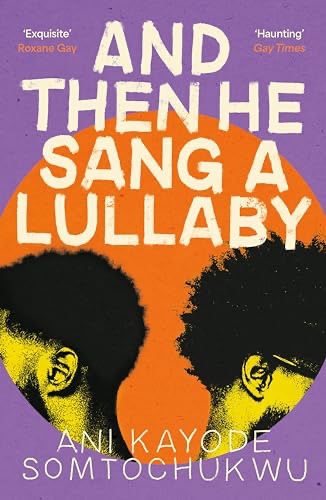
My pick for Pride Month is a searingly honest and often heartbreaking story of two gay men finding love and themselves in a country that is decidedly against them. August Akasike, whose mother dies while giving birth to him, is often tormented by the same fact and considers her foolish for going ahead with the pregnancy despite the doctor’s warnings. He lives in Enugu and has three older sisters who dote on him and mollycoddle his every action and achievement. They along with an emotionally indifferent father entrust him with the responsibility of protecting the Akasike family name. However, August who is a phenomenal track star, is naturally attracted towards men and often admonishes himself in the harshest way possible for even having these thoughts. Despite the strong self reluctance in wanting to engage in sex with men, he does have a few dalliances, which end up causing him extreme emotional turmoil, so much so that in University he tries having a relationship with a girl, Betty, until he meets Segun.

Segun, who lives in Iyana-Ipaja near Lagos, is the only child to a fierce mother and an impassive father. His body language and gesticulations which get perceived as being “effeminate” attract teasing, bullying and even assaults from a very young age. Tanko, his first boyfriend, gaslights him, physically manipulates and harms him until Tanko himself becomes a victim of homophobic attack. His other failed relationships and random sexual encounters make him cynical of love. He refuses to be discreet and starts living openly as a queer man, picking up fights, and being borderline reckless in his defiance. He wants his partner to be as open as him until he meets August.

Segun and August meet at the University in Enugu and despite their reservations regarding each other, fall in love. At the beginning of their relationship, August is secretive and ashamed of their affair. This irks Segun to no end and they have multiple heated arguments over it. Later, a brutal mob attack on Segun at his hostel, changes him completely. The once bold and rebellious Segun becomes submissive and docile. He loses his will to live and to fight. This prompts almost a role reversal and August becomes the new rebel; comes out to his bewildered sisters and his peers, inviting contempt. However, nothing that he does, is able to shake Segun out of his despair.

The author, Ani Kayode Somtochukwu, is a Nigerian writer and a prominent LGBTQ+ activist who is known for his advocacy and criticism of anti-LGBTQ+ laws. This book, his debut work, published at the age of 23, is a purely African queer story and Nigeria remains the front and center of it. As the story unfolds, the author simultaneously introduces us to the political scenario in his country and the rising hostility towards queer people. Some of the striking moments in the book are about the Nigerian President Goodluck Jonathan signing into law the Same Sex Marriage Prohibition Act in 2014, to cheers from a largely homophobic society and disputes between August and Segun. But the real beauty of the book lies in the way, Somtochukwu has written his characters. They are as real as it gets, brimming with temerity and perseverance but also being flawed in their own ignorant way. The tender moments between August and Segun are affirming and written with so much consideration. August’s love for Segun is all encompassing and immersive yet helpless. Ani Kayode has written with such empathy that never overburdens the reader. His prose is exacting in the grimness of the realities faced by August and Segun and still offering a vague semblance of mundanity to their romance. His depiction of sexual scenes is exemplary and one where in other writers could take notes from. Kudos to him for championing compelling themes of internalised homophobia, closeted gays, emotional and physical violence in gay relationships with the requisite sensitivity and nuance. This story is truly a lullaby, a lullaby you will hum long after you finish reading it, reminiscing August and Segun and their love which was never meant to be.

As I write this, LGBTQIA+ individuals are criminalised in Nigeria and various states of the country have extremely harsh laws for the same. In fact, worldwide 64 countries criminalise homosexuality as of 2024. In 12 countries, the death penalty is imposed. Here, in our country, we may have decriminalised article 377, but LGBTQ+ individuals still remain second class citizens with no equal rights. I wonder, how long would it take for others to see us as humans? How many lives need to be lost, and hopes to be crushed for a positive change to happen?

Happy Pride indeed!

~ JUST A GAY BOY. 🏳️‍🌈🏳️‍⚧️

Homegoing

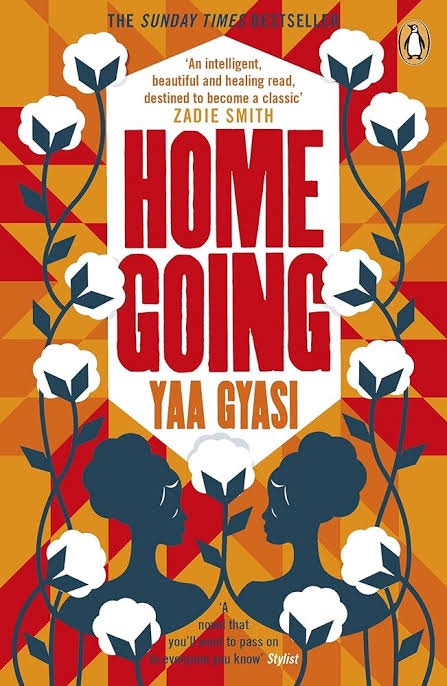
Yaa Gyasi’s monumental epic is a story that talks about slavery. From the days when slave trade was legal, to the days when it became a crime. It’s a multigenerational saga that carries the trauma of slavery through every generation, relives with every birth. It starts in the seventeenth century in Asanteland, along the Gold Coast of West Africa, and follows the bloodlines of two women Effia and Esi, unknown to each other, but connected through their mother Maame. The author takes us on a grippingly astute narrative through the seven generations of Effia and Esi. She brilliantly alternates between Effia and Esi’s families, through the various characters who become different chapters in the book. However, each of the chapter and character introduces us to the then geopolitical scenario and takes us a breathtaking journey as we pass through centuries. Every character is powerful despite the powerlessness of their existence. Every tale is poignant despite the numbness that accompanies it.

Yaa Gyasi describes the horrors of slave trade and the perils of living life as a black person as is. As we struggle to read the words, Gyasi makes it even more stark. Esi’s life in the slave dungeons is a putrid narrative of living alongside death, disease and human secretions. Ness’s story is about her life as a black slave woman in Alabama. H and Sonny’s tales are about black men in America who have suffered wrongful incarceration and become committed to a life full of wrong choices and consequences. Sonny and Amani Zulema’s questionable love track is steeped in doom, drugs and heartache. Kojo narrates his desperation as new slave laws come into force in Baltimore and despite being a free man, he feels enslaved and a criminal. Gyasi acquaints us with the civil war in America, the inhumane coal mines of Birmingham, the brutality of colorism and racism, and the romance of the discovery of cocoa in Ghana. Melancholy never leaves the page, as does despondency that never leaves the souls of the characters.

Homegoing creates an ache in your heart and soul which remains unshakeable long after you have finished reading it. Gyasi hasn’t written a story to soothe us, instead it jolts us out of our slumber. She presents us a history that has been wiped out, is being criminalised when talked about and unflinchingly demonstrates the ugliness of its ramifications. Her writing is confident and reverberating with tenacity. Her masterly craft shines through as she takes us on this journey from Asante villages to present day Ghana and America. The idea for Homegoing came to her during the summer of her sophomore year. At the age of 26, this stellar historical fiction was her debut work. Every character in the book is fleshed out and has been wronged. Every story is raw and imprinted with grief and violence. Homegoing is the undeniable truth about slavery and how it trickles through generations despite outwardly freedom. Gyasi is its authentic voice.

Compulsory read!

~ JUST A GAY BOY. 👏

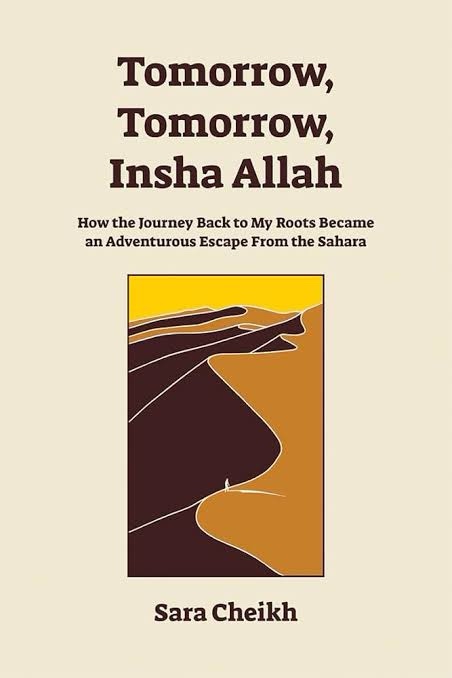
Tomorrow, Tomorrow, Insha Allah

📍 Western Sahara 🇪🇭

Western Sahara is a disputed territory on the northwest coast of Africa and is among the most arid and inhospitable on the planet. Colonised by Spain until 1975, about 20% of the territory is controlled by the Saharawi Arab Democratic Republic (SADR); while the remaining 80% is occupied and administered by Morocco with tacit support from France and the United States. A nationalist movement, the Polisario Front, has proclaimed the rightful leadership of the SADR with a government in exile in Tindouf, Algeria. The UN considers the Polisario Front to be the legitimate representative of the Saharawi people and maintains the Saharawis have a right to self determination. Western Sahara is the last African colonial state yet to achieve its independence and has been dubbed “Africa’s last colony”.

The book is a memoir of the Saharawi author, Sara Cheikh. Born in the Smara refugee camp in Tindouf, where she lived till the age of six, Sara later immigrated to Spain and is currently living in Paris. In the March of 2020, Sara decides to travel to Western Sahara to see her grandmother, Noa; just when the world is discovering about Covid-19. Despite a very uncertain and anxious start to her journey from Paris, she travels to Algiers, then Tindouf, then Smara and ultimately to Mheiriz in the liberated territory where she meets Noa and many members of her family. However, by this time, border closures have started happening all over the world and Sara is left panicking if she is ever going to go back to Europe. Her journey back from the desolate desert terrains forms the crux of this story that keeps us, the readers on the edge of our seats.

Sara’s writing is descriptive, nuanced and humorous. She carefully describes the geopolitical situation of the Saharawi people and benevolently introduces us to their culture, traditions and cuisine. The desert forms an important character in the prose and its harshness and kindness has been lucidly illustrated by the author. As you read the book, you discover that Saharawi women are fierce, independent and liberal minded. Sara’s mother, Gbnaha, comes across as this daring go-getter with a charming attitude who is tough and strong willed. The Saharawi men also appear to be supportive, convivial and progressive. The book is peppered with archival and personal pictures of the Saharawi territories and the people. Through the book, Sara tries portraying her juxtaposition as she battles her European upbringing with her Saharawi consciousness and makes a compelling case about a hyphenated existence.

Tomorrow, Tomorrow, Insha Allah is one of those rare books written by a Saharawi talking about the forgotten territory of Western Sahara. With this book, you realise that even in 2024, there’s colonialism present and the same colonisers are giving lessons to the world about freedom and equal rights. What a time to be alive!

~ JUST A GAY BOY. 🥹

A General Theory of Oblivion

📍 Angola 🇦🇴

Angola is a country on the west central coast of Southern Africa. It is the second largest Portuguese speaking (Lusophone) country in the world. After a protracted anti-colonial struggle, Angola achieved independence in 1975 from Portuguese colonisation as a Marxist-Leninist one party Republic. The country descended into a devastating civil war the same year between the ruling People’s Movement for the Liberation of Angola (MPLA), the insurgent National Union for the Total Independence of Angola, and the militant organization National Liberation Front of Angola. The country has been governed by MPLA ever since its independence in 1975. Following the end of the war in 2002, Angola emerged as a relatively stable unitary, presidential constitutional republic. (Source- Wikipedia)

The book, originally written in Portuguese by Angolan writer, José Eduardo Agualusa in 2012, was translated into English by Daniel Hahn in 2015. The novel appeared on the shortlist for the 2016 Man Booker International Prize and has been the recipient of the 2017 International Dublin Literary Award. The story is about a woman, Ludovica, who seals herself off in her apartment in Luanda in 1975 at the time of Angola’s independence. As Luanda plunges into a civil car soon after, Ludovica watches it unfold in bits and pieces through her window, radio and sometimes overhearing people’s conversations. She’s also dealing with the abrupt disappearance of her sister and brother-in-law which happens around the same time. She sustains herself frugally by growing her own vegetables, catching pigeons, reading the books in her house and by scribbling her thoughts on the wall. Years pass by, and Ludovica, with her aging and diminishing eyesight often oscillates between periods of imagined insanity and hopeless reality. One day, a little boy, Sabalu comes into her life, at a time, when she’s immobile and sprawled out on the floor due to a fracture. He tends to her and gives her hope through his unconditional empathy and care. Just when Ludo starts considering Sabalu as her grandson and only family, she is confronted with an unexpected and unknown family member.

This dark and seemingly despondent life of Ludovica runs in parallel with the civil upheaval in Luanda and Angola. The author also introduces us to a myriad of other characters through the narrative, whose individual stories, purposes and intentions come together in the end. Each of them has a tale woven across Angola’s independence. He also takes time in explaining Ludovica’s painful past traumas leading her to live a life of confinement, self abandonment and shame.

Agualusa’s prose is purposeful, political and poetic. He crafts a meandering plot that traverses from Angola’s independence in 1975, through the civil war, till its end in 2002. He doesn’t shy away from layering the text with mentions of colonialism and white supremacy and it’s problematic effects. Ludovica comes across as a woman of steely grit having a resounding optimism to live, despite her circumstances and her own beliefs about her. That’s the genius of Agualusa’s writing. Do savour it.

~ JUST A GAY BOY. 🙃

Black Foam

📍 Eritrea 🇪🇷

This is a book like no other. The novel, written by Doha based Eritrean novelist Haji Jabir, was originally published in Arabic in 2018 and, is the first Eritrean novel to be longlisted for the 2019 International Prize for Arabic Fiction. It has been translated into English by Sawad Hussain and Marcia Lynx Qualey. The story is about an Eritrean soldier’s relentless pursuit in finding stability, hope and freedom as he traverses from Eritrea to Ethiopia to Israel. Adal fights as a soldier in The Eritrean war of Independence against Ethiopia and sees his country achieve it. While Asmara celebrates the new freedom, Adal changes his name to Dawoud, because he doesn’t want to be associated with it. During his time at the Revolution school there, his infractions lead him being sent to the torture prison at the Blue Valley. He escapes the prison to land in Endabaguna refugee camp in North Ethiopia where he becomes David. From there, he manages to enter the Gondar camp in the Amhara region of Ethiopia, posing as a Falasha Mura (Ethiopian Jew) named Dawit. This helps him in getting to Israel, finally to Jerusalem. This arduous journey which converts him from a soldier to a refugee, whilst he assumes various identities and religions, shakes him to his core; challenges all his beliefs and notions about the world and humanity. Ultimately, he finds a glimmer of solace when he visits the Al-Aqsa mosque in the West Bank region of Jerusalem, Palestine; it appears to him, as if life has come a full circle and there he starts questioning his identity and whether he may now be a part of a community of African Palestinians.

Black Foam is a composite story that, at the outset, through the protagonist’s character highlights the struggles and atrocities faced by a refugee. However, as we delve deep into the narrative, it holds your attention towards a plethora of unspoken issues and peoples. A nation’s independence needn’t necessarily attribute independence to all its citizens. As a soldier, Adal was left stifled living that life, though now Eritrea was free. However, his mindset was such that, he could never accept freedom, which led him from one refugee camp to another. The book also talks about the plight of Ethiopian Jews, who remain at the mercy of the Israeli Jews and live like second class citizens in the country. The story also talks about Palestine and lives of Palestinians living under the apartheid regime of Israel. Whilst weaving a sombre and at times discordant narrative through these complex geographies, the author simultaneously constructs the romantic and sexual life of the protagonist. This juxtaposition in the storytelling is distracting, deliberately pervasive and at times tedious.

Haji Jabir has masterfully sketched this story of a man in search of a home, security, a sense of belonging only to be met by hostility and uncertainty every step of the way. This quest is sadly the tale of millions of refugees in various parts of the world. Kudos to the author for writing it, keeping the despair and depravity alive in every page; for breathing life into the forgotten lives of the refugees; for portraying doom as a running subtext to the entire narrative. The descriptions of Jerusalem, West Bank, Al-Aqsa Mosque, Church of the Holy Sepulchre, is so detailed, nuanced; it’s almost as if we are there with Dawoud/ David/ Dawit as he roams these streets searching and questioning his life’s meaning and purpose.

Black Foam is a bittersweet melancholy that will stay with you long after you have finished reading it.

~ JUST A GAY BOY. 🥺

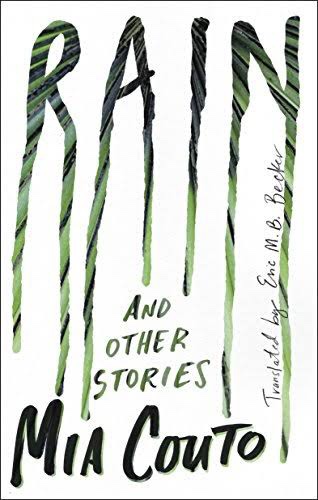
Rain and other stories

📍 Mozambique 🇲🇿

Mozambican writer Mia Couto is one of the most prominent Portuguese language writers of today. After studying medicine and biology, he worked as a journalist and headed several national newspapers and magazines in Mozambique. He has published more than thirty books that have been translated in thirty different countries.

He won the Camões Prize in 2013, the most important literary award in the Portuguese language, and the Neustadt International Prize for Literature (The Prize is a biennial award sponsored by the University of Oklahoma and World Literature Today since 1970, and is one of the few international prizes for which poets, novelists, and playwrights are equally eligible) in 2014. He was shortlisted for his entire body of work for the Man Booker International Prize 2015. In many of his texts, he undertakes to recreate the Portuguese language by infusing it with regional vocabulary and structures from Mozambique, thus producing a new model for African narrative. He lives in Maputo, Mozambique.

Mozambique, a country located in southeastern Africa, gained independence from Portuguese colonial rule in 1975. After only two years following independence, the country descended into a bloody and protracted civil war lasting from 1977 to 1992. This book was first published in 1994, shortly after the 1992 peace agreement and has been translated by Eric M.B. Becker.

The book is a collection of 26 short stories. Though the book has received wide critical acclaim internationally, I completely failed to connect with it. The stories are extremely fable like, many inspired by Mozambican folklore while others oscillate between the real world and an imaginary magical realm. The stories start and end abruptly and the author fails to provide any nuanced significance for each of them. Reading these stories I wondered, if there was a purpose for this kind of pithy yet tedious storytelling. Are Mozambicans only supposed to understand them?

Disappointed.

~ JUST A GAY BOY. 😑

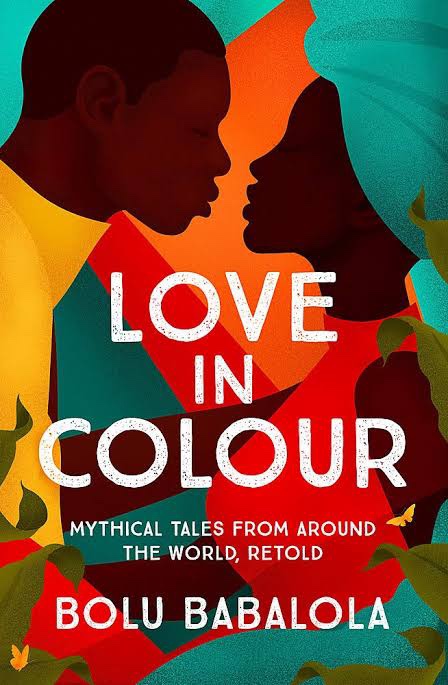
Love in Colour

Nigerian British author, Bolu Babalola’s book is a symphony orchestrated in shades of love and romance. It’s an anthology of thirteen short stories, ten retellings of myths from around the world, and three original stories. These retellings range from Ghana to Greece to Egypt to Lesotho. She has reimagined certain Yoruba and Chinese mythical stories and made it her own. The original mythical stories were essentially told from the male perspective and had tinges of patriarchy and misogyny. However, the genius that Bolu is, has flipped that very narrative, that very story and given the agency and power to the female characters. These stories are now intersectional, rooted in feminism and coloured ever so beautifully with the myriad hues of love and romance; which in reality, if you observe, love is a spectrum and there can never be one rigid definition of it.

Out of all these stories, a few stood out for me. The story of Scheherazade may seem like a movie but the emotions running through it are so pure, almost scared. One can’t help but get misty eyed at the end of it. The banter between the lovers is so real, so convivial. The tale of Attem is all about a woman’s agency and control over her desires and sexuality, and the mighty prowess that she exudes when she celebrates herself. Nefertiti’s story is about feminism that’s active, affirmative and audacious. It’s also about sexuality that’s languid, undefined yet completely your own. The story of Naleli is empowering in so many ways as she comes to terms with her medical condition, her self acceptance of the same and basking in its glory whilst navigating teenage angst and politics. The breakup scene in Tiara’s story is breathtakingly heartbreaking and intimate. In fact the distance that creeps up between them during the conversation is deafening but deftly portrayed. The way Bolu has crafted the nitty-gritty of a modern day relationship involving long distance, jealousy and insecurity is ingenious to say the least. Lastly, Orin’s tale is fun, flirty and humorous. The scene in the bar, I wish I were Orin!

One doesn’t need to know or be familiar with the myths. The author at no point makes the reader feel abandoned for not knowing them. She in fact takes us on this lyrical, poetic journey of love through her writing. This book is lush, the writing is stellar. Bolu has achieved the indomitable feat of marrying ancestry with modernism. In fact, this is one of those very few books where the language is dripping with love, the emotions tug at your heart and the characters make you laugh and cry with them. It’s not a cliché, if I will tell you that this book will want you to fall in love and if you are already in love with a wonderful partner/s, then you would want to hug them tightly as you relish the book.

Take a bow, Bolu Babalola!

~ JUST A GAY BOY. 🫶