Being Queer and Somali: LGBT Somalis at Home and Abroad 

📍 Somalia 🇸🇴 

Somalia is the easternmost country in Africa and located in the Horn of Africa. Mogadishu is the capital and largest city. Around 85% of Somalia’s residents are ethnic Somalis; and Somali is the primary language. The country has been ravaged by a civil war that started in the 1980s as a resistance to the military junta. There is an ongoing phase of the civil war which is concentrated in southern and central Somalia that began in January 2009. Al-Shabaab, a militant terrorist organisation who have pledged allegiance to al-Qaeda is actively involved in the war and despite the growing challenges, still controls large swathes of territory in southern Somalia. LGBTQ people in Somalia face severe adversity and consensual same sex sexual activity is illegal for men and women. In areas controlled by al-Shabaab and in Jubaland, capital punishment is frequently executed.

Afdhere Jama is a Somali writer and filmmaker, born and raised in Somalia who moved to America as a teenager. Jama identifies as queer and Muslim. He has written six books till date.

Now, who would have thought about Queer Somalis? Hardly any! Nobody thinks about queer people in Africa and definitely not in a Muslim majority country like Somalia. And that’s where, the author, through this book, not only has shattered our preconceived notions and ill informed opinions and prejudices, but also has shown that, queer Somalis are living their lives unapologetically. This book is a testament to the fact that LGBT individuals in Somalia despite being in a hostile environment have had the courage to navigate the precarious circumstances to thrive, some doing it cautiously in the country, others having escaped to other countries and being advocates for the diaspora queer Somalis and also for those back home. 

The book starts with the author giving us a comprehensive overview of the country, culture, history, geography and the various tribes with their languages and dialects. He has also provided an essay on what it means to be queer, as a Muslim and as a Somali. He has given us a snapshot on the bullying faced by LGBT people in the country and the everyday slangs that are used for them. Through the book, he has also explained the origins, the continuity and the consequences of the civil war. With this background, he introduces us to a diverse and interesting plethora of LGBT Somalis who he has interviewed for the book. These individuals, resplendent in their own uniqueness, tell their stories of identity, struggle, escape, vulnerability, grief and fear; but forever standing tall and constantly reminding us readers of their supreme fortitude, resilience and charisma. 

The stories span from Mogadishu to cities and towns in Somalia, and to cities across the world such as Paris, London, Toronto, Oslo, Dubai, Jeddah, Cape Town, Nairobi, Washington, Atlanta and even our very own Mumbai. The Mumbai story features a Somali gay guy Kamal, working as a high profile escort in the city, living the good life who decides to quit the profession in the future and pursue his career in IT. Many stories about individuals fleeing the country as a refugee and/or illegal immigrant are gut wrenching for the sheer amount of brutality that they experience. But what’s even more astonishing is their ability to reconcile with their traumas, not dwelling in them and ultimately choosing to live, dream and hope. 

Every story is a gem but the ones that touched me deeply are as follows, described in a nutshell. Badal from Bosaaso comes out to his family after being married, is forced to flee to Mogadishu and establishes a relationship with a married man, Mubarak. The story of a labeeb, (a person who is neither a boy nor a girl; as said by the narrator Abshir), whose gender remains ambiguous, amongst the Sufis in the city of Bardera, is fascinating to say the least. Nuuroow’s a gay boy living in the town of Baraawe; a town controlled by al-Shabaab. Despite the overbearing presence of radicalism and homophobia, Nuuroow and his friends indulge in clandestine gay parties dancing to Bollywood music and living life in debauchery and defiance. Shamsa and Isfahan are a lesbian couple from Hargeisa, Somaliland, who had lived together in Rome, and are back in Hargeisa living in a seven bedroom house with four other lesbian couples. Rahma’s from Geneva, Switzerland, who has finished her medical school and waiting to be a gynaecologist; is a fierce feminist educating the Somali community on the horrible practice of FGM (Female Genital Mutilation); loves her vagina and is looking forward to marrying her girlfriend. Hamdi, a Somali trans woman, from Waqooyi in Northern Somalia, ran away from an abusive gay relationship to Mogadishu, then to a Kenyan refugee camp in Mombasa, finally emigrating to Seattle and has undergone gender reassignment surgery. She’s now a nurse in the US and happily married to a Somali man. Dadirow’s a black, muscular, gay man; is HIV positive, who experienced a traumatic childhood due to an abusive father, escaped to Ethiopia before coming to the US. Now he leads a disciplined life, loving and respecting his body, things that never occurred to him during his recalcitrant and reckless years. 

February is LGBTQ History Month. I am ecstatic to have read this book during this month. World over when LGBTQ individuals are being mistreated, misunderstood, misrepresented, maligned and marginalised, the Somalis are showing us how to survive these odds and make your voice heard. Through this book and their glorious existence, they are paving the way for so many of us to emulate and hence discover ourselves. Afdhere Jama, through his stellar writing, interviewing and compassion, has shown how to portray diversity and inclusivity. He has represented gay, lesbian, bisexual and transgender people from Somalia and the Somalian diaspora with equity, dignity and integrity. The book is a masterclass in writing and representation which when done rightfully, makes the unseen seen and the unheard heard. 

Read this book to be inspired, read it to be humbled; every step of the way. 

~ JUST A GAY BOY. 🏳️‍🌈🏳️‍⚧️

Wild Geese

Wild Geese, written by trans writer, Soula Emmanuel; the 2024 Lambda Literary Awards winner for Transgender Fiction; is a vivid exploration of the complexities of human existence, especially when people refuse to conform to their societal perceptions. Phoebe Forde, is a thirty year old Irish trans woman, three years into her transition, pursuing her PhD from a Swedish University and living in Copenhagen, Denmark. She leaves Ireland to chart a new life for her as a trans woman, and to escape from a life that was no longer serving her. She is living a pretty nondescript life in Copenhagen with her dog, when suddenly one day, her ex girlfriend Grace, shows up at her doorstep.

The book is essentially what happens between Phoebe and Grace over one weekend. Their past lives, their individual and shared traumas, their anger and insecurities, their contemplations about a blurry future get sometimes muddled, sometimes real and many times jarring in the present, as they speak unfiltered, not shying from the awkwardness of each other’s presence, yet getting caught in the awkwardness of their truth and lies, things said and unsaid, emotions discerned and disregarded, leading to an incongruence of expectations and a cacophony of explicit suppositions often blanketed by a symphony of territorial understanding.

Phoebe comes across as a very real person having the rightful fears and anxieties about her existence so much so that, she prefers anonymity. The author sensitively and sensibly portrays her experience as a trans woman without making it a spectacle ever. Phoebe isn’t out there to challenge people’s beliefs and wage a war against transphobia, rather through her confusions and complications, shows her authenticity, vulnerability and reality. Even when Grace, with her preconceived notions provokes Phoebe, she prefers to remain calm and engages her in an esoteric debate over bodies, minds and belongingness.

The writer, Soula Emmanuel, an Irish trans woman, whose debut work is Wild Geese, has used the book as a meditative consideration on a trans person’s lived experience. It is quiet, benevolent and benign. Soula tactfully never tries to answer all the questions that readers may have about Phoebe. Through her nuanced writing, she emphatically states that trans lives are not for scrutiny and examination. The dreamy Copenhagen forms the perfect backdrop to stage Phoebe and Grace’s chance rendezvous. However, there were times, wherein I felt, the prose to be too metaphorical and the language difficult. The conversations between Phoebe and Grace are easy to read, but Phoebe’s internal monologue seems demanding in terms of the language. My pedantic views shouldn’t really stop anyone from picking this profoundly glorious book. An astute, unambiguous, unapologetic and forthright voice in Trans literature. Bravo Soula!

~ JUST A GAY BOY. 🏳️‍⚧️

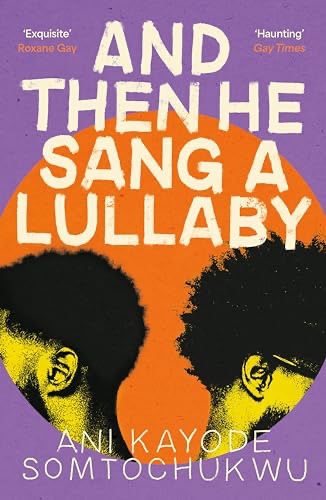
And Then He Sang A Lullaby

📍 Nigeria 🇳🇬

My pick for Pride Month is a searingly honest and often heartbreaking story of two gay men finding love and themselves in a country that is decidedly against them. August Akasike, whose mother dies while giving birth to him, is often tormented by the same fact and considers her foolish for going ahead with the pregnancy despite the doctor’s warnings. He lives in Enugu and has three older sisters who dote on him and mollycoddle his every action and achievement. They along with an emotionally indifferent father entrust him with the responsibility of protecting the Akasike family name. However, August who is a phenomenal track star, is naturally attracted towards men and often admonishes himself in the harshest way possible for even having these thoughts. Despite the strong self reluctance in wanting to engage in sex with men, he does have a few dalliances, which end up causing him extreme emotional turmoil, so much so that in University he tries having a relationship with a girl, Betty, until he meets Segun.

Segun, who lives in Iyana-Ipaja near Lagos, is the only child to a fierce mother and an impassive father. His body language and gesticulations which get perceived as being “effeminate” attract teasing, bullying and even assaults from a very young age. Tanko, his first boyfriend, gaslights him, physically manipulates and harms him until Tanko himself becomes a victim of homophobic attack. His other failed relationships and random sexual encounters make him cynical of love. He refuses to be discreet and starts living openly as a queer man, picking up fights, and being borderline reckless in his defiance. He wants his partner to be as open as him until he meets August.

Segun and August meet at the University in Enugu and despite their reservations regarding each other, fall in love. At the beginning of their relationship, August is secretive and ashamed of their affair. This irks Segun to no end and they have multiple heated arguments over it. Later, a brutal mob attack on Segun at his hostel, changes him completely. The once bold and rebellious Segun becomes submissive and docile. He loses his will to live and to fight. This prompts almost a role reversal and August becomes the new rebel; comes out to his bewildered sisters and his peers, inviting contempt. However, nothing that he does, is able to shake Segun out of his despair.

The author, Ani Kayode Somtochukwu, is a Nigerian writer and a prominent LGBTQ+ activist who is known for his advocacy and criticism of anti-LGBTQ+ laws. This book, his debut work, published at the age of 23, is a purely African queer story and Nigeria remains the front and center of it. As the story unfolds, the author simultaneously introduces us to the political scenario in his country and the rising hostility towards queer people. Some of the striking moments in the book are about the Nigerian President Goodluck Jonathan signing into law the Same Sex Marriage Prohibition Act in 2014, to cheers from a largely homophobic society and disputes between August and Segun. But the real beauty of the book lies in the way, Somtochukwu has written his characters. They are as real as it gets, brimming with temerity and perseverance but also being flawed in their own ignorant way. The tender moments between August and Segun are affirming and written with so much consideration. August’s love for Segun is all encompassing and immersive yet helpless. Ani Kayode has written with such empathy that never overburdens the reader. His prose is exacting in the grimness of the realities faced by August and Segun and still offering a vague semblance of mundanity to their romance. His depiction of sexual scenes is exemplary and one where in other writers could take notes from. Kudos to him for championing compelling themes of internalised homophobia, closeted gays, emotional and physical violence in gay relationships with the requisite sensitivity and nuance. This story is truly a lullaby, a lullaby you will hum long after you finish reading it, reminiscing August and Segun and their love which was never meant to be.

As I write this, LGBTQIA+ individuals are criminalised in Nigeria and various states of the country have extremely harsh laws for the same. In fact, worldwide 64 countries criminalise homosexuality as of 2024. In 12 countries, the death penalty is imposed. Here, in our country, we may have decriminalised article 377, but LGBTQ+ individuals still remain second class citizens with no equal rights. I wonder, how long would it take for others to see us as humans? How many lives need to be lost, and hopes to be crushed for a positive change to happen?

Happy Pride indeed!

~ JUST A GAY BOY. 🏳️‍🌈🏳️‍⚧️

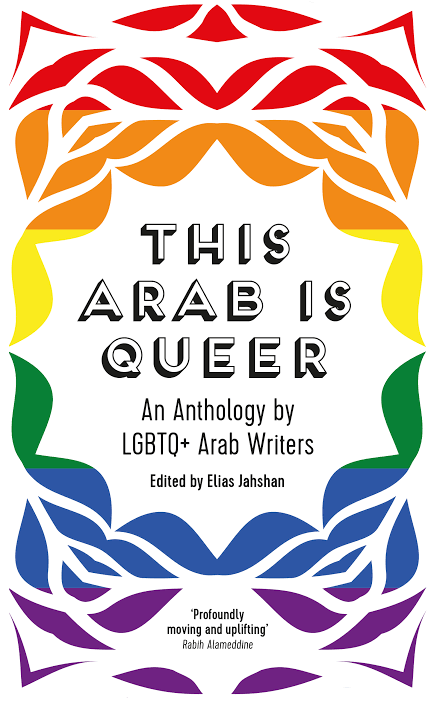
This Arab is Queer

I feel, I am blessed to have read this book, that too during pride month. The book, which the Time magazine hailed as ‘groundbreaking’, is indeed that. It’s also trailblazing in so many ways. It’s an anthology of 18 essays written by queer Arab writers from the SWANA region, edited by Elias Jahshan, a Palestinian Lebanese journalist living in Australia. Now when was the last time you heard or saw space for a queer arab? And that’s the power this book yields. By asking 18 brilliant writers to write their stories, their way, many through their lived experiences, this book embodies the queer arab narrative, emboldens the queer arab and makes their visibility and intersectionality a necessity. While the stories are rooted in the arab-ness and queerness, diaspora or otherwise, the feelings of dignity, safety, and belongingness remain universal.

The book begins with the feminist giant (that’s also her newsletter) Mona Eltahawy’s essay, The decade of saying all that I could not say. Mona, a survivor of sexual assault, has been a crusader against patriarchy. In her essay she astutely describes her reckoning of owning her sexuality, her bisexuality, and the umpteen nuances that make it so. Her liberation by shedding the shame surrounding sex, has been an act of rebellion. As a Muslim woman, her vehement uprising against heteronormativity has been her emancipation. Mona writes not just to inspire us but to instigate our power.

Though each essay is profound, I would like to highlight a few that stayed with me. Amrou Al-kadhi’s essay, You made me your Monster, is a fierce, defiant take on Arab-ness, Quran and his Islamic identity. His transgressions viewed as blasphemous in the Arab world are just his ways of honouring his own authentic existence. Through his flamboyant, glamorous drag persona, Glamrou; Amrou is reinforcing the power in provocation.

Danny Ramadan, in his essay, The Artist’s portrait of a marginalised man, talks about how his writing is always up for debate, whether it’s fiction or non fiction and if it’s based on his real life experiences, simply because he’s a queer Syrian man with a refugee experience. He poignantly points out people’s assumptions about him and his work since he’s a queer arab and also worries if his real life trauma is going to unknowingly and inadvertently slip into his every narrative.

Amna Ali’s essay, My intersectionality was my biggest bully, is an eye opening piece about her journey as a Black Queer Arab. Growing up as and being a visibly Black person in a racism predominant society like UAE, Amna had a tumultuous upbringing wherein she was taught to be shameful about her blackness. Later, she became shameful about her queerness too. This amalgamation of multiple identities made her distraught, caused her abuse and violence, until she learnt to make peace with them. Amna has since realised her intersectionality as a Somali-Yemeni-Emirati queer person, is her true strength and yet it continues to be an arduous journey.

Hasan Namir’s story, Dancing like Sherihan, is about his tryst with shame due to his queerness leading to his ingrained belief about him being a sinner. His strict Iraqi Muslim upbringing was always at odds despite him moving to Canada and experiencing queer freedom. His essay deftly portrays the internal struggles of a queer person as they oscillate between religious virtues, familial pressures, internalised shame and queer trauma. Hasan’s relationship with Tarn, leading to their marriage and later having a child is one that of queer joy. It makes you misty-eyed, it makes you hopeful and it feels like a collective queer victory.

Madian Al Jazerah’s moving piece, Then came Hope, is an ode to him as a displaced Palestinian Queer man who is constantly engaged in an embittered battle with shame whilst remaining hopeful that he would emerge triumphant. His trauma is multilayered as he navigates zionism and homophobia. His astute observations on the blatant yet veiled discrimination in the gay world is one that many of us can identify with. Madian has a beautiful bookstore in Amman which I had visited back in 2019. It’s now through this book that I know the connection between the bookstore and him and have been so ecstatic since. Queer joy indeed comes in so many forms and experiences. I would like to quote a couple of lines from his essay which I felt were earth shatteringly brilliant. Here goes;

I know from experience that you can put shame on the highest shelf and forget about it for a while, but bigots and bullies can smell it and it is always within their reach.

When we talk about love, the image of a heterosexual couple is accompanied by a thousand positive romantic associations. When we talk about gay men, the image is of two men having sex.’

Many or most of these stories are about shame and trauma, and that’s so true since those are the first feelings one experiences as a queer person. They also highlight the yearning for love, acceptance and inclusion. These stories are a lot tragic, which just goes on to show the commonality in their lived experiences as a queer arab. At the same time, the writers have done a commendable job in instilling faith and hope despite their grim realities of being a queer arab in a world so hostile towards them. This is a book that is going to jolt you out of your assumptions, privileges and entitlements. Burst that bubble, it’s time for a masterclass on humility and humanity.

Elias Jahshan has done beyond stellar work as an editor. Bringing together each of these supremely talented and gifted writers is not just groundbreaking but distinctively exceptional. Take a bow!

~ JUST A QUEER HUMAN. 🥹🥲

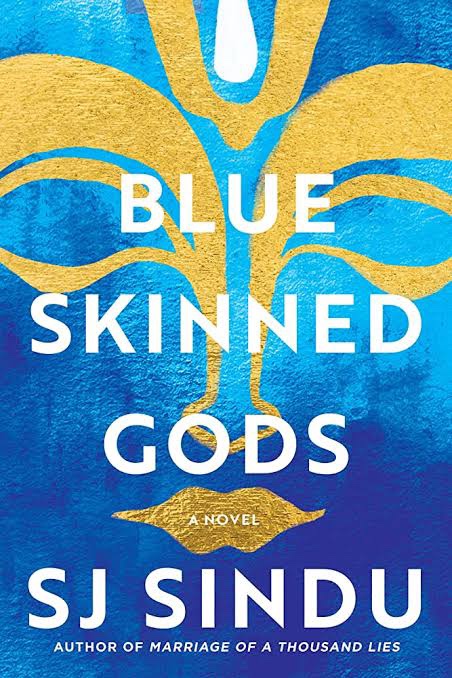
Blue Skinned Gods

A story that weaves a rich tapestry of emotions embedded in superstitions and beliefs need not be the most unusual or awe inducing. However, Blue Skinned Gods, finalist in bisexual fiction in the 2022 Lambda Literary Awards, is a story that gives layers to the same emotions, provides nuances in the narrative and simultaneously transports you to a world that’s at times unbelievably despondent and many a times believably blindsided.

The story set in Tamil Nadu, is about a blue skinned boy, Kalki, who is made to believe and thought to be as the last avatar of Vishnu; because of his skin colour. His father, Ayya, forces this belief not just onto Kalki and his entire family but the whole village, so much so that be builds an ashram for him, which also serves as a healing space for people troubled by physical and mental ailments. To perpetuate his notion, Ayya doesn’t shy away from deceit, abuse, punishments and emotional torture. Kalki soon starts believing in his own godliness and prowess, despite nagging doubts regarding the same. He becomes codependent on Ayya and no amount of abuse, including his mother’s loss, seems to make him stand up against his father. However, when he lands in New York city as part of his world tour, reality hits hard and Kalki begins his journey of emancipation and self discovery albeit through alcohol, sex and being emotionally distraught.

S J Sindu (she/they), Tamil and genderqueer, has masterfully authored this complex narrative of regret, remorse and redemption, through the lens of a docile, bereft and fragile character like Kalki. There are times when as a reader you want Kalki to rebel and retaliate, however his ingrained trauma and abuse prevents him from doing so. And this is the truth for many such childhood trauma survivors. Sindu presents trauma as this multilayered annihilator that destroys a person’s sense of being despite the right reckoning.

Blue Skinned Gods is rooted in Tamizh culture. The narrative is peppered with beautiful, lyrical Tamizh words. Hindu religious beliefs and mythology form the backbone of the story. Sindu has presented this alongside science and rationalism without putting them at loggerheads. The nuanced references to casteism and sexism in Hindiusm has been done ever so poignantly without being provocative. The various queer characters in the book bring their own uniqueness to this moving tale centred on humanity.

Do read!

~ JUST A GAY BOY. 😇

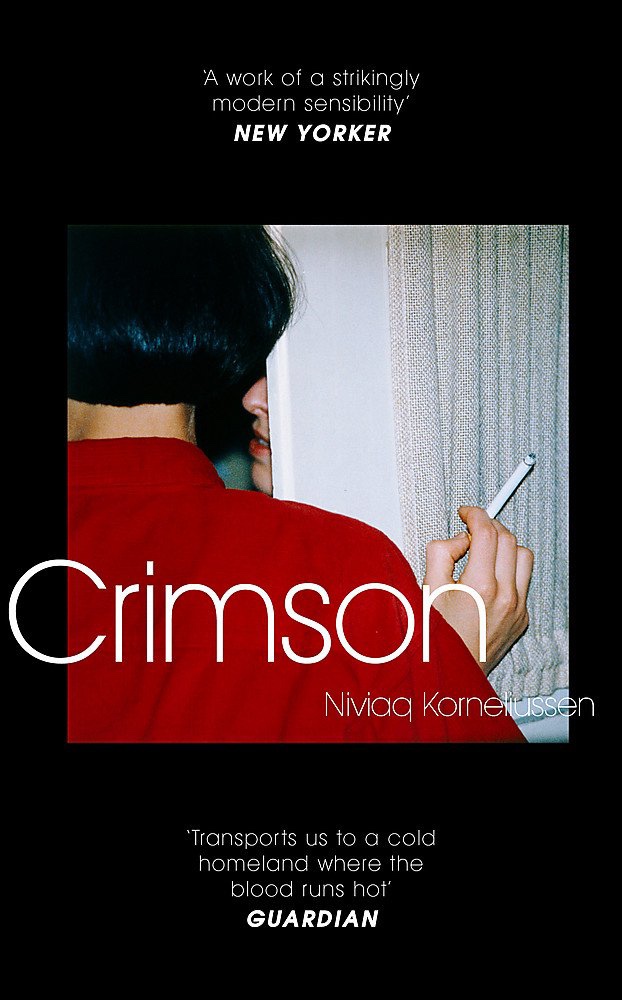
Crimson by Niviaq Korneliussen

📍Greenland 🇬🇱

First published in Greenlandic in 2014 as Homo Sapienne, the book was then translated by the author into Danish, a version that went on to receive Nordic acclaim, being nominated for the Nordic Council’s Literature Prize. In 2018, the UK translation, Crimson (released as Last Night in Nuuk in the US in 2019) was published, converted from Danish by Anna Halager. Events unfold at a startling pace in this book, told through the lives and stories of its five protagonists. Fia, has no love for her longtime boyfriend, and is now repulsed by his touch and presence. She breaks up with him, only to fall head over heels for Sara. Inuk, Fia’s brother, is a closeted gay guy and is in a secret relationship with a prominent personality from Nuuk. Arnaq, Inuk’s best friend and who is temporarily hosting Fia at her apartment, has unresolved childhood traumas which has lead her to alcoholism and a self destructive “party” lifestyle. She is smitten with Ivik. Ivik, who’s story is the most heartwarming and queer affirming, is struggling with the label of being a lesbian and sexual intimacy with girlfriend Sara; later realises his gender dysphoria. Sara, who actually makes Ivik realise the above, is grappling with loss of the relationship, the birth of her niece, and her simmering attraction for Fia.

The book is an exploration of various nuances of gender and sexuality. The author, a queer woman and native Greenlander herself, asserts that queerness cannot be explained by a stringent and linear definition. Queer individuals define it for themselves. Through it’s myriad characters, Niviaq, makes space for an unbridled queer narrative that’s messy, flawed, imperfect, inconsistent and even inconsequential at times. Their internal dialogues and personal struggles, conveyed effortlessly by the author, is reminiscent of every queer person’s journey, irrespective of their country of origin. The book also gives us a glimpse into Greenland (a former Danish colony which became self governing in 2009 after a referendum), it’s culture and life in its capital city, Nuuk. I feel, the original in Greenlandic, was way ahead of its time, since queer discourses and identities have become and are becoming mainstream only since the last couple of years. Bravo, Niviaq!

~ JUST A GAY BOY. 🥹

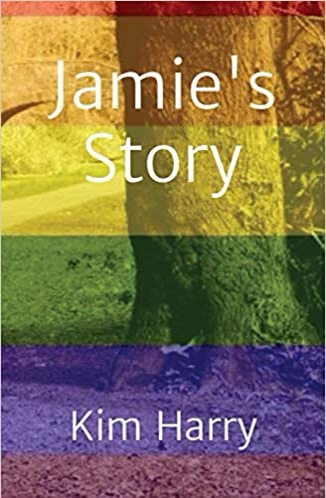
Jamie’s Story

Jamie’s story is about Jamie Taylor. She is a lesbian woman, a nightclub owner, living in Cardiff. The book traces her story from adolescence to late twenties. Growing up in an extremely dysfunctional family, to an abusive and homophobic father; Jamie is forever looking to escape. Her home is never the safe place because it’s filled with fear and hate. Her father, an out of work veteran, is an alcoholic, wife beater and a bully. Even in her school, Jamie becomes a victim of bullying and homophobia. During these trying times, she develops a romantic relationship with another girl, Heather. However, misunderstandings, deceit and a series of unfortunate events make them go their separate ways.

Now when Jamie is an adult, her life is still chaos. It comprises of hookups, late nights, binge drinking. She remains emotionally scattered and unavailable to her own self. She intentionally tries to keep romance and love at bay. But a chance encounter with Heather, after so many years, reignites the forgotten passion. This leads her to question the self sabotaging behaviour and makes her receptive and accepting of new, beautiful and fulfilling possibilities.

The book is a brilliant take on the life of a queer, troubled woman who not just manages to survive but thrive. The narrative is fast paced; a page turner in fact! The climax has elements of mystery and suspense to it. The book addresses the realities of domestic violence and bullying in gory details; which can be triggering for some. However, the delicate and nuanced portrayal of the complicated relationships of Jamie with Heather and Sarah, is queer affirming and sensitive.

Despite the grim beginning, the end is uplifting and inspiring. We Lgbtqia+ people need such stories that celebrate our authenticity, spirit, resilience and humanity. We need stories where the end is filled with happiness.

Thank you Kim Harry for choosing me to read your book. Astounding debut!

~ JUST A GAY BOY. 🏳️‍🌈🏳️‍⚧️

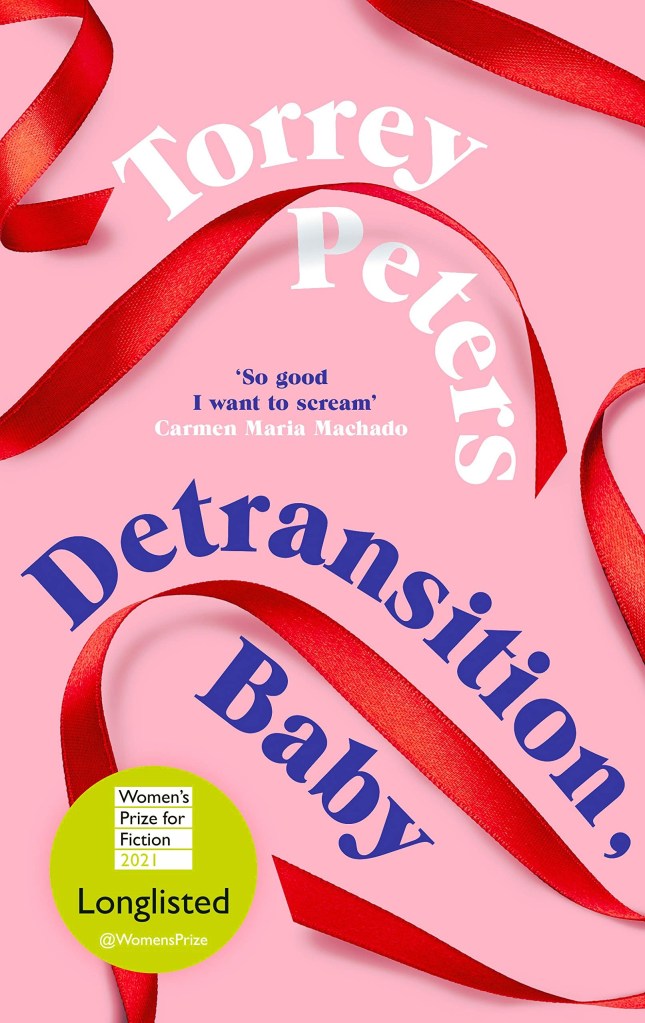
Detransition, Baby

This book, longlisted for the Women’s Prize for Fiction, is about trans feminine culture. The story navigates between it’s three principle characters; Reese, Amy/Ames and Katrina. Reese is a trans woman who is forever walking a fine line of societal perception of her trans-ness and her own reality of being a woman. She is desperately wanting to be a mother however her inherent resentment and angst makes her sabotage all the good choices and relationships. It makes her seek transphobic and misogynistic men for sexual gratification who leave her depleted and consumed.

Amy is a trans woman who later detransitions to Ames, due to complicated reasons. Amy and Reese were in a romantic relationship previously. However, Ames now is involved with Katrina who is a cis woman and has got her pregnant. This circumstance and each of the characters’ insecurities forces the three of them to consider the possibility of all three parenting the unborn child.

This book is a no nonsense yet vulnerable storytelling of trans lives. The characters are damaged and dysfunctional and the author doesn’t try to sugarcoat or patronise it. It’s a believably chaotic and nuanced exploration of modern relationships and parenting. The author deftly handles issues of gender, detransitioning, heteronormativity and queer culture with sensitivity and impartiality.

Through the book, Torrey Peters, brings to life an experience of human relations via trans and cis lived truths and bourgeois realities. Torrey who is a trans woman herself, presents intersectionality as a layered subtext throughout the book. This leaves us, as a reader, questioning a lot of our assumptions and prejudices.

In a word, Triumphant!

~ JUST A GAY BOY. 🥳